L10&11- Amniotes and Reptiles
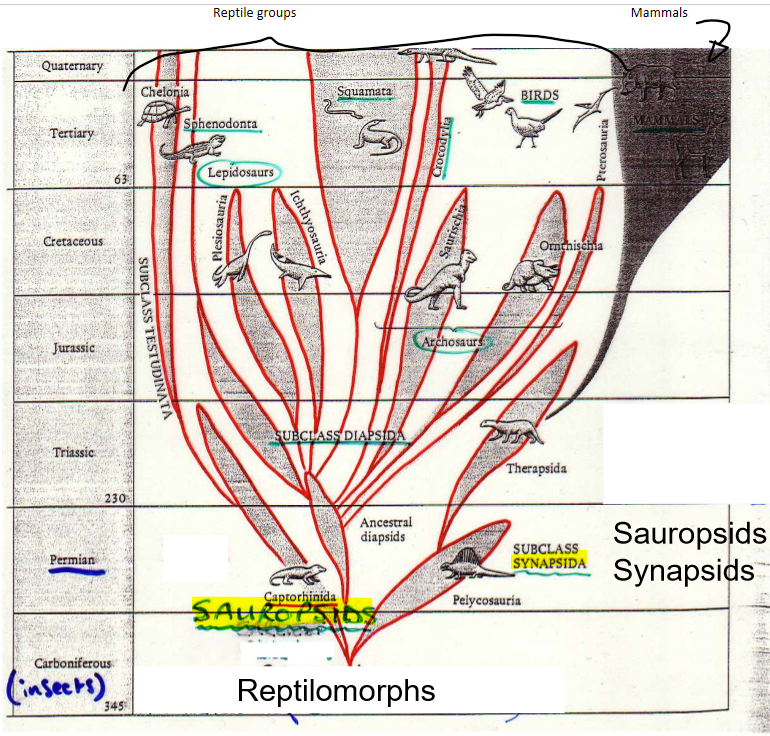
2 main groups of non-amniote tetrapods:
Batrachomorphs→ gave rise to the amphibians
Reptilomophs→ gave rise to the amniotes
The diversification of the tetrapods:
1st diversification was to form the reptilomorphs
driven by diversification of insects, food source
2nd diversification was to form the two main groups of amniotes
Synapsids→ gave rise to the mammals
Sauropsids→ gave rise to the reptilian groups
spilt ~355 mya, end Carboniferous-Permian
 Phylogeny:
Early Amniotes varied in size but are linked by common features→ Amniotic Egg:
Distinguishes amniotes (reptiles, birds, mammals) from non-amniotes (fish, amphibians)
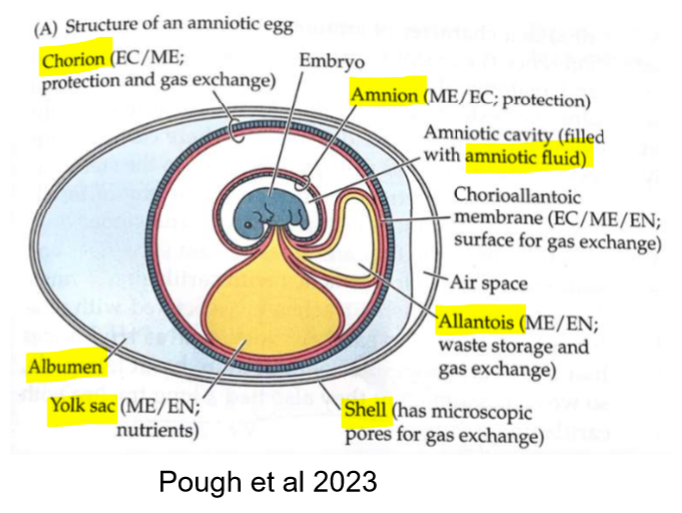
Has 3 extraembryonic membranes→ from the embryo itself
Allantois→ waste storage, vascularised (gas exchange), is left
Amnion→ grows around embryo, sac has amniotic fluid, protection
Chorion- surrounds all contents, can be vascularised too
Albumin→ surround chorion, source of protein and water
Shell→ surrounds albumin, added from female tract later on
Yolk sac→ food source
Germinal disc→ where embryo is fertilised
Chalaza→ keeps yolk in position
internal fertilisation
most males have intromittent organs and females have clitorises/hemiclitores
the ancestral forms determined sex based on environmental conditions (seen in many groups)
egg has to be laid on land
The extraembryonic membranes in egg-layers and non-egg layers are homologous: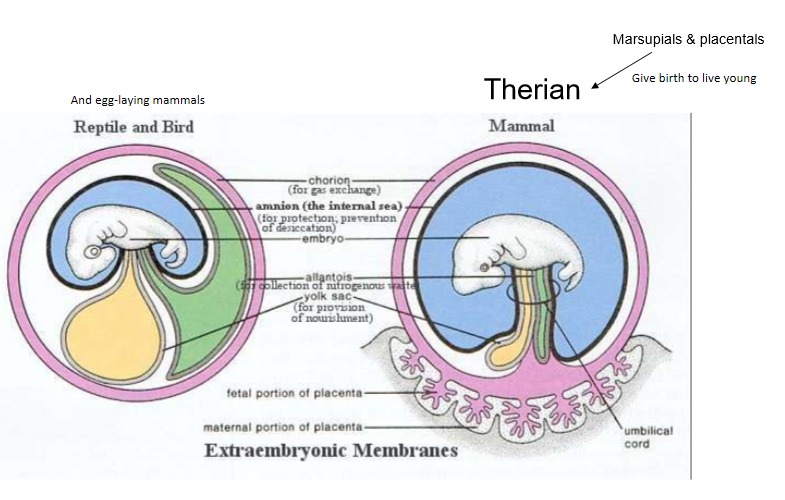
Theories of why extraembryonic membranes evolved:
Increases SA for gas exchange
Having a shell provides support
Can lead to larger eggs and larger adults
Derived Features of Amniotes:
Skeletal characters e.g.
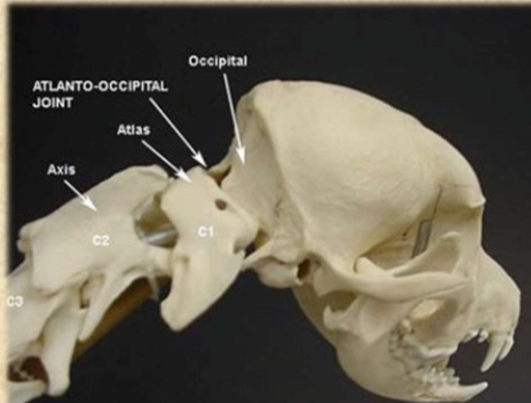
Cervical vertebrae (in the neck) have become modified
Axis (C2) has become enlarged
Is connected to Atlas (C1) that is also connected to the skull
→ are able to rotate head
Skin
reduced permeability, thicker, keratinised, more lipids
all amniotes have alpha keratin, sauropsids have beta keratin (stronger)
→ don’t need to rely on water like amphibians
have scales, hair, feathers, formed from epidermal placode
→ all homologous, just different gene expressions
Ventilation
have costal ventilation→ use rib movements for ventilating lungs
allows air to be drawn in a longer distance→ have longer necks
longer necks allow more complex nerves to control forelimbs
Temporal fenestration
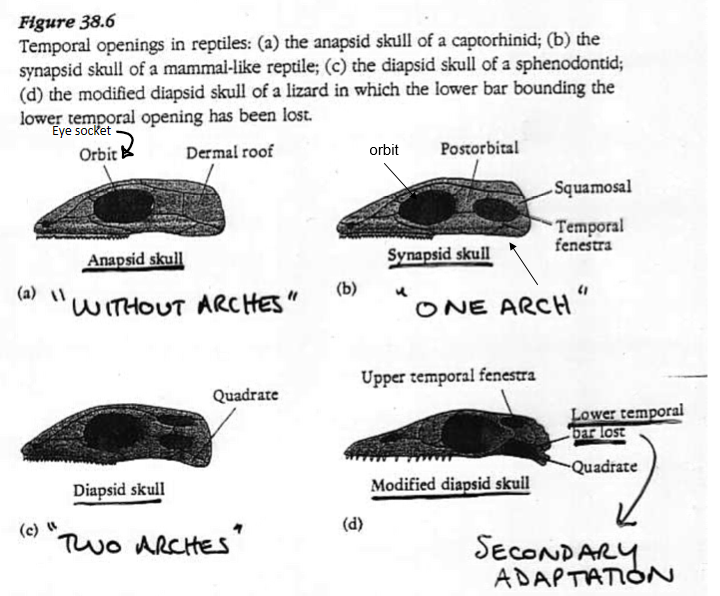
presence of holes in the skull
anapsid→ no holes
synapsid→ have 1 hole and 1 bar (arch) underneath
diapsid→ have 2 holes and 2 bars
can be modified→ lower arch is lost in lizards, both lost in snakes
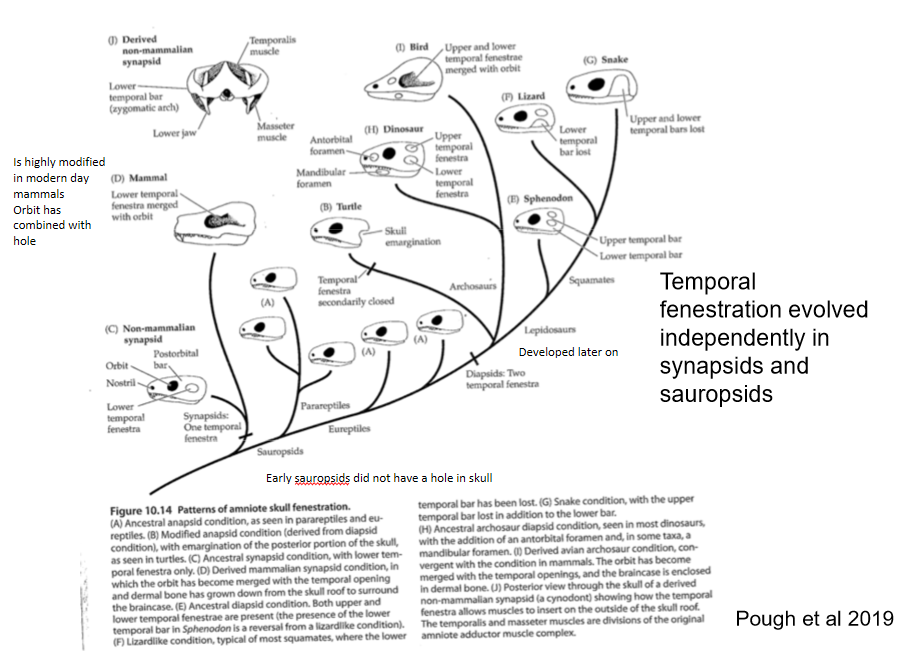
synapsids had one hole but sauropods did not have holes when they diverged→ has evolved independently in synapsids and sauropsids
is highly modified→ orbit has combined with the hole in modern-day mammals
Why do amniotes have holes in their skull:
Non-amniotes→ can only do buccal pumping (mouth sucking to feed) so have flat skulls, has 1 unmodified muscle (adductor muscle)
→ could only open and close mouth
Amniotes→ can do costal ventilation so have dome-shaped skulls, muscle has differentiated to 2 muscles
→ can open and close mouth and also apply pressure
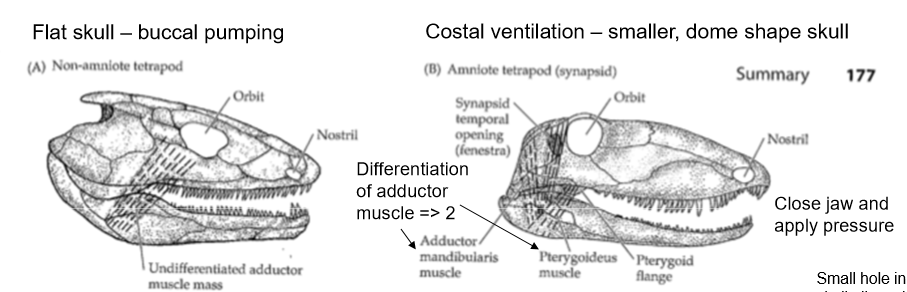
How did the holes form:
Non-amniotes→ muscle is attached to the inside of the skull
Amniotes→ muscles are attached to the top of the outside of the skull through gaps in the bones, allows muscle enlargement and an improved jaw
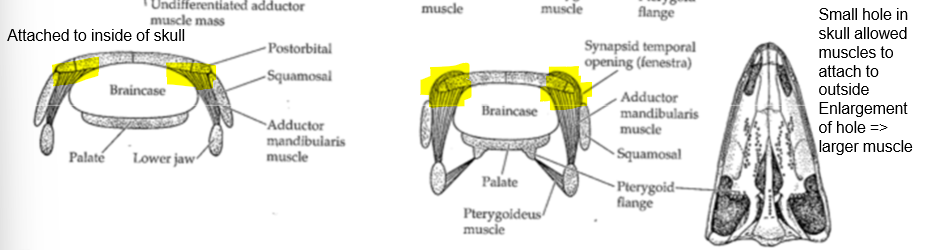
Holes in the phylogeny:
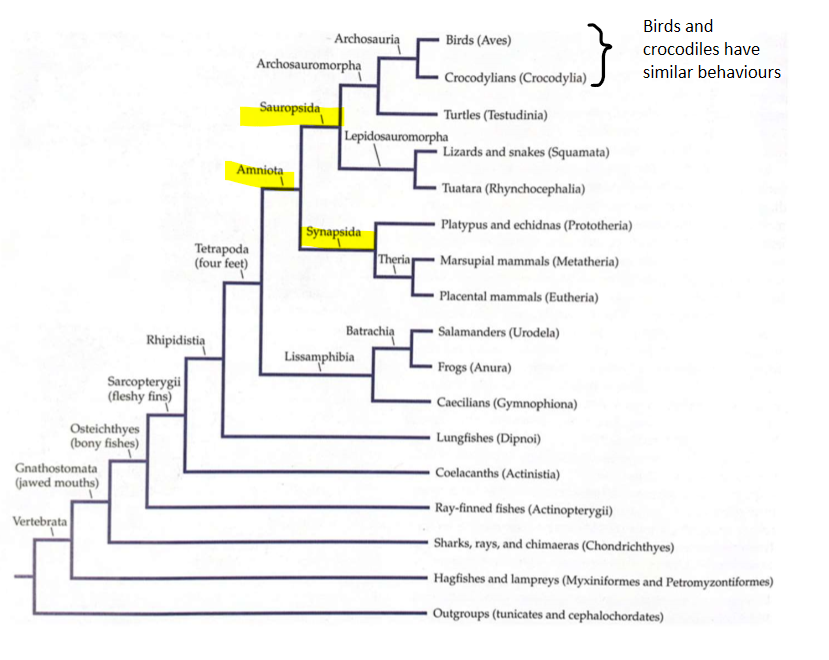
Turtles look anapsid but are actually diapsid (holes are just covered)
Turtles are sister group to the Archosaurs
Archosaurs are the crocodiles, birds, pterosaurs and dinosaurs
Lepidosaurs are the tuatara (sphenodon), snakes and lizards
these two groups diverged in the Permian
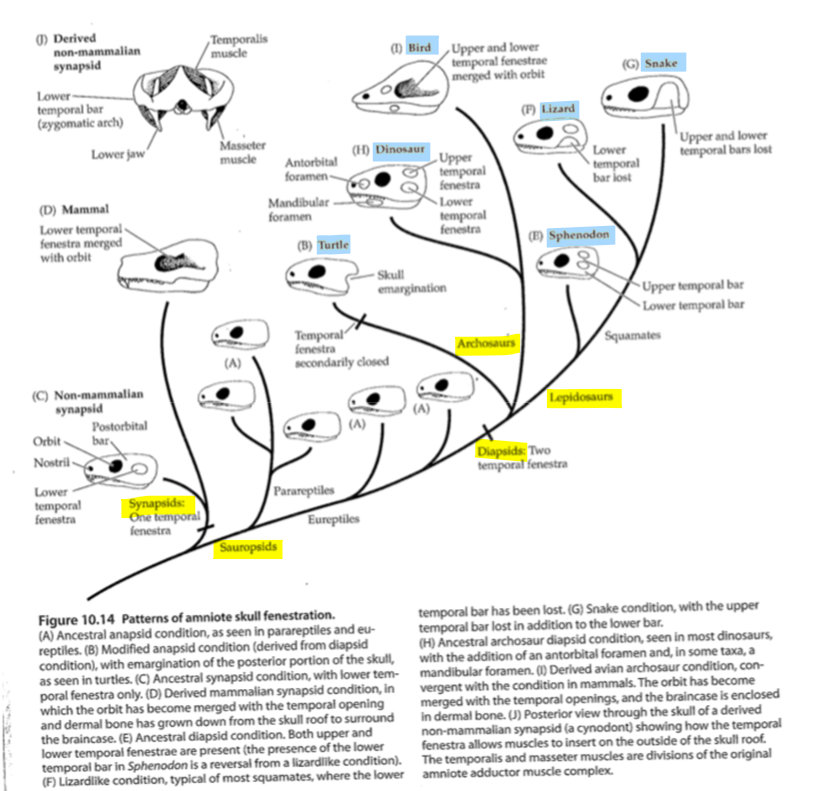
Turtles/Tortoises (Chelonia):
Structure:
Carapace→ top, Plastron→ bottom
made of bone, covered in beta keratin→ can form scutes (pattern)
The Vertebrate and Ribs are fused to the carapace
Ancestors had teeth but modern-day have a keratin beak instead
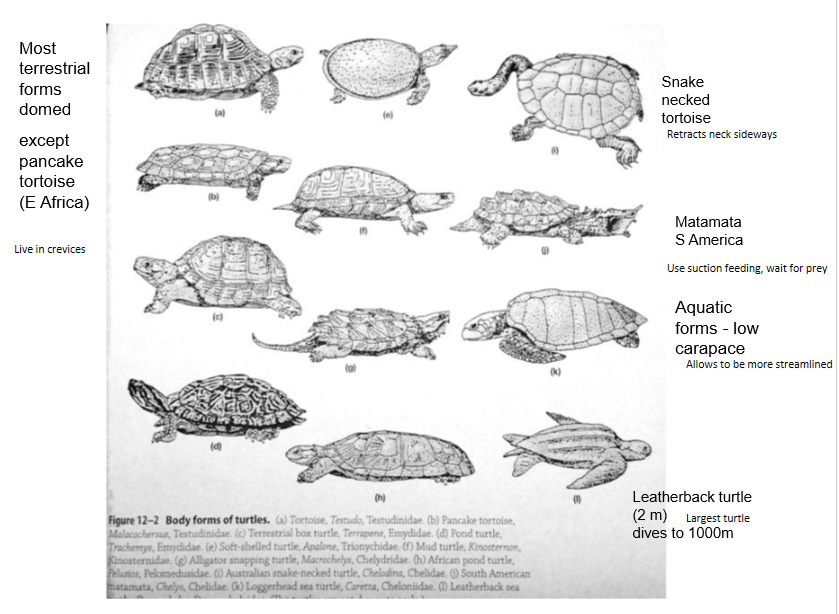
Have a flexible and retractable neck→ can retract forward or sideways (side-necked/snake-necked turtle)
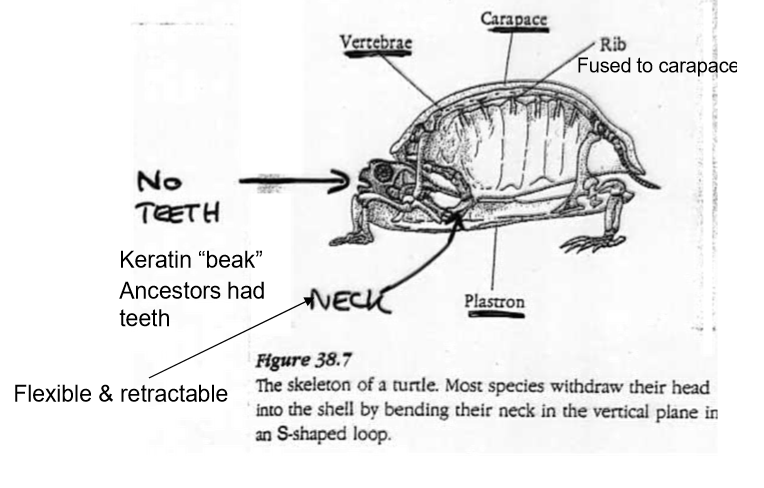
Ventilation:
Cannot do costal ventilation as ribs are connected to the carapace
Instead connective tissue holds lungs and gut together, so:
inspire→ contract side muscles, gut moves down, moves lungs down too, increase in volume, take air in
expire→ muscles contract, push gut up, lungs move up too, decrease in volume, release air
Can be modified:
aquatic turtles use the hydrostatic pressure of the water too
some use a vascularised pharynx or a vascularised cloaca
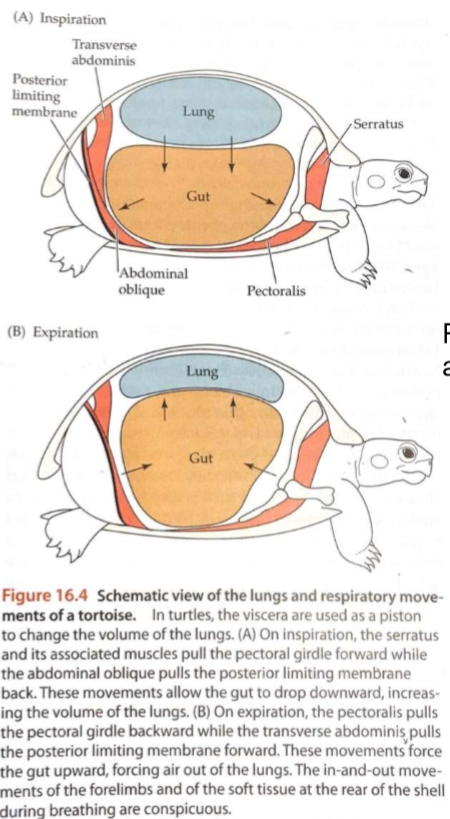
There is variation in body forms:
are all egg layers, on land
most are carnivorous (sometimes mistake plastic as jellyfish)
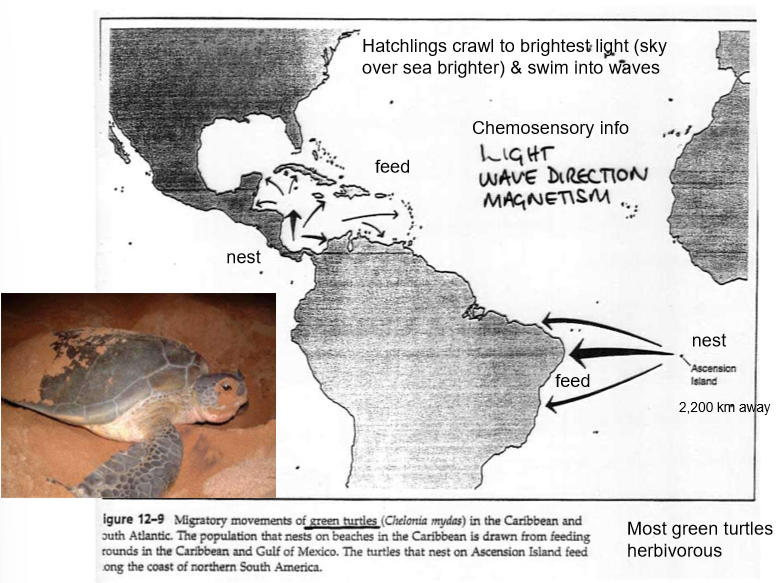
green turtles are herbivorous
have huge migrations→ feed in one area, nest far away
hatchlings crawl to the sky over sea light (brighter than sky over land)→ go out to the ocean
use chemosensory info to pick nesting site (light, wave direction, magnetism) and are site-faithful
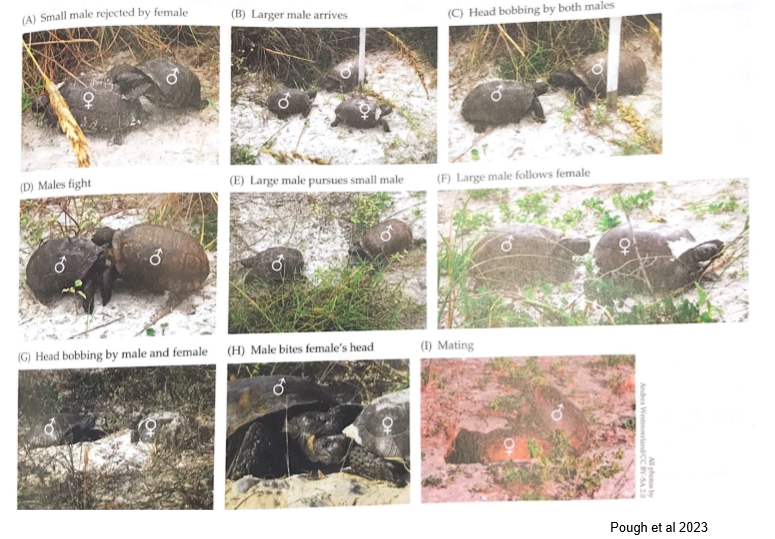
Have many mating behaviours:
males have to mount the females, can be kicked off
bobbing→ signal to work out who is who
male hooks tail underneath female
both have a cloaca→ reproductive opening that also excretes waste
Environmental Sex Determination:
temperature determines sex
females are formed when temperature is high in turtles
females are formed when temperature is low in lizards
→ theory is that the sex at the higher temperature is the larger sex
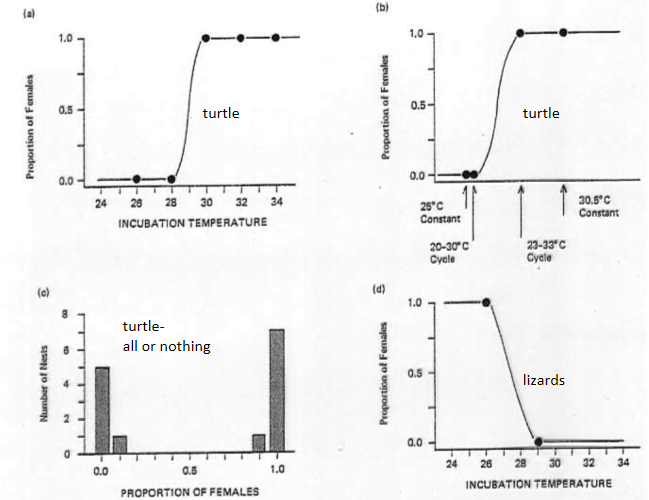
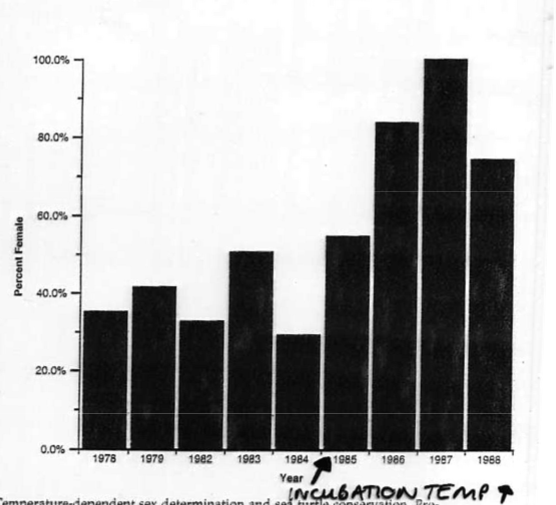
can have implications for conservation, e.g. Kemp’s Ridley turtles:
environmental sex determination was discovered in 1985
tried to establish another population before this but had few females
realised needed to increase the temperature→ got more females
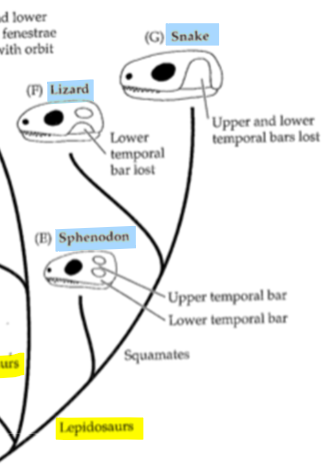
Lepidosaurs:
Tuataras→ Sphenodonta
Lizards and Snakes→ Squamates
Tuatara:
are found on islands, have spines on their back
are nocturnal but have a low body temp and are still active
live in burrows with seabirds
mess of seabird nest attracts arthropods→ feed on these
arthropods are active at night→ may be why tuatara are nocturnal
have a diapsid skull
have 2 rows of teeth on the upper jaw and 1 set of teeth on the lower jaw that fits in between→ manipulate food
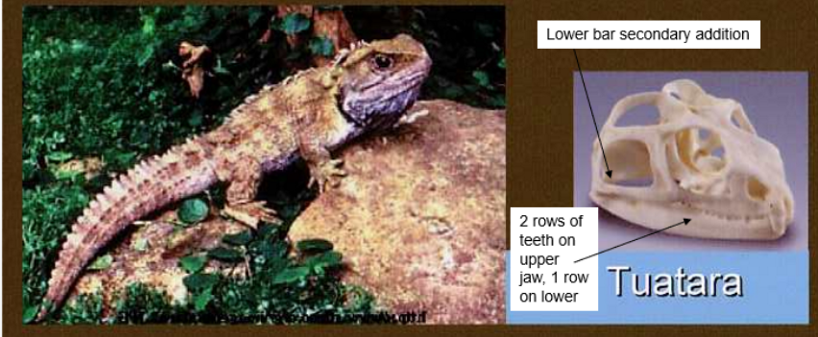
Jaws of Lepidosaurs:
Tuatara→ classically diapsid skull
the lower bar was lost and then reformed again (secondary addition)
Lizards→ bottom bar has been lost and not reformed
have an enlarged hole but still 2 holes
Snakes→ top and bottom bar have been lost and both have not reformed
have 1 big hole
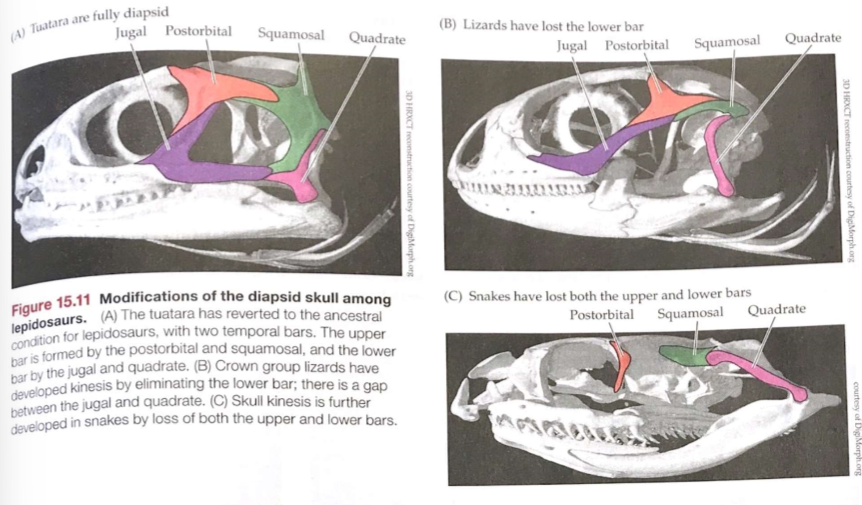
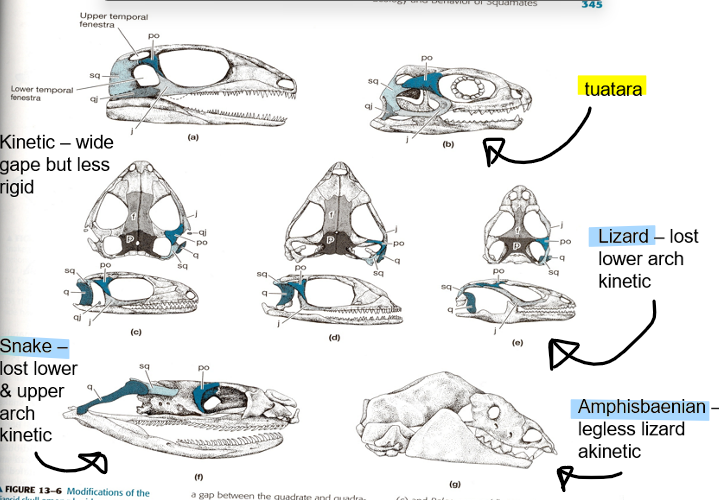
Snake and lizard skulls are kinetic
allows a very flexible jaw, not as strong bite force though
an exception is the Amphisbaenian→ does not move jaw at all as it uses its head for burrowing into the ground
Lizards:
80% are <20g→ are very small to feed on insects
Larger lizards are mostly herbivores
Exception→ Monitor Lizards e.g. Komodo Dragon/Monitor:
feeds on large prey
has venom glands→ lower blood pressure + anticoagulant
move fast using gular pumping
Lizards move by undulating body but use the same muscles for costal ventilation→ creates a conflict for locomotion and ventilation
some have adapted gular pumping to counter this→ use throat to pump air into lungs instead of ribs
Many are arboreal (live in trees)
e.g. Chameleon, have adaptations for this:
Zygodachtylous→ join digits together to form an opposable toe for grip
Prehensile tail for grip
Eyes can move independently and also focus together too
Have a fast tongue projection
Have evolved limb reduction >60 times
is an adaptation for moving
surface dwellers (in high vegetation) have long tails
burrowers have short tails
Snakes:
Are very specialised legless lizards
branched from lizards in the Cretaceous
main theory is that a group of lizards started digging, almost lost eyes, came back up, reformed eyes→ snakes have no eyelids
Have few neck and tail vertebrae, most of animal is thorax
caused by changes in gene expression in developmental genes:
Oct4 genes→ get lots of thoracic vertebrae and less limbs
Shh protein stimulates limb formation, is controlled by ZRS protein→ ZRS is mutated so there is less ZRS, less Shh, less limb formation
→ all leads to elongation of the body and a reduction in limbs
lack pectoral and pelvic girdles
some species have vestigial (tiny) ones e.g. pythons and boas, used for mating (not locomotion)
fossil forms had back legs but no front legs→ lost front legs first
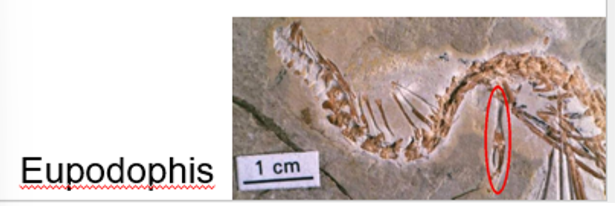
another fossil form had 4 small limbs and has features suggesting burrowing
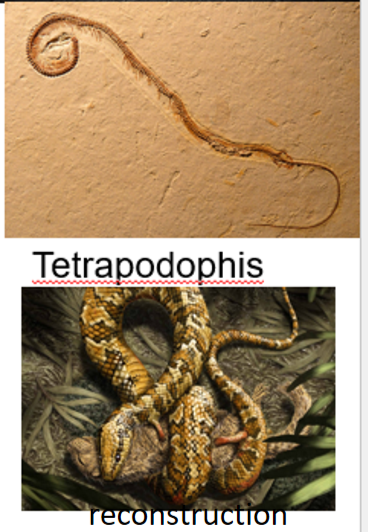 → is debated if this was a snake or not though
Elongation of body lead to a reduction in diameter but have a very flexible jaw with lots of points of articulation to eat a wide variety of prey
Have backward facing teeth→ push prey back into oesophagus
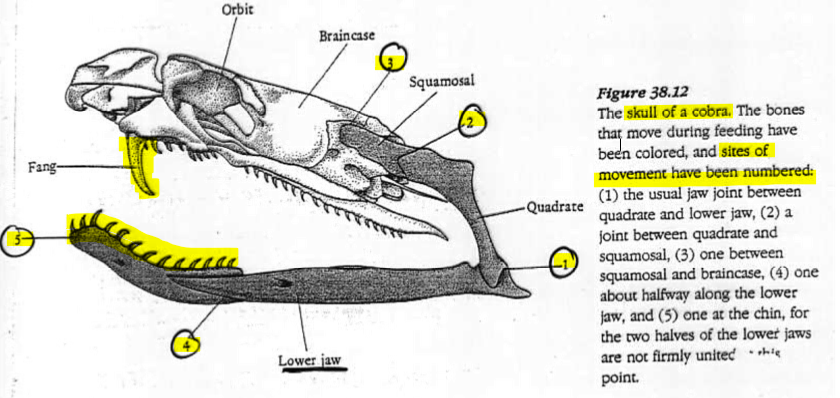
Feed live
Have specialised methods→ some swallow whole, some have teeth to feed
Subdue prey by either constriction (reduce blood flow to organs) or venom (use fang to immobilise prey)
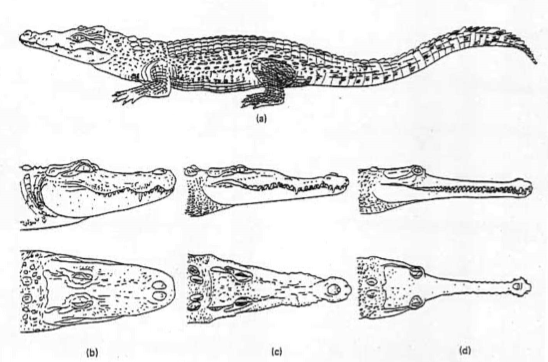
Archosaurs→ Crocodylia:
Alligators
Gharials
Crocodiles
Have a classically diapsid skull→ 2 holes
Have thecodont teeth→ teeth in sockets
Have a secondary palate (like mammals):
separates nasal passage from the mouth
allows breathing through nostrils when swimming
also have a gular valve→ stops water going down the trachea
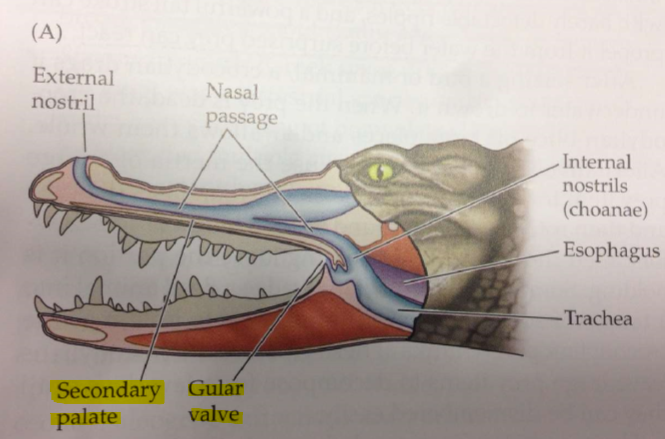
Are semi-aquatic and primarily aquatic predators
Have integumentary sensory organs around jaw/face/body
are very sensitive pressure receptors
use jaw instead of forelimbs to detect prey and parental care
Can use lures to attract prey e.g. putting sticks on top of themselves to attract birds and then catch them
There are 26 living species but there used to be a lot more, e.g.:
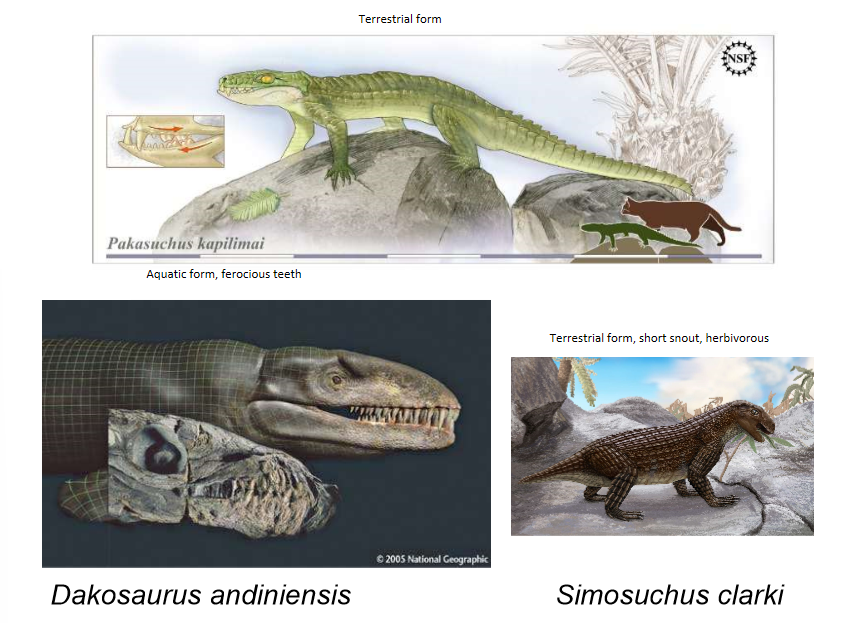
Features of Crocodilians:
Varied head shape
believed to be associated with diet→ Gharial feeds on fish and False Gharial feeds on lots of prey but both have slender snout
→ is not associated with diet
Can swim (tail), crawl (drag body), walk (lift body) and gallop (fast)
Use liver movement to ventilate lung
adaptation to moving and ventilation conflict
Use sound for social behaviour (like birds)
e.g. territories, mating, parental care
Lay eggs
using environmental sex determination
Show extensive parental care
e.g. guarding nest, transferring in mouth, looking after in crest
Show play behaviour
costs energy but has no advantage