Chapter 2
Video notes
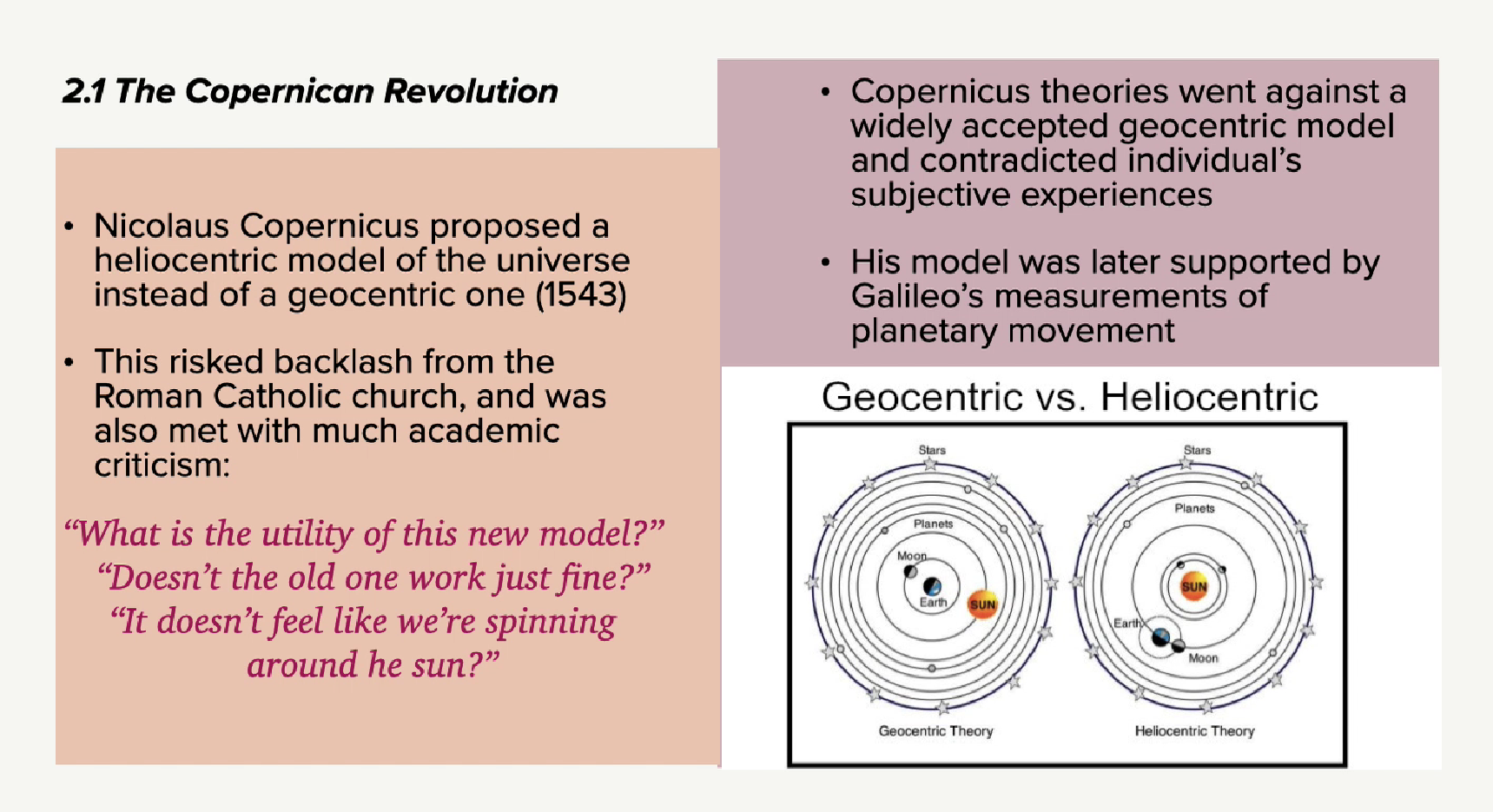
Geocentric - run revolving around earth
Heliocentric - earth revolving around sun
Copernicus proposed heliocentric model close to his death potentially from fear of church. Other backlash was due to lack of evidence at the time and a ‘common sense’ approach - we don’t feel like we ae spinning.
when new theories are proposed what is the utility and are we risking invalidating what was previously known as fact.
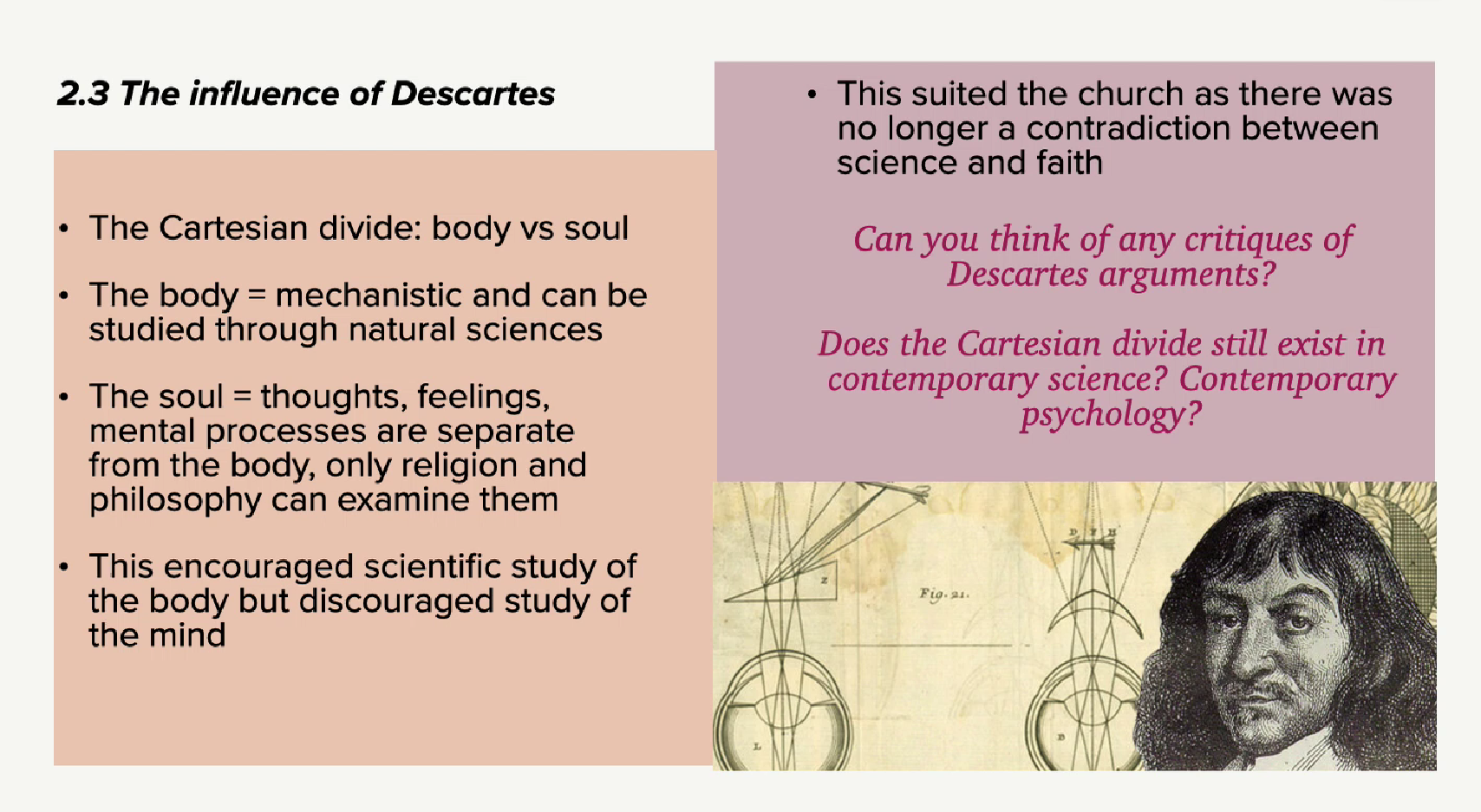
change in how we as humans understand and view ourselves
concept of dualism and understanding a divide in soul and physical body
this excluded thoughts, feeling, and religion from science
this helped science and religion not to be in direct opposition so it was more accepted in the church
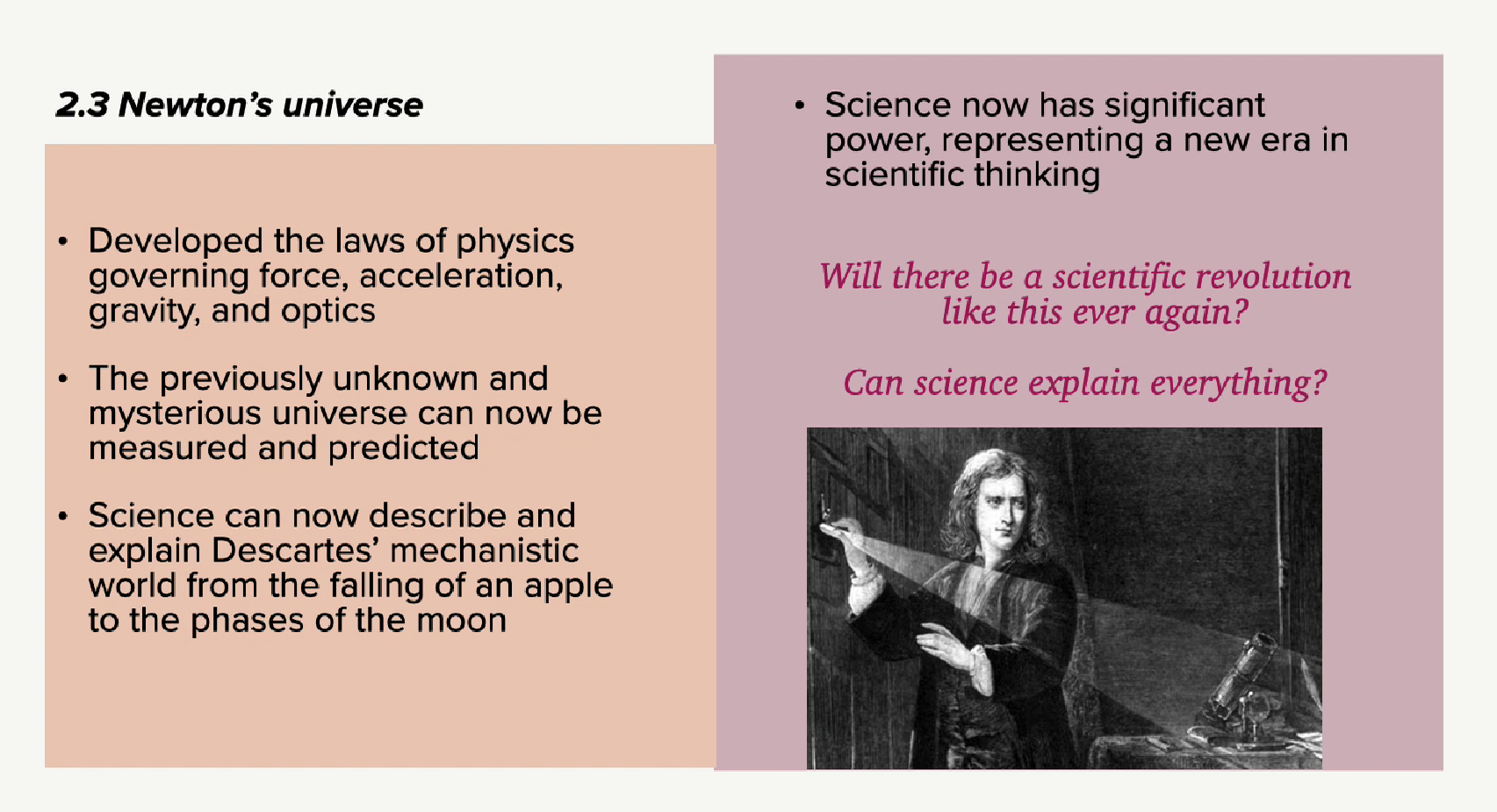
way of thinking he pulled into science of the time
argued everything could me measured and therefor predicted
positivism - the way of thinking that science fundamentally is truth and proves truth
popular way of thinking in academia today
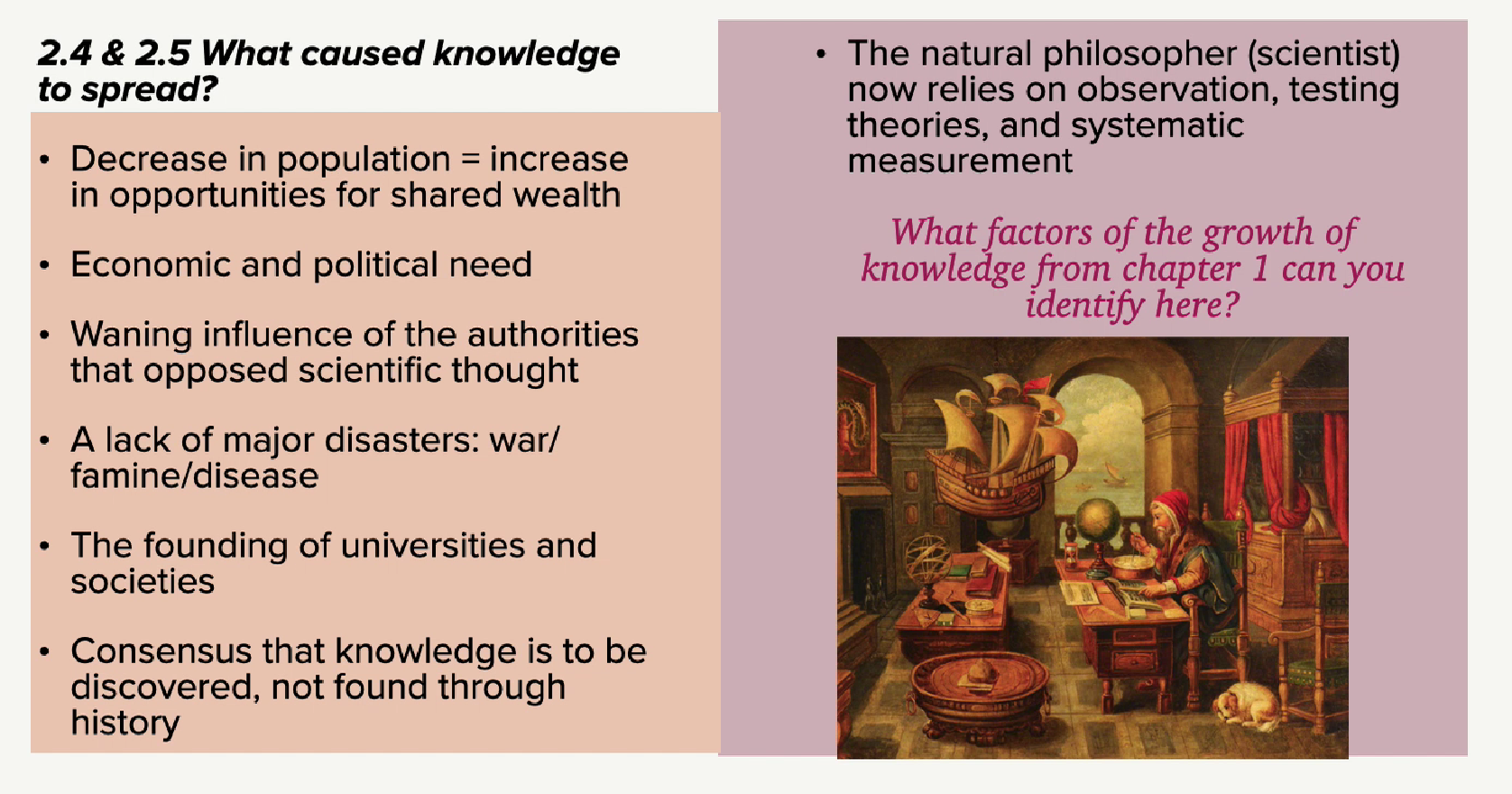
new opportunity to move between classes e.g. merchant class → more shared wealth and opportunities leading to a greater sharing of knowledge
economic and political need for furthering science
following the black death there was no disasters in Europe for a long time - e.g. no epidemics, wars, natural disasters ext.
this allowed societies to thrive and academia could grow - universities were founded
decrease of influence of roman catholic church - allowed scientific ideas to grow
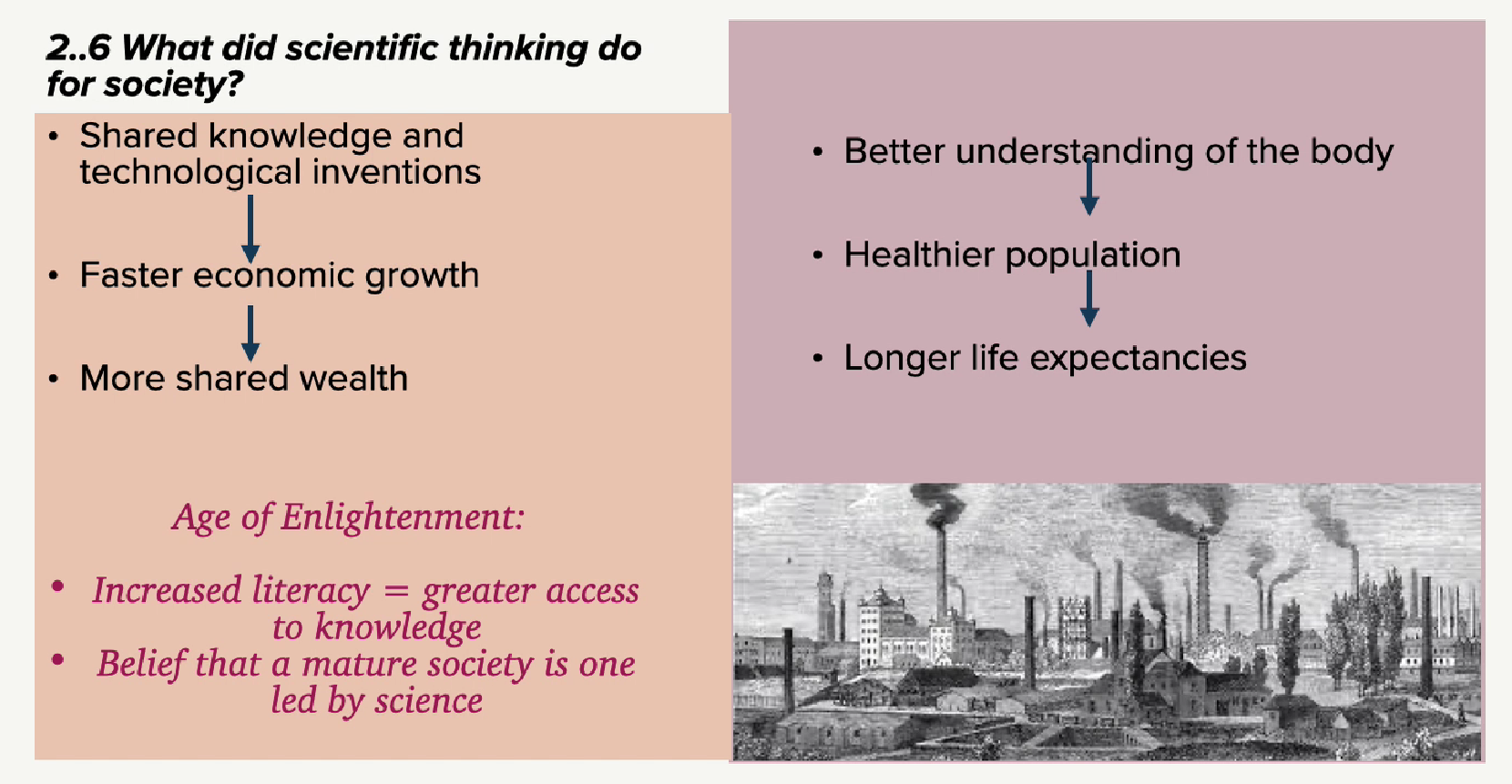
significant changes 14 - 17th centuries
greater scientific understanding allowed the industrial revolution moving towards a society more like today
medicine became better increasing life expectancy
more people became literate and were able to learn - knowledge to organise society
summaries:
any summary is imperfect particularly when it is on history
focus on only a few key thinkers and their ideas → risk giving too much significance to these ideas
focus on philosophers from Europe who spoke English ignores knowledge and ideas from other cultures