The Big Questions: | Notes: |
Part 1: Affiliation, attraction, and love |
Are we drawn to other people during times of stress? | Describe the main finding from the study on seeking affiliation during stress (the electric shock study). - People who thought they were waiting for a painful shock wanted to wait together
- People who thought they were receiving a mild shock wanted to wait alone.
|
What are the factors involved in initial attraction? | - Familiarity: we are attracted to people who are familiar (people we see often)
Describe the main finding from the Westgate Study. - Students in residence asked to name their 3 closest friends
- Results (% close friends by neighbor type):
- Next door neighbors: 41%
- 2 doors apart: 22%
- Opposite hallways 10%
- The closer people lived, the more likely they were to become friends.
- Proximity is important because the proximity influences the exposure
- Repeated exposure to someone enhances likeability
Describe the main finding from the study of TAs, familiarity, and liking. (The researchers manipulated the number of times each TA visited the classroom) - Similarity: we prefer people who are similar to us (religion, politics, personality, etc.)
- Physical attractiveness: We prefer people we find physically attractive.
- The more frequently the TA’s visited the more attractive people found them
- Reciprocity: we prefer people who reciprocate liking.
|
What are the factors that contribute to relationships deepening? | What is self-disclosure, and how does it impact relationship deepening? Self-disclosure: the sharing of intimate information and feelings with another person - We disclose to those we like
- We like those that disclose to us
- We like those to whom we have disclosed.
Describe the main finding from the study in which heterosexual men and women sat face to face and asked and answered a series of increasingly personal questions - Conducted in the late 50s, a heterosexual male and female were asked to sit face to face and ask increasingly personal questions
- It was found that disclosure breeds liking and feelings and closeness
- The participants actually got married
|
What is social exchange theory? | Social exchange theory: - A relationship as a cost benefit calculation
- How people feel about their relationships will depend on their perceptions of rewards, costs, and comparison level.
Use the table below to describe the terms from social exchange theory. Term: | Summary/Description: | Reward | - Positive outcome in a social situation
| Cost | - The price of a social situation/ relationship
| Comparison level | - Personal standard for acceptance between reward and cost
|
|
What is Robert Sternberg’s triangular theory of love? | Describe Robert Sternberg’s triangular theory of love. - Poses that there are different forms of love that fall somewhere between intimacy passion and commitment.
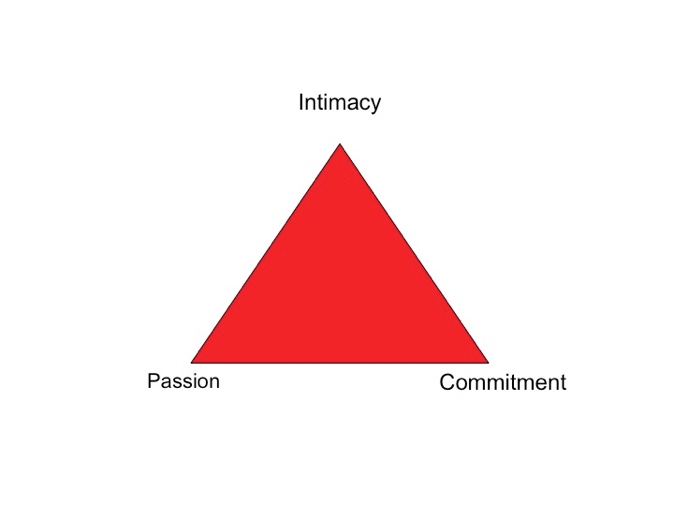 Use the table below to describe the different types of love from Robert Sternberg’s triangular theory of love. Term: | Summary/Description: | Romantic love | - When you feel intimate and passionate towards a person
- The high of romantic love dies out somewhere between 1 year and 18 months, and it turns into companionate love
| Companionate love | - A combination of intimacy and commitment
- Experienced by couples who have been together for a long time
| Consummate love | - When you experience all three, passion, commitment and intimacy.
- Many try to achieve, ideal love
|
|
What questions do you have about Part 1? Make sure to come to office hours and get them answered! |
|
Part 2: Helping others |
What is the bystander effect? | Bystander effect: The greater number of people who witness a crime, the less likely any one of them is to help. |
What are the reasons that people sometimes fail to act in an emergency? | Use the table below to make notes about why people sometimes fail to help in an emergency. Term: | Summary/Description: | Diffusion of responsibility | Feeling less responsible because other people are able to help. (Ex. someone passes out in a large crowd) | Pluralistic ignorance | Assuming that nothing is wrong because no one else looks concerned. (ex. fire video) |
|
What questions do you have about Part 2? Make sure to come to office hours and get them answered! |
|
Part 3: Aggression |
What factors contribute to aggressive behaviour? | Use the table below to make notes about the things that make us more likely to be aggressive. Aggression- any action carried out with the intention of harming another person. Cause: | Summary/Description: | Alcohol | - It has been proven that people who are legally drunk are more likely to be aggressive.
- Ex. situations of domestic violence often involve alcohol use.
- This is because it lowers your inhibitions, making you impulsive and less cautious.
- Alcohol does not automatically make you aggressive
| Discomfort | - When we are uncomfortable, we are more likely to exhibit aggressive behaviour.
- Ex. heat, hunger
| Frustration | - Frustration aggression hypothesis: frustration yields discomfort and makes us more prone to aggression.
|
|
What is social learning theory? | Social learning theory: We learn to be aggressive by observing aggression in others - Bobo doll studies by albert bandura
- Children observe the adults be aggressive towards a blow-up doll, then when given the opportunity to play with the doll, they copied the adults
|
What questions do you have about Part 3? Make sure to come to office hours and get them answered! |
Part 4: Prejudice |
What is prejudice? | Prejudice: A negative attitude towards a group of people Expressed as: - Beliefs: stereotypes about a group
- Emotions: feelings about a group
- Actions: discriminatory behaviour toward a group
|
What are the three different types of prejudice? | Use the table below to make notes about the three types of prejudice. Prejudice: | Summary/Description: | Explicit Prejudice | People consciously and openly expressing a negative attitude towards a group. - There is an increasing norm in society to not be explicitly prejudice.
| Symbolic Prejudice | Expression of prejudice through the support of prejudice ideas and policies - Ex. “I’m not racist but I support anti-immigration policies”
| Implicit Prejudice | We hold certain biases that we aren’t aware of, that are learned through a lifetime of exposure and cultural information that shapes our psychology. - Ex. associating men with working and women with staying home
|
|
How can we reduce prejudice? | Describe what happened during the four stages of the Sherif et al. (1961) Robbers cave study. - 11-year-old boys at camp in Robber’s Cave National Park
- Split into two groups: Rattlers and Eagles (self-named)
- Stage 1: Only do activities with own group (increases ingroup identity)
- Stage 2: Engage in competitive sports with prizes for winning team (competing for scarce resources)
- By the end of stage two a rivalry is started, they wanted little to do with one another
- Stage 3: Mere Contact: Arranged lunchtime seating assignments so that boys from each team were intermixed
- Stage 4: Conditions for positive contact:
- Equal status between the groups
- Common goals
Describe the main finding of the Sherif et al. (1961) Robbers cave study. After Positive Contact: - Hostility between groups declined
- New friendships formed
- Caveat: Ingroup identification was difficult to eliminate altogether.
Use the table below to make notes about the three conditions for positive contact: Conditions: | Summary/Description: | Equal status | Establishing a level playing field Minimizing hierarchical differences Encouraging mutual respect and open communication | Common goals | Fostering shared objectives Promoting teamwork and collaboration Creating a sense of unity and purpose | Opportunity for friendship | Encouraging personal connections Providing space for informal interactions Building rapport and trust through social engagement |
Why are friendships such a powerful way to reduce prejudice? - Individuating information
- commonalties
|
What questions do you have about Part 4? Make sure to come to office hours and get them answered! |