EMR - Cardiovascular
Cardiac Chest Pain Protocol
Complete Primary survey (consider target SpO2 of 95%. Get partner to get a baseline set of vitals) → ASA → Complete Critical Hx (pain assessment) → Nitro → Transport → continue PAM → Nitro q3 → Consider Entonox
0 - BP, HR, Resps, SpO2, Skin, Pain, GCS → Nitro
3 - BP, HR, Pain → Nitro
5 - Resps, GCS, SpO2, Skin
6 - BP (palp), HR, Pain → Nitro
Notification, consider calling EPOS if pain not resolved
10 - Resps, GCS, Spo2, Skin
Cardiovascular Disease
Coronary Artery Disease (CAD)
Peripheral Artery disease
Hypertension
Arteriosclerosis (hardening)
Atherosclerosis (narrowing)
Cerebrovascular disease
congenital heart disease (CHD)
Deep vein thrombosis (DVT) - clot
Pulmonary embolism (PE) - lung clot
Anatomy review
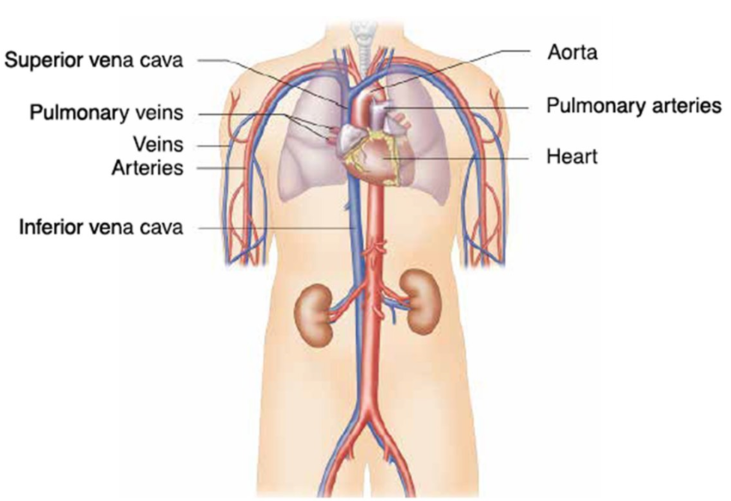
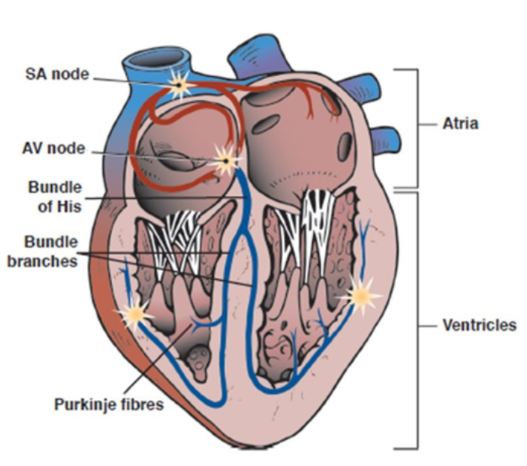
Angina (angina pectoris) and Myocardial Infarction (MI)
Angina
Chest pain as a result of reduced blood flow to muscles of heart (partial blockage). May be recurring and is common.
MI
heart attach. blockage of blood flow to heart muscles
Signs & Symptoms |
Chest pain or discomfort (heaviness/squeezing) SOB Fast and irregular pulse Indigestion, nausea, vomiting Sweating Pale, grey, cyanosis Feeling of impending doom Anxiety or irritability |
Treatment |
SpO2 target of 94-95% (nasal canula) ASA Nitro Entonox Pos of comfort RTC Supportive care |
Abdominal Aortic Aneurysm (AAA))
AAA
Blockage in dorsal aorta
pulsating mass in abd resulting in potential tearing of abd
check and compare BP left vs right. 30 point difference
Treat the same as other cardiac issues
Congestive heart failure (CHF)
Right sided heart failure | Left sided heart failure | Both |
Swelling of lower extremities increased urination JVD Syncopal episodes | Increased RR SOB when laying down Pale or cyanotic skin coughing foamy sputum or blood wheezing hypertension | SOB Tachycardia |
Treatment |
15 lpm O2 NRB pos sitting and comfortable RTC Supportive care consider BVM for inadequate resps or failing resps |