Anaphy
Multiple Choice
Bell’s Palsy
a) cardiomyopathy
Cardiomyopathy (kahr-dee-o-my-OP-uh-thee) is a disease of the heart muscle that makes it harder for the heart to pump blood to the rest of the body. Cardiomyopathy can lead to heart failure.
It causes the heart to lose its ability to pump blood well. In some cases, the heart rhythm also becomes disturbed. This leads to arrhythmias (irregular heartbeats).
b) corpus striatum:
Primary nuclei that is located deep within the cerebrum
Part of the basal ganglia
Involved in motor control and reward processing
c) coronary thrombosis:
Blood clot in the coronary arteries
Can lead to heart attack
d) substantia nigra:
Group of darkly pigmented cells in the midbrain
Produces dopamine
Involved in movement control
e) myocardial infarction:
Medical term for heart attack
Occurs when blood flow to the heart is blocked
f) Nearsightedness:
Difficulty seeing distant objects clearly
Caused by elongated eyeball or steep cornea
g) Hemophilia:
Genetic disorder affecting blood clotting
Results in prolonged bleeding and easy bruising
h) Farsightedness:
Difficulty seeing nearby objects clearly
Caused by shorter eyeball or flat cornea
i) Malaria:
Infectious disease caused by parasites
Transmitted through mosquito bites
j) Color blindness:
Absence or perception of one or more colors
Inability to distinguish certain colors
Most commonly affects red and green perception
k) Stroke:
Caused by bleeding in the brain or a clot or spasm blocking cerebral blood vessels that results in a local area of cell death; symptoms include loss of speech, numbness, or paralysis
Interruption of blood flow to the brain
Can cause brain damage or death
l) Nervous system:
Controls and coordinates body functions
Basal Nuclei
m) Endocrine system:
Is a messenger system comprising feedback loops of the hormones released by internal glands directly into the circulatory system, regulating distant target organs
Regulates hormone production and release
Allows cells to communicate with each other
n) Encephalitis:
Inflammation of the brain
Often caused by virus and less often by bacteria or other agents;symptoms include fever, coma and convulsions
o) Meningitis:
Inflammation of the meninges (membranes surrounding the brain and spinal cord)
Can be bacterial infection or viral in nature; symptoms include stiffness in the neck, head ache, and fever; severe cases can cause paralysis, coma or death
Functions of:
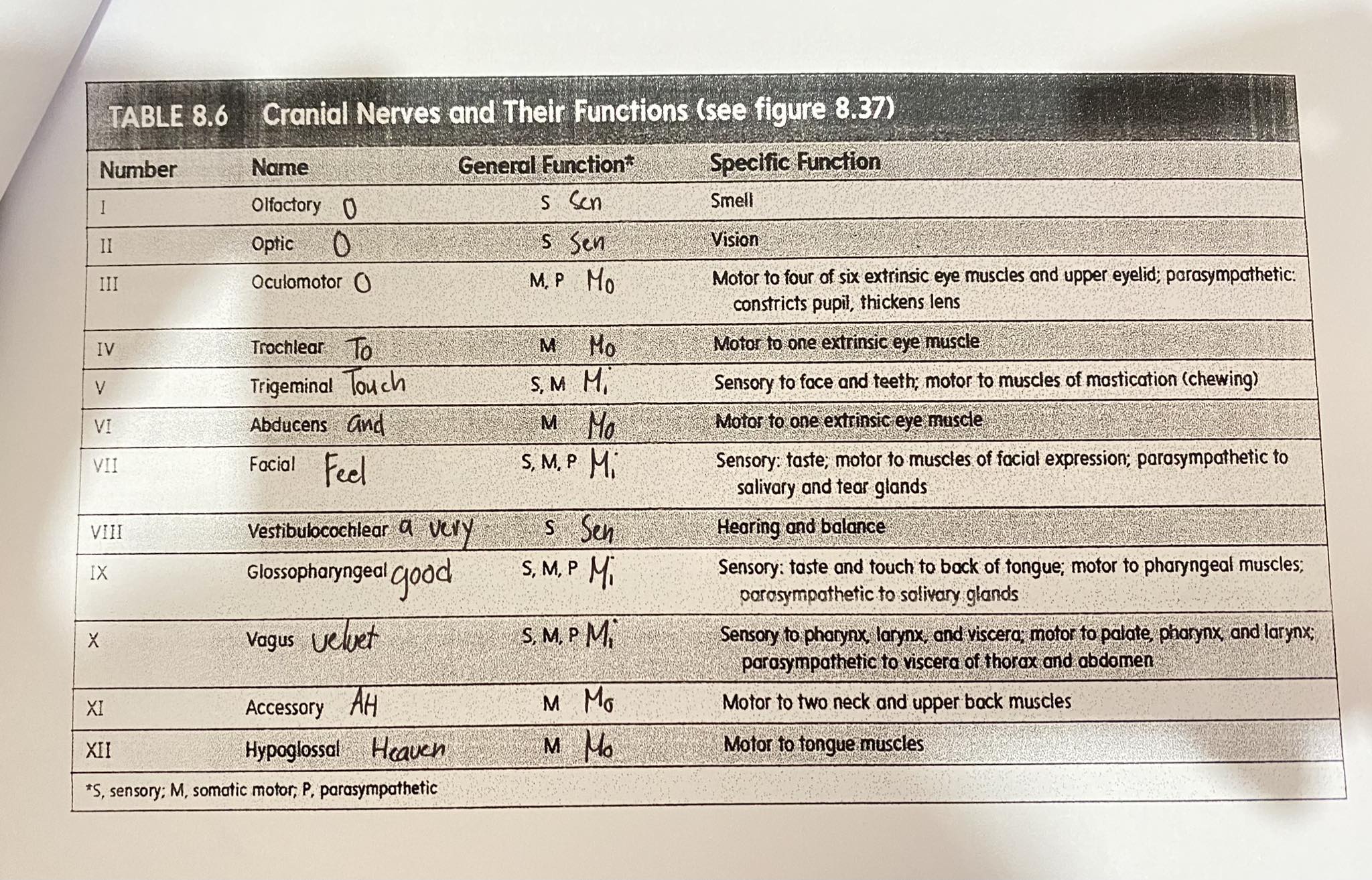
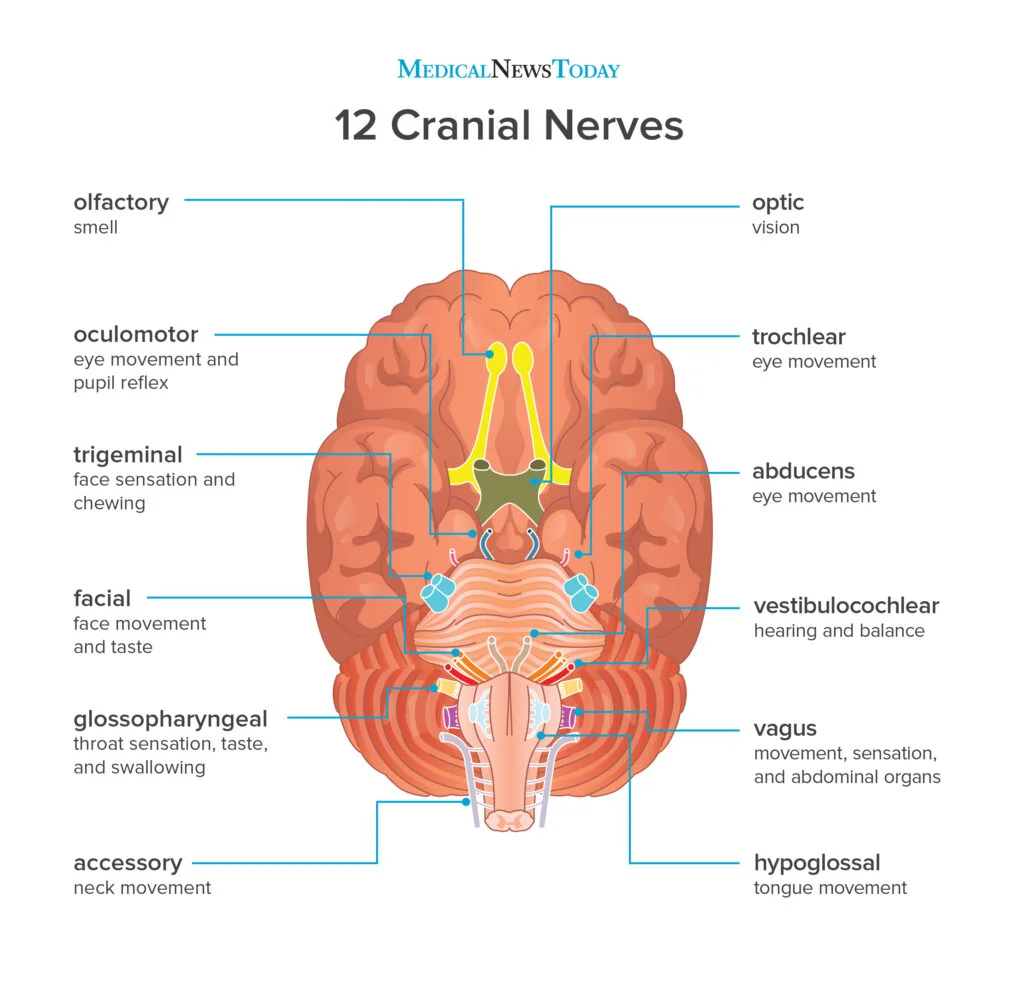
Cranial nerves
carry impulses to and from the brain
SEN SEN MO MO MI MO MI SEN MI MI MO MO
Endocrine
Metabolism
Control of food intake & digestion
Tissue development
Ion regulation
Water balance
Heart rate and blood pressure regulation
Control of blood glucose & other nutrients
Control of reproductive functions
Uterine contractions& milk release
Immune system regulation
Blood
Transport of gases, nutrients, and waste products.
Transport of processed molecules.
Transport of regulatory molecules.
Regulation of pH and osmosis.
Maintenance of body temperature.
Protection against foreign substances.
Clot formation.
Nervous system
Receiving sensory input
Integrating Information
Controlling muscles and glands
Maintaining homeostasis
Establishing and maintaining mental activity
Cardiovascular System
Generating Blood Pressure
Routing Blood
Ensuring One-way Blood Flow
Regulating Blood Supply
Functions of Special Senses
Smell
Taste
Sight
Hearing
Balance
Structure of:
Cranial Nerves
olfactory
optic
oculomotor
trochlear
trigeminal
abducens
facial
vestibulocochlear
glossopharyngeal
vagus
accessory
hypoglossal
Chambers of eye
Anterior Chamber
Posterior Chamber
Vitreous Chamber
Meninges
Dura Mater
Arachnoid mater
Pia Mater
Sensory receptors
1. Mechanoreceptors- respond to mechanical stimuli, such as the bending or stretching of receptors.
2. Chemoreceptors - respond to chemicals, such as odor molecules.
3. Photoreceptors - respond to light.
4. Thermoreceptors - respond to temperature changes.
5. Nociceptors - respond to stimuli that result in the sensation of pain.
External ear parts:
External Auditory Canal
Auricle
Parts of inside of the eye
Retina
Pigmented Retina
Sensory Retina Inner
Rods
Cones
Interneurons
Middle layer of eye:
Choroid
Ciliary Body
Lens
Iris
Pupil
Different glands
Pituitary
Pineal gland
Thyroid
Thymus
Parathyroids posterior part of thyroid)
Adrenals
Ovaries (female)
Pancreas (isiets)
Testes (male)
Minengeal layer
Gaglia:
Astrocytes
Microglia
Nodes of Ranvier
Ependymal
Oligodendrocytes
Type of Nervous system
Central Nervous System
Peripheral Nervous System
Central Nervous System Disorders
Myasthenia Gravis
RABIES
Encephalitis
Tetanus
Parts of the brain
Brainstem
Cerebellum
Diencephalon
Cerebrum
Pathways of the brain
Direct Pathways
Indirect Pathways
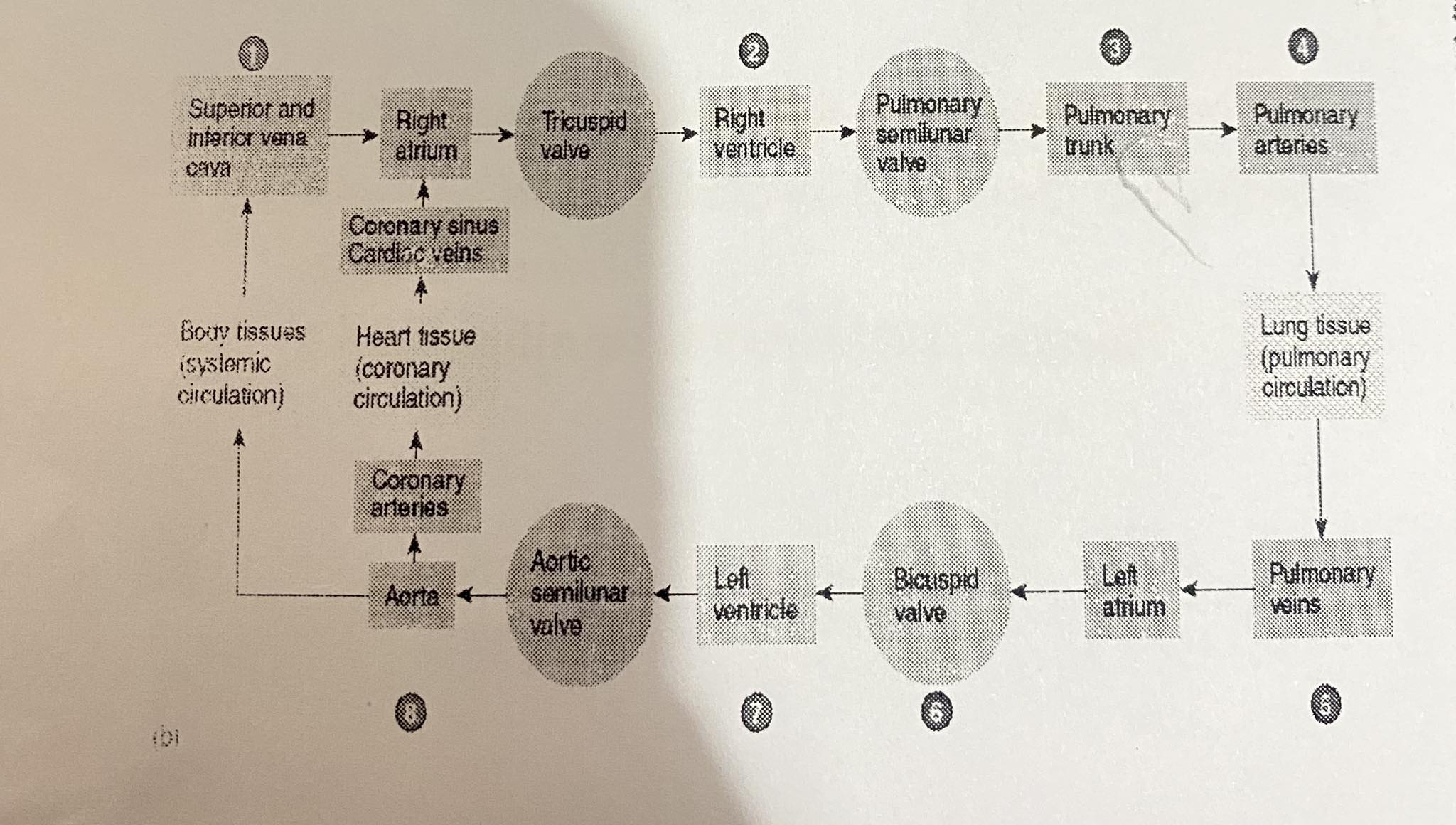
Chambers of the Heart
Right and Left Atria
Right and Left Ventricle
Heart Valve
Circulation of blood parts
All glands functions
Pituitary: Controls hormone production in the body
Pineal gland: Regulates sleep-wake cycle and produces melatonin
Thyroid: Regulates metabolism and produces thyroid hormones
Thymus: Plays a role in immune system development
Parathyroids: Regulate calcium levels in the body
Adrenals: Produce hormones involved in stress response
Ovaries (female): Produce estrogen and progesterone
Pancreas: Regulates blood sugar levels through insulin production
Testes (male): Produce testosterone
Meningeal layer: Protective layer surrounding the brain and spinal cord
Hormones- A chemical messenger that is secreted into the blood, travels to a distant target tissue, & binds to specific receptors to produce a coordinated set of events in that target tissue.
oxytocin - Target tissues: Uterus, Mammary gland. Functions: increases uterine contractions during labor, Increase milk let-down reflex
prolactin- Target tissues: mammary glands and ovaries Functions: milk production, helps promote development of the breast during pregnancy.
calcitonin- Target Tissue: Primarily Bone. Function: Decreases rate of bone breakdown; prevents large increase in blood Ca levels following a meal.
growth hormones-Target tissues: most tissues
Functions: stimulates growth of bones, muscles, and organs
Abnormalities:
/ Too much GH causes giantism v Too little GH causes pituitary dwarfism
Endocrine Exocrine functions
Endocrine- secreted into bloodstream by certain glands & cell; affect cells distant from source (ex: epinephrine)
Exocrine-providing the body with a method to release secretions containing proteins, mucus, and other products to epithelial surfaces around the body.
Compositions of Blood
Plasma:
Main component of blood
Contains water, proteins, hormones, and waste products
Transports nutrients, hormones, and waste products
Helps maintain blood pressure and pH balance
Hemoglobin:
Protein in red blood cells
Carries oxygen from lungs to body tissues
Binds with carbon dioxide to transport it back to lungs
Platelet:
Cell fragment in blood
Helps in blood clotting
Releases chemicals to promote clot formation
Essential for preventing excessive bleeding
Erethropoietin-Hormone secreted by the kidneys that increases the rate of production of red blood cells in response to falling levels of oxygen in the tissues.
Pernicious animia-a relatively rare autoimmune disorder that causes diminishment in dietary vitamin B12 (cobalamin) absorption, resulting in B12 deficiency and subsequent megaloblastic anemia.
Aplastic anemia-a rare but serious blood condition that occurs when your bone marrow cannot make enough new blood cells for your body to work normally.
Polycythemia-or erythrocytosis, refers to an increase in the absolute red blood cell (RBC) mass in the body.
Lymphocyte- Virus
Monocyte- Parasite or Viral Infection
Eusinophil-Parasite or Allergy
Neutrophil-Bacteria
Basophil-Autoimmune Disease
Process of blood production
Blood from lungs to heart pumps