4.4 Climate Change
energy absorbed by Earth and atmosphere = energy radiated back again by Earth and atmosphere
How Does a Greenhouse Work?
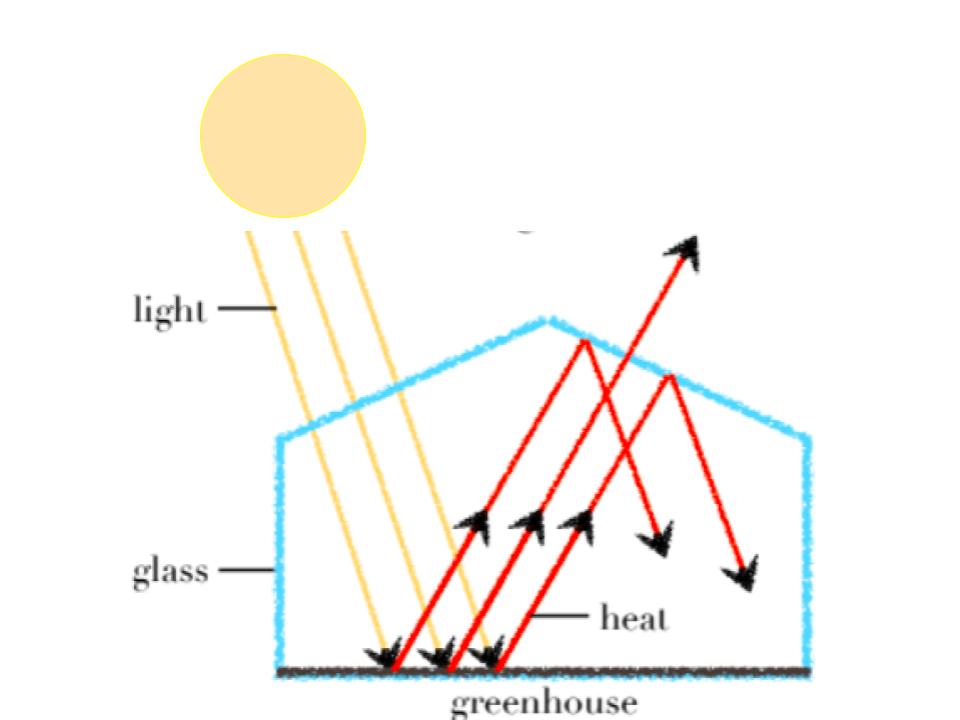
A greenhouse can be used to grow plants in the winter. The walls are made of glass or plastic. Visible light can pass through the walls.
When the light hits an object some of it is turned into heat.
As a result, the greenhouse becomes warmer.
Certain gases in the Earth’s atmosphere can act like the glass of a greenhouse, to trap heat in the atmosphere.
These are called greenhouse gases.
What are Greenhouse Gases?
Greenhouse Gases (GHG) - atmospheric gases that trap heat energy from the Sun
Contribute to greenhouse effect
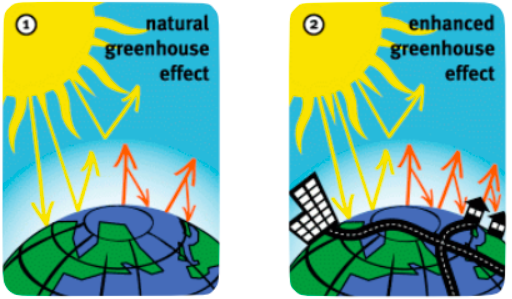
More of these gases we put into atmosphere, more the planet will heat up - leads to global warming (global temp rise)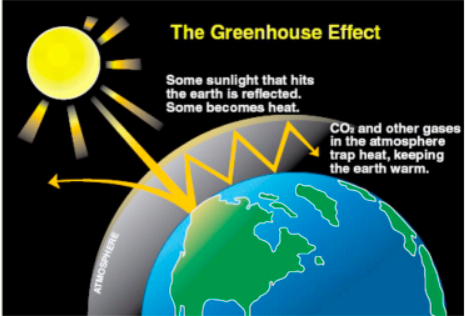
The Natural Greenhouse Effect
Without the natural greenhouse effect the average temperature on Earth would be 33°C colder
Greenhouse Gases
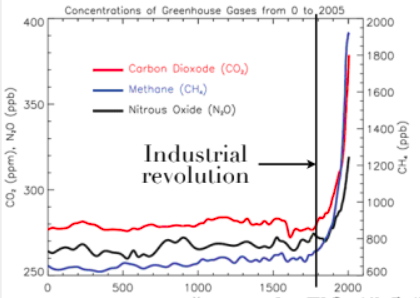
Carbon dioxide (CO2), methane (CH4), nitrous oxides (N2O), and ozone (O3) are naturally occurring green house gases
For 650,000 years, levels of these gases remained fairly steady Human activity in last 250 yrs caused large increase in GHG’s
Water vapour (H2O) is a GHG, but human activity doesn’t have much influence on this gas
GHG’s Produced in Canada
Greenhouse Gas | Human Sources |
|---|---|
Carbon dioxide CO2 |
|
Methane CH4 |
|
Nitrous oxide N2O |
|
Hydrochlorofluorocarbons HFC’s |
|
What is a Carbon Sink?
One way to decrease CO2 levels is to stop burning fossil fuels
Another way would be to remove CO2 from atmosphere using carbon sinks
Carbon Sink - anything that absorbs CO2 from atmosphere
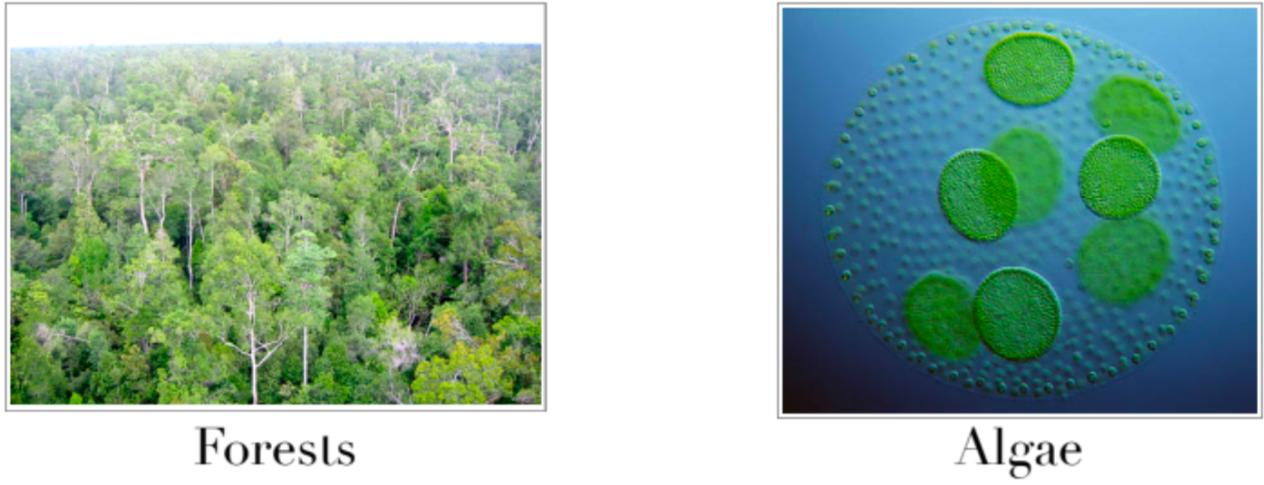
Examples: trees, plants, microorganisms in oceans
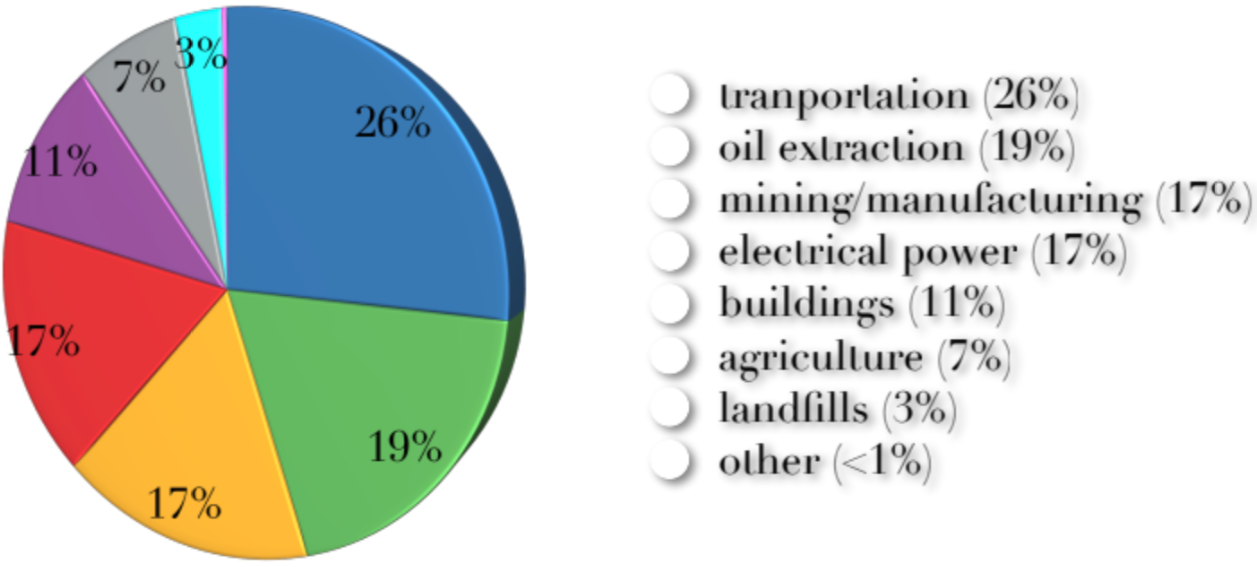
 In Canada, transportation is the source of most of our GHG emissions. Extraction of oil, mostly from the tar sands, is also a major source. Other sources include mining and manufacturing, generating electricity, buildings, agriculture and landfills.