Iran [SLIDE BASED]
PART 1 SLIDES:
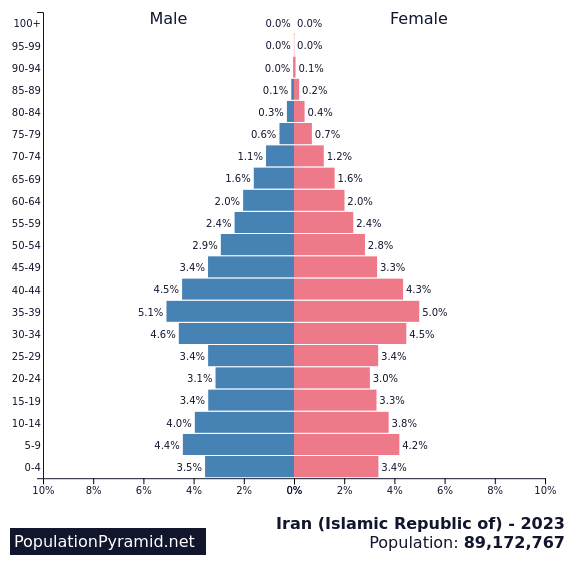
Large young population:
24% of the population is under 15
Median age is 27
Cultural/Lingual Demographics:
89% are Shia Muslim
58% speak Farsi
51% are ethnically Persian
History:
1905 - 1909 Constitutional Revolution
Direct elections
Separation of powers
Laws made by the elected legislature
Popular sovereignty
Bill of Rights
Established Shiism as the official religion
Created the Guardian Council
1925 - 1979 Pahlavi Dynasty
1921→ Reza Shah carries out the coup d’etat
Shah-in-shah
Ruled with an iron fist, resulting in the Majlis losing its power
Allied with the Nazis and changed the country from Persia to Iran
1941→ Muhammad Reza Shah (his son) took power
He formed SAVAK
Authoritarian regime
Rise of the National Front
Led by Muhammad Mossadegh
Support from middle class
Emphasis on nationalism
1953 Coup D’etat
1951→ Iran democratically elected Mohammad Mossadegh as their prime minister.
He nationalized Iran’s oil industry, which had previously been under the control of the British.
This move threatened British economic interests, so their government reached out to the US and sought their help to overthrow Mossadegh and regain control of the Iranian oil industry.
Mossadegh was also a great endorser of nationalist policies, and the US saw this as a threat to their interests in the Middle East, and were also fearful of the spread of communism and the consequential spread of the Soviets’ influence in the Middle East.
1953→ The CIA and MI6 orchestrated a coup to overthrow Mossadegh.
They had the support of the Shah of Iran and some Iranian military officials.
The Shah was reinstated as Iran’s monarch following Mossadegh’s arrest during the coup.
The coup set the stage for the Shah’s authoritarian rule, with political repression and human rights abuses.
1979 Revolution
What triggered the revolution?
Oil prices were decreased by 10% and consumer prices increased by 20%
The US put pressure on the Shah to loosen restraints on the opposition
Ayatollah Ruhollah Khomeini was in exile in Paris, but his speeches were influential
Shah fled the country in February 1979
1979 Founding of the Islamic Republic of Iran
National referendum was held and the monarchy was abolished
New constitution
Ayatollah Khomeini becomes Supreme Leader
Islamic fundamentalism
Velayat-e-faqih
1979 - 1981 Hostage Crisis
Hostages from the American embassy in _____ were held for 444 days
1980 Cultural Revolution
Launched by Shia leaders
Aim was to purify the country from the Shah’s regime, secular values, and western influences
Purged liberal universities
Suppression of opposition
1980 - 1988 Iran-Iraq War
Started when Iraq invaded Iran by land and air
Anti-government rallies
Ended in 1988
Due to UN organized ceasefire
1989 (to present) Post-Khomeini
Khomeini died in 1989
Ayatollah Ali Khameini takes over (1989 - present)
President Hashemi Rafsanjani (1989 - 1997)
Very few reforms
President Mohammad Khatami (1997 - 2005)
Reformist
Less censorship of press
Tried to improve relations with the US and other Western countries
President Ahmadinejad (2005 - 2013)
Ultra-conservative mayor of Tehran
First non-cleric president in 24 years
Several major reformist newspapers were closed down
Journalists and civil society activists were arrested
Jailed internet users who spread information and engaged in content that “aimed at disturbing the public mind”
Morality police enforced Islamic dress code and prevent public mingling of men and women
Increased arrests, torture, and executions
Sharia more strictly enforced
Destruction of Israel
Questioned reality of Holocaust
Increased fuel research
PART 2 SLIDES:
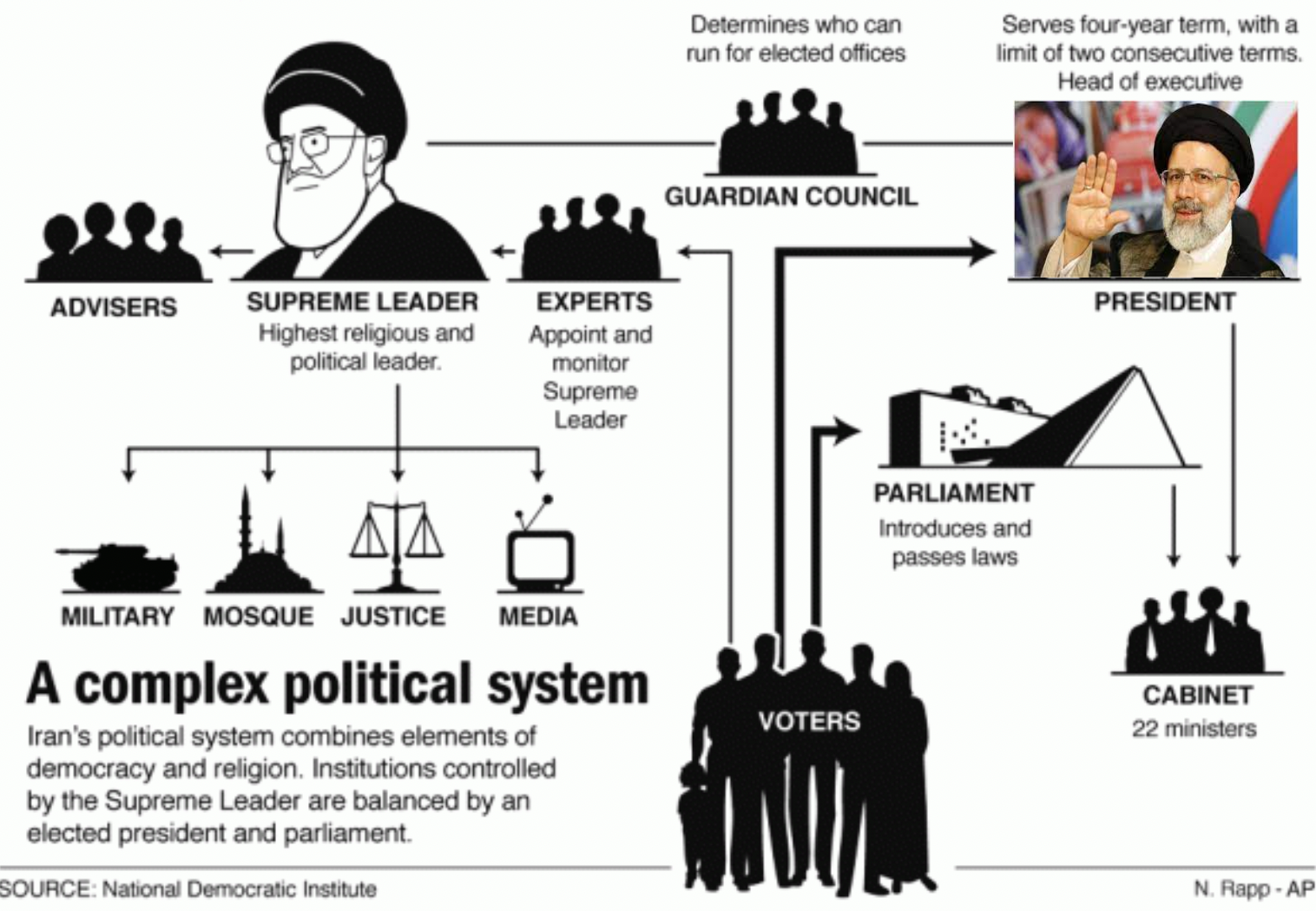
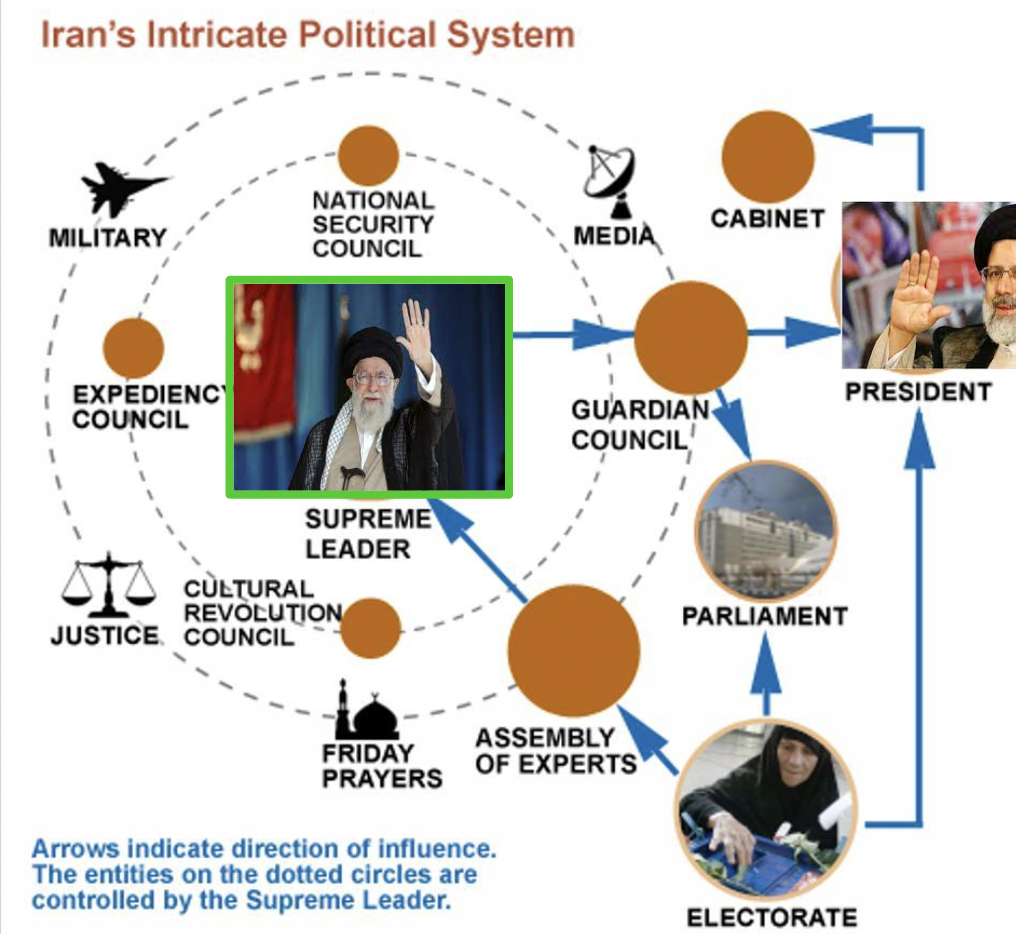
Executive | Supreme Leader:
Powers: limits presidential candidates, authority to overrule/dismiss president, command of armed forces, declaration of war and peace, issue national referenda, appoint head of judiciary, and appoint half of the members of the Guardian Council. |
|---|---|
President:
Powers: selecting the vice president and cabinet members, organizing budgets, signing treaties, laws, and agreements, appointing provincial governors and ambassadors. | |
Assembly of Experts:
| |
Expediency Council:
| |
Guardian Council:
Powers: change laws, investigate cabinet ministers, approve budgets, treaties and loans. | |
Legislative | Majlis:
|
Judiciary | Judiciary:
|
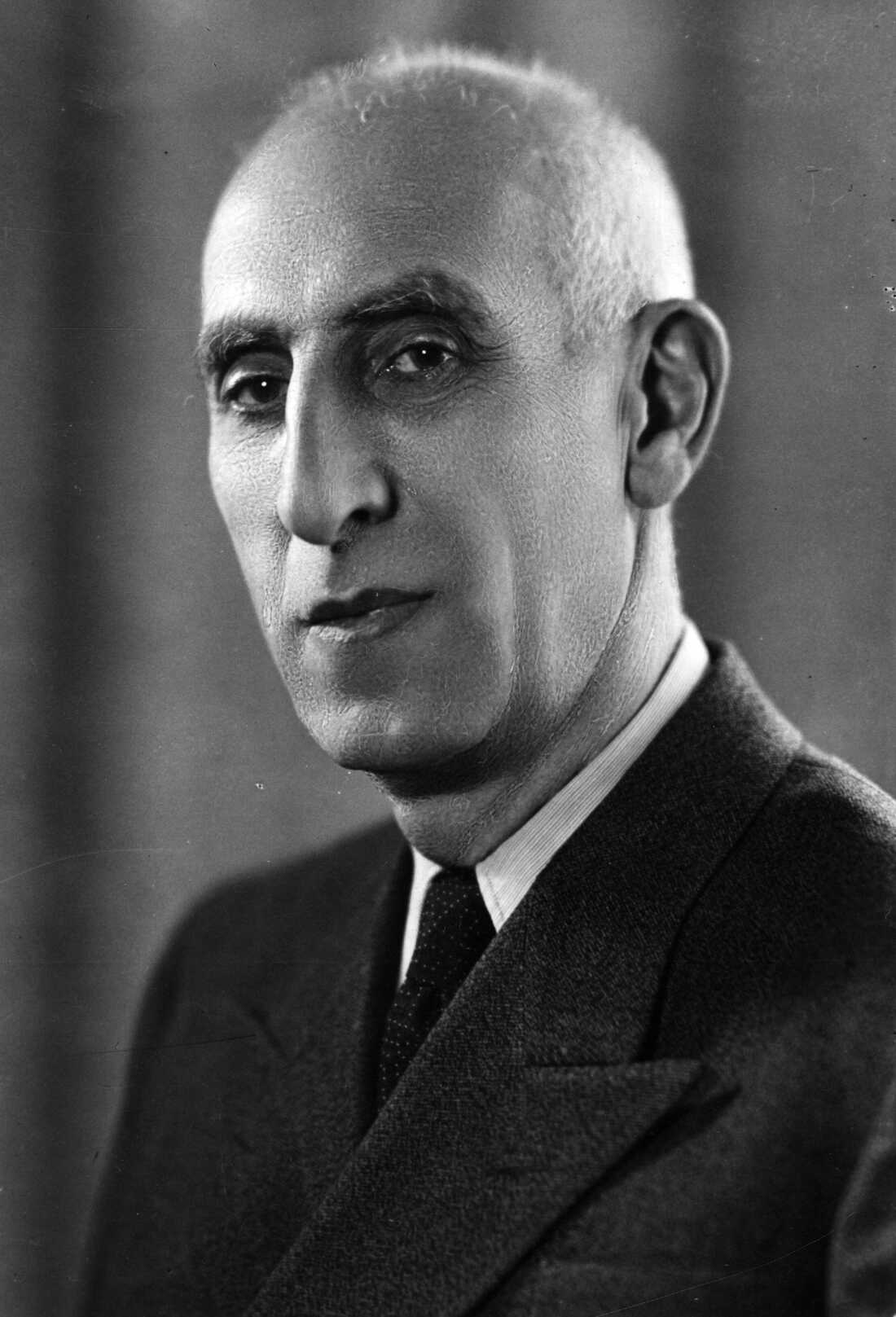
| MOHAMMAD MOSSADEGH | |
|---|---|---|
In office: 1951 - 1953 (Prime Minister) | ||
Remains a controversial figure in Iranian politics and is widely revered as a nationalist hero for his efforts to stand up to foreign powers and defend Iranian sovereignty. | ||
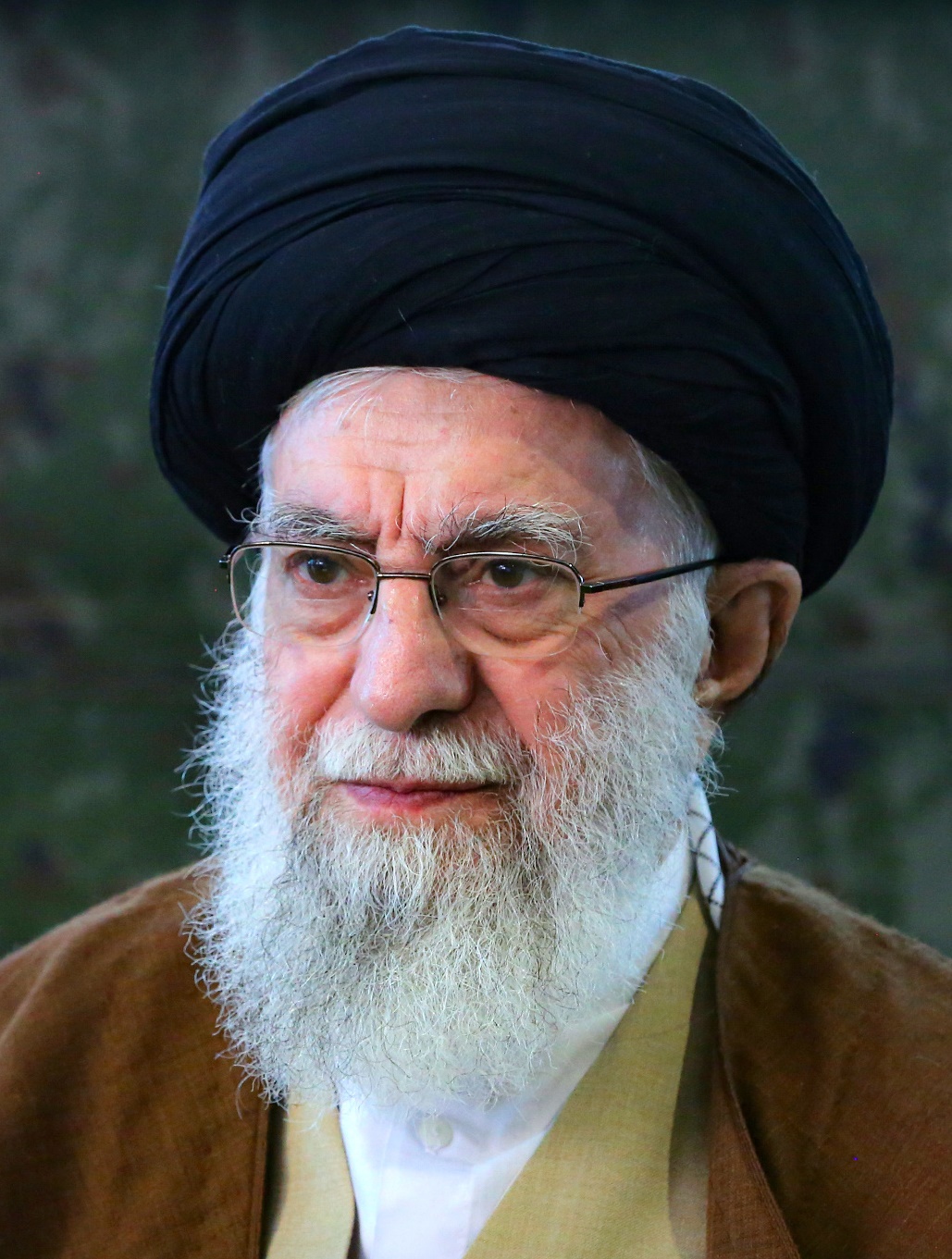
| AYATOLLAH ALI KHAMEINI | |
|---|---|---|
Present Supreme Leader of the Islamic Republic of Iran | In office: | |
| ||
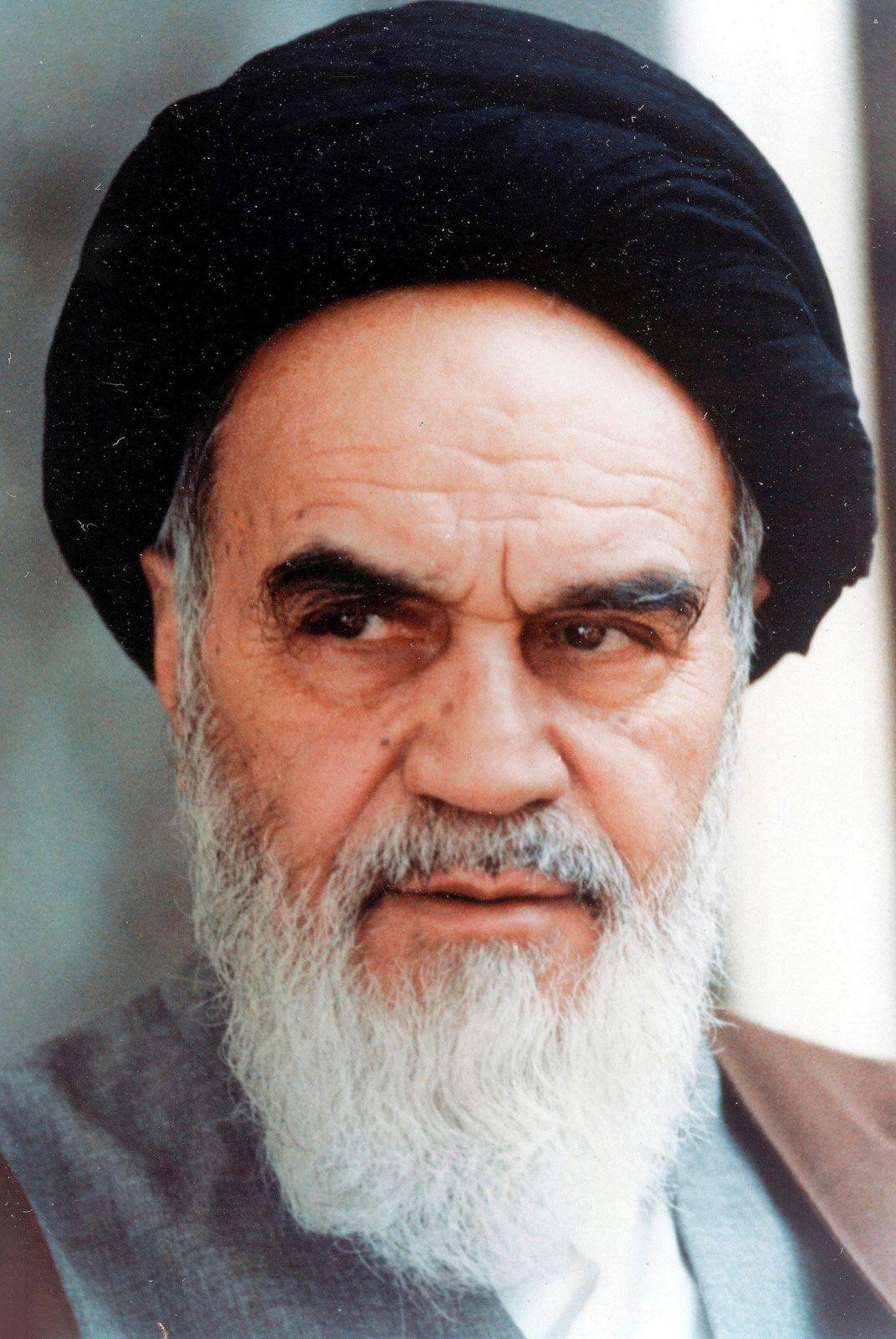
| AYATOLLAH KHOMEINI | |
|---|---|---|
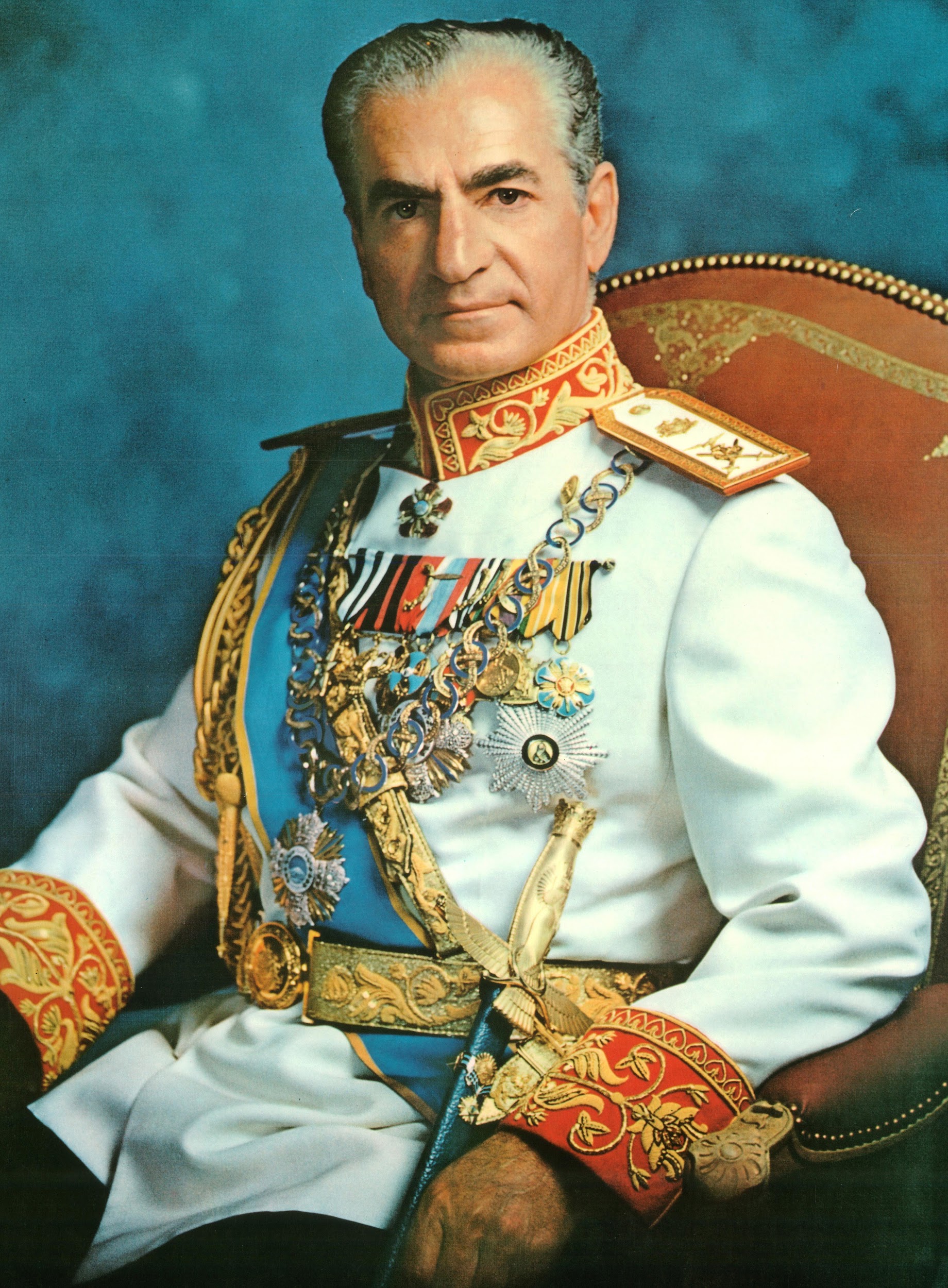
| MUHAMMAD REZA PAHLAVI (SHAH) | |
|---|---|---|
| ||
PART 3 SLIDES:
Civil society:
Civil society was suppressed under the Pahlavi dynasty
Most civic organizations were either absorbed into the state or outlawed
Under Khatami (1997 - 2005): loosening of freedom of speech and press
Under Ahmadinejad (2005 - 2013): newspapers shut down, books and websites were banned, peaceful protests were not tolerated
Protests & Demonstrations:
1999→ protests erupted in universities across the country because the government shut down a reformist newspaper
2002→ protests by students when the courts ruled a death sentence for a reformist academic Hashem Aghajari
2003→ student mass protests over privatization of university system
2006→ security forces attacked striking bus drivers in Tehran and arrested hundreds
→ police beat hundreds of citizens who assembled to commemorate International Women’s Day
2009 - 2010→ the Iranian Election Protests
People protested against the victory of President Mahmoud Ahmadinejad in the elections
Known as the Green Movement
In response, the government sent thousands of Revolutionary Guards to disperse crowds = violence
Society has been “vaccinated” against these “germs” - Ayatollah Khameini
Shooting of Neda Agha-Soltan
A philosophy student taking part in the 2009 election protests with her teacher was fatally shot in the chest.
Reportedly shot by a militiaman from the paramilitary organization
Her death was recorded and broadcast to the internet
Became a rallying point for the protesters
2022→ Mahsa Amini, a woman who opposed the mandatory hijab law, was killed in police custody which sparked a wave of protests nationwide.
Women & the Political System:
First allowed to be admitted into universities in 1937
Women were granted the right to vote in 1963
Iranian women have higher levels of education today than under the Shah
Women are able to run for seats in the Majlis (about 3%) but are constitutionally barred from running for presidency
Well represented in some areas in society (doctors and government employees)
Difficult for women to get hired - represent 33% of the labor force
Women must dress conservatively and cannot leave the country without the consent of male relatives
Occasional stoning of women for adultery, however the government recently issued a ban