Chapter 5: Algorithms and Programming Part 2
Programming
- Programs can be developed for creative expression, to satisfy personal curiosity, to create new knowledge, or to solve problems (to help people, organizations, or society).
- Advances in computing have generated and increased creativity in other fields.
Programs Can Be Flexible
- When it was targeted to a smaller, local audience simply to satisfy Zuckerberg’s personal curiosity and enjoyment, Facebook was held to much different standards in its development.
- When it was made for billions of people to use, changes had to be made to accommodate so many people and to target it toward a wide market of people that might use it—making it appealing to a wider audience.
Programming Design Steps
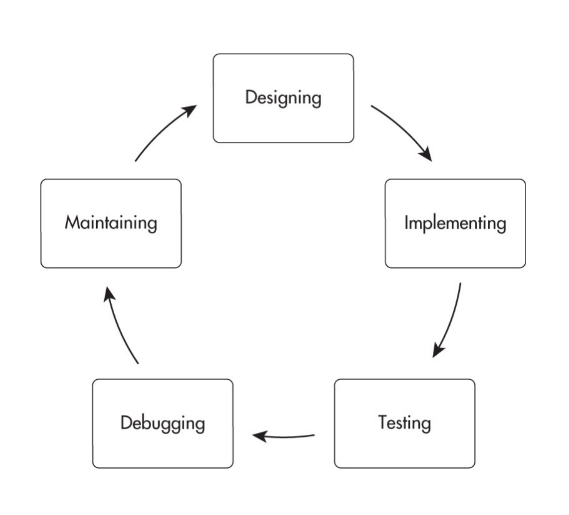
- The first step in programming is planning and identifying programmer and user concerns that can affect the solution.
- Consultation and communication with program users are important aspects of program development to solve problems.
- When designing a large program, an iterative process helps with correctly coding.
Program Documentation
- Program documentation is helpful in all stages of program development.
- Documentation does not slow down run speed and is necessary when collaborating or programming alone.
- Documentation is useful during initial program development and when modifications are made.
Flowcharts
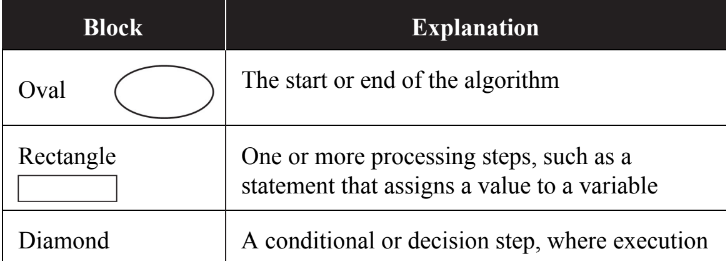
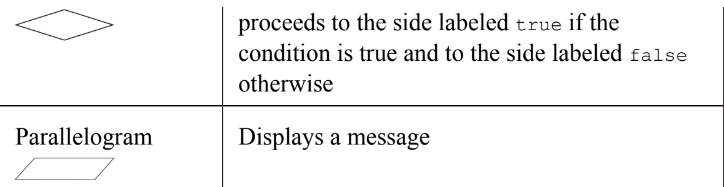
- A flowchart is a way to represent an algorithm visually.
LISTS
- Lists are an organized and formatted way of storing and retrieving data.
- Each element in a list can be accessed by its index.
Traversing a List
- Traversing a list means that you are accessing all the elements of the list one by one.
Procedures
- A procedure is a set of code that is referred to by name and can be called (invoked) at any point in a program simply by utilizing the procedure’s name.
- In some languages, a procedure could be called a method or subroutine.
- The purpose of the above procedure is to append all negative numbers in aList into bList.
- Line 3 iterates through aList.
- If the element in aList is less than 0, line 5 causes the element to be appended into bList.
- A call to keepPositive(aList, bList) where aList[2, −5, −11, 6] and bList[ ] would result in bList containing the numbers [−5, −11].