Lipids
Functions:
Stores long term energy
Makes up a cell membrane (phospholipids)
Insulation from the cold
Shock absorption
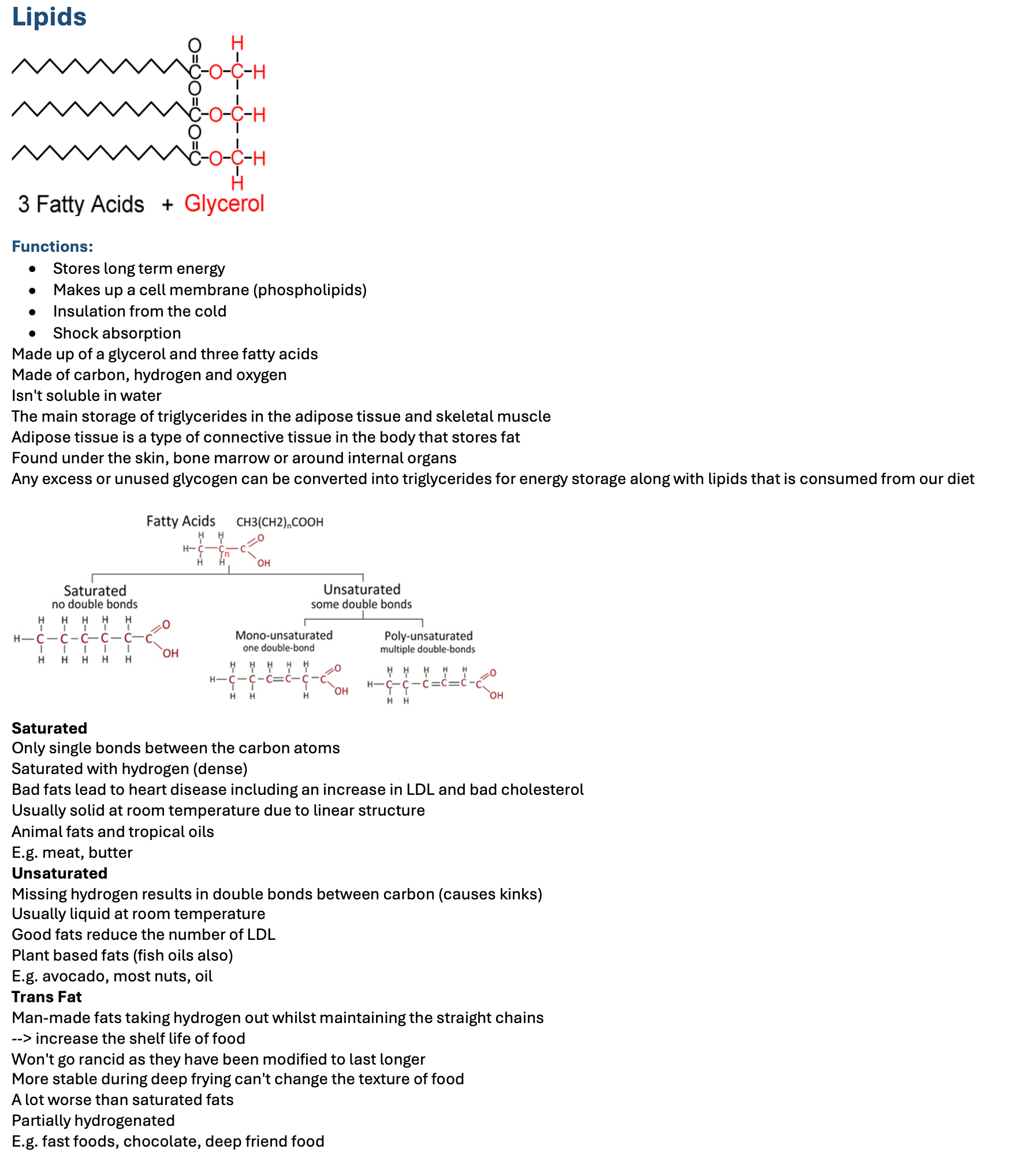
Made up of a glycerol and three fatty acids
Made of carbon, hydrogen and oxygen
Isn't soluble in water
The main storage of triglycerides in the adipose tissue and skeletal muscle
Adipose tissue is a type of connective tissue in the body that stores fat
Found under the skin, bone marrow or around internal organs
Any excess or unused glycogen can be converted into triglycerides for energy storage along with lipids that is consumed from our diet
Saturated
Only single bonds between the carbon atoms
Saturated with hydrogen (dense)
Bad fats lead to heart disease including an increase in LDL and bad cholesterol
Usually solid at room temperature due to linear structure
Animal fats and tropical oils
E.g. meat, butter
Unsaturated
Missing hydrogen results in double bonds between carbon (causes kinks)
Usually liquid at room temperature
Good fats reduce the number of LDL
Plant based fats (fish oils also)
E.g. avocado, most nuts, oil
Trans Fat
Man-made fats taking hydrogen out whilst maintaining the straight chains
--> increase the shelf life of food
Won't go rancid as they have been modified to last longer
More stable during deep frying can't change the texture of food
A lot worse than saturated fats
Partially hydrogenated
E.g. fast foods, chocolate, deep friend food