ENGLISH 1-3
ACADEMIC READING |
|---|
Writer/writing starts from reading
RECAP
Scan = searching for a specific term
Skim = glance
Intensive = reading for study/academic purposes
Extensive = reading for leisure
HOW DO WE PROCESS ACADEMIC TEXTS? |
|---|
Top-down - reading a material with schemata
Down-up - without schemata
Interactive - schemata are equal to the material
PSYCHOLOGICAL PROCESS OF READING |
|---|
Recognition of printed language symbols
Reader assigns meaning to symbols based on schemata
Fuses her schemata with the author’s ideas
Reader adjusts, modifies, applies, and constructs new knowledge
ACADEMIC VS NON ACADEMIC |
|---|
ACADEMIC | NON-ACADEMIC | |
|---|---|---|
Author | Same field of study Ex. art/science/english etc. | Writes as a profession Ex. graphic designer, doctor, etc. |
Purpose | Beyond informing (V-A-N: Validate Affirm Negate) (to advance that study) Ex. ai vs humans, research/critique paper | Public information Ex. memos, newspapers, letters, business paper |
Audience | Specific Audience | General Audience |
Vocabulary + Grammar | Uses technical language and jargon Ex. Open house, proportion, masking, etc. | Plain Language |
Organization and Flow of content | Structured format and Specialized knowledge Ex. Essays | Unpredictable patterns and general information Ex. Fiction, poetry |
ACADEMIC TEXT
Has a definite purpose
Is structured in a specific way to clearly communicate a message
Has an intended/specific audience.
WHY DO WE NEED TO READ ACADEMIC TEXT? (from recitation!) |
|---|
To enhance your brain
To be updated in your field
To get in-depth knowledge on specific topics
Understand different perspectives + prevent biases
To improve reading comprehension + build vocabulary
WHY DO WE NEED TO READ ACADEMIC TEXT? |
|---|
Retrieve data from reliable sources
Enrich an essay, report, or any written assignment with valuable information
Get ready for a presentation, seminar, or workshop
Broadens knowledge and immerse oneself in a myriad of perspectives
Know the best topic for thesis or dissertation
Prepare for an interview and for the academic writing process
ACADEMIC WRITING
Process; has a series of steps + takes time
Clear Purpose; validate, affirm, negate
Thinking
Special Knowledge; even if you read a lot of books, you’re not an expert! (you need to read books that are targeted on your topic)
REVIEW:
An academic article…
uses words typical to the field, targets a certain group of readers/audience (CANNOT BE UNDERSTOOD ACROSS DISCIPLINES)
may be edited by an author’s peers, can be written by professionals but CANNOT BE WRITTEN BY ANYONE W/O CREDENTIALS (because its not their expertise!)
employ formal language, follows a format BUT NOT SLANG LANGUAGE
list references, support its claims by citing experts + previous studies, MUST NOT BE HIGHLY OPINIONATED (must be objective + facts)
CHARACTERISTICS OF ACADEMIC TEXTS |
|---|
Begin with clear assumptions
Has the main idea and the argument
Summarize what the academic text is about
Not explicitly stated but IMPLIED
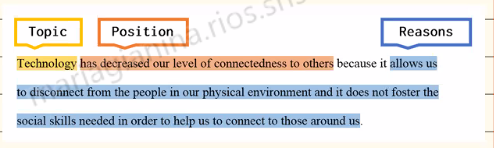
Rely on several sources
Backed up by evidence
Reliable sources (academic journals, textbooks, doc.edu websites)
Heavily researched
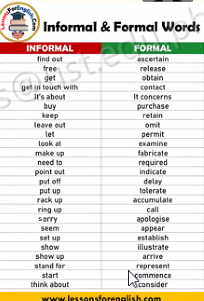
Use formal words
Use of single verbs only
End with Valid Conclusions
HOW TO ACHIEVE FORMALITY IN ACADEMIC WRITING? |
|---|
Modal Forms
Expanded modal forms + terms
Ex. Don’t = Do not
Single Verb
Ex. Looking into = examining
Phrasal verb = composed of the main verb and a proposition
Avoid colloquial, trite, and idiomatic expressions
Charot, Ewan q, erm, neways (shortcuts)
Using these can lead to misinterpretations
Use more formal negative forms
The study did not observe multiple strains
Not many - few; Not much - little; Not - No
Be careful when using direct quotations
Avoid plagiarism
May sound too credible (too reliant)
Quote only when necessary
Place Adverbs within the verb phrase
This model was ORIGINALLY developed by Calvin in 2024.
Consider whether you should split infinitives
May result to different interpretation in the sentence
Infinitives =
Working from home allowed employees to easily save money and time.
Working from home allowed employees to save money and time easily.
Aim for efficient use of words
It may be difficult to make a decision DECIDE about blabla.
Be concise, straightforward
Limit the use of all-purpose expressions
And the like, among others, etc, many more
Avoid using 1st and 2nd person pronouns
May sound informal + subjective (biased)
WORKING BIBLIOGRAPHY VS ANNOTATED BIBLIOGRAPHY
ANNOTATED
Once you’re done?
Created for the reader
Provides the source material
Longer, way more comprehensive
FOUR QUESTIONS TO ASK ON REFERENCING
Has it been presented formally into the public domain in some way?
Public domain - not protected by intellectual property, free for everyone to use, no one owns it
Has it been presented publicly in a tangible form? (printed material, internet, public lecture, public performance)
Cite from professors/teachers
Does someone or an organization have ownership of it?
Is the information presented in the source in question or outside common knowledge?
We don’t need to cite if it's common knowledge
Common knowledge - commonly known by people, common sense, ideas present in large sources, no one can claim ownership to this idea due to its “commonness”
Earth is NOT flat
Philippines is an archipelago
Oxygen is essential
CONCEPT PAPER
Describing an idea to propose
Before a full proposal; not detailed yet
Provides a framework/overview of how it can be implemented
Must give a clear picture of the research/project/feasibility study is all about
Clarifies the purpose/processes need to carry it out
Product
Program
Service
Software
Policies
Prelude to a full paper; seeks approval/funding
Summary of what you’re proposing + importance + process
CONCEPT PAPER IN ACADEME
May come in a form of a research proposal
Done before a full blown research paper is implemented/approved for funding
Follows a format and may differ depending on target audience
Target readers - Research teacher
PURPOSES
Stipulates meaning by limiting, extending, redirecting the reference
Defining some terms based on the context of your research
EXPLAINING A CONCEPT
Definition - what is it?
Clarifies the meaning of a word/concept
Limits the scope of that particular word/concept
Paragraph development that answers; what is it?
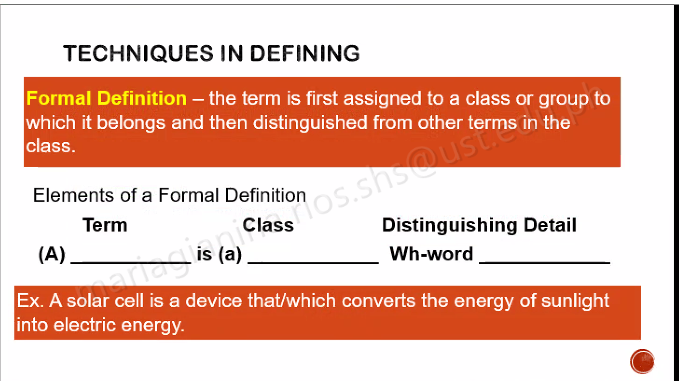
Formal Definition
Assigned to a class/group which it belongs
Distinguished from other terms in the class
Most basic:
A solar cellis a device which/that converts…
^ term, class, distinguishing detail
Extended Definition
For abstract concepts, broaden definition through analogy, examples, characteristics, components, historical account, something else