AP psychology
AP psychology
Biological bases of behavior
- Prenology:
- 1800- Franz Gall suggested bumps in the skull represented mental abilities (shape of brain)
- Incorrect theory
- Thinking brain works like a muscle
- Biological psych:
- Links between biology and behavior
- We are a biopsychological system
- Humans and animals operate similarly when processing information
- The neuron:
- Based on electrical impulses
- Same features as other cells
- Nucleus
- Cytoplasm
- Cell membrane
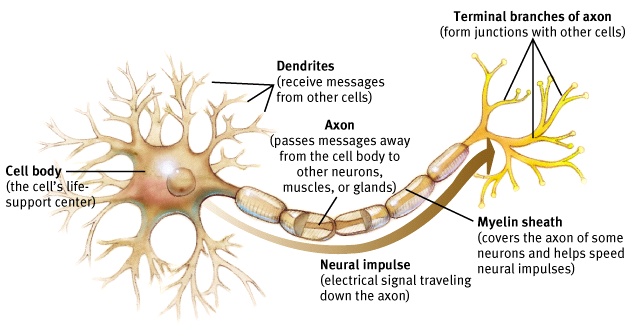
- Cell body: soma
- Dendrites: receive messages from other neurons
- Axon: send messages to other neurons, muscles, glands
- Axon terminal branches/buttons: where messages are sent out
- Myelin sheath: fatty substance that covers to speed up neurotransmission, insulates
- Dendrite –> axon
- Glial cells: create myelin sheath, remove waste in brain, insulate and support neurons
- Schwann: insulate neurons
- Astrocytes: provide nutrition to neurons
- Oligodendrocytes: insulate neurons
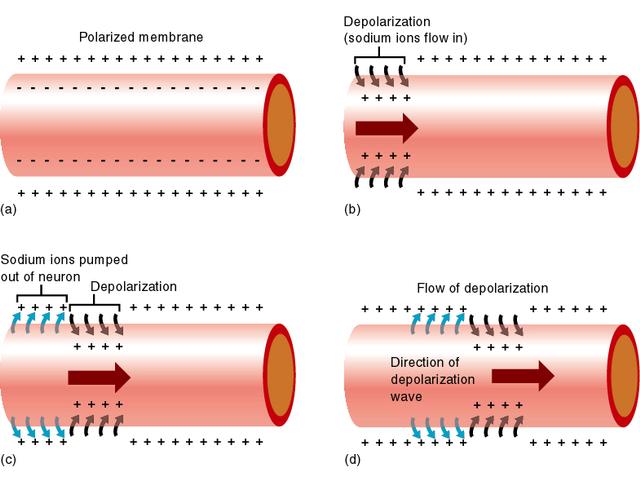
- Membrane is depolarizing
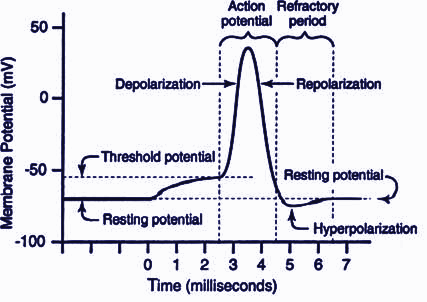
- Resting potential: neuron is not transmitting info, its resting
- Outside is positive
- Inside is negative
- Action potential
- Neural impulse
- Brief electrical charge that travels down the axon
- Caused by movement of positively charged ions
- Sodium potassium pumps:
- Pump positive ions out from the inside of the neuron
- Kicks ions back on
- Makes ready for an action potential
- All or none response: when depolarizing current exceeds the firing threshold/absolute threshold, a neuron will fire
- Axons surface is selectively permeable - things can travel through
- Action potential properties:
- When depolarizing current exceeds the firing/absolute threshold the neuron will fire
- If threshold fails, neuron will not fire
- Intensity of action potential: of an action potential remains the same throughout the length of the axon.
- Refractory Period: After a neuron fires an action potential it pauses for a short period to recharge itself to fire again.
- resting potential : how polarized it is in resting state
- action potential: peak
- Know how to label graph
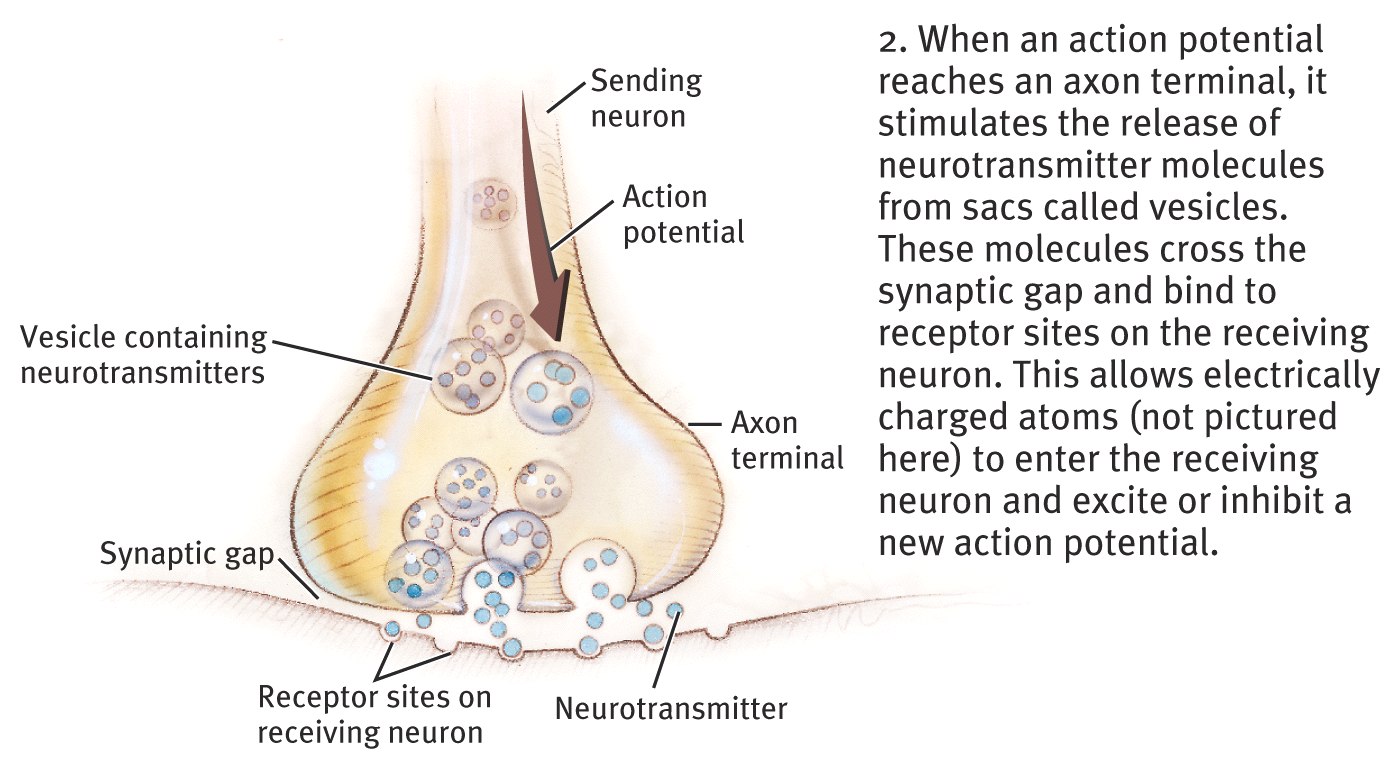
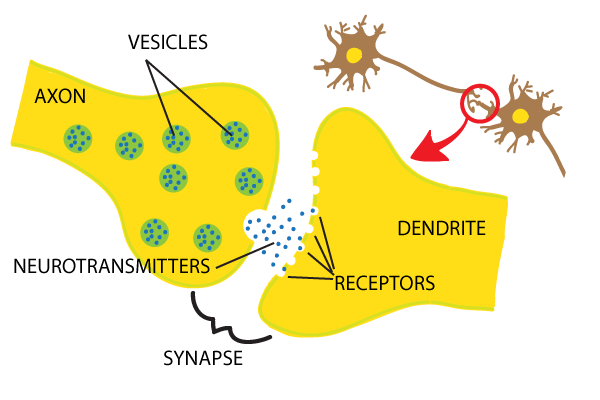
- Synapse: junction between axon tip of a sending neuron & dendrite/cell body of receiving neuron
- The gap is called the synaptic cleft
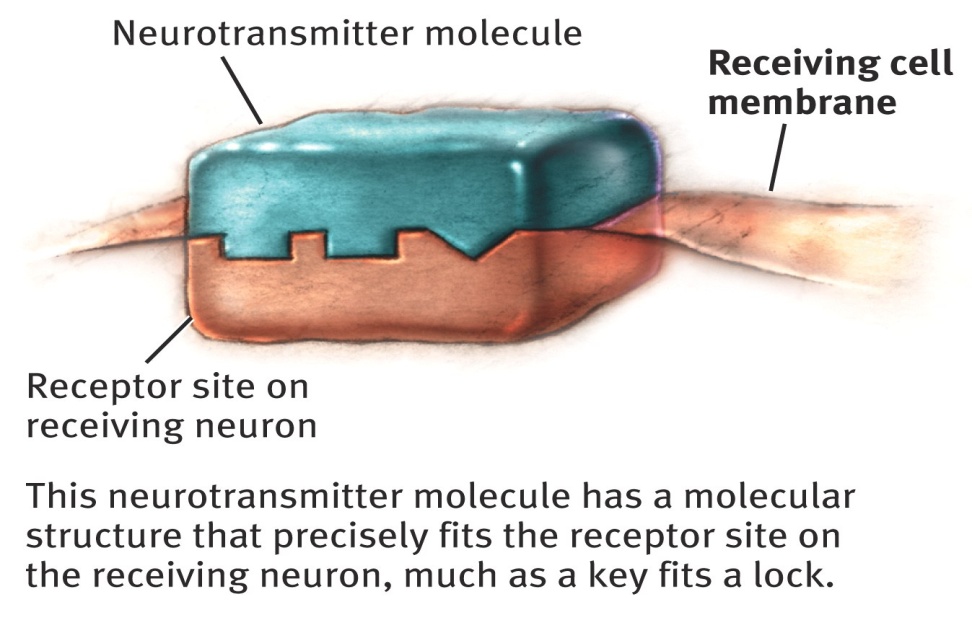
- Neurotransmitters: chemicals released from the sending neuron that travels across the synapse and bind to receptor sites on the receiving neuron
- How neurons communicate
- Live in vesicles
- Reuptake: neurotransmitters in synapse are reabsorbed into the sending neurons (presynaptic membrane)
- Involved in refractory period
Steps:
- action potential causes vesicles to open
- Neurotransmitter released into synapse
- Locks onto receptor molecule in the postsynaptic membrane
- Neurotransmitter reuptake in vesicles
- Lock & key
2 categories of neurotransmitters
- Excitatory: fire
- Key fits and opens receiving neuron –> leads to firing
- Causes depolarization of membrane and orimites action potential in receiving neuron
- Inhibitory: don’t fire
- Activation of receptor leads to hyperpolarization and stops action potential
Know what a neurotransmitter is and what happens if you have too much or too little
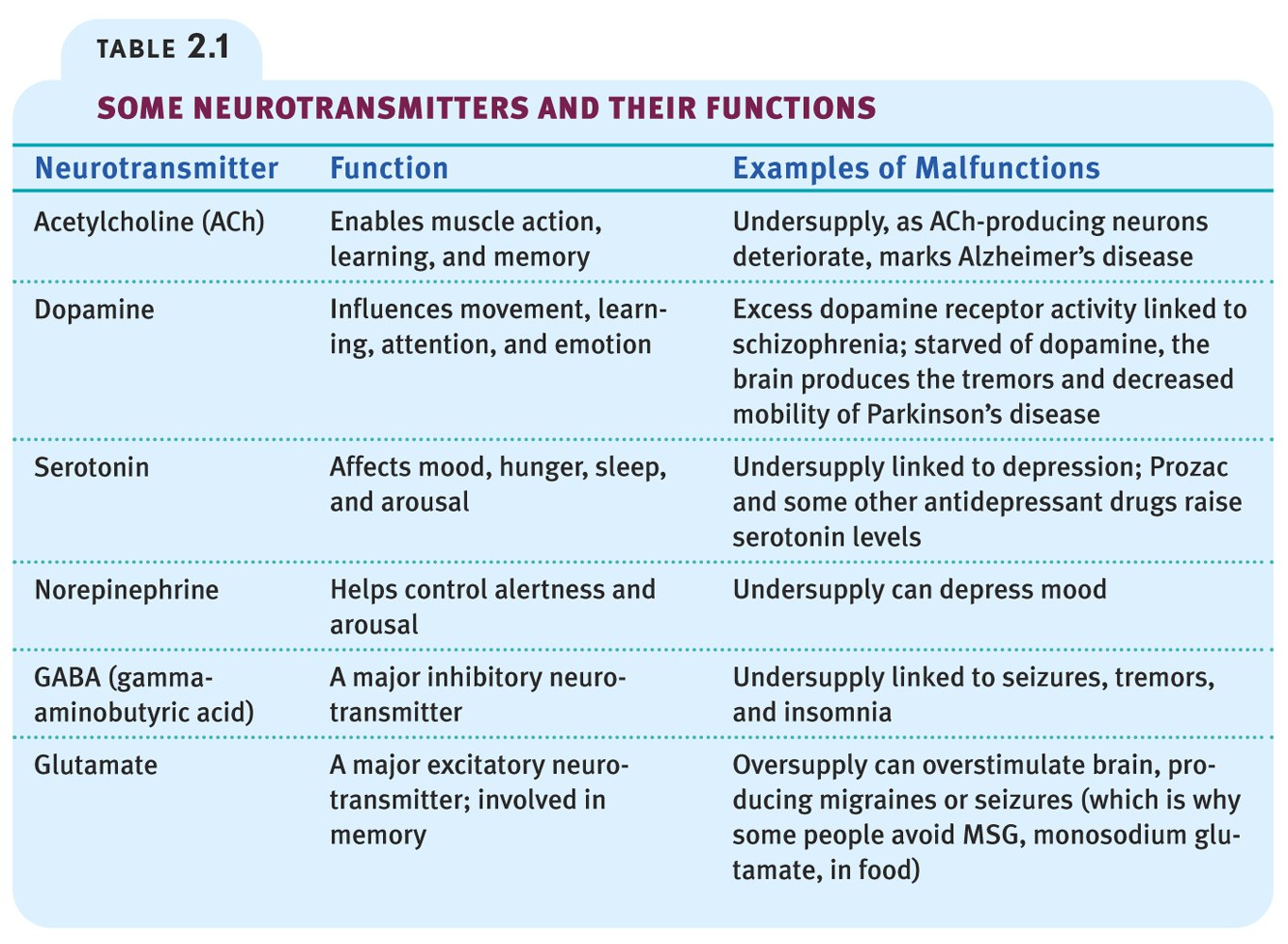
- Major neurotransmitter:
- Acetylcholine:
- Excitatory
- Function: motor movement & memory
- Undersupply: alzheimers, paralysis
- Dopamine:
- Excitatory & inhibitory
- Function: motor movement, alertness, pleasure
- Undersupply: parkinson's disease
- Oversupply: schizophrenia
- Gaba:
- Most common inhibitory neurotransmitter (tells to stop)
- Undersupply: huntington’s disease, anxiety, insomnia, epilepsy
- Glutamate:
- Most common excitatory neurotransmitter
- Memory
- Oversupply: ALS, migraines, seizures
- Endorphins:
- Inhibitory
- Alleviate pain
- Similar to opioids
- Undersupply: chronic pain disorders
- Serotonin:
- Inhibitory
- Sleep, mood, appetite, sensory
- Undersupply: depression
- Oversupply: anxiety, limits depression
- Substance P
- P is pain
- Responsible for sending pain messages
- Norepinephrine:
- Excitatory
- Alertness & arousal
- Hormone
- Undersupply: depression
SSRI
Selective serotonin reuptake inhibitors
- Boots serotonin connections by blocking reuptake of serotonin
- mirror neurons:
- Fire when someone else does something
- Nervous and endocrine system
- central nervous system: brain and spinal cord
- peripheral nervous system: autonomic & simatic
- Nerves:
- Bundles of axons together
- peripheral nervous system
- Connect CNS to muscles, sense organs, glands
- Sensory (afferent) neurons
- Input from sensory organs to the brain & spinal cord
- Motor (efferent) neurons
- Output from brain and spinal cord to muscles and clans
- Effector cells
- Respond to stimuli at end of neuron
- Interneurons
- Carry info between brain and spinal cord
- SAME
- Sensory afferent motor efferent
- autonomic nervous system:
- Involuntary
- Regulates functions of internal organs
- Regulates involuntary responses
- Ex: heart beat
- Somatic nervous system
- Voluntary
- Connects brain to motor neurons
- Were in control of this system
- sympathetic nervous system
- fight or flight
- CNS
- Brain
- Sensation
- Movement
- Info processing
- Spinal cord
- Reflexes
- communication between brain and peripheral nervous system
- Endocrine system:
- Body's slow chemical communication system
- Communication carried out by hormones
- Hormones -slow in blood
- Neurotransmitters- fast in the synapse
- Hormones
- Mood
- Metabolism
- Energy
- Muscles
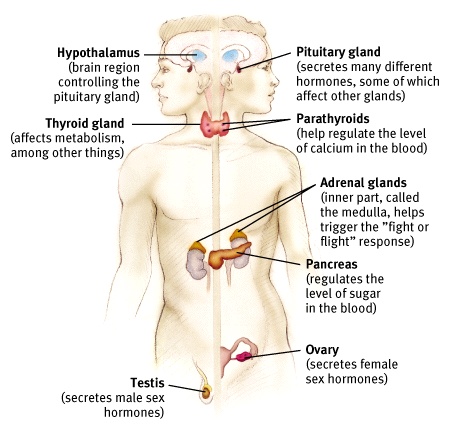
- endocrine system:
- Hypothalamus:
- controls pituitary gland
- Thyroid gland:
- metabolism
- pituitary gland:
- secretes hormones,
- master gland
- Controlled by hypothalamus
- parathyroid glands:
- regulate level of calcium in blood
- Adrenal glands:
- fight or flight
- Pancreas:
- blood sugar
- Ovaries & testes:
- sex hormones
- Quiz up to endocrine/hormones
- Everything before
- Neuron and parts and functions
- neurotransmitters
The Brain:
- Lesion: where you experimentally destroy brain tissue (in animals) to study behavior
- Autopsy: post-mortem study of brain to compare changes
- Clinical observation: watching people & their behavior
Ways to view the brain:
- EEG: electrodes are put on ones scalp
- Tells about brain activity
- CT scan: a series of x rays
- Structural
- PET scan: tells function of brain by inserting radioactive glucose
- MRI: uses magnetic fields and radio waves to make an image
- Structural
- fMRI: reveals brain functioning
Hindbrain:
- Brainstem: oldest part of brain, where spinal cord enters skull
- Medulla: basic functioning and reflexes
- Pons: sleep & wake cycle
- Reticular formation: alertness & attention
- Cerebellum: balance, movement, learning
- Thalamus: sensory except smell
Limbic System:
- Hippocampus
- Formation of memories
- Damage to it → alzeimers
- ex) HM
- Had hippocampus removed due to seizures
- Lost memory and couldn't make new memories
- Amygdala
- Emotions of fear and aggression
- Decision making
- Hypothalamus
- Below thalamus
- 4 Fs
- Fight
- Flight
- Feeding
- Fornicating
- Controls endocrine system
- Body temperature
- Melatonin release
- Ventromedial hypothalamus (VMH)
- Suppress hunger
- lateral hypothalamus
- Increases hunger
- Associated with emotions, aggression, sex drive, memory
Reward Center
- Reward deficiency syndrome: people are genetically predisposed to crave whatever provides missing pleasure. `
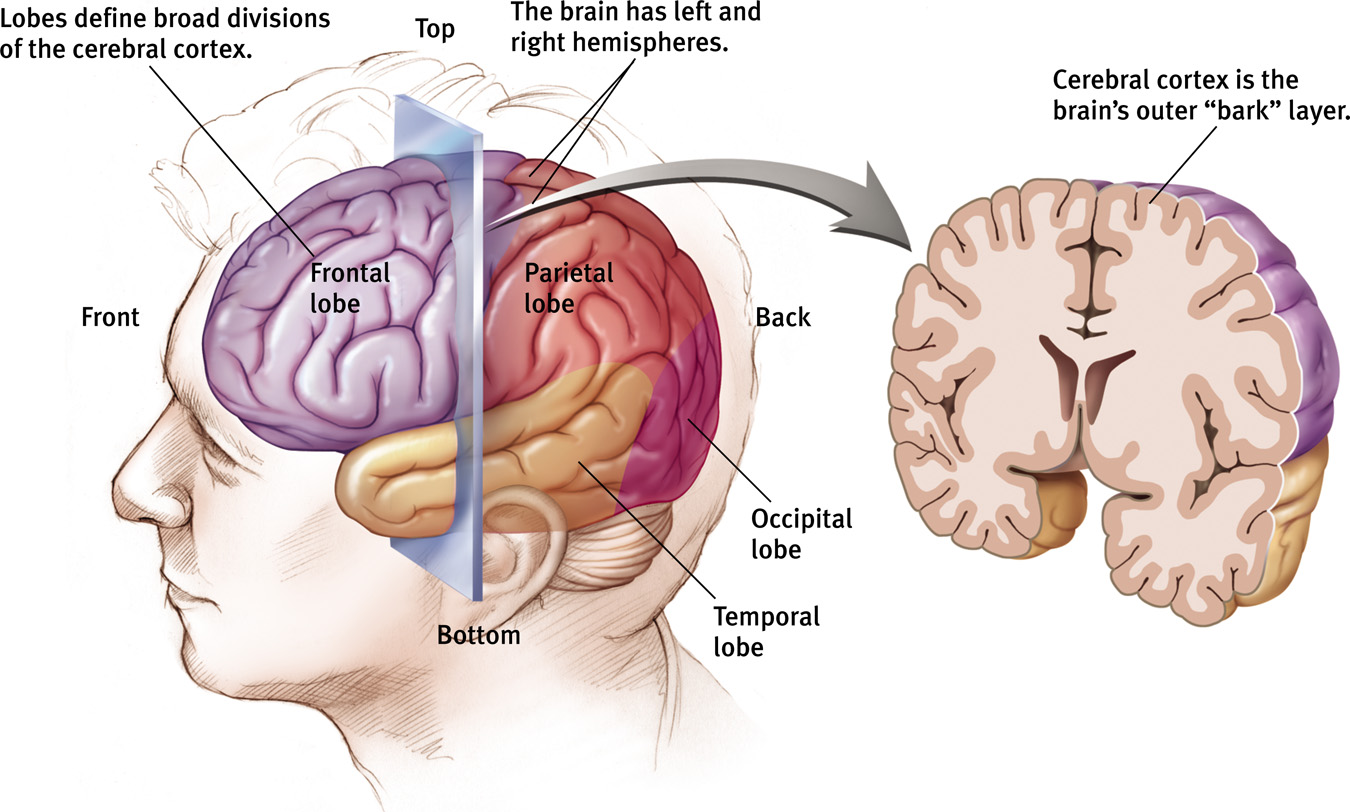
Cerebral Cortex
- Interconnected neural cells that cover cerebral hemispheres
- Control & info processing center
- Frontal lobe
- Decision making
- Planning
- Movement
- Parietal lobes
- Sensory cortex
- Touch
- Taste
- occipital lobe
- Visual
- temporal lobe
- Auditory
- Facial recognition
- Smell
- Motor cortex:
- Controls voluntary movements
- Somatosensory cortex:
- Registers body sensations, touch, temperature, pain
The Brain
- Plasticity- brain's ability to modify itself after injury/illness
- Neurogenesis- formation of new neurons in adulthood (from sleep, exercise, non-stress environment) stem cells
- Long term potentiation- the more you use a neural pathway the stronger it becomes
- Neural networks- interconnected neural cells
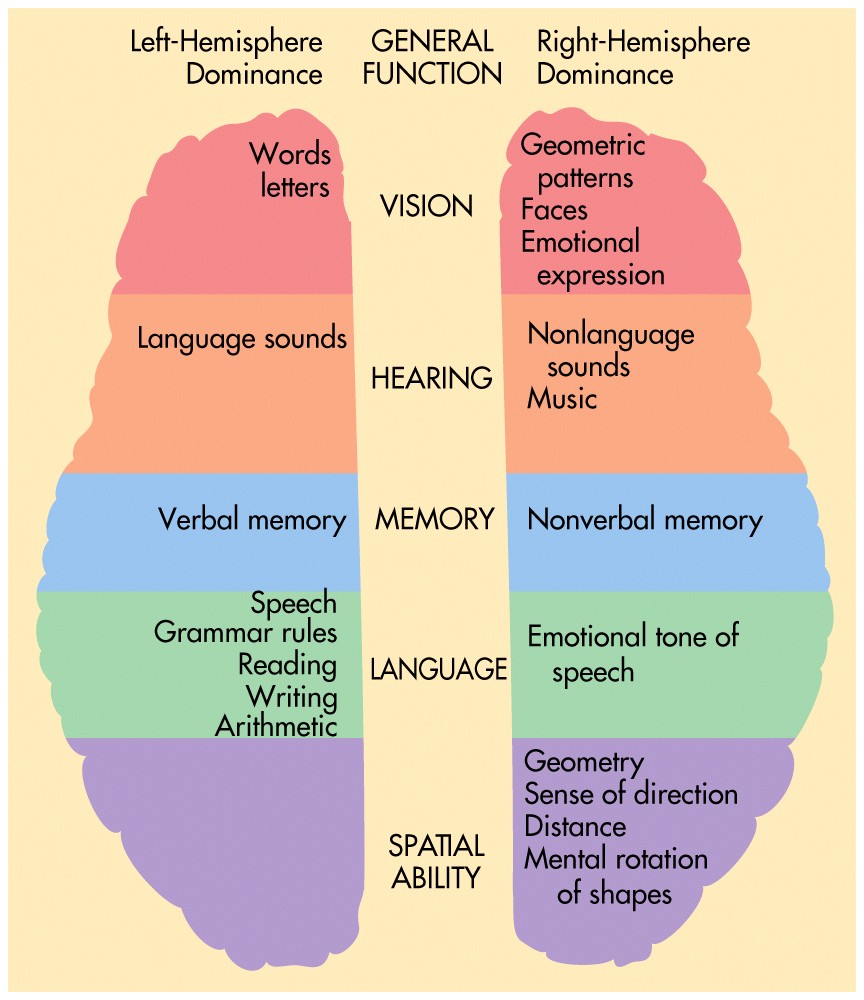
- Splitting the brain- a procedure where 2 brain hemispheres are separated by cutting corpus callosum
- Nature v nurture
- Chromosomes: contain genes
- Human genome: common human dna sequence
- Genotype: genetic info
- Phenotype: physical traits
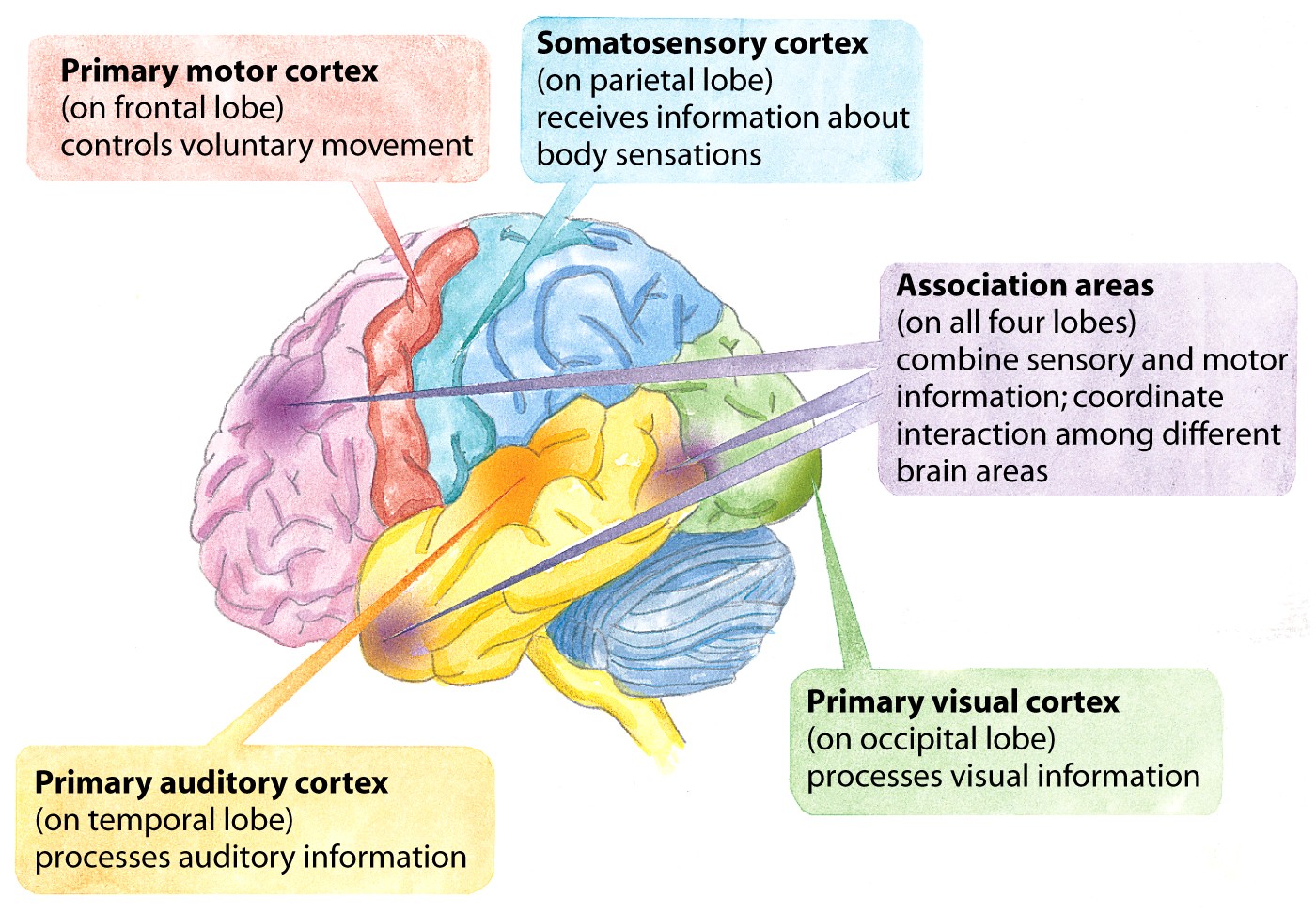
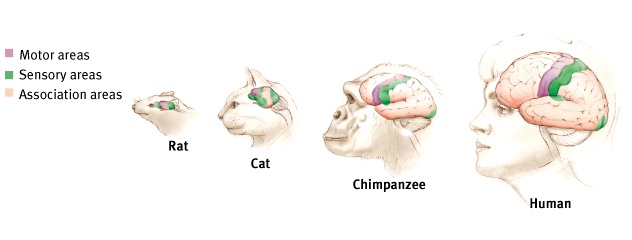
Association areas
- Areas of cerebral cortex not involved in primary motor or sensory functions
- Higher mental functions
Language:
- Aphasia: impairment of language
- Caused by damage to left hemisphere
- Wernicke's area: impaired understanding
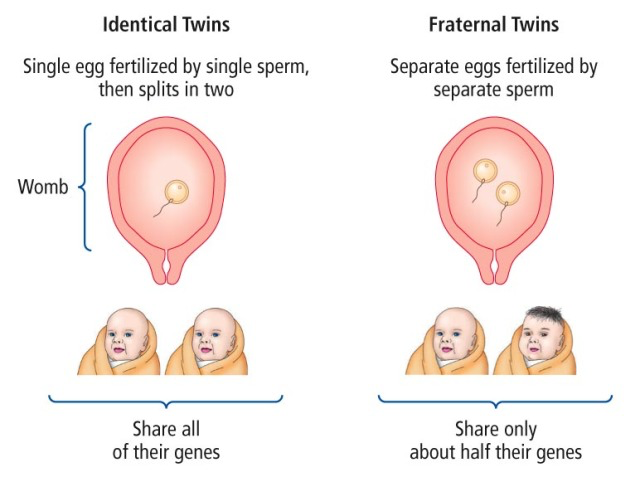
Twin & Adoption Studies:
- Molecular genetics:
- How specific genes influence behavior
- Heritability:
- Population of variation among individuals that can be attributed to genes
- Varies for traits
- Heritability estimates only reflect what causes variation in traits.
- Estimates the sources of differences among people
- Not inherited
- Epigenetics: how the environment triggers gene expression
- Epigenetic marker: organic methyl which if attached to dna, proteins will not be encoded
- Either says make protein or stop making it
Sleep & dreaming
- Stages of sleep:
- 1: nonREM
- Light sleep
- hallucinations
- 2: nonREM
- Sleep spindles
- Largest amount of sleep
- 3&4: nonREM
- Deep sleep
- 5: REM = rapid eye movement
- Active brain
- Elevated heart rate & blood pressure
- Body is paralyzed
- Sympathetic NS action
- Dreaming
- Rem deprivation → rem rebound
- Micro sleep:
- Tiny second long sleeps
- Circadian rhythms:
- Internal biological clock
- Governs sleep and wake cycle
- Influences pineal gland (secretes melatonin)
- circadian rhythm: biological clock
- Insomnia: increases ghrelin and cortisol
- Dream theories