wgu s5: nervous system/brain
purpose games
cranial nerves
brain anatomy
eye anatomy'ear
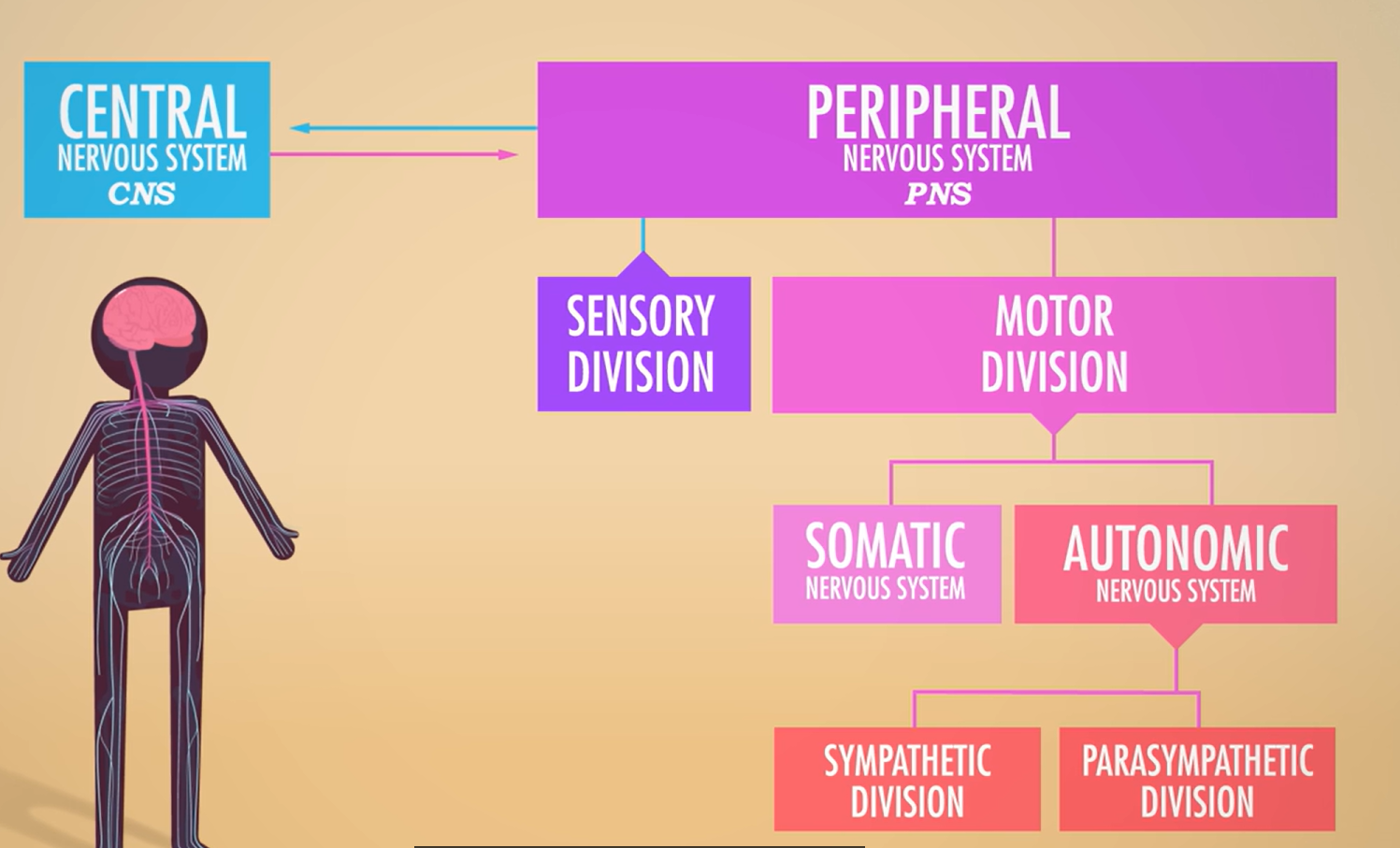
the somatic nervous system controls all voluntary movements in skeletal muscles
the enteric nervous system controls digestive tract
Medulla oblongata controls vital involuntary functions in the body
PONS bridges the nervous system together
White matter - axons
grey matter - synapses
Somatostatin - a neurotransmitter/hormone inhibits other hormones or neurotransmitters
Glial cells
Astrocytes are the most abundant glial cells, found in the central nervous system
Microglial cells are kind of thorny and also found in the CNS are your main defense against any invaders
Ependymal cells line the barriers of the brain and spinal cord and are what make and manage cerebrospinal fluid(CSF)
Oligodendrocytes… insulation/make myelin
Cranial nerves (sensory or motor or both)
1. Olfactory nerve S
2. Optic nerve S
3. Oculomotor nerve - controls 4 of 6 eye muscles M
4. Trochlear nerve - controls a single eye muscle(looking down) M
5. Trigeminal nerve - Largest, control face and jaw muscles B
6. Abducens - controls eye muscle looking side to side M
7. Facial nerve - makes facial expressions possible B
8. Auditory nerve S
9. Glossopharyngeal nerve - tongue B
10. Vagus nerve - heart and digestive tract B
11. Spinal accessory nerve - head and shoulder movement M
12. Hypoglossal - swallow and talk M
back-to-front
brainstem
cerebellum
diencephalon
cerebrum
Thalamus:
Acts as a relay station. It sends most sensory information (touch, pain, temperature, etc.) to the correct parts of the cerebrum.
Hypothalamus:
Maintains homeostasis. It controls things like body temperature, hunger, thirst, and hormone release.
Epithalamus:
Part of the diencephalon that helps regulate sleep cycles and connects parts of the limbic system.
Pineal gland:
Produces the hormone melatonin, which helps control the sleep–wake cycle.
Pituitary gland:
Known as the “master gland.” It releases hormones that control other endocrine glands in the body.
carotid arteries and vertebral arteries. are the ones that supply the brain
Limbic system - emotional system
a nerve is just a bundle of axons
glucose is the only source of brain energy
Choroid plexus produces cerebrospinal fluid
gap junctions are never in skeletal muscle
The meninges are three protective layers of tissue that cover and protect the brain and spinal cord. The three layers are the dura mater, arachnoid mater, and pia mater(DAP)
Eye ANATOMY is made of three layers
Fibrous
Sclera(back) - provides attachment for eye muscles
Cornea(avascular)
Vascular
Choroid(back)
Ciliary body - ring of muscle tissue that surrounds the lens
Iris - the colored part of your eye(made of smooth muscle) that contracts and expands to dilate or protect the pupil
Pupil
Lens - projects light onto the retina
Inner
Retina = nervous tissue responsible for photoreception
Photoreceptors
rods - color vision
cones - night vision and motion detection
TASTE
• Filiform papillae – most common; help with texture and movement of food (no taste buds)
• Fungiform papillae – mushroom-shaped
• Circumvallate papillae – large papillae at the back of the tongue
• Foliate papillae – folds on the sides of the tongue
EAR
External ear
Oracle/Pinna is the outermost and visible part of the ear that’s job is to catch sounds
Auditory canal
Eardrum (aka tympanic membrane)- catches those sound waves and vibrates
Middle ear
tympanic cavity - amplifies those waves - swings back and forth based on frequency and volume
Malleus(HAMMER)
incus(ANVIL)
stapes(STIRRUP)
oval window - separates mid and inner ear
Inner ear(labyrinth)
Cochlea
basilar membrane
hair cells - contain the mechanically gated potassium channels
organ of corti - contains the sensory cells that transduce sound vibration into electrical signals
Semicircular canals - balance and equilibrium
Vestibular apparatus - series of sacs and canals responsible for sensing movement and position of head
Myelin in the CNS - oligodendrocytes
Myelin in the PNS - Schwann cells
Microglia - CNS immune cells
Ependymal cells - make cerebrospinalfluid
Astrocytes are just glial cells
OLFACTORY (in temporal lobe)
Nerve fibers > nerves > bulb > tract