Inheritance
Key definitions
A genome is the entire DNA of an organism
A gene is a short section of DNA that codes for a particular sequence of amino acids, which form different types of proteins
Alleles are different forms of genes which give rise to differences in inherited characteristics. Humans have 2 alleles for each gene, one for each parent.
Phenotype refers to the physical/observable characteristics of an individual
Genotype refers to the combinations of alleles that control a certain characteristic.
Alleles can be dominant or recessive:
- A dominant allele only needs to be inherited from one parent to be seen in the phenotype (upper case letter)
- A recessive allele needs to be inherited from both parents to show up in the phenotype (lower case letter)
- Codominance is when neither allele is dominant over the other, so both show up in the phenotype, e.g. a black chicken and white chicken have speckled offspring, so they are codominant.
Homozygous is when both inherited alleles are identical for a particular characteristic
Heterozygous is when both alleles are different for a particular characteristic
In the nucleus of a cell, the DNA double helix supercoils to form structures called chromosomes, on which genes are located. Human cells contain 23 pairs of chromosomes. (one pair from each parent)
DNA structure
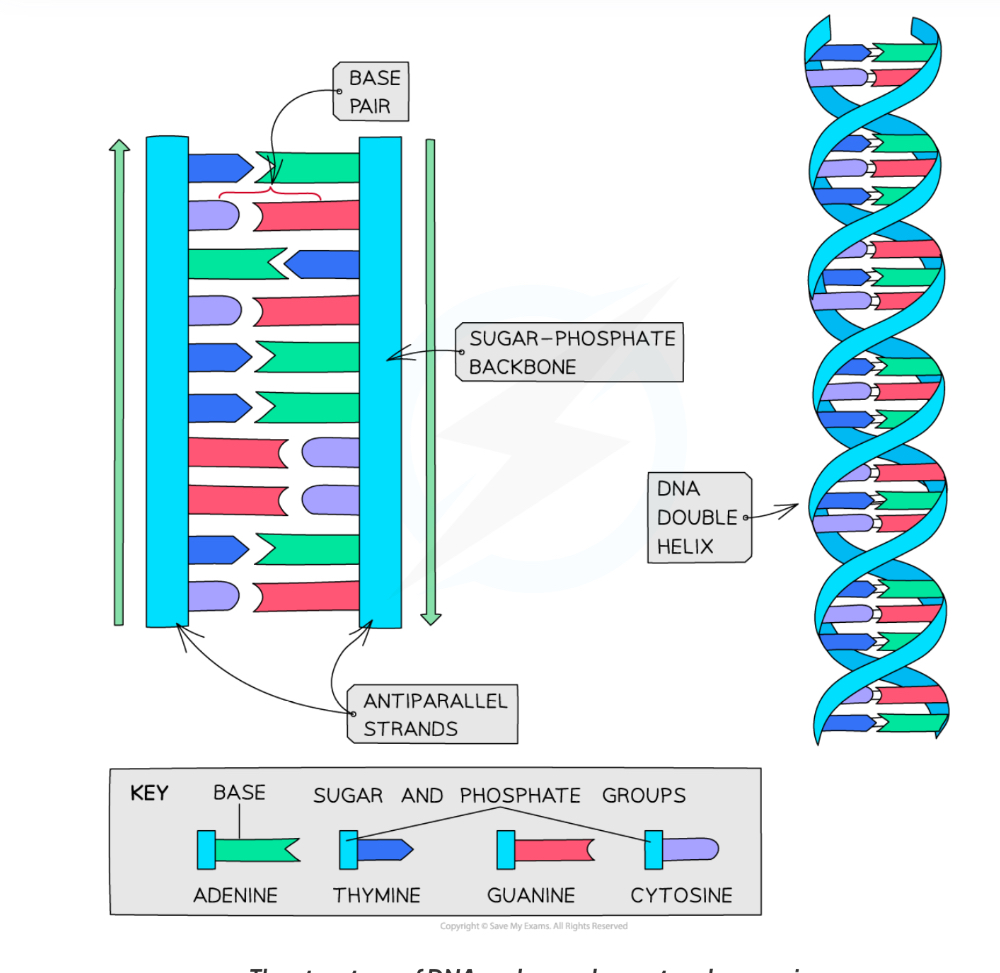
DNA is a polymer. Each molecule of DNA is two strands coiled to form a double helix. The strands are formed from a sugar phosphate backbone, with bases joined together in complementary pairs:
- Adenine(A) with Thymine(T)
- Cytosine(C) with Guanine(G)
Genetic inheritance
Most characteristics and phenotypic features are the result of polygenic inheritance rather than single genes. This means that they are controlled by more than one gene, and are a result of multiple genes interacting. E.g. eye colour. Brown eyes are dominant to blue, however not everyone has only brown or blue eyes, there are several other phenotypes such as green or hazel eyes.
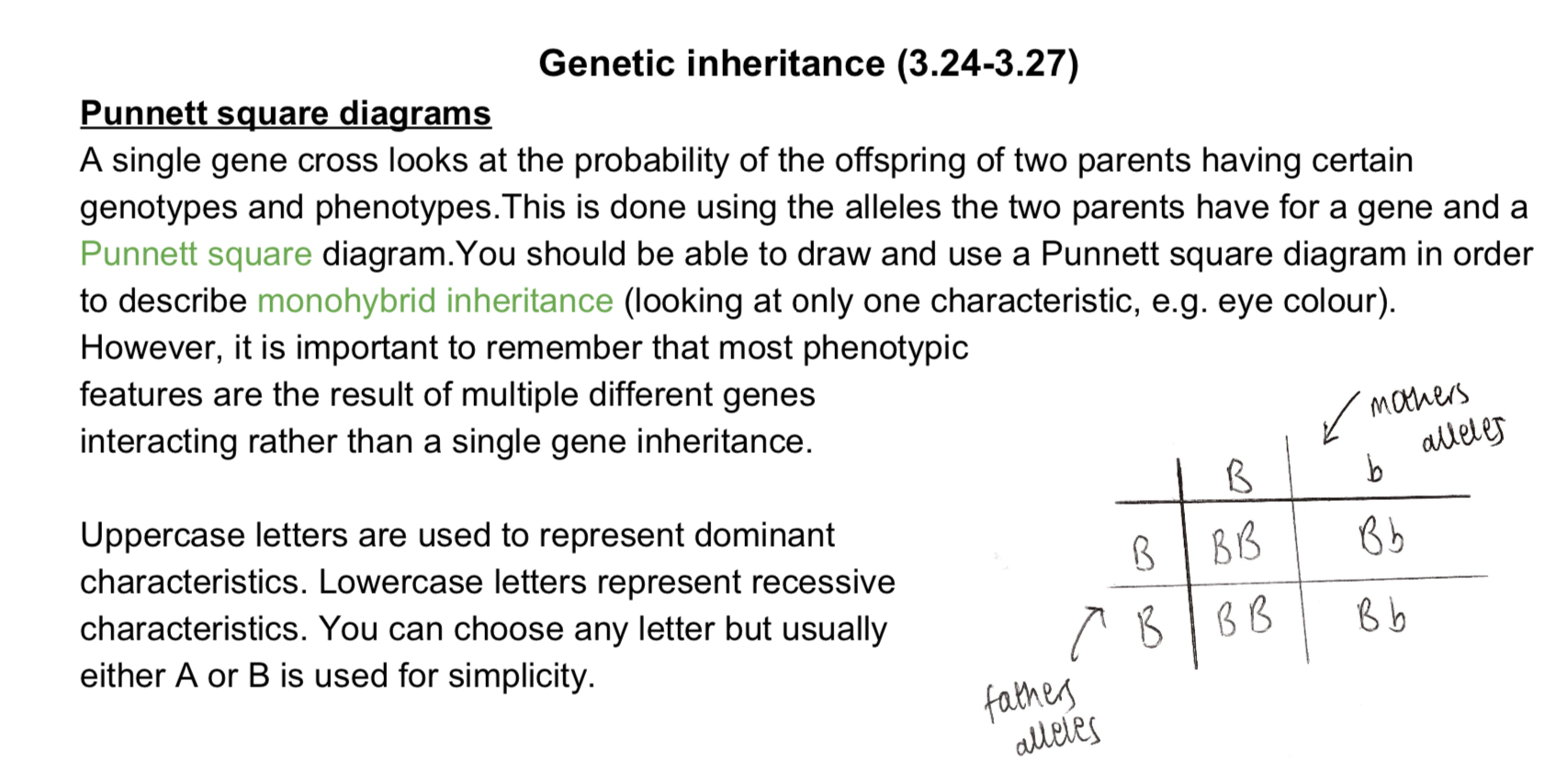
Monohybrid inheritance is the inheritance of a characteristic controlled by a single gene. This can be represented using a punnet square diagram:
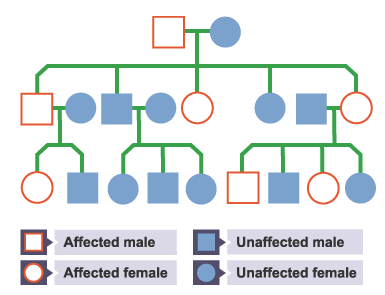
Family pedigree diagrams show the inheritance of a specific characteristic through generations of a family. They can be used to work out the probability that a certain member will have a certain genetic disorder.
The above family pedigree shows:
- both males and females are affected
- every generation has affected individuals
- there is only one family group with no affected individuals
- the other family groups have one affected parent, which leads to affected children
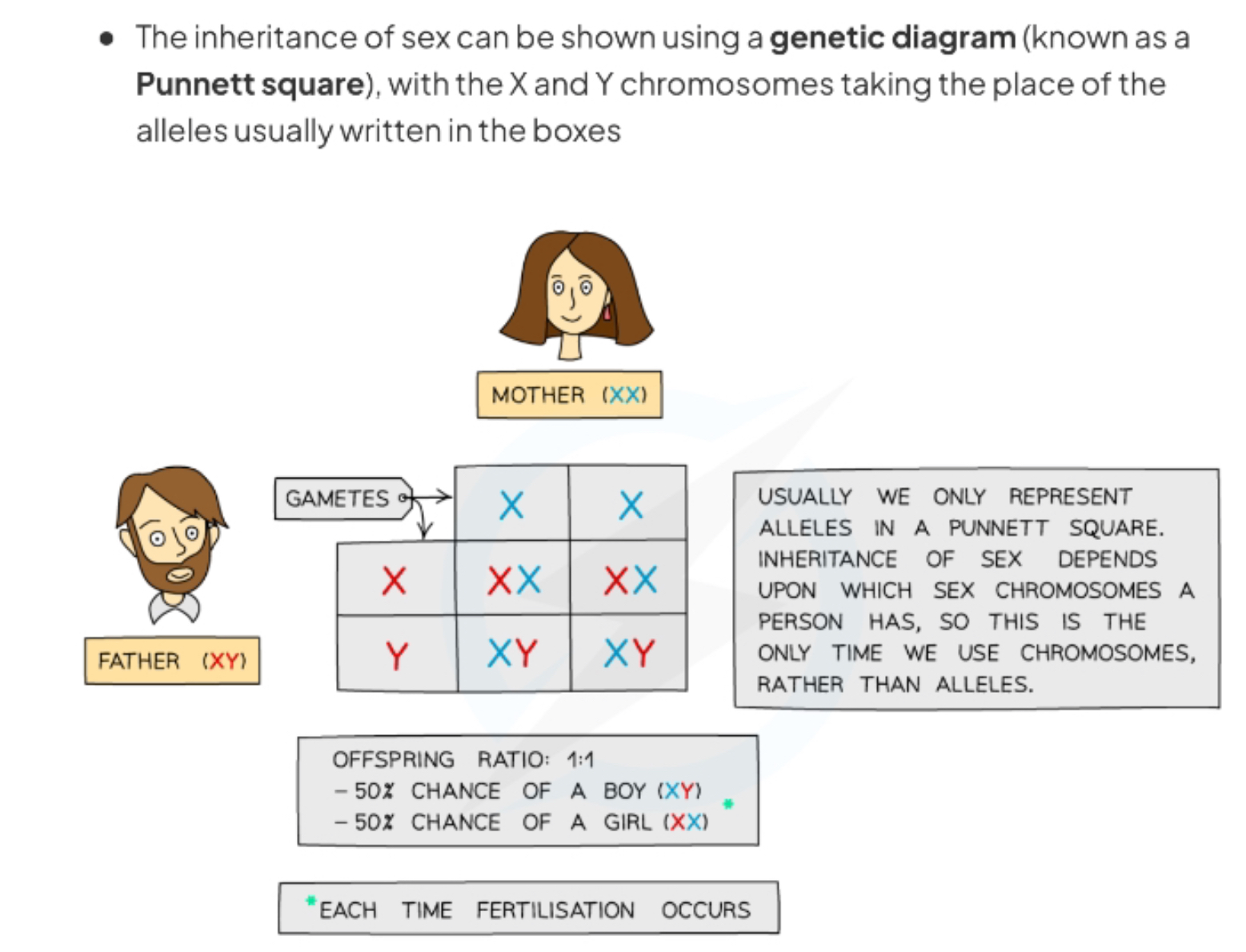
The sex of a child is determined by a pair of chromosomes. Females have XX chromosomes, and males have XY chromosomes. A father has a Y chromosome, meaning that he is responsible for determining the sex of a child.
Half of a males sperm carry X chromosomes, and the other half Y, whereas all eggs carry an X chromosome, meaning that the sex of offspring is determined by whether a sperm with an X or Y chromosome penetrates the egg.
Sex determination can be shown using a genetic diagram: