L1: Cytogenetics
Introductions
Chromosome
Characteristics
composed of thin chromatin threads called chromatin fibres
undergo folding coiling and supercoiling during prophase → thicker and smaller: observable under light microscope
telomere: chromosome ends
centromere: site of spindle attachment
nucleosome: DNA double helix wrapped around histone proteins
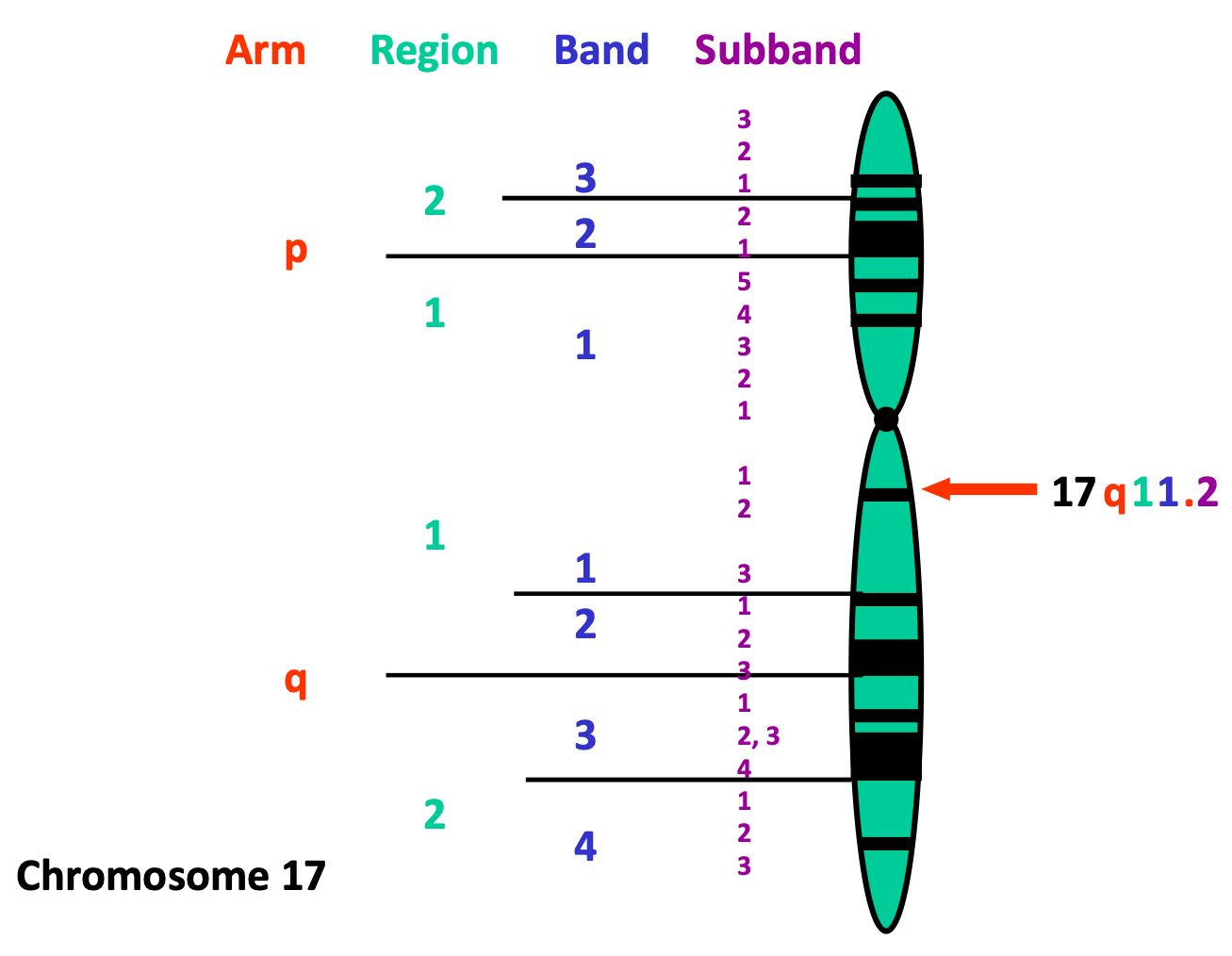
Chromosomal Locations
arm: p and q
region: 1 and 2
band:
p: 3, 2, 1
q: 1, 2, 3, 4
suband
p23, q11, q12, q24: 1-3
p22: 1-2
p11: 1-5
q13: 1-4
Chromosome morphology
metacentric
centrally located centromere
two arms of equal length
chromosomes 1,3, 16, 19, 20
submetacentric
slightly off-center centromere
a short arm (p) and a long arm (q)
chromosome 17 and 18
acrocentric
centromere located near the end of a chromosome
a long arm and a short arm (satellite and stalk)
chromosomes 13, 14, 15, 21, and 22
Definitions
Karyotype
the general morphology of the somatic chromosome
represent by arranging in the descending order of size
centromeres are kept in a straight line
Ideogram
diagrammatic representation of karyotype of a species
shows all morphological features of the chromosomes
Chromosome Abnormalities
Numerical abnormalities
Down syndrome
trisomy 21
arise from
non disjunction in the first meiotic division
mosaic: non dissection during early zygotic division
inheritance of a translocation chromosome from a parent who is a balanced carrier
symptoms
facial dysmorphology
IQ less than 50
moderate to severe mental handicap
Patau syndrome
trisomy 13
Mostly due to
maternal non-disjuction
a parent who is a translocation carrier
50% of babies die within 1st month and very few service beyond the first tear
symptom
small head
small or missing eyes
hear defects
extra fingers
abnormal genitalia
mentally retarded
cleft palate
Edwards syndrome
trisomy 18
not inherited: random event in sperm or egg
Turner syndrome
45, X
# 23 monosomy non-disjunction
X inactivation occurs randomly and is not inherited
symptoms
very short
infertile
broad chest
widely spaced nipples
webbed neck
unaffected IQ and lifespan
Kleinfelter’s Syndrome
47, XXY
# 23 trisomy non-disjunction
symptoms
scarce beard
longer fingers and arms
sterile: testes are small and fail to produce normal levels of testosterone→ breast growth
delicate skin
low mental ability
slight IQ reduction
normal lifespan
Non-disjunction
unequal distribution of chromosome due to failure of separation
occurs during mitosis/ meiosis/ embryogenesis
mitotic non-disjunction
occurs after fertilisation
happen during 1st or 2nd cleavage
→ one blastomere receive 45 chromosomes, the other receive 47
meiotic non-disjunction
occur during gametogenesis
one type contain 22 chromosomes, the other contain 24
Structural abnormalities
Deletion
terminal deletion of short arm
terminal deletion of long arm
deletion of long arm
ring chromosome
Insertion
a segment of one chromosome breaks off and inserts into another chromosome
Duplication and deletion
unequal crossing over during meiosis.
due to misalignment of homologous chromosomes
→ one chromatid gaining extra genetic material while the other loses some.
Translocation
reciprocal translocation
two non-homologous chromosomes exchange segments
happen during meiosis when chromosomes break and rejoin incorrectly
robertsonian translocation
two acrocentric chromosomes fuse at the centromere, forming a single chromosome
→ loss of short arm
Inversion
a piece of chromosome has been lifted out, turned around and reinserted
paracentric: exclude centromere
pericentric: include centromere
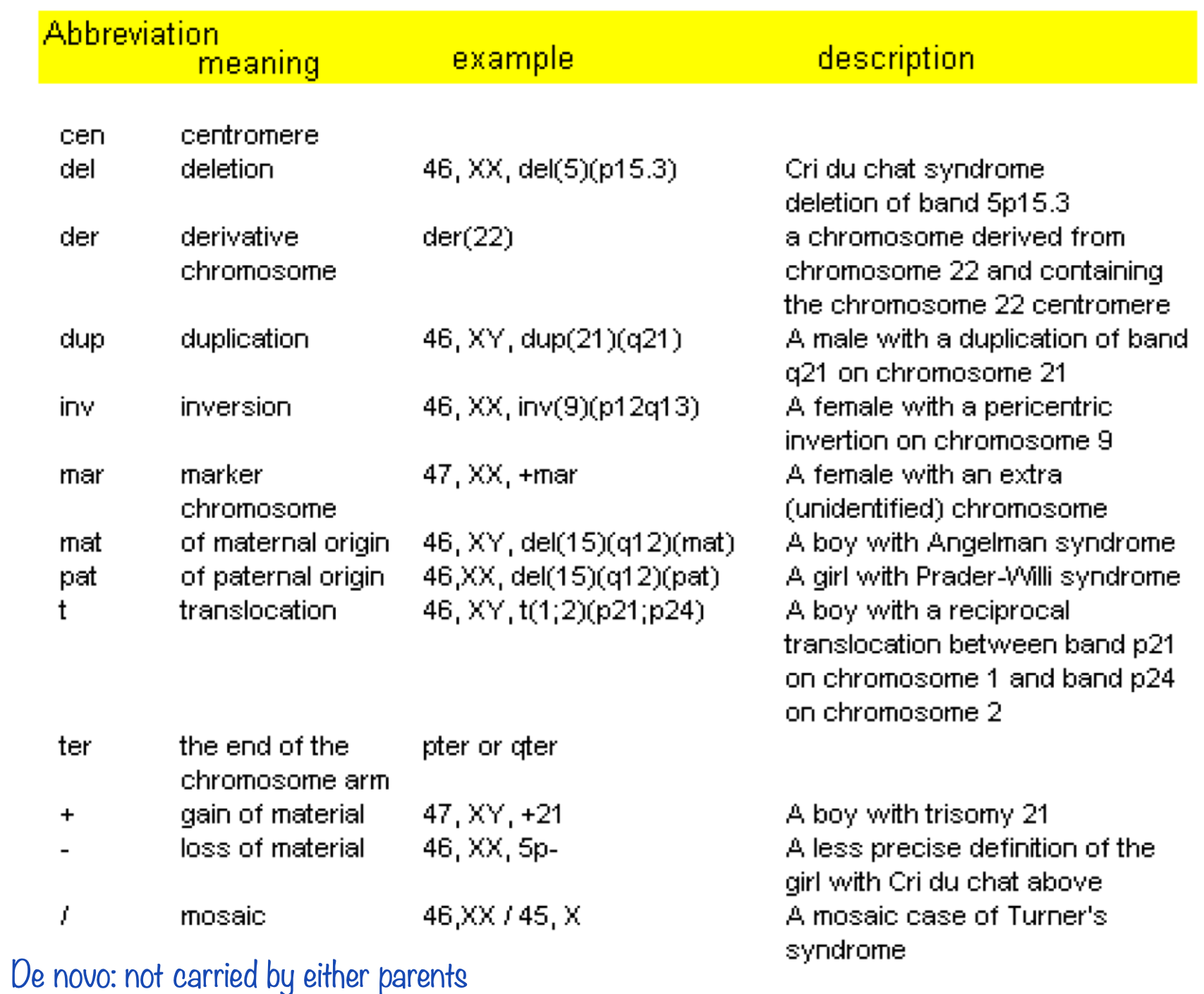
Abbreviation used in describing chromosomes and karyotypes
 Cytogenetic technology
Peripheral blood lymphocyte culture
Collect blood sample
Stimulate lymphocytes with PHA
Culture cells in RPMI 1640 for 72 hours
Analyze metaphase chromosomes under a microscope
Banding: Giemsa
350–550 bands per haploid set during metaphase
850 bands in prometaphase
G-band (dark): AT-rich, fewer transcribed gene
R-band (light): GC-rich, more transcribed genes
FISH Technique
Fluorescence In Situ Hybridization
Purpose: detect and localize the presence or absence of specific DNA sequences on chromosomes
metaphase or interphase
procedure
denaturation of chromosome
denaturation of probes
hybridisation
fluorescence staining
examination of slides