CHEM 400 Nomenclature
Nomenclature: set of rules to generate systematic names for chemical compounds
Binary Ionic Compound: metal + nonmetal PLUS ide
Examples:
NaCl = Sodium chloride
CaO = Calcium oxide
NaF = Sodium fluoride
K2O = Potassium oxide
Li2O = Lithium oxide
GaAs = Gallium arsenide
Molecular Compound: nonmetal + nonmetal; prefix & element PLUS prefix & element
Use prefixes (mono, di, tri, tetra, penta, hexa, hepta, octa, nona, deca) to indicate the number of atoms present in the compound.
Mono
Di
Tri
Tetra
Penta
Hexa
Hepta
Octa
Nona
Deca
The prefix mono- is not used for the first element. If there is not a prefix before the first element, it is assumed that there is only one atom of that element.
Examples:
P2O5 = Diphosphorus pentoxide
CO2 = Carbon dioxide
Si2Br6 = Disilicon hexabromide
P4S10 = Tetraphosphorus decasulfide
N2O5 = Dinitrogen pentoxide
NO2 = Nitrogen dioxide
Ternary Ionic Compound: 3 elements; element + polyatomic ion
Examples:
K2CO3 = Potassium carbonate
Au(OH)3 = Gold (III) hydroxide
Be(ClO4)2 = Beryllium perchlorate
MgSO3 = Magnesium sulfite
ZnSO4 = Zinc sulfate
NaClO = Sodium hypochlorite
Polyatomic Ions
Acetate = C2H3O2-
Carbonate = CO3-2
Chlorate = ClO3-
Chlorite = ClO2-
Chromate = CrO4-2
Cyanide = CN-
Dichromate = Cr2O7-2
Dihydrogen phosphate = H2PO4-
Hydrogen carbonate = HCO3-
Hydrogen phosphate = HPO4-2
Hydrogen sulfate or bisulfate = HSO4-
Hydroxide = OH-
Nitrate = NO3-
Nitrite = NO2-
Oxalate = C2O4-2
Perchlorate = ClO4-
Permanganate = MnO4-
Peroxide = O2-2
Phosphate = PO4-3
Sulfate = SO4-2
Sulfite = SO3-2
Thiocyanate = SCN-
Thiosulfate = S2O3 -2
Ammonia = NH3
Ammonium = NH4+
Silicate = SiO4-
Acids
Hydrochloric acid = HCl
Hydrobromic acid = HBr
Hydroiodic acid = HI
Hydrocyanic acid = HCN
Hydrofluoric acid = HF
Hydrosulfuric acid = H2S
Sulfuric acid = H2SO4
Sulfurous acid = H2SO3
Nitric acid = HNO3
Nitrous acid = HNO2
Phosphoric acid = H3PO4
Phosphorous acid = H3PO3
Acetic acid = HC2H3O2
Carbonic acid = H2CO3
Chloric acid = HClO3
Perchloric acid = HClO4
Hypochlorous acid = HClO
Nomenclature of Acids
No Oxygen
Hydro + anion -ic acid
HCl = Hydrochloric acid
HBr = Hydrobromic acid
HI = Hydroiodic acid
HCN = Hydrocyanic acid
Oxygen is Present
Anion ending in -ate —> -ic
SO4-2 = Sulfate
H2SO4 = Sulfuric acid
C2H3O2- = Acetate
HC2H3O2- = Acetic acid
Anion ends in -ite —> -ous
NO2- = Nitrite
HNO2 = Nitrous acid
SO3-2 = Sulfite
H2SO3 = Sulfurous acid
Ions That Can Have Several Charges:
Chromium (III) or Chromium (II) = Cr+3 or Cr+2
Cobalt (II) or Cobalt (III) = Co+2 or Co+3
Copper (I) or Copper (II) = Cu+1 or Cu+2
Iron (II) or Iron (III) = Fe+2 or Fe+3
Lead (II) or Lead (IV) = Pb+2 or Pb+4
Manganese (II) = Mn+2
Mercury (I) or Mercury (II) = Hg22+ or Hg+2
Tin (II) = Sn+2
Exceptions:
Zn+2
Ag+
Cd+2
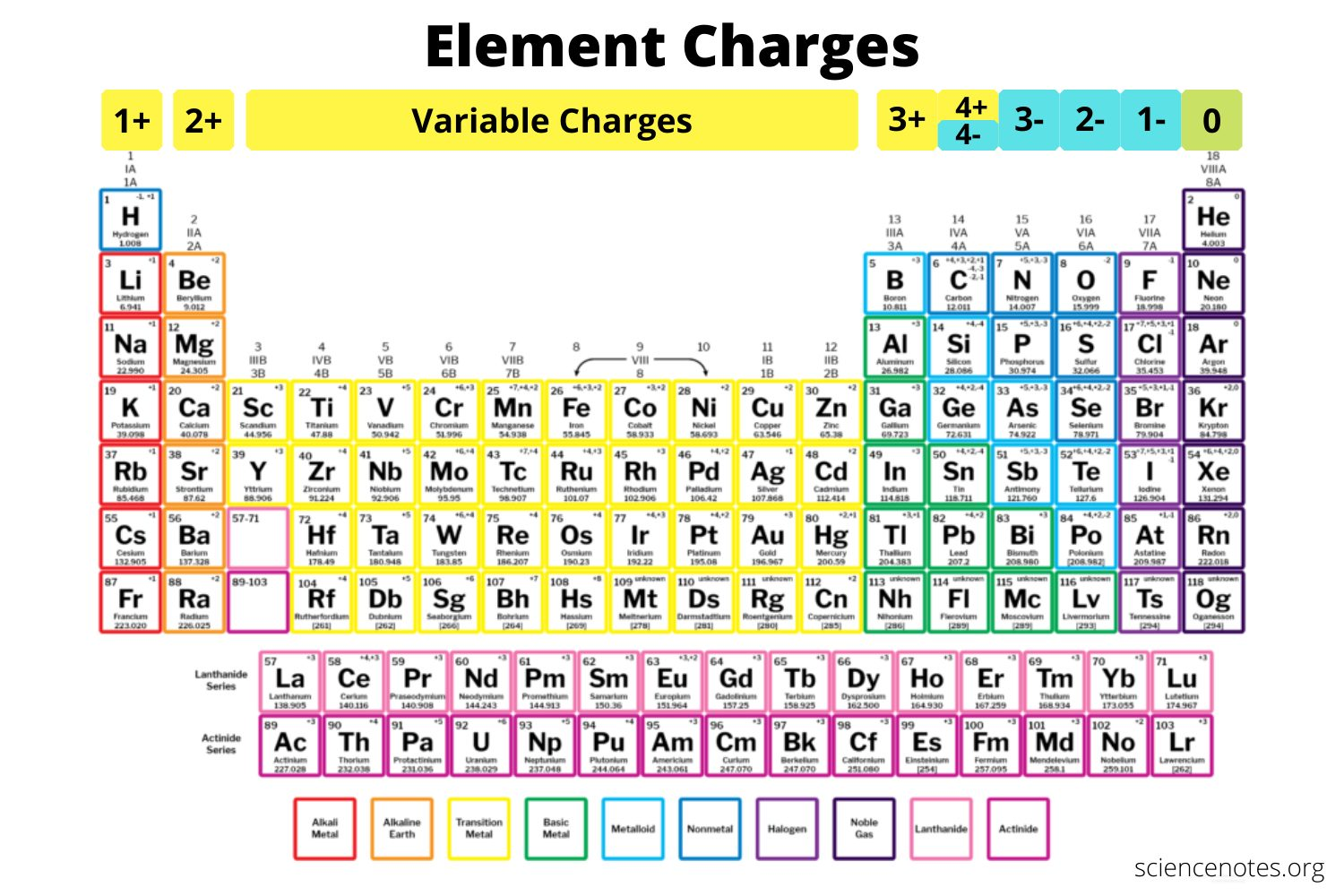
Periodic Table
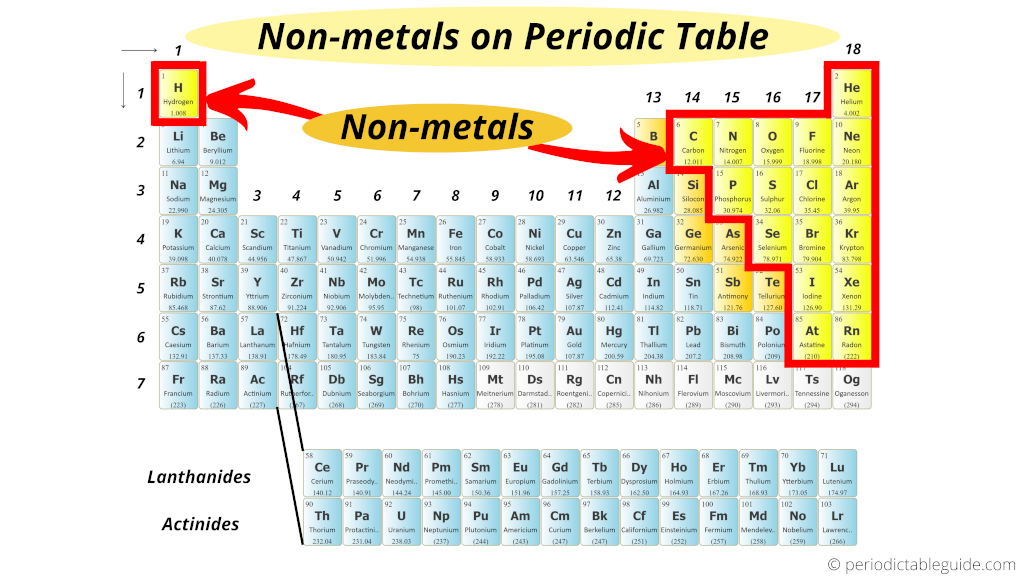
Families or groups are the vertical columns on the periodic table while periods are the horizontal rows.
Family names:
Family 1 = Alkali
Family 2 = Alkali earth metals
Family 15 = Pnictogens
Family 16 = Chalcogens
Family 17 = Halogens
Family 18 = Noble gases
Lanthanides and Actinides are two rows of elements below the main body of the periodic table.
Metals
high lustre: shiny or having the quality of reflecting light from its surface
malleable: can be hammered, pressed, or rolled into sheets without breaking
ductile: the ability to be hammered thin or stretched into a wire without breaking
conduct electricity/heat
Metalloids
shiny
brittle
semiconductors: a material that can conduct electricity much better than an insulator like glass, but not as well as metals
Nonmetals
colorful
brittle
nonconductors
History
Rutherford’s Gold Foil Experiment
nucleus has a small dense positive charge
James Chadwick
discovery of neutron
Frederick Soddy