5b
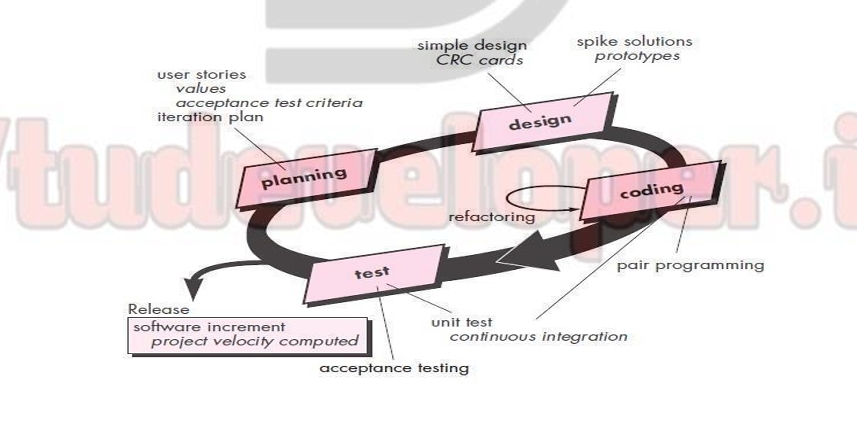
Key XP activities are • Planning. The planning activity (also called the planning game) begins with listening—a requirements gathering activity that enables the technical members of the XP team to understand the business context for the software and to get a broad feel for required output and major features and functionality. • Design. XP design rigorously follows the KIS (keep it simple) principle. A simple design is always preferred over a more complex representation. In addition, the design provides • Coding. After stories are developed and preliminary design work is done, the team does not move to code, but rather develops a series of unit tests that will exercise each of the stories that is to be included in the current release Once the code is complete, it can be unit-tested immediately, thereby providing instantaneous feedback to the developers. • Testing. The creation of unit tests before coding commences is a key element of the XP approach. The unit tests that are created should be implemented using a framework that enables them to be automated. This encourages a regression testing strategy whenever code is modified. As the individual unit tests are organized into a “universal testing suite” integration and validation testing of the system can occur on a daily basis. This provides the XP team with a continual indication of progress and also can raise warning flags early if things go awry. Wells states: “Fixing small problems every few hours takes less time than fixing huge problems just before the deadline.