Prenatal Development
Vocabulary:
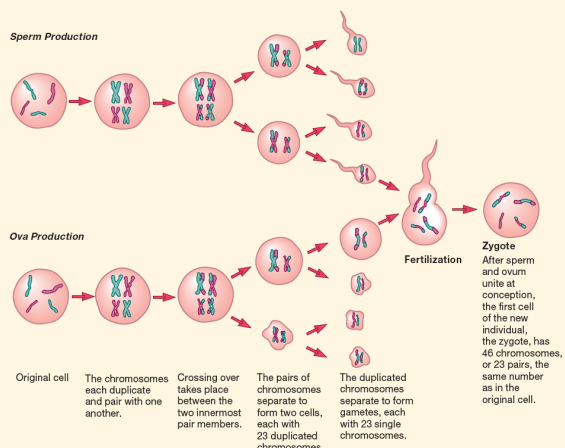
Chromosome: Made up of DNA, transferred from parent to child, typically 23 for humans
DNA: Make up chromosomes, carry instructions for forming organisms
Gene: A segment of DNA, basic unit of heredity
Meiosis: A kind of cell division that halves the number of chromosomes, forms gametes, leads to genetic variability
Gamete: Sex cells, either sperm of ovum
Autosome: A chromosome that doesn’t contain information about sex and secondary characteristics
Sex chromosome: A chromosome that contains information about sex and secondary characteristics
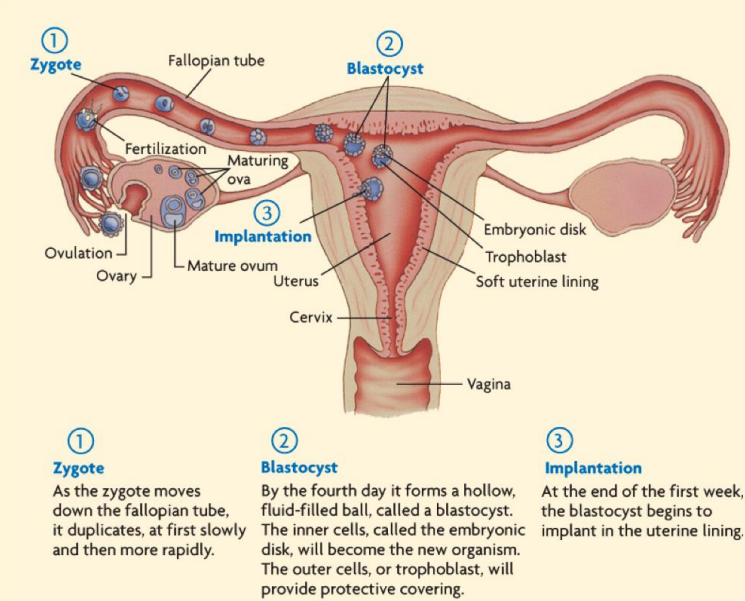
Ovulation: Happens once a month to females, egg is released from the ovary and travels through the fallopian tube, this is the period of time where conception can occur
Zygote: Single cellular, formed by sperm and ovum fertilization
Blastocyst: Has inner and outer cells, inner form the organism and outer help protect it, after a week will implant in uterine lining. Occurs days 4-7 of pregnancy
Mitosis: Cell division resulting in two identical cells, produces new body cells
Cell differentiation: The process of cells specializing to become certain types of cells
Apoptosis: Programmed cell death, happens to unnecessary cells in development
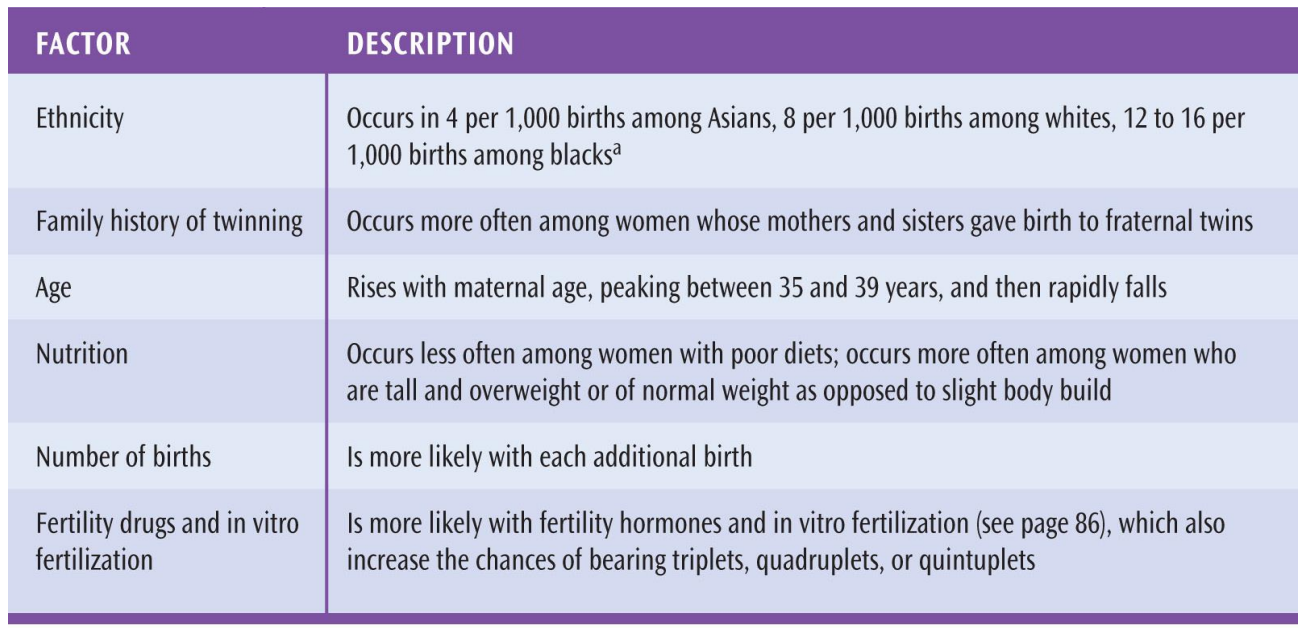
Monozygotic twins: Identical twins, formed by one zygote splitting into two individuals, share a placenta, have the same genetic information, 1/330 births
Dizygotic twins: Fraternal twins, two zygotes are formed from separate fertilized ova, they have different placentas and don’t share identical genetic make up, 1/60 births
Pregnancy: Lasts 40 weeks, made up of 3 trimesters, post conception while
First trimester: Contains germinal stage, embryonic stage, and fetal stage
Germinal stage: Zygotic stage, organism is called a zygote in this stage, 1-2 weeks
Embryonic stage: 3-8 weeks, called an embryo
Fetal stage: Starts in the first trimester but lasts throughout pregnancy, weeks 9-13
Embryonic disk: Inner blastocyst cells, become the organism
Trophoblast: Outer blastocyst cells, provide protective covering
Implantation: Days 7-9, the blastocyst burrows into the uterine lining, around 30% don’t do this due to issues with meiosis and don’t continue to develop
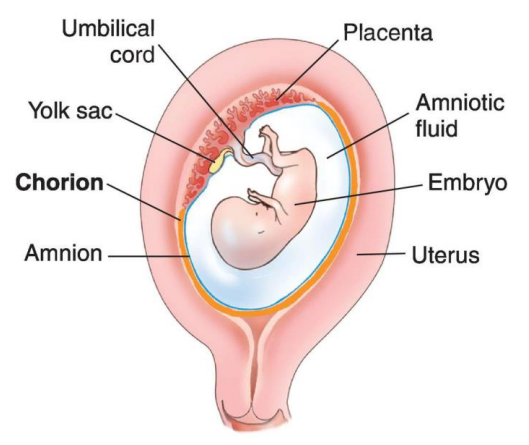
Chorion: Forms after 2 weeks, a protective membrane around the amnion
Amnion: Amnionic fluid, provides nutrition to the developing organism
Placenta: Allows food and oxygen to enter and waste products to exit and carried away, prevents parent and baby blood from mixing
Umbilical cord: Delivers blood and removes waste from developing organism
Neural tube: Forms neurons and forms brain
Mesoderm: Forms muscles, skeleton, and circulatory system
Ectoderm: Contains the neural tube, becomes nervous system and skin
Endoderm: Forms digestive system, lungs, urinary tract, and glands
Second trimester: Parent can start to feel fetal movements at 17-20 weeks, when vernix and lanugo develop, lots of brain growth though most neurons are formed they are differentiating and making connections, glial cells develop. Growing brain starts to show new reactive behaviors to things like sound or light. If born, not likely to survive
Age of viability: When a fetus will likely be able to survive if born early, 22-26 weeks, would require lots of medical attention, cannot breathe or regulate temperature
Third trimester: When the cerebral cortex enlarges and grooves appear, fetus is awake and has a heart rate (at 28 weeks). 30-36 weeks have auditory development. At 23-30 weeks there is pain sensitivity, by 28 weeks the fetus blinks. Gains over 5 pounds and 7 inches in length, develop a fat layer for temperature regulation. Additional head weight moves the fetus upside down, signaling preparation for birth
Vernix: Protects skin from chapping in amnionic fluid
Lanugo: White, downy hair that covers fetuses, allows vernix to stick to skin
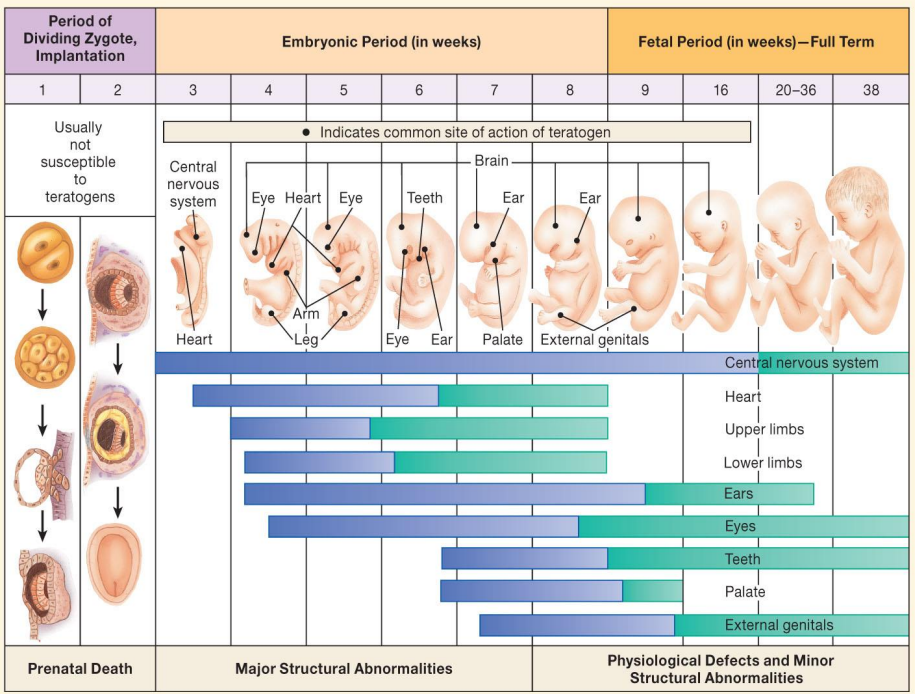
Teratogen: A harmful substance to a fetus, an environmental age causing damage during the prenatal period. Impacted by dose, heredity, and age/sensitive period. The larger and longer exposer is the worse it can be, heredity and natural resilience also come into play, if more teratogens are used the risks are higher
Maternal disease: Diseases that aren’t likely to cause death in a parent, though can cause irreparable damage to a growing fetus
Diethylstilbestrol (DES): A prescription drug previously used (1945 - 1970) to prevent miscarriages, stopped use after shown to cause reproductive problems in children
Accutane: A prescription drug used to control acne, though can cause intense deformities of eye, ear, skull, or cause abnormalities in the brain, heart, CNS, and the immune system. Doesn’t always cause these, but chance is high enough that all people capable of pregnancy while on this take birth control
Opioids: A type of prescription drug that causes neonatal abstinence syndrome, more common in rural states due to higher rates of abuse. Use of one of these is likely correlated with use of another teratogen, exacerbating the effects
Neonatal abstinence syndrome (NAS): A condition with low birth weight, seizures, and problems breathing and feeding, higher rates in rural areas, babies spend a lot longer in the hospital and due to the financial cost it is a public health issue
Aspirin: A non-prescription drug, regular use (daily) can lead to low birth weight death, poor motor development, and lower intelligence scores
Caffeine: With heavy intake (3 cups of coffee a day), can lead to low birth weight, miscarriage, and withdrawal present in the child
Illegal drugs: Used by 4.5% of pregnant people in the US, includes things like cocaine, heroin, and sometimes marijuana. Can cause prematurity, low birth weight, difficulty breathing, death, babies born with addictions, slow motor development, and attention/memory deficits
Tobacco: Used in 7.2% of pregnancies, can cause low birth weights. Increases the risk for miscarriage, prematurity, cleft lip/breathing, impaired hearth rate and breathing, infant death (SIDS), childhood asthma/cancer, and ADHD. The more of this is used, the higher the risk is
Marijuana: A drug legal in some places, can leave to smaller head sizes, linked to ADHD, and attention/memory deficits
Alcohol: Used by 10% of pregnant people, this uses oxygen to be metabolized and therefore leaves less for cell growth in the fetus, causes reduced brain size, abnormal brain structures and functioning. Recommended to be entirely avoided
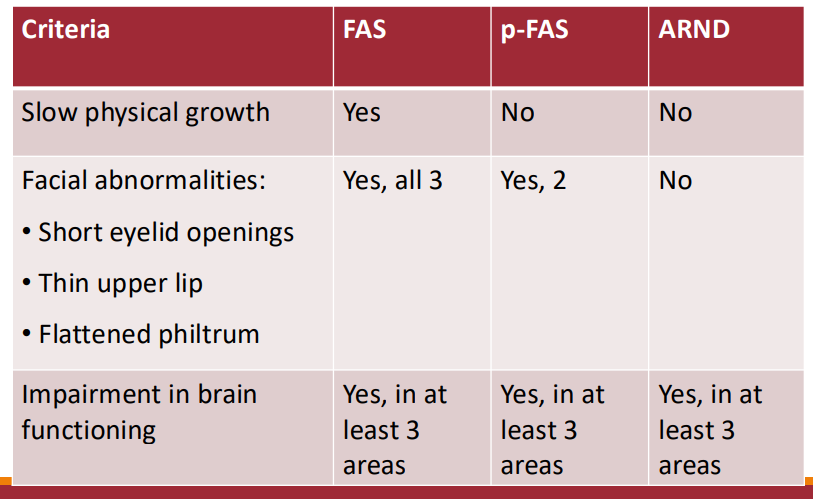
Partial fetal alcohol syndrome (pFAS): Caused by alcohol use in pregnancy, no physical growth slowed, but has short eyelids, thin upper lips, or flattened philtrum (facial abnormalities)
Alcohol related neurodevelopmental disorder (ARDN): Caused by alcohol use, most prevalent and underdiagnosed. Caused by any amount of alcohol (can’t be tested), causes impaired brain functioning
Radiation: Exposure can cause deformation of the fetus at higher levels, low levels can show emotional disorders. Very variable and only researched due to disasters, effects depend on what point in pregnancy exposure is present at
Environmental pollutants: Natural
Mercury: Exposure can lead to abnormal speech, chewing, and movement, or also cause brain damage due to disruption of production and migration of neurons
Lead: There is no safe level, recommended to avoid during and after pregnancy, can lead to prematurity, low birth weight, poor mental/motor development. Exposure comes from pipes and paint. Exposure can also come from consumption of predatory fish
Rubella: A disease caused by a virus, most harmful in the embryonic period, causes cataracts, deafness, heart/genital/urinary/intestinal defects, and intellectual impairment, and smaller head size. Can be prevented with a now common childhood vaccine
Microcephaly: Reduced head size
HIV: A maternal disease, common (25-30%) in South Africa, passed on in 20% of untreated pregnancies and 1% of treated, causes illness in infancy where half die after a year, and 90% die by the third year, prevented by a greater distribution of zidovudine
Zidovudine (ZVD): A drug that reduce AIDS transmitted by 90%, has no harmful side effects
Nutrition: A maternal factor in prenatal development, healthy diet can result in a weight gain of 25-30 lbs
Folic acid: Present in maternal supplements, cuts risk of spine bifida and anencephaly by 70%, reduces risk of low birth weight and prematurity by 50%, contained in breads
Spina bifida: Abnormal development of the spinal cord, can lead to paralysis
Anencephaly: A condition where there is no forebrain, not likely to survive past birth
Calcium: A supplement that can reduce maternal blood pressure and reduce rates of prematurity
Iodine: Deficiencies can cause intellectual impairment, contained in salt
Vitamin C and Iron: Promotes growth in the placenta and healthy birth weights
Stress: High maternal levels lead to birth complications, so exercise is recommended for pregnant people to reduce this and is correlated with fewer discomforts, less respiratory issues, and increased birth weights
Socioeconomic status (SES): The social standing of an individual, financial resources available, occupational prestige, education, distinguished between low/middle/high
Low SES: Associated with higher risk of physical and mental problems, which can cause birth defects due to stress, less access to things like exercise and maternal lifestyle changes
Maternal age: A maternal factor, the higher this is the greater risk of maternal preeclampsia, low birth weight, and fetal death. Spikes after 50 years, lowest at 30-39 years. When really young (teenage) there are higher risk factors, though less due to age factors but rather other related factors like age and lifestyle habits
Maternal preeclampsia: A sudden increase in high blood pressure of the pregnant person, associated with extremity swelling, stress, and other physical issues for the pregnant person. Risk to both parent and fetus
People:
DeCasper & Spence (1986): Conducted a study when pregnant people read stories, like Cat in the Hat, to their fetuses the last 6 weeks before birth. Once born, recordings were played of the book and a new book, they would adjust sucking patterns to be able to hear the familiar book. Also showed the voice replaying the book one born didn’t need to be the parent’s. Shows fetuses can learn and prenatal experiences matter
Genetic information travel from parent to child with chromosomes
Week 7 has 250,000 neurons produced, ½ an ounce, has sense of touch, can move
3rd month has organized systems, organs and muscles and the nervous system. Can open/close mouth, kick, and suck thumb. Fingernails grow and other ‘finishing touches’ like tooth buds and eyelids
By the 12th week, sex of the fetus is evident
There is rapid growth in the second and third trimesters
Activity level measured by heart rate is stagnant until 20 weeks, at 28 weeks its 11%, and right before birth it is at 16%
Auditorily, heart rate shifts with response to male v female, mother v stranger
Examples of teratogens include prescription and non-prescription drugs, pollution, tobacco, alcohol, radiation, and maternal disease
Rates of teenage pregnancies are dropping
Regular medical checks are recommended for pregnant people, to ensure their weight is healthy, drugs aren’t being used, monitor preeclampsia and gestational diabetes risks, fetal health, and to address complications
Over 90% of newborns in North America are born healthy, with minimal impacts of teratogens or lifestyle factors negatively on the fetus
Paternal impacts on the fetus are vastly understudied, though age as it rises can be a larger factor