Unit #13 Rise of Modern Humans
Archaic Homo Sapiens
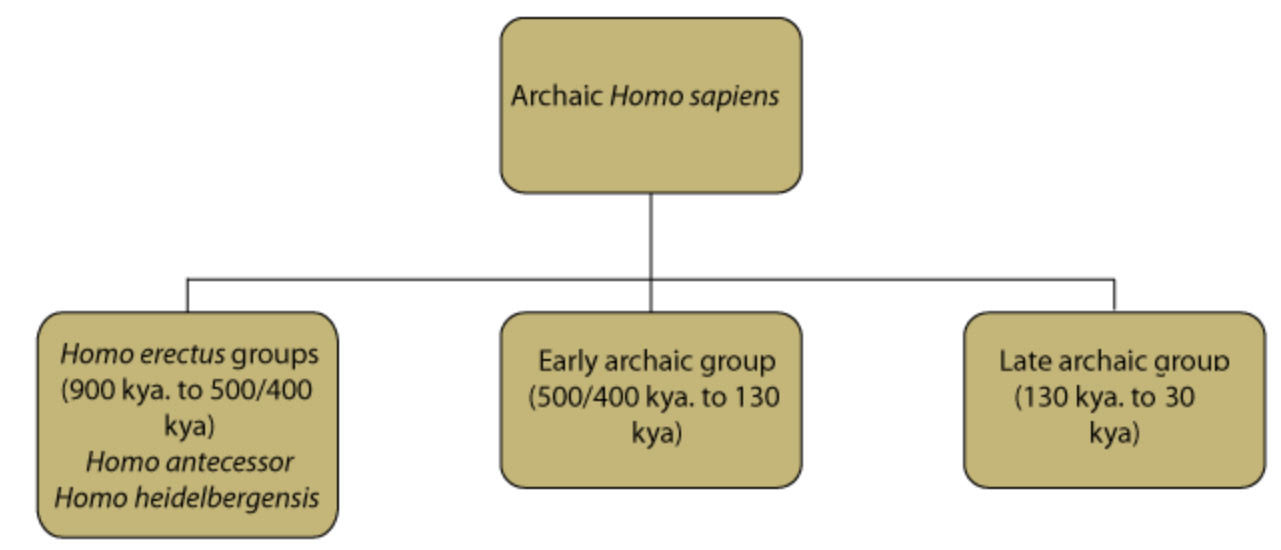
Homo erectus evolved into a group of highly varied hominins we call them Archaic Homo sapiens, we can divide them into two groups…
Early archaic Homo sapiens (500/400 Kya - 200/100 Kya)
Late archaic Homo sapiens (200/100 kya - 30 kya)
Early Archaic Homo Sapiens
By 400 kya cranial capacities reached modern day levels
Bones found of these people display a combination of Homo erectus and Homo sapiens features.
Sierra de Atapuerca: Spanish site that contains the remains of 28 individuals (most important fossils from this time period)
Atapuerca 5: most prevalent specimen found in Atapuerca.
Fossilized skull found in direct association with postcranial skull
large cranial capacity (1200cc)
large browridge
pronounced facial projection
wide nasal aperture
Tool making once again began to change with the development of the Levallois Technique and Hafting
Levallois Technique: This technique involves the selection of specific stones to be used as cores and then whittled down radially until the entire surface is flaked away. After being whittled down, one final blow is struck to free a large flake, as well as leave the intact core behind.
Hafting: Fastening of small stone bifaces and flakes to handles of wood
Ex of final product: 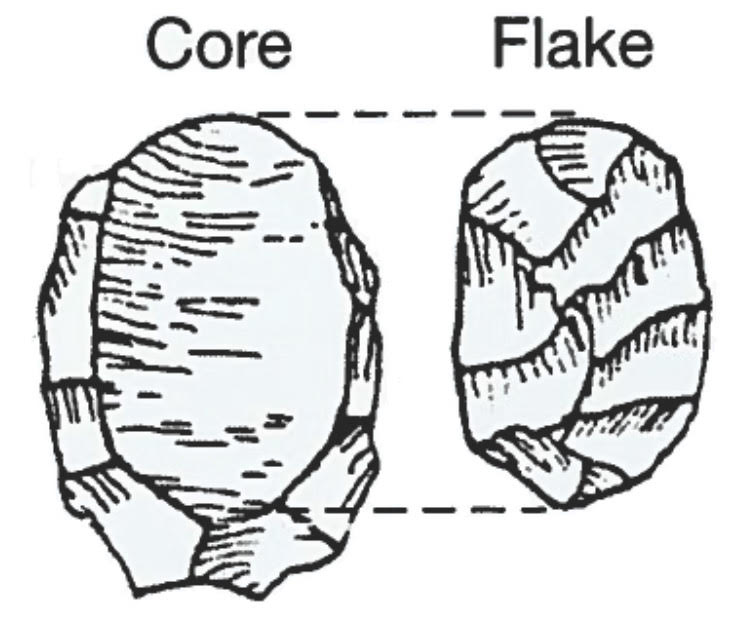
Late Archaic Homo Sapiens
Lived ~ 200/100 kya - 30 kya
Lived in Europe and southwestern Asia
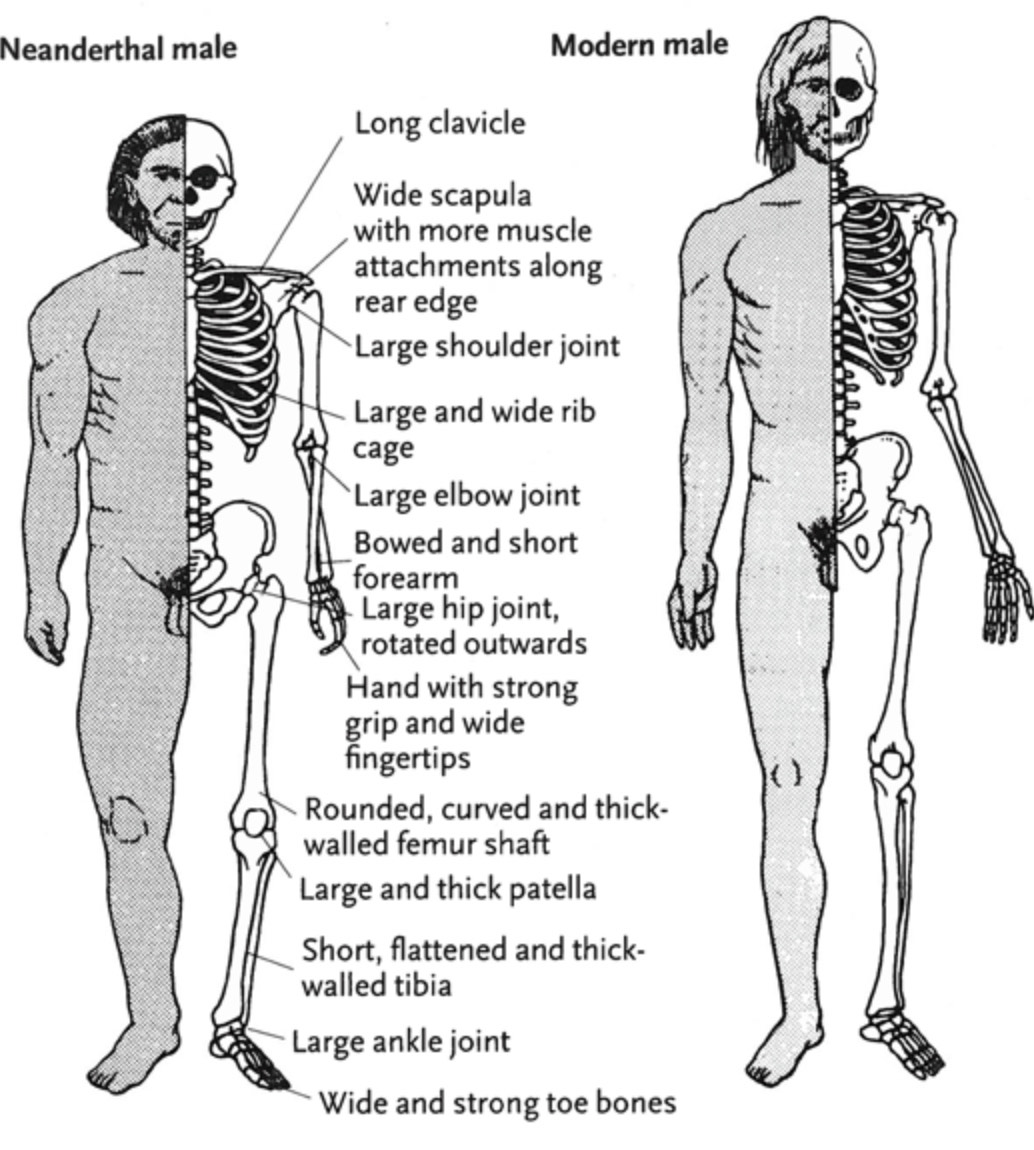
Robust and heavily- muscled bodies
Thicker leg bones
Larger more expansive rib cage
Rounded crania
Long and low skull
low receding forehead
Strong Browridge
Smaller teeth
weighed about 30% more than modern day humans
Concerning the fossil record Neanderthals are often divided into 2 groups
European/Classic Neanderthals
Near East Neanderthals
Neanderthal Culture
Neanderthals were not brutish apes, they were thought to be great hunters, developed sophisticated tech, buried their dead, and were capable of some kind of symbolic behaviors.
Neanderthals developed a complex culture known as Mousterian, this lasted 130-30 kya
Mousterian tools were lighter and were mostly fabricated using the levallois technique
There were a greater varieties of tools (development of proper weapons such as spears)
Neanderthals were able to better cope with arctic conditions with the inventions of these tools
Neanderthal Art
Single-species Model: Art and symbolic behavior are exclusive to anatomically modern people
Multi-species Model: Art and symbolism emerged independently among modern human and Neanderthals
The multi-species model is being suggested more frequently over the years due to the items personal items and art found in Grotte du Renne, France. This theory would also suggest that Neanderthals had their own language and possessed similar intellectual abilities that we have today.
The Fossil Record of Homo sapiens
First fossils of modern homo sapiens were found in 1868 at the site of Cro-Magnon, for this reason they’re still sometimes known as Cro-Magnons.
These fossil are more widely known as Homo sapiens because they share a number of traits with modern day humans that were not present in previous hominins.