MARKETING PREFINALS SEM 1 QUIZ#2
THE MARKETING PLAN
A marketing plan is a written guide that identifies what a business wants to achieve, who it wants to reach, and what marketing actions it will take to achieve its goals.
Marketing Plan = Goal + Market Information + Strategy + Action + Budget + Timeline
Why does a business need a marketing plan?

5 MAJOR PARTS OF A MARKETING PLAN
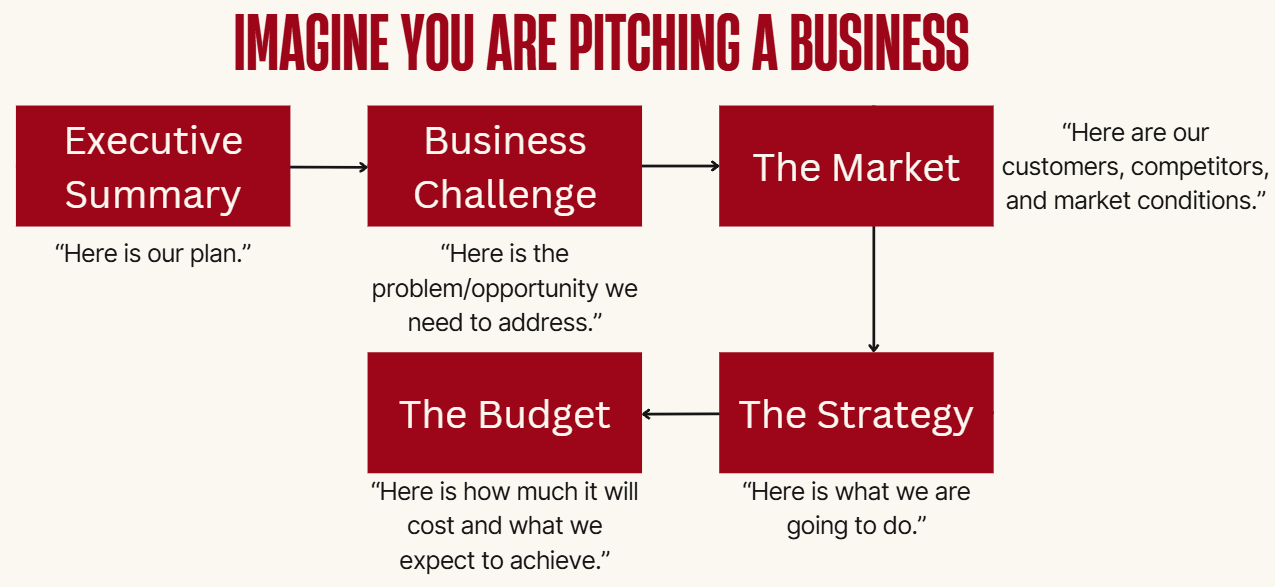
Executive Summary
If the business owner only have 30 seconds to understand your marketing plan what would you tell them?
“Here is our plan.”
Business Challenge
What is the business trying to solve?
“Here is the problem/opportunity we need to address.”
PROBLEM: “Students know our cafe but rarely buy from us.”
GOAL: “Increase student purchase during lunch.”
SMART GOAL:
Increase student purchasing during lunch by 20% within one month by implementing targeted lunch-time promotions, improving product visibility, and offering student-friendly meal or snack options.
Market Analysis
“Know Before You Go.”
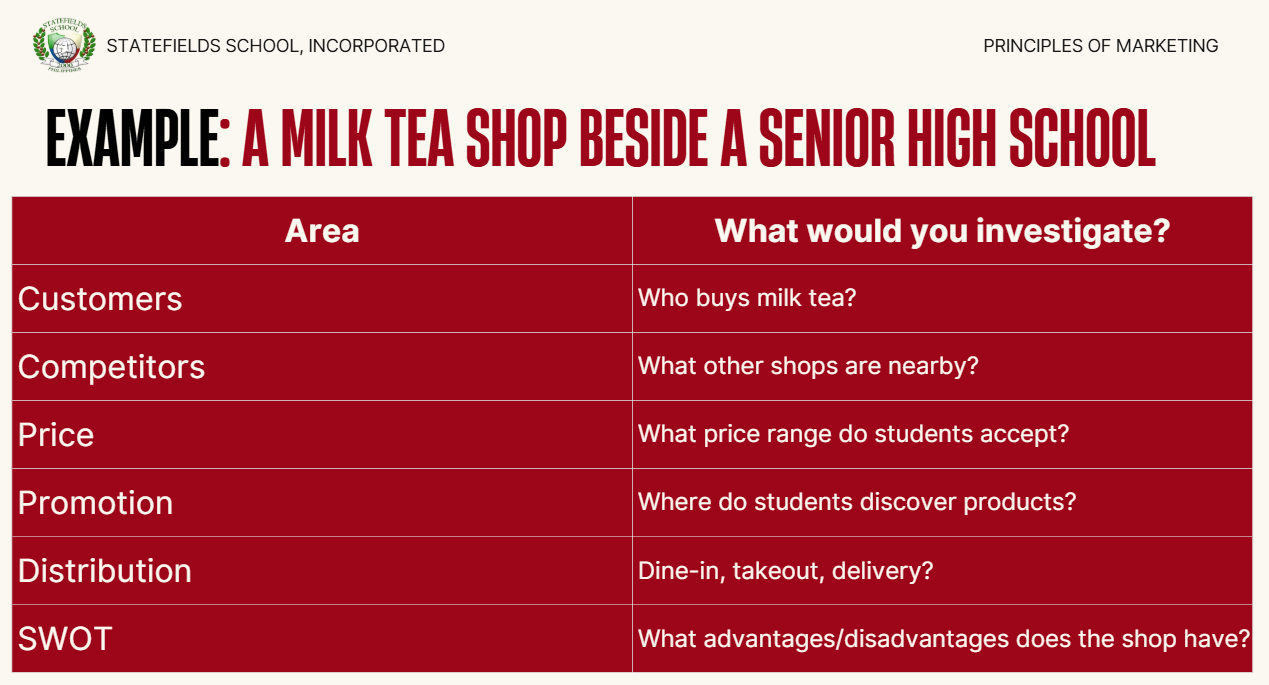
Before launching a campaign, ask:
CUSTOMER
Who buys?
What do they need?
What influences their purchase?
COMPETITOR
Who else sells?
What do they offer?
How do they price/promote?
MARKET
How large is the market?
What trends affect it?
BUSINESS
What are our strengths?
EXAMPLE
MARKETING STRATEGIES (Which Strategy fits?)
Online shop wants customers to share its products
Business wants to reach specific customers online
Business has a customer database
Salesperson personally approaches customers
Happy customers recommend the business
Store uses discounts/coupons
Business focuses on long-term customer loyalty
THE BUSINESS CHALLENGE (O.W.A)
The Business Challenge explains what the business will offer, why customers would want it, and what the business wants to achieve.
Business Challenge =
What will we offer?
Why will customers choose it?
What do we want to achieve?
“Choosing a product is not simply about what we like. A business must determine whether its offering can satisfy a need, reach a feasible market, and creative value.”
BUILDING THE BUSINESS CHALLENGE:

CASE: A Group of students wants to sell a affordable coffee and snacks near the school. (O.CN.USP. F.PN.G.BE)
OFFER
What will we offer?
Not: “We sell Coffee.”
Instead: “Affordable coffee and snacks designed for students who need a quick and convenient option during school breaks.”
THE CUSTOMER NEED
Who needs it?
Example:
Observation:
Students often have limited time between classes and need affordable food and drinks near school.
Therefore:
The business addresses students’ need for convenient and affordable food and beverages within walking distance of the school.
UNIQUE SELLING PROPOSITION
Why will they choose us?
Example:
Instead of:
“We sell affordable coffee.”
Make it:
“We provide affordable coffee and study meals specifically designed for students, with convenient ordering and quick service during school breaks.”
BARRIERS TO ENTRY
How easy are we to copy?
Examples:
exclusive supplier arrangement
strong customer loyalty
established school/community partnerships
specialized recipe or process
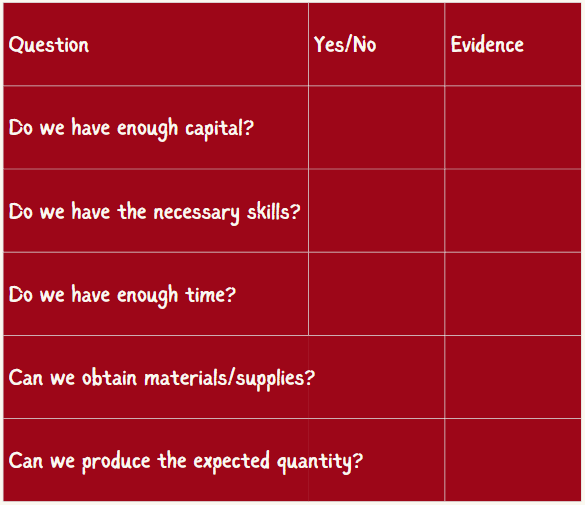
THE FEASIBILITY
Can we actually provide it?
Example:
SCENARIO:
Capital: Php 5,000
Equipment: Basic Coffee Equipment
Available time: 2 hours/day
Supplier: Available
Team: 4 students
POTENTIAL NUMBERS
Can we make money?
What is the contribution per unit?
How many unites must be sold to break even?
Is that sales target realistic?
For example:
Selling Price = Php 150
Variable cost = Php 90
Fixed costs = Php 6,000
THE GOAL
What do we want to achieve?
SMART
Specific
Measurable
Achievable
Relevant
Time-bound
Example:
“We want to increase student purchases.” → “Increase student purchases by 15% within three months.”
BARRIERS TO ENTRY
What could make it difficult for another business to enter this market?
Examples:
High startup cost
Specialized skills
Licenses/permits
Patents
Strong customer loyalty
Exclusive suppliers
NAME THAT BUSINESS FACTOR!
An entrepreneur determines that there are approximately 5,000 potential customers within the area. What consideration does this address? (Potential Target Market)
A Business asks, “why should customers buy from us when there are already five similar businesses nearby?” what consideration is the business examining? (Unique Selling Proposition)
A food business discovers that its target customers want affordable meals that can be ordered online and delivered quickly. (Customer needs)
A pharmaceutical business requires substantial capital, specialized technology, and government approval before entering the market. (Barriers to Entry)
A student plans to sell customized graduation souvenirs. Before starting, she asks whether she has enough money, suppliers, equipment, and time to fulfill orders. (Feasibility)
An entrepreneur estimates the number of unites that can be sold each month and calculates expected revenue and costs. What consideration is being examined? (Potential Numbers)
THE MARKET ANALYSIS
Understanding Market Analysis (Example)
Adrian’s Tech-shop is an internet cafe located in the downtown area that also offers repairs and IT services. Study the details about the business and answer the following questions.

ESSENTIAL QUESTION:
Why are customers the center of all marketing plans?
MARKET
The customers and sellers in a particular area or region
physical, virtual, or both
local or global
valuable or flawed
MARKET SIZE
The number of persons in a market who can buy and sell items and services.
WRITING THE MARKETING PLAN 2: THE MARKET
The market changes. These changes have implications for existing products and services.
Products may become more valuable, less important, or obsolete.
Elaborates on the customers, competitors, collaborators, and the overall situation of the market
Proves how well your company and its product or service fit in.

CUSTOMER
The target market
The group of people who will purchase the product or service
The customers
Descriptive:
Demographic
Geographic
Geodeographic
Behavioral:
Psychographic
Benefits:
Wants
KNOWING YOUR CUSTOMERS…
The marketing mix will have firm grounding
Effective promotions
Easy to change products/services to assure customer satisfaction
The company can establish strong customer relationship
COMPANY
considered the internal environment
consists of interior corporate elements that influence the effectiveness of marketing efforts
COMPONENTS IN THE INTERNAL ENVIRONMENT:
Workforce
Equipment
Facilities
Materials
Finance
WRITING GUIDELINES: COMPANY
Present how the company…
Effectively manage internal elements
Capacity and resources
Limitations
COMPETITORS
Businesses that manufacture or sell similar or alternative products or services in the market
a significant factor in the success and failure of their marketing plans
WRITING GUIDELINES: COMPETITORS
Know your competitors
Differentiation
Capitalize competitor’s flaws
COLLABORATORS
Third parties who work directly with your business to support or assist you in creating or implementing your strategy.

WRITING GUIDELINES: COLLABORATORS
Core set of collaborators:
Agencies
Partners
Distributors
Suppliers
Preliminary assessment of capability and dedication