10/1
Viridiplantae:
Green Algae
Land plants
Green Algae
The first green plants in the fossil record are green algae, found in rocks from 725-1000 million years ago (Precambrian!)
Biologists are still investigating which group of green algae is most closely related to land plants, but we know that it’s a green algae
Land plants:
Nonvascular land plants: liverworts, mosses, hornworts
The first land fossil plants are found in rocks around 475 million years ago, along will animals and fungi
These plants would have been quite small with low, sprawling habits. They lacked rigidity and would have had to obtain water via pores. Kinda look like moss.
Life out of water was hard, so the oldest land plants adapted:
Adaptations of nonvascular land plants:
Sporopollenin: a very durable biopolymer that encases spores and prevents dying
Cuticle and UV-absorbing compounds that acted as sunscreen
Land plants exhibit alternation of generations. Nonvascular land plants are gametophyte (haploid) dominant.
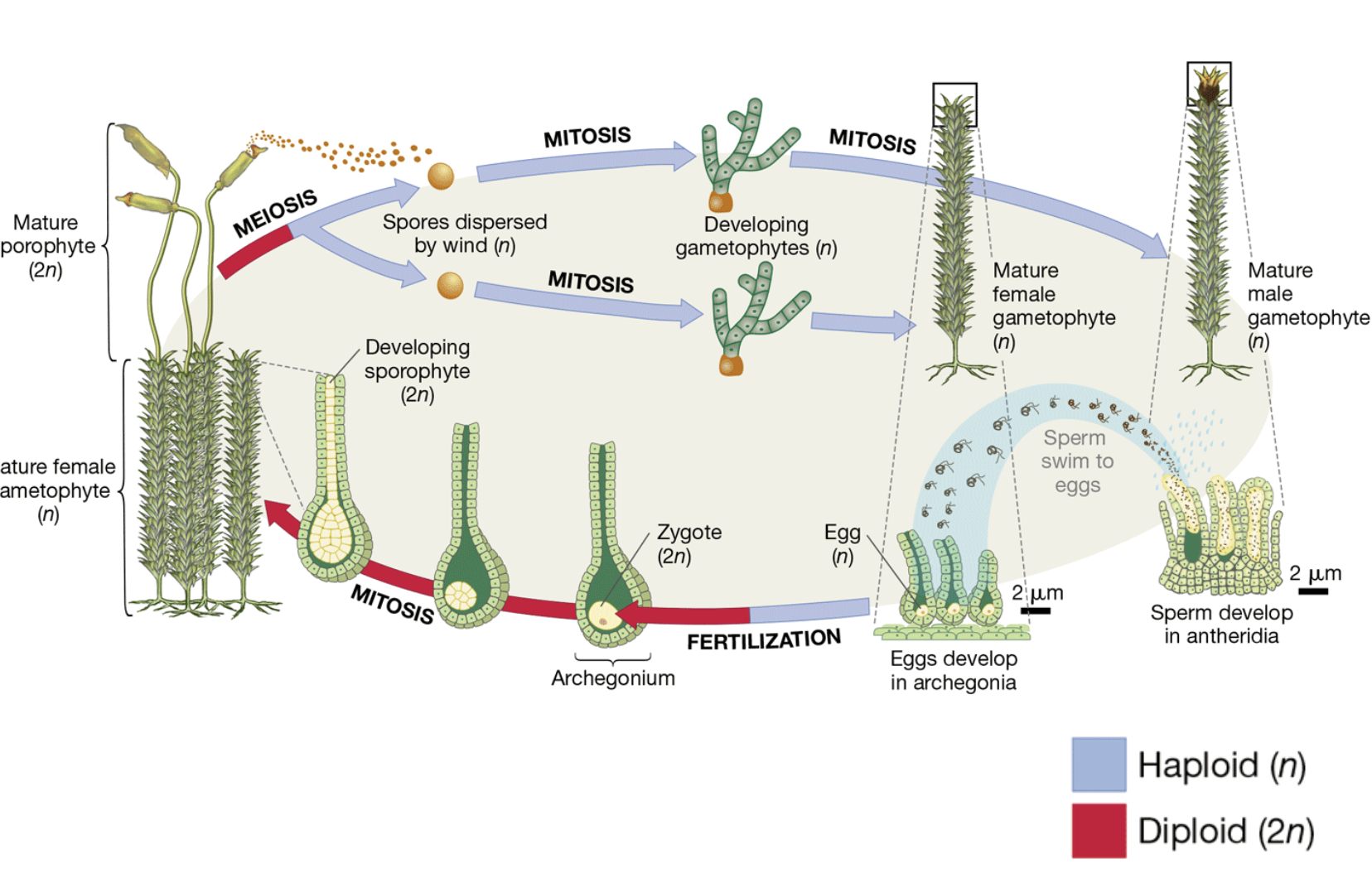
Sperm need to swim in the water to get to the archegonia
Vascular Land Plants
Ferns and friends
First vascular plants show up in the fossil record around 420 million years ago
Ferns and friends undergo adaptive radiation around 360 million years ago
Adaptations:
The evolution of lignin and secondary cell walls facilitated the evolution of vascular systems in land plants
Primary cell wall of cellulose and secondary cell wall of lignin
Vascularity gives them rigidity
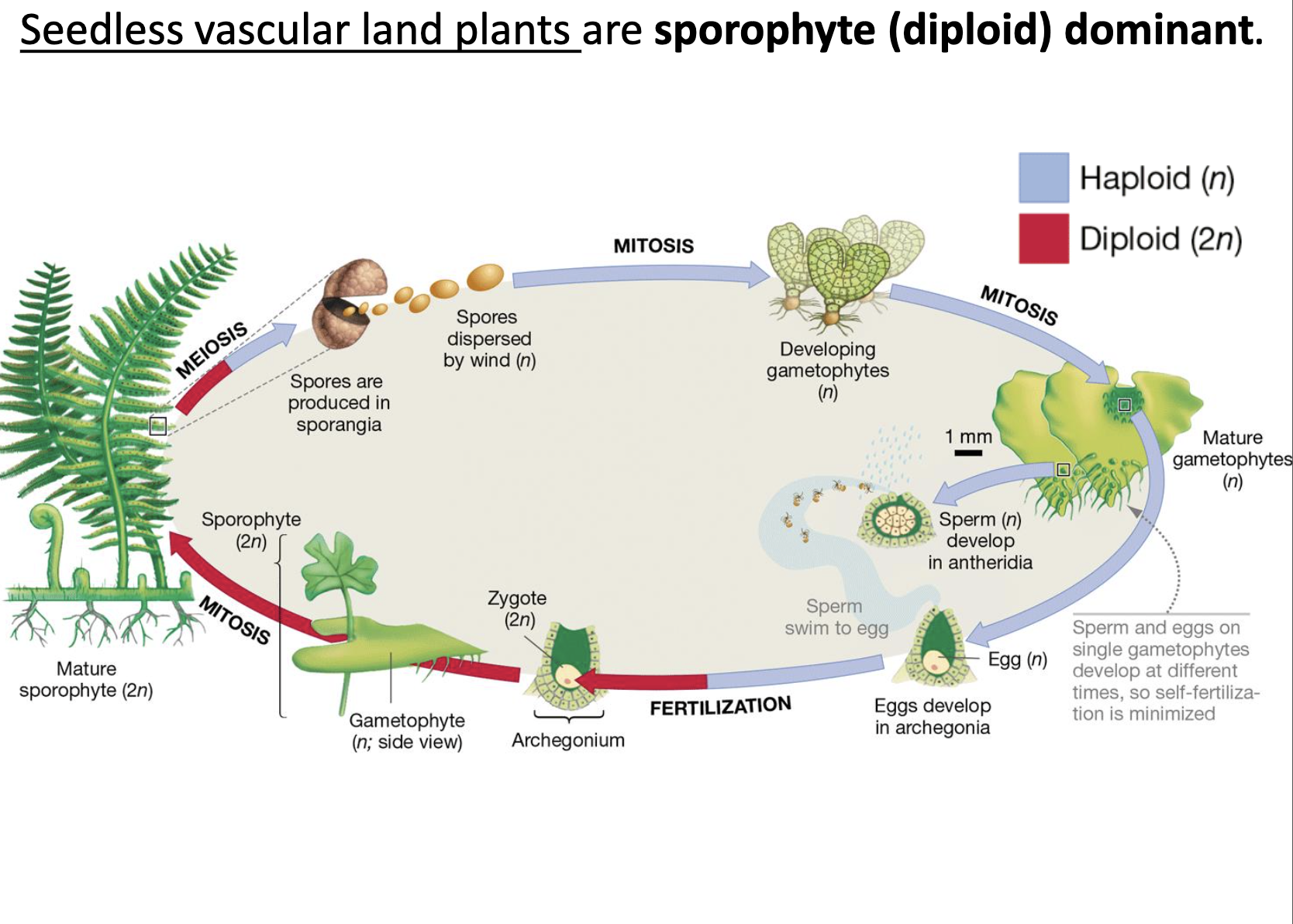
Still needs water for the sperm to swim in