Intro to fractions & mixed numbers
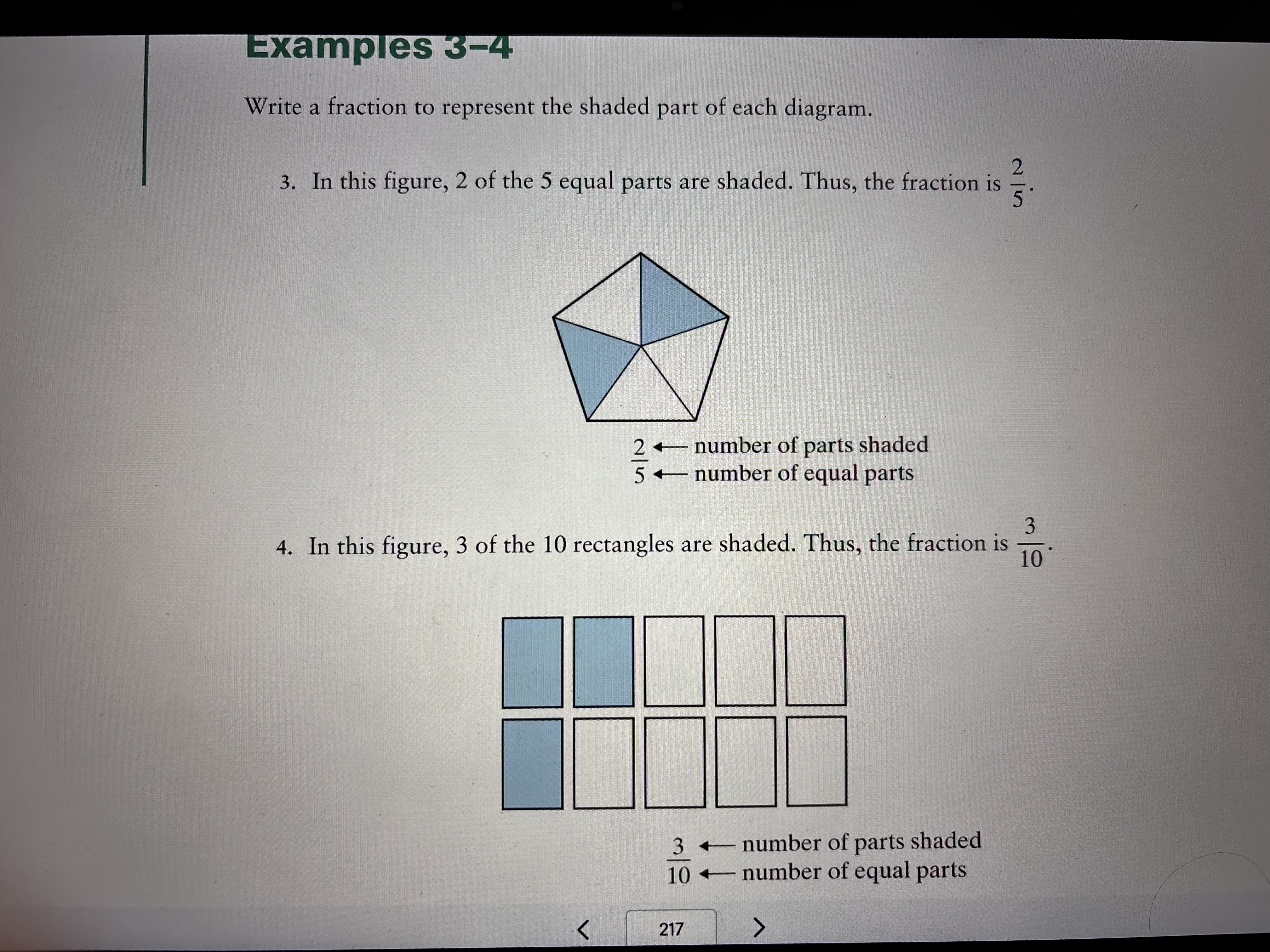
we use fractions to represent a part of a whole
¾
3=numeratior 4=denominator
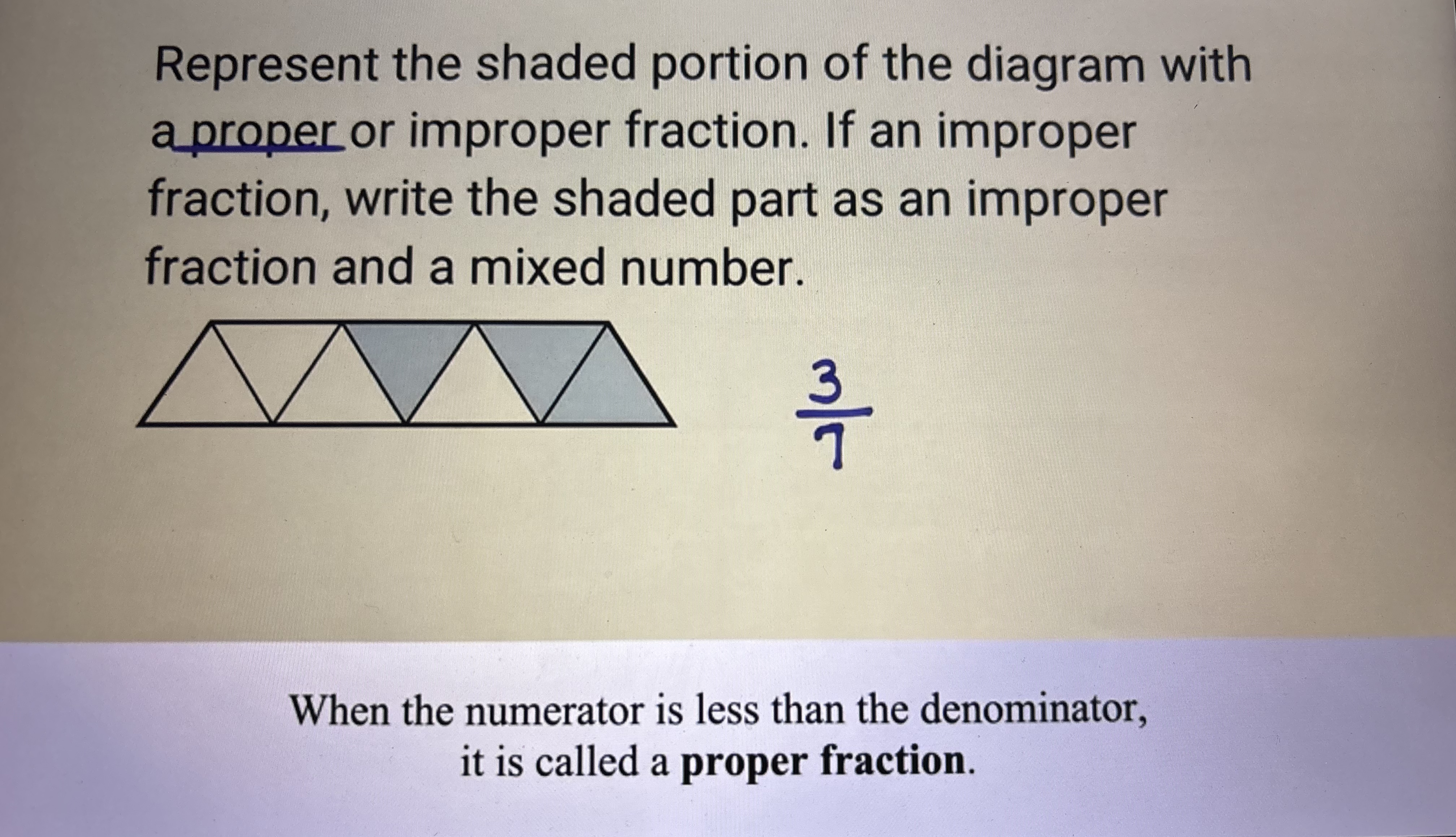
when the numeratior is less than the denominator it is called a proper fraction
when the numeratior is greater than or equal to the denominator its is called a improper fraction
Ex: ½ is a proper fraction. 10/3 is a improper fraction
A mixed number has a whole number part and fraction part. a mixed number is greater than 1
Ex 2 1/3 also means 2+ 1/3
Solve
a bag contains 50 red or blue marbles, if 21 marbles are blue, A. what fraction of the marbles are blue? B. how many marbles are red? C. what fraction of the marbles are red?
A. since there are 50 marbles in total, the denominator is 50, and since there are 21 blue marbles, the numerator is 21. 21/50
B. to find how many red marble there are you would subtract the total of marbles and the amount of blue marbles to find how many are remaining. 50-21=29
C. since there are 50 marbles in total, the denominator is 50, and since there are 29 red marbles, the numerator is 29. 29/50
Graph a fraction on a number line
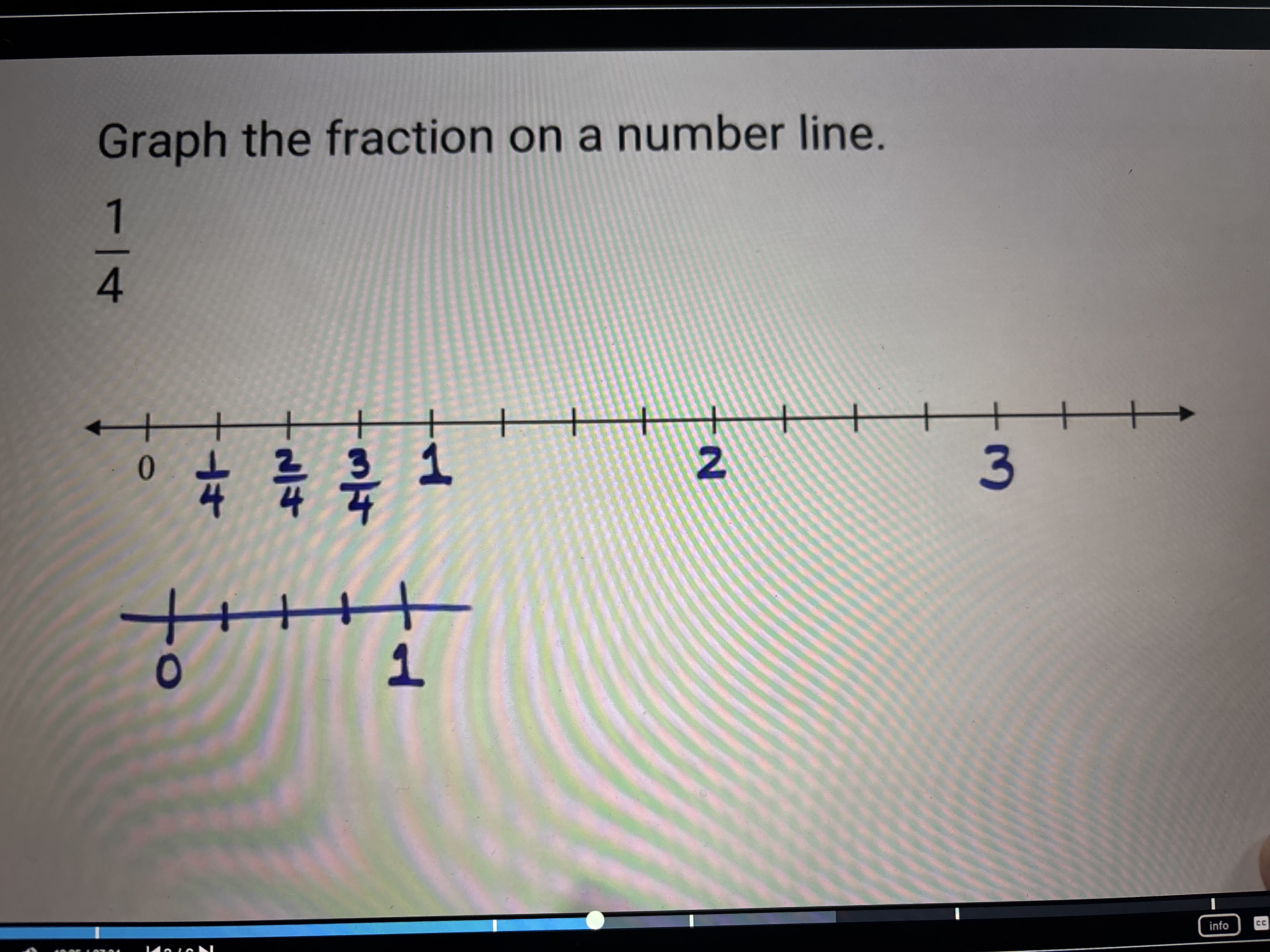
graph ¼ on a number line
since the denominator is a 4 divided the distance from 0 to 1 in 4 equal parts
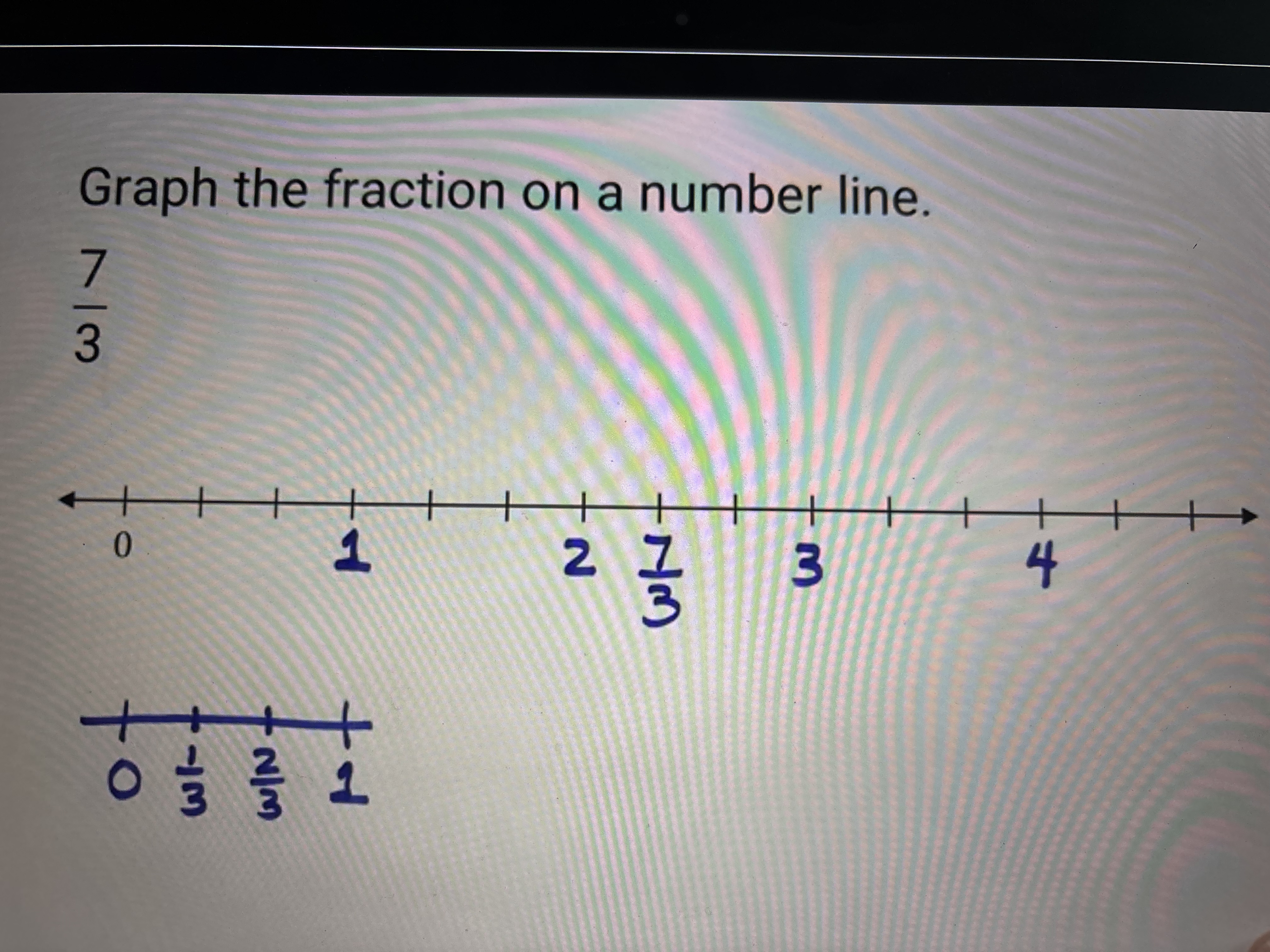
Graph 7/3 on a number line
Write mixed numbers as improper fractions
to write a mixed number as an improper fraction:
step 1: multiply the denominator of the fraction by the whole number
step 2: add the numerator of the fraction to the product from step 1
step 3: write the sum from step 2 as the numerator of the improper fraction over the original denominator
(the denominator never changes)
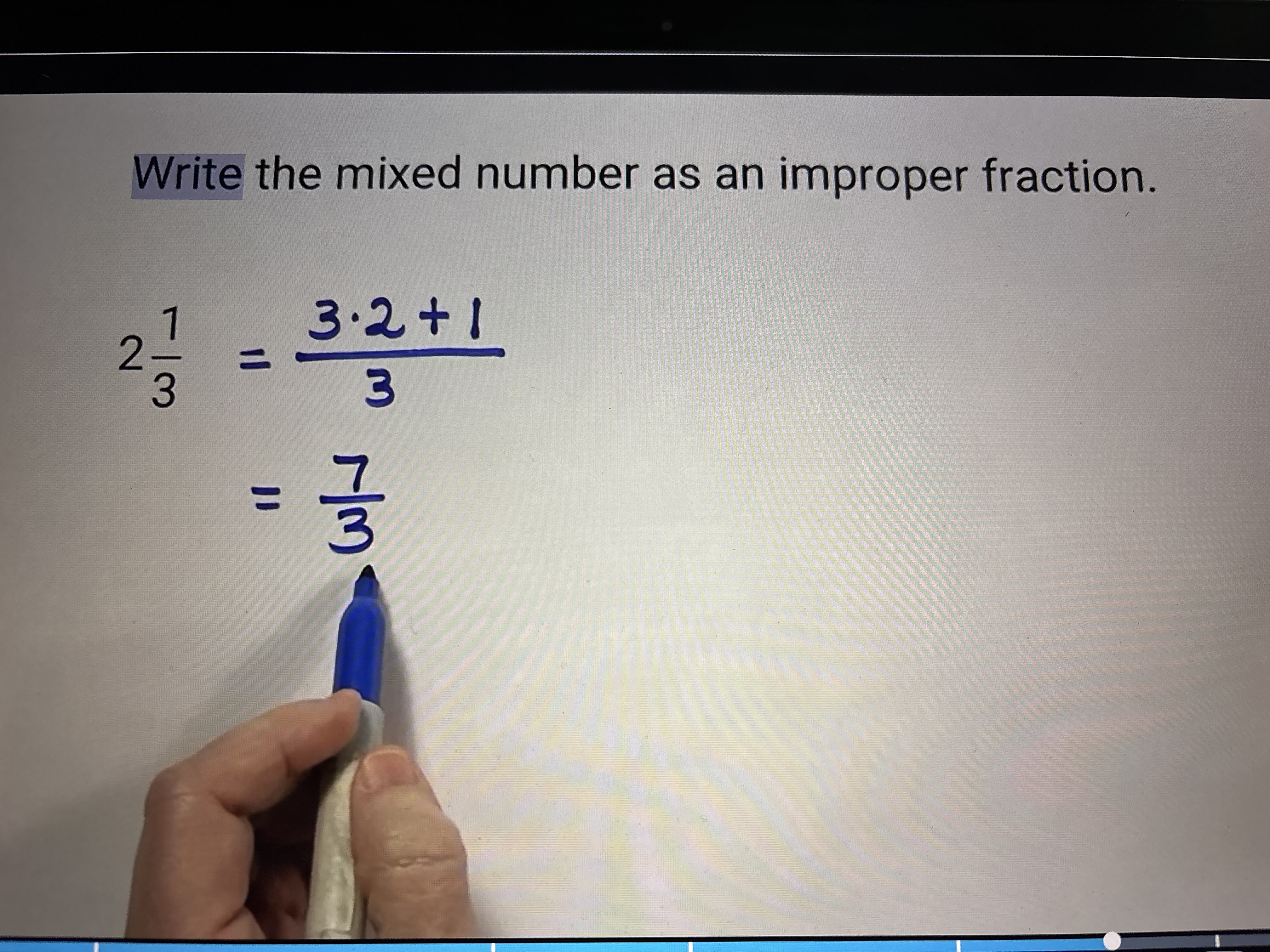
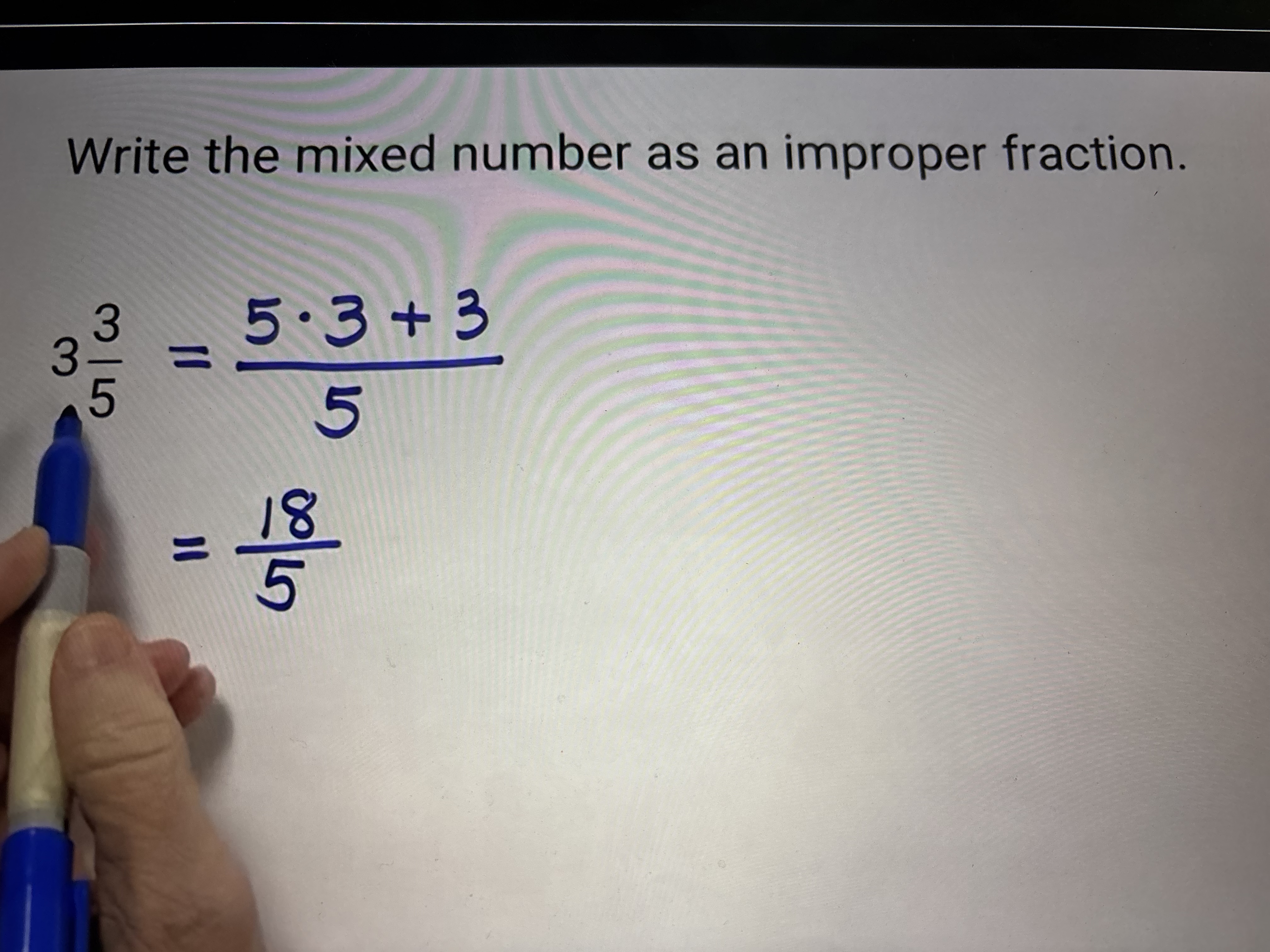
write the mixed number as an improper fraction
2 1/3 = 3•2+1/3= 7/3 so 2 1/3= 7/3
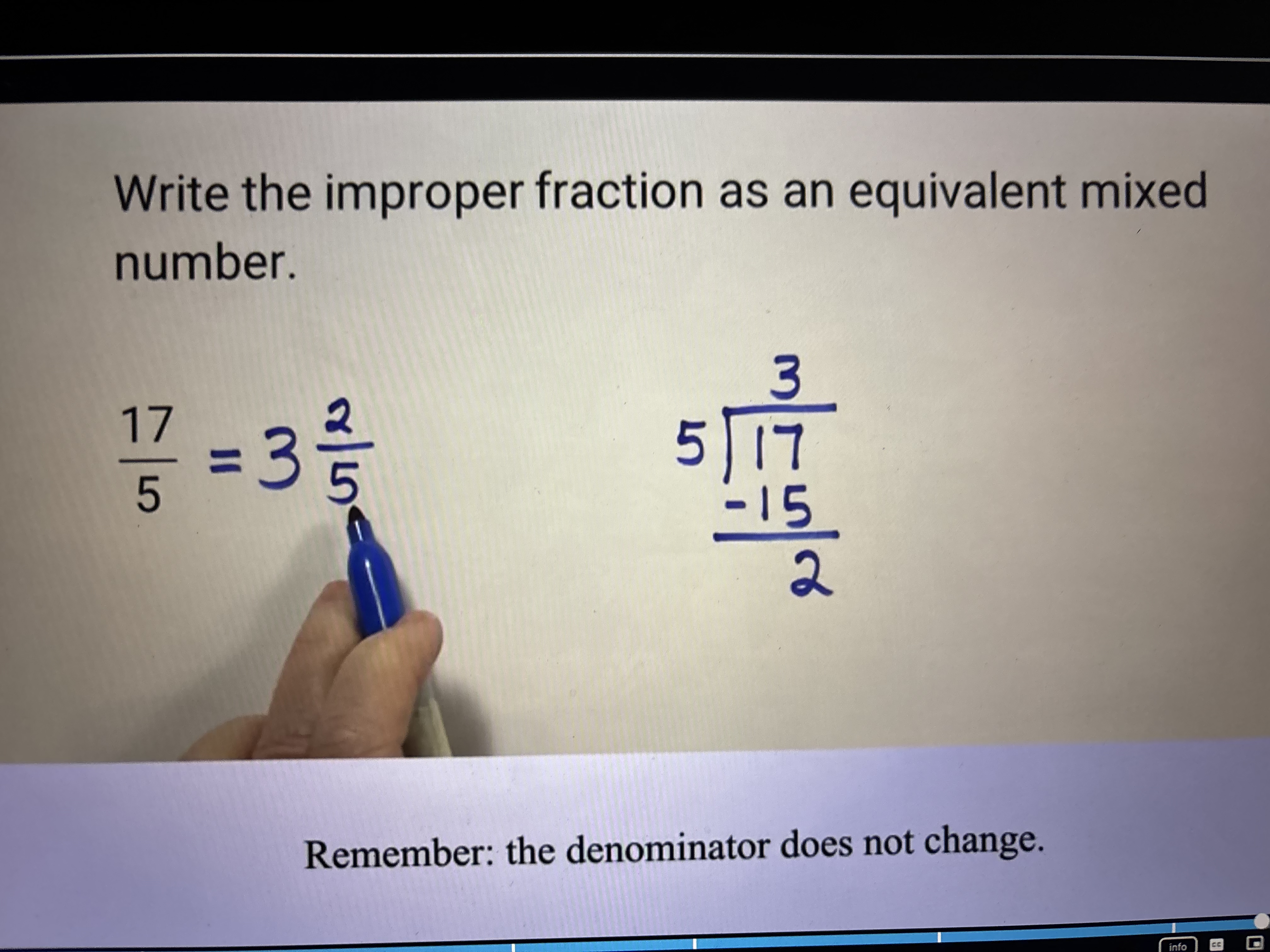
write improper fractions as mixed numbers or whole numbers
to write an improper fraction as a mixed or whole number:
Step 1: divide the denominator into the numerator
step 2: the whole part of the mixed number is the quotient. the fraction part of the mixed number is the remainder of the original denominator.
(denominator doesn’t change)