soil color
The Munsell System
Hue
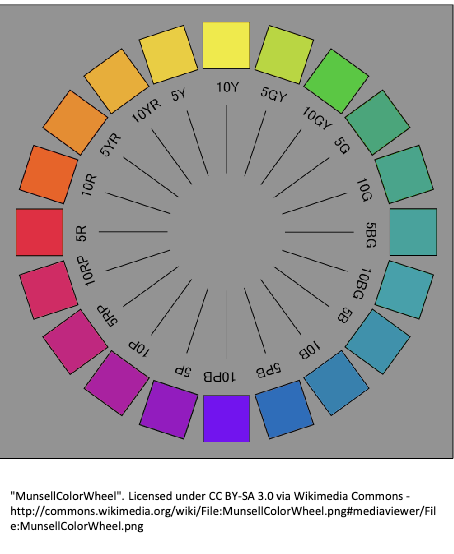
The pure colors have the number 5 is “pure”
5 indicates the primary color is pure
5R is pure red
move to the left of the primary hue, the number increases
10RP indicates it is mostly red, and slightly purple
A perfect 50/50 mix has a 5 with two letters
ex: 5RP is 50% red 50% purple
Moving one more chip to the left:
10P means it is mostly purple and slightly red
Value
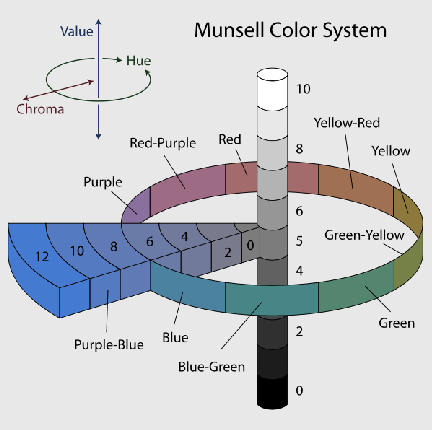
Value is the lightness of a color
ranges from 0 (very dark, black) to 10 (very light, white)
Relates to how much light is reflected/absorbed
White reflects light
black absorbs light
Chroma
Chroma is the concentration of purity of the color
The higher the concentration, the higher the chroma number.
ranges betweem 0-12
If color was a wagon wheel:
Hue would be the individual spokes
Value would be position on the axel
chroma is the distance from the axel.
Recording Soil color
Soil must be moist
not soaked to the point of glistening (matte finish)
sometimes soil colors are reported as dry color
unless a soil profile description explicitly says soil colors were recorded as dry color, assume that soil colors are moist colors.
Always use sunlight
no sunglasses or tinted lenses
use fresh face or ped
don’t crush or rub the soil
Determine the matrix (dominant color) and all subordinate colors (mottles)
HVAC (hue value&chroma)
How is Soil Color Used?
Diagnostic Epipedons
the more OM, the darker the color
mollic and umbric epipedons have lots of OM
specific values and chromas are required for the epipedons
Separating soil series
soils of the same taxonomic family can be separated by soil colors
Determining depth to seasonal high water table
agricultural drainage
wetland delineation
oxidation-reduction reactions cause gray colored “mottles” to form below the water table
Oxidation: produces electrons when two things are present
e- produced when OM is eaten
Reduction: reactions with e- and H+
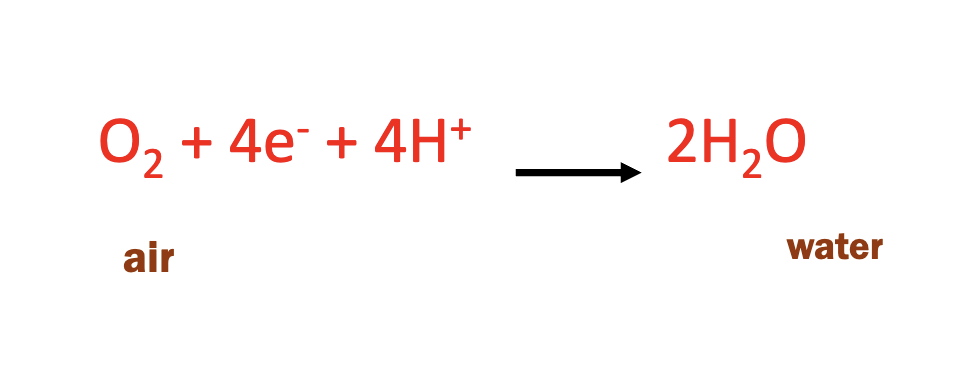
Oxidation and Reduction occur together
What happens in waterlogged soils?
OM continues to be decomposed
no O2 present
Instead, “alternative electron acceptors” are used
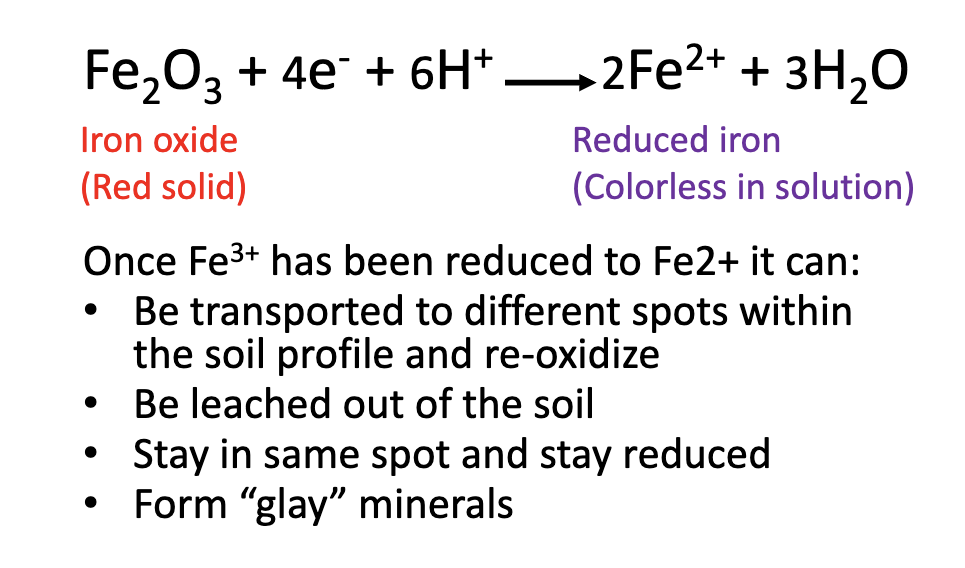
NO3-. MnO2, Fe2O3, SO42- and CO2
Iron Reduction Reaction
Formation of Redoximorphic Features
Mottles form where there is:
OM
active microbes
Saturated conditions
Fe present
Water table:
Depth at which there is free-standing water
depth varies by season
Seasonally high water table
marked by depth of mottles with chroma 2 or less
Drainage Class and Saturated Conditions
Developed by USDA to identify areas of farmland needing drainage.
Saturated conditions in the rooting zone negatively impacts plants.
Saturated conditions near the surface can reduce soil strength causing problems when machinery is being used
Construction
Planting/harvesting
Wetland Delineation