Prologue
A ratio is a way to compare two or more numbers to show how they relate to each other in terms of size or quantity. It tells you how much of one thing there is compared to another.
A ratio is basically a structured comparison. It shows how numbers relate.
Problem
What’s the ratio of apples to oranges?
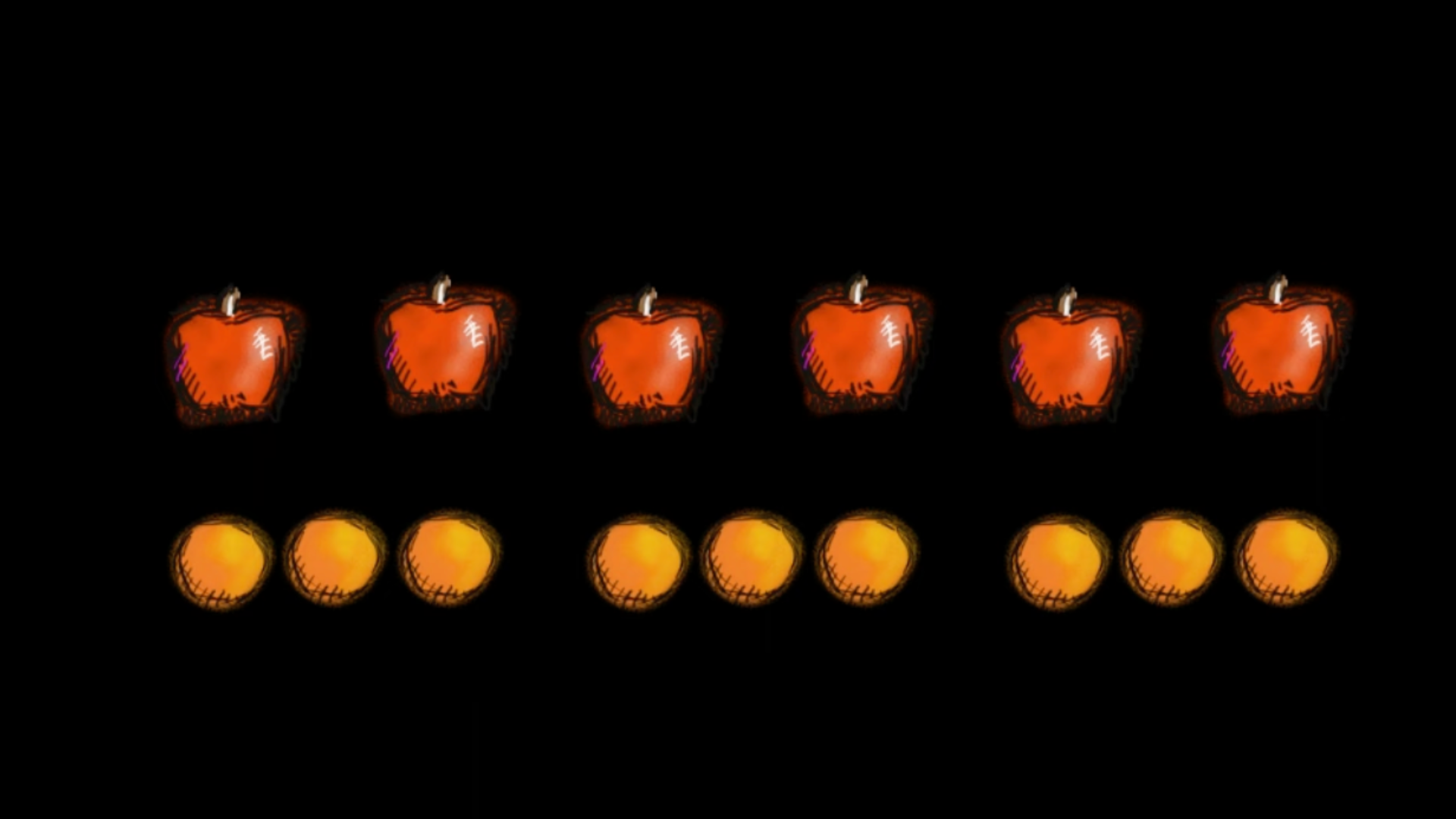
6 to 9… 6:9 : = to. You can also simplify, just like simplifying fractions. You can simplify ratios. Both 6 and 9 are divisible by 3. So:
2:3Wording can easily change the result. Ie. The phrasing ‘Apples to oranges’ ≠ ‘Oranges to Apples.’
6:9 ≠ 9:6Bonus (How Ratios Quickly Turn Into Algebra)
Ratios turn into variables
At first you’re doing 2:3. Later that becomes :
2x:3xThat’s algebra saying, “whatever scale you’re using, the relationship stays the same.” If the apples double, the oranges double. That’s proportional reasoning — the backbone of algebra.
Ratios turn into equations
Eventually instead of saying, “the ratio is 2:3,” you’ll say :
a/b = 2/3Ratios turn into real world math
Ratios are everywhere:
Speed (miles : hour)
Scale (map distance: real distance)
Probability (Favourable outcomes : total outcomes)
Slopes (rise : run)