Perry et al - Oxytocin & Empathy
Aim
To investigate the effect of oxytocin on preferred interpersonal distance in individuals with high or low empathy traits.
Research Hypotheses
Administering oxytocin will affect interpersonal distance depending on a person’s level of empathy.
High-empathy individuals will prefer closer distances, while low-empathy individuals will prefer greater distances.
Background
Dr. Anat Perry, a professor at the Hebrew University of Jerusalem, studies empathy and social processes through cognitive neuroscience.
The study aimed to test the Social Salience Hypothesis (SSH), which suggests oxytocin increases attention to social cues, affecting behavior.
Amygdala involvement:
Controls personal space preferences.
Lesions reduce the need for interpersonal distance.
Oxytocin affects amygdala activity, influencing personal space preferences.
Hall’s (1966) Four Zones of Interpersonal Distance:
Intimate distance – Close relationships.
Personal distance – Everyday interactions.
Social distance – Formal interactions.
Public distance – Public figures.
Empathy and its dimensions:
Cognitive empathy: Understanding another person’s emotions.
Affective empathy: Feeling another person’s emotions.
Previous research (Scheele et al., 2012): Oxytocin increased interpersonal distance in monogamous men interacting with attractive women.
Psychology Being Investigated
Interpersonal distance: The space between individuals, influenced by relationships, culture, and personal traits.
Personal space: An invisible boundary that, when invaded, can cause discomfort or threat.
Oxytocin: A social bonding hormone that promotes prosocial behavior but can also amplify social biases.
Sample
56 male undergraduates from the University of Haifa, Israel.
Aged 19-32 years.
Participants received course credit or payment.
5 left-handed; all had normal vision and no mental health conditions (screening interview).
Sampling technique: Volunteer (self-selecting).
Research Method and Design
Two laboratory experiments.
Repeated measures design with randomization.
Independent Variables (IVs)
Empathy level (high or low, based on the Interpersonal Reactivity Index [IRI] questionnaire).
Oxytocin or placebo (Ps received both conditions two weeks apart, in a randomized, counterbalanced order).
Dependent Variable (DV)
Effect of oxytocin on preferred interpersonal distance based on empathy level.
Procedure
Ps divided into high or low empathy groups (based on IRI questionnaire scores).
High-empathy group: Score ≥ 40.
Low-empathy group: Score ≤ 33.
Oxytocin and placebo given in a counterbalanced order over two weeks.
Double-blind design: Neither Ps nor experimenters knew which solution was administered.
45-minute wait time after administration to stabilize oxytocin levels.
Experiment 1 – Comfortable Interpersonal Distance Paradigm
Ps completed a computer-based task measuring preferred interpersonal distance from:
Stranger
Authority figure
Friend
Object (ball)
Animated figures approached from 8 entrances.
Ps pressed spacebar to stop the figure.
Distance measured as a percentage score (0% = touching, 100% = farthest).
96 trials were conducted.
Experiment 2 – ‘Choosing Rooms’ Task
Ps selected seating arrangements for a personal conversation.
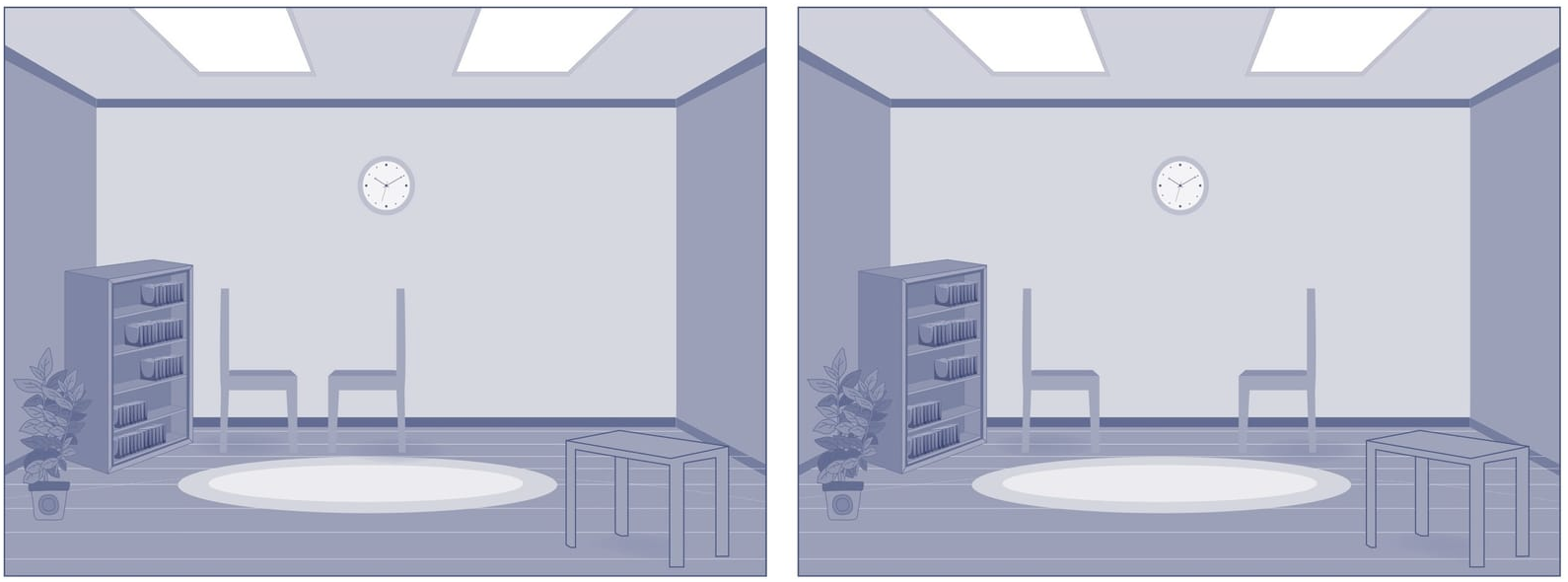
Measured variables:
Distance between chairs.
Angle of chair positions.
Control conditions: Distance/angle of table and plant.
Controls
Double-blind technique (prevents experimenter bias).
Counterbalancing (reduces order effects).
Standardized stimuli (same animations, fixation points, and timing for all Ps).
Results
Experiment 1
High-empathy group:
Oxytocin decreased interpersonal distance (placebo: 26.11% → oxytocin: 23.29%).
Low-empathy group:
Oxytocin increased interpersonal distance (placebo: 26.98% → oxytocin: 30.20%).
Significant differences found in distance preferences for different social figures.
Ps were willing to be closer to an object (ball) than to a stranger or authority figure in the oxytocin condition.
Experiment 2
High-empathy group:
Chose closer chair distances in the oxytocin condition (80.58) vs. placebo (78.07).
Low-empathy group:
Chose greater chair distances in the oxytocin condition (78.33) vs. placebo (80.14).
Oxytocin did not significantly affect chair angle preferences.
Conclusions
Oxytocin affects interpersonal distance based on empathy level.
High-empathy individuals preferred closer distances after oxytocin.
Low-empathy individuals preferred greater distances after oxytocin.
Supports the Social Salience Hypothesis (SSH):
Oxytocin amplifies social cues, making people more sensitive to interpersonal space.
Ethics
Informed consent was obtained.
Ps were debriefed after the study.
Deception in Experiment 2 (Ps believed they would have a personal discussion, which never happened—potential psychological harm).
Evaluation (Strengths and Weaknesses)
Strengths
Double-blind technique reduced bias and demand characteristics.
Quantitative data allowed objective measurement and comparison.
Highly standardized (controlled animations, identical conditions for all Ps).
Widely validated paradigm (CID paradigm) increased validity.
Weaknesses
Self-report measure (IRI) may have social desirability bias (Ps may have exaggerated empathy scores).
All-male sample—findings may not generalize to women.
Lab-based, computer task lacks ecological validity (real-life interactions may evoke stronger emotional responses).
Deception in Experiment 2 may have caused unnecessary anxiety.
Issues and Debates
Individual vs. Situational Explanation
Individual differences: Oxytocin affected each group differently.
Situational factors: Interpersonal distance was influenced by oxytocin levels and social context.
Real-Life Applications
1. Social Interventions for Autism Spectrum Disorder (ASD)
Oxytocin may not be effective for ASD treatment, as it can reinforce existing social biases rather than improve social interactions.
2. Workplace and Public Space Design
Understanding personal space preferences can help design office layouts and public seating arrangements that accommodate different comfort levels.
3. Therapy and Social Training
Oxytocin may help high-empathy individuals engage more comfortably in social situations but may be counterproductive for those with low empathy.