psych unit 4
Social Psychology
- Social psychology
- The scientific study of how we think about, influence, and relate to one another
Social Thinking
- Fundamental attribution error
- The tendency to attribute other people’s behaviors to their character rather than their situation.
- Examples:
- someone is late to work because they are lazy, not considering they may have run into unexpected traffic
- someone quiet at a party is antisocial, not considering they may not feel well tonight
- someone that cuts you off in traffic is an idiot, not considering they may be tired from being up all night caring for a loved one
- Examples:
- The tendency to attribute other people’s behaviors to their character rather than their situation.
Attitudes Affect Actions
- Attitudes are feelings influenced by beliefs, which predispose people to have specific reactions to objects, people, and events.
Actions Affect Attitudes
- Actions can modify attitudes
- Foot-in-the-door phenomenon
- compliance with a small request causes the subject to infer that they have a positive attitude toward cooperating with good causes; in turn, this positive attitude leads to compliance with the larger request
- Attitudes follow behavior
- Cooperative actions feed mutual liking. Such attitudes, in turn, promote positive behavior.
Cognitive Dissonance
- Cognitive Dissonance: when attitudes do not fit with actions tension is created.
- We act to reduce the discomfort (dissonance) we feel when two of our thoughts (cognitions) clash.
Persuasion
- Peripheral route persuasion occurs when people are influenced by incidental cues, such as a speaker’s attractiveness.
- Central route persuasion occurs when interested people focus on the arguments and respond with favorable thoughts.
Social Influence
- Social contagion
- The more we mimic, the greater our empathy, and the more people tend to like us.
- This is a form of conformity.
- Example: In a large crowd, if one person starts running and screaming, others will follow in the same direction - this is adaptive.
Conformity and Obedience
- Asch and others have found that people are most likely to adjust their behavior or thinking to coincide with a group standard in the following circumstances:
- They feel incompetent or insecure.
- Their group has at least three people.
- Everyone else agrees.
- They admire the group’s status and attractiveness.
- They have not already committed to another response.
- They know they are being observed.
- Their culture encourages respect for social standards.
People May Conform for Many Reasons
- Normative social influence: Influence resulting from a person’s desire to gain approval or avoid disapproval
- I don’t want people to think I’m difficult, so I’ll agree
- Informational social influence: Influence resulting from one’s willingness to accept others’ opinions about reality
- If they all think 1 is correct, it must be correct
Milgram’s Obedience Experiments
- Stanley Milgram’s experiments
- People obeyed orders even when they thought they were harming another person.
- Strong social influences can make ordinary people conform to falsehoods or exhibit cruel behavior.
- In any society, great evil acts often grow out of people’s compliance with lesser evils.
Milgram’s Obedience Experiments
- Findings from the Milgram experiments
- Obedience was highest when:
- The person giving orders was nearby and was perceived as a legitimate authority figure.
- The research was supported by a prestigious institution.
- The victim was depersonalized or at a distance.
- There were no role models for defiance.
- Obedience was highest when:
Behavior in the presence of others
- Social facilitation: The presence of others arouses people, improving performance on easy or well-learned tasks but decreasing performance on difficult tasks.
- home-team advantage
- Social loafing: Tendency for people in a group to exert less effort when pooling their efforts toward attaining a common goal than when individually accountable
- don’t be a social loafer in your groups!
- Deindividuation: A loss of self-awareness and self-restraint that occurs in group situations that foster arousal and anonymity
- more likely to give to charity if others are, or engage in violence if others are
Group Polarization and Groupthink
- Group polarization
- Group discussions with like-minded others strengthen members’ prevailing beliefs and attitudes.
- Internet communication magnifies this effect, for better or for worse.
- Groupthink
- People are driven by a desire for harmony within a decision-making group, with this desire overriding realistic appraisal of alternatives.
Group Polarization
- If group members are like-minded, discussion strengthens the prevailing opinions.
- Talking over racial issues increased prejudice in a high-prejudice group of high school students and decreased it in a low-prejudice group.
Antisocial Relations
- Prejudice: An unjustifiable (and usually negative) attitude toward a group and its members (Prejudice generally involves stereotyped beliefs, negative feelings, and a predisposition to discriminatory action.)
- Discrimination: Unjustifiable negative behavior toward a group and its members
Roots of Prejudice
- Social roots of prejudice
- Social inequalities: Often lead to the development of attitudes that justify the status quo
- Stereotypes: Rationalize inequalities
- Example of social roots of prejudice: The unhoused population is lazy and don’t want to work to buy a house.
- Evolution prepares people to identify with a group.
- Ingroup: “Us”—people with whom we share a common identity
- Outgroup: “Them”—those perceived as different or apart from our ingroup
- Ingroup bias: The tendency to favor our own group
- Scapegoat theory: The theory that prejudice offers an outlet for anger by providing someone to blame
- Research evidence
- Prejudice levels tend to be high among economically frustrated people.
- In experiments, a temporary frustration increases prejudice.
Altruism
- Altruism is an unselfish concern for the welfare of others.
- Odds for being helped increase if the person appears to deserve help or is a woman.
- Similarity to self, being unhurried or in a good mood, feeling guilty, and being focused on others and not preoccupied also raise the likelihood of helping.
- Bystander effect
- Tendency for any given bystander to be less likely to give aid if other bystanders are present
- Occurs when there is a diffusion of responsibility
The Norms for Helping
- Positive social norms encourage generosity and enable group living.
- Socialization norm: Social expectation that prescribes how we should behave
- Reciprocity norm: Expectation that people will respond favorably to each other by returning benefits for benefit
- Social-responsibility norm: Expectation that people should help those who depend on them
Personality
- Personality
- An individual’s characteristic pattern of thinking, feeling, and acting
- Psychodynamic theories
- Posit that behavior is the dynamic interaction between the conscious and unconscious mind
Freud’s Psychoanalytic Perspective: Perspective Exploring the Unconscious
- Sigmund Freud (1856 – 1939) was an Austrian neurologist and the founder of psychoanalysis.
- Observed patients whose disorders had no clear physical explanations
- Concluded that their problems reflected unacceptable thoughts and feelings, hidden away in the unconscious mind
Freud’s Personality Structure
- Personality results from the mind’s three systems.
- Id: Operates on the pleasure principle; unconsciously strives to satisfy basic drives to survive, reproduce, and aggress
- Ego: Operates on the reality principle; seeks to realistically gratify the id’s impulses to bring long-term pleasure
- Superego: Focuses on ideal behavior; strives for perfection; acts as moral conscience
Freud’s Idea of the Mind’s Structure
- The iceberg image
- The id is totally unconscious, but the ego and the superego operate both consciously and unconsciously
Defense Mechanisms
- The ego protects itself with tactics that reduce and redirect anxiety by reality distortion (defense mechanisms).
- Defense mechanisms function indirectly and unconsciously.
Six Defense Mechanisms
Defense Mechanism | Unconscious Process Employed to Avoid Anxiety- Arousing Thoughts or Feelings | Example |
|---|---|---|
Regression | Retreating to an earlier psychosexual stage, where some psychic energy remains fixated | A little boy reverts to the oral comfort of thumb sucking in the car on the way to his first day of school. |
Reaction formation | Switching unacceptable impulses into their opposites | Repressing angry feelings, a person displays exaggerated friendliness. |
Projection | Disguising one’s own threatening impulses by attributing them to others | “The thief thinks everyone else is a thief” (an El Salvadoran saying). |
Rationalization | Offering self-justifying explanations in place of the real, more threatening unconscious reasons for one’s actions | A habitual drinker says she drinks with her friends “just to be sociable.” |
Displacement | Shifting sexual or aggressive impulses toward a more acceptable or less threatening object or person | A little girl kicks the family dog after her mother puts her in a time-out. |
Denial | Refusing to believe or even perceive painful realities | A partner denies evidence of his loved one’s affair. |
The Neo-Freudian and Later Psychodynamic Theorists
- Neo-Freudians
- Accepted many of Freud’s ideas
- Placed more emphasis on the conscious mind and on social motives than sexual- or aggression-related ones
- Contemporary psychodynamic theorists
- View mental life as primarily unconscious
- Contend that childhood social experiences influence adult personality and attachment patterns
The Neo-Freudian and Later Psychodynamic Theorists
- Alfred Adler: “The individual feels at home in life and feels his existence to be worthwhile just so far as he is useful to others and is overcoming feelings of inferiority” (Problems of Neurosis, 1964).
- Karen Horney: “The view that women are infantile and emotional creatures, and as such, incapable of responsibility and independence is the work of the masculine tendency to lower women’s self-respect” (Feminine Psychology, 1932).
- Carl Jung: “From the living fountain of instinct flows everything that is creative; hence the unconscious is the very source of the creative impulse” (The Structure and Dynamics of the Psyche, 1960).
Evaluating Freud’s Psychoanalytic Perspective and Modern Views of the Unconscious
- Freud’s major contributions:
- Drew attention to the vast unconscious
- Addressed conflict between biological impulses and social restraints
- Identified forms of defense mechanisms and unconscious terror-management defenses
Assessing Unconscious Processes
- Projective test
- Personality test that provides ambiguous stimuli
- Designed to trigger the projection of one’s inner dynamics and reveal unconscious motives
- Thematic Apperception Test (TAT)
- Projective test in which people express their inner feelings and interests through the stories they make up about ambiguous scenes
Assessing Unconscious Processes
- Rorschach inkblot test
- Most widely used projective test
- A set of 10 inkblots, designed by Hermann Rorschach
- Seeks to identify people’s inner feelings by analyzing their interpretations of the blots
Rorschach Test
Although developed to diagnose schizophrenia, this test has also been used to illuminate personality characteristics.
Let’s give it a try…
- Get into groups of 3.
- Each group will get an inkblot card.
- All group members should think about (or share, if you’re comfortable) what you see in the blot.
- Once all group members have decided, flip over the card and see what your interpretation says about your personality.
- Once finished with one card you can switch with another group and try another card.
Humanistic Theories and Trait Theories
- Abraham Maslow’s self-actualizing person
- Maslow focused on the potential for healthy personal growth and people’s striving for self-determination and self-realization.
- People are motivated by a hierarchy of needs and strive for self-actualization and self-transcendence.
- Carl Rogers’s person-centered perspective
- Roger posited that characteristics of growth-promoting environment include genuineness, acceptance, and empathy.
- Unconditional positive regard and self-concept are key components of Rogers’s theory.
Assessing the Self
- Humanistic psychologists sometimes assessed personality using questionnaires to evaluate their self-concept.
- Some rejected any standardized assessments and relied on interviews and conversations.
- Rogers sometimes used questionnaires in which people described their ideal and actual selves, which was later used to judge progress during therapy.
Evaluating Humanistic Theories
- Influences
- Influenced counseling, education, child raising, and management
- Laid the groundwork for positive psychology
- Renewed interest in the concept of the self
- Criticisms
- Present vague and subjective concepts
- Advance individualism and self-centered values
- Offer naively optimistic assumptions
Trait Theories: Describing Personality
Trait theorists
- See personality as a stable and enduring pattern of behavior
- Describe differences rather than trying to explain them
- Use factor analysis to identify clusters of behavior tendencies that occur together
- Suggest that genetic predispositions influence many traits
Assessing Traits
- Personality inventory
- Questionnaire on which people respond to items designed to gauge a wide range of feelings and behaviors
- Empirically derived; tests objectively scored
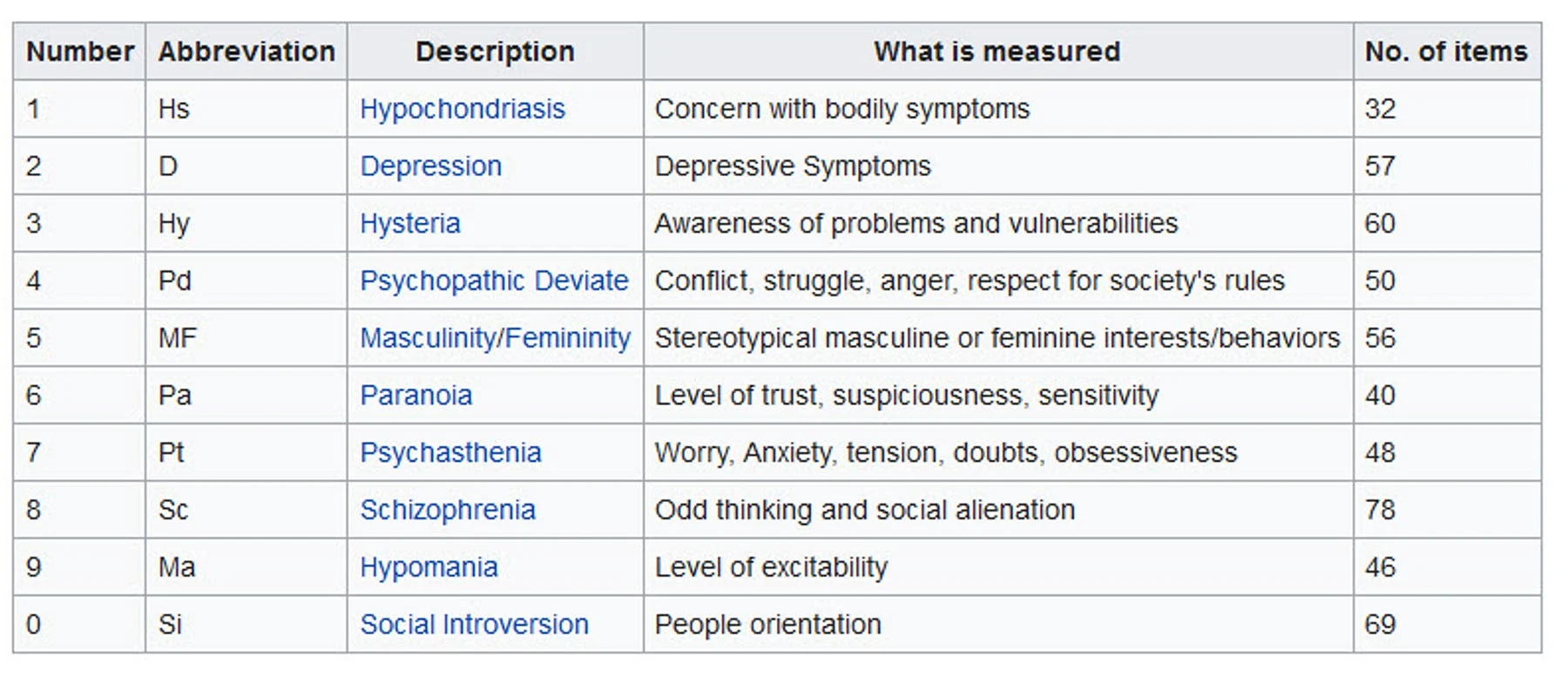
- The Minnesota Multiphasic Personality Inventory (MMPI) is the most common psychometric test devised to assess personality traits and psychopathology.
MMPI
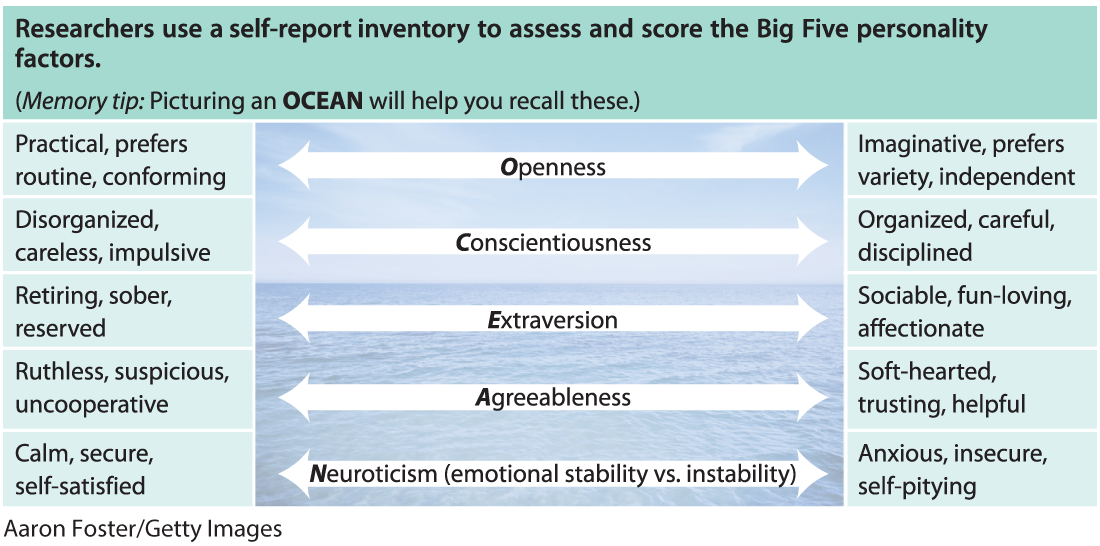
The “Big Five” Personality Factors
- The Big Five factors: Most widely accepted picture of personality
- CANOE:
- Conscientiousness
- Agreeableness
- Neuroticism
- Openness
- Extraversion
The “Big Five” Personality Factors
Big Five Research Questions
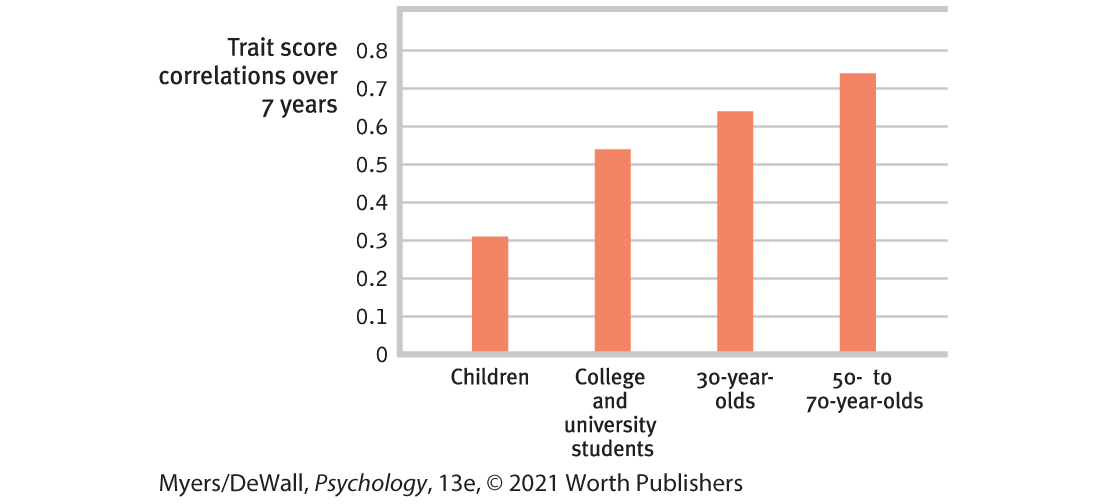
- How stable are these traits?
- Do self-ratings on these traits match others’ ratings?
- Do traits reflect differing brain structure?
- Do these traits reflect birth order?
- How well do these traits apply to various cultures?
- Do the Big Five traits predict our actual behaviors?
Personality Stability
Social-Cognitive Theories and the Self
- Social-cognitive perspective
- Views behaviors as influenced by the interaction between people’s traits (including their thinking) and their social context
- Emphasizes interaction of our traits with our situations
- Applies principles of learning, cognition, and social behavior to personality
Reciprocal Influences
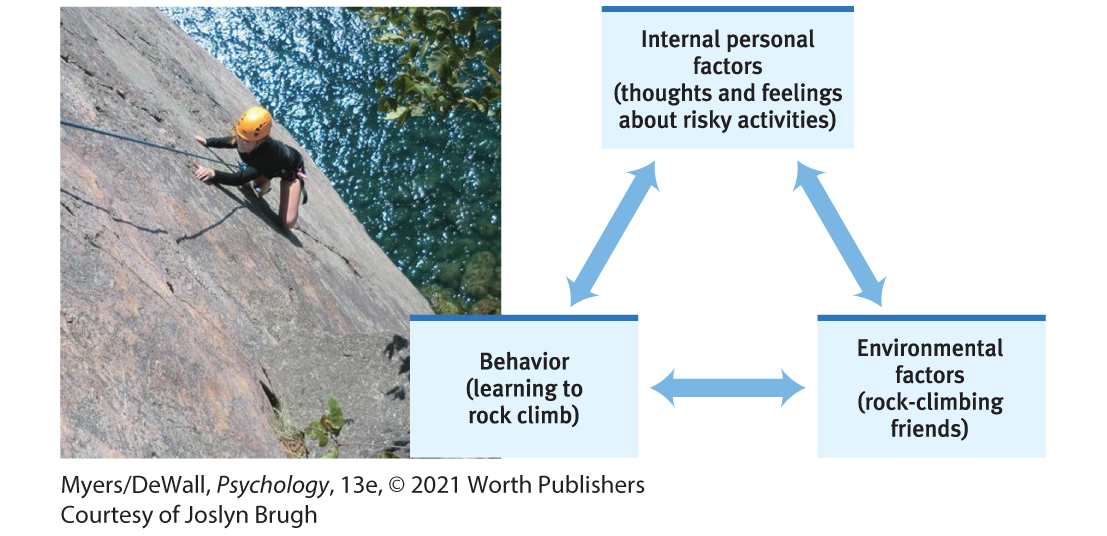
- Reciprocal determinism
- Describes the interaction and mutual influence of behavior, internal personal factors, and environmental factors
Exploring the Self
- Self-esteem: Our feeling of self-worth
- Self-efficacy: Our sense of competence on a task
- High self-esteem correlates with less pressure to conform, with persistence at difficult tasks, and with happiness. But the direction of the correlation is not clear.
Costs of Self-Esteem
- Blindness to one’s own incompetence
- People are most overconfident when most incompetent; it takes competence to recognize competence.
- Self-serving bias
- Involves a readiness to perceive the self favorably
- Suggests that people accept more responsibility for good deeds than for bad and for successes rather than for failure
Psychological Disorders
Introduction to Psychological Disorders
- Psychological diagnoses are marked by a clinically significant disturbance in an individual’s cognition, emotion regulation, or behavior (APA, 2013).
- Disturbed or dysfunctional thoughts, emotions, or behaviors are maladaptive.
Introduction to Psychological Disorders
- Diagnostic classification
- Predicts the disorder’s future course
- Suggests appropriate treatment
- Prompts research into its causes
Diagnostic and Statistical Manual of Mental Disorders (DSM-5)
- DSM-5
- American Psychiatric Association, fifth edition
- Describes disorders and estimates their occurrence
Percentage of Americans Reporting Selected Disorders in the Past Year
Psychological Disorder | Percentage |
|---|---|
Depressive disorders or bipolar disorders | 9.3 |
Phobia of specific object or situation | 8.7 |
Social anxiety disorder | 6.8 |
Attention-deficit/hyperactivity disorder (ADHD) | 4.1 |
Posttraumatic stress disorder (PTSD) | 3.5 |
Generalized anxiety disorder | 3.1 |
Schizophrenia | 1.1 |
Obsessive-compulsive disorder | 1.0 |
What Increases Vulnerability?
Risk Factors | Protective Factors |
|---|---|
Academic failure | Aerobic exercise |
Birth complications | Community offering empowerment, opportunity, and security |
Caring for those who are chronically ill or who have a neurocognitive disorder | Economic independence |
Child abuse and neglect | Effective parenting |
Chronic insomnia | Feelings of mastery and control |
Chronic pain | Feelings of security |
Family disorganization or conflict | High self-esteem |
Low birth weight | Literacy |
Low socioeconomic status | Positive attachment and early bonding |
Medical illness | Positive parent-child relationships |
Neurochemical imbalance | Problem-solving skills |
Parental mental illness | Resilient coping with stress and adversity |
Parental substance abuse | Social and work skills |
Personal loss and bereavement | Social support from family and friends |
Poor work skills and habits | |
Reading disabilities | |
Sensory disabilities | |
Social incompetence | |
Stressful life events | |
Substance abuse | |
Trauma experiences |
Anxiety Disorders, OCD, and PTSD
- Anxiety disorders
- Marked by distressing, persistent anxiety, or maladaptive behaviors that reduce anxiety
- GAD
- Person is continually tense, apprehensive, and in a state of autonomic nervous system arousal.
Terms to Learn: Anxiety Disorders
- Panic disorder
- Person experiences sudden episodes of intense dread and often lives in fear of when the next attack might strike.
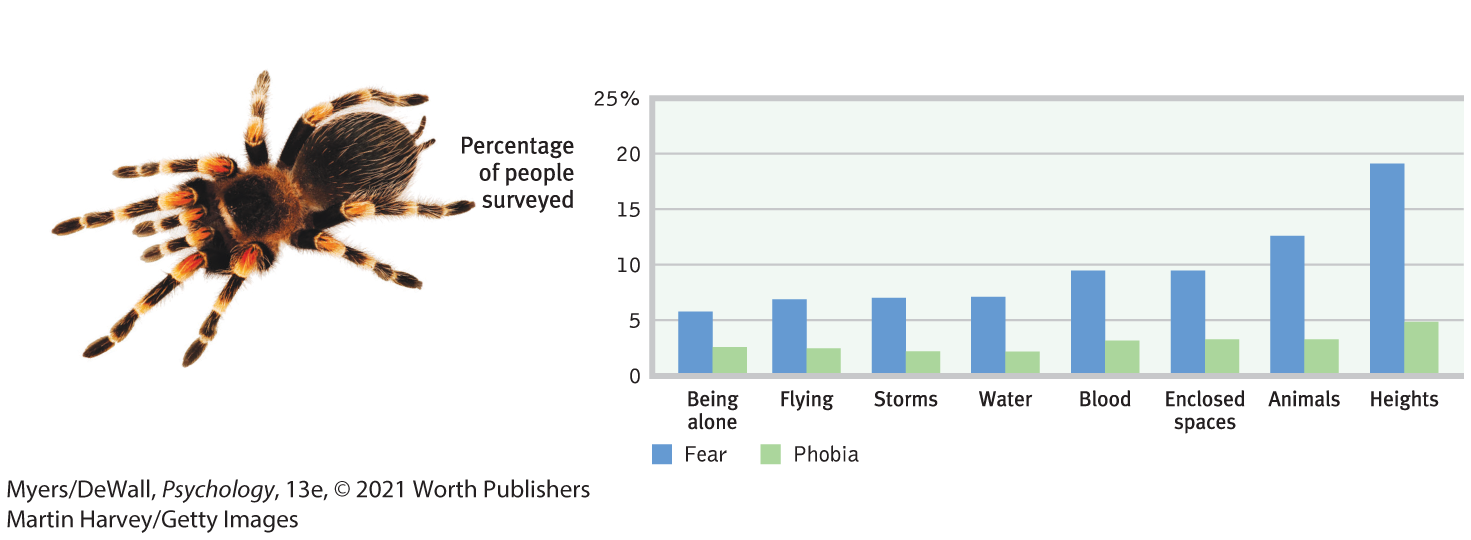
- Phobia
- Person experiences a persistent, irrational fear and avoidance of a specific object, activity, or situation.
Some Common and Uncommon Specific Fears
Obsessive-Compulsive Disorder (OCD)
- OCD
- Characterized by persistent and repetitive thoughts (obsessions), actions (compulsions), or both
- Obsessive thoughts and compulsive behaviors interfere with everyday life and cause distress.
Common Obsessions and Compulsions Among Children and Adolescents with OCD
Thought or Behavior | Percentage Reporting Symptom |
|---|---|
Obsessions (repetitive thoughts) | |
Concern with dirt, germs, or toxins | 40 |
Something terrible happening (fire, death, illness) | 24 |
Symmetry, order, or exactness | 17 |
Compulsions (repetitive behaviors) | |
Excessive hand washing, bathing, toothbrushing, or grooming | 85 |
Repeating rituals (in/out of a door, up/down from a chair) | 51 |
Checking doors, locks, appliances, car brakes, homework | 46 |
Posttraumatic Stress Disorder (PTSD)
- PTSD
- Characterized by haunting memories, nightmares, social withdrawal, jumpy anxiety, numbness of feeling, and/or insomnia lingering for 4 weeks or more after a traumatic experience
- Often affects battle-scarred veterans (7.6 percent of combatants; 1.4 percent of noncombatants) and survivors of accidents, disasters, and violent and sexual assaults (two-thirds of prostitutes)
Understanding Anxiety Disorders, OCD, and PTSD
- Conditioning
- Classical conditioning research helps explain how panic-prone people associate anxiety with certain cues.
- Stimulus generalization research demonstrates how a fearful event can later become a fear of similar events.
- Reinforcement (operant conditioning) can help maintain a developed and generalized phobia.
Understanding Anxiety Disorders, OCD, and PTSD
- Cognition
- Observing others can contribute to development of some fears.
- children observe and embody fears of parents
- Observing others can contribute to development of some fears.
Understanding Anxiety Disorders, OCD, and
PTSD
- Biology
- Genes: Genetic predisposition to anxiety, OCD, and PTSD
- The brain: Trauma linked to new fear pathways, hyperactive danger detection, impulse control, and habitual behavior areas of brain
- Natural selection: Biological preparedness to fear threats; easily conditioned and difficult to extinguish
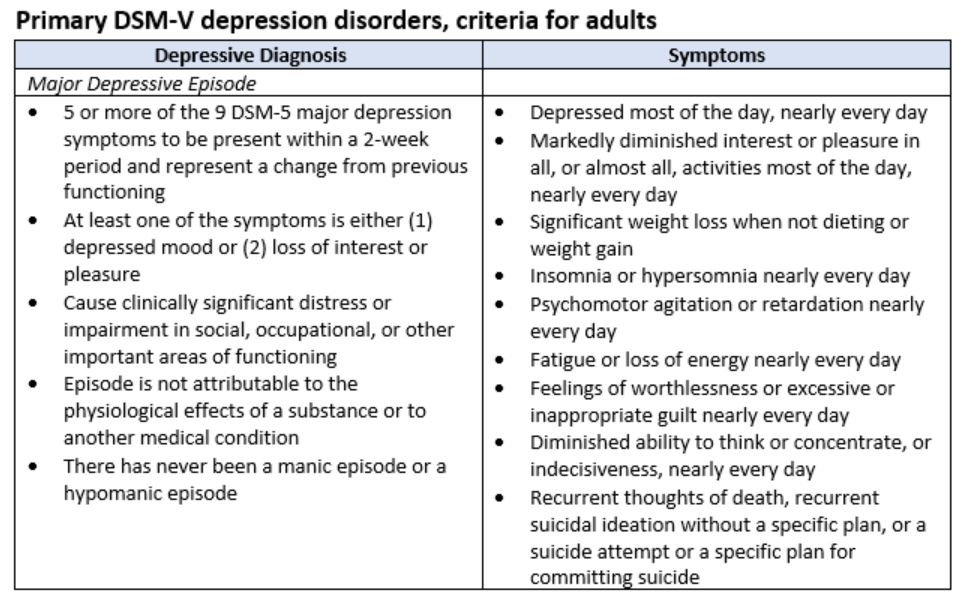
Depressive Disorders
- Major depressive disorder
- Person experiences, in the absence of drugs or another medical condition, 2 or more weeks with five or more symptoms, at least one of which must be either (1) depressed mood or (2) loss of interest or pleasure.
- Persistent depressive disorder
- Person experiences mildly depressed mood more often than not for at least 2 years, along with at least two other symptoms.
- Depressive symptoms may have a seasonal pattern.
Bipolar Dx
- Bipolar Disorder
- Disorder in which a person alternates between the hopelessness and lethargy of depression and the overexcited state of mania; formerly called manic-depressive disorder
- Mania
- A hyperactive, wildly optimistic state in which dangerously poor judgment is common
- Bipolar disorder is much less common than MDD but is often more dysfunctional.
- Potent predictor of suicide
Genetic Influences
- Risk increases if family member has diagnosis.
- Twin studies: Estimated heritability of major depression is 37 percent.
- Many genes work together and produce interacting small effects that increase risk for depression.
Understanding Depressive Disorders and Bipolar Disorder
- Social-cognitive perspective
- Explores how people’s assumptions and expectations influence their perceptions
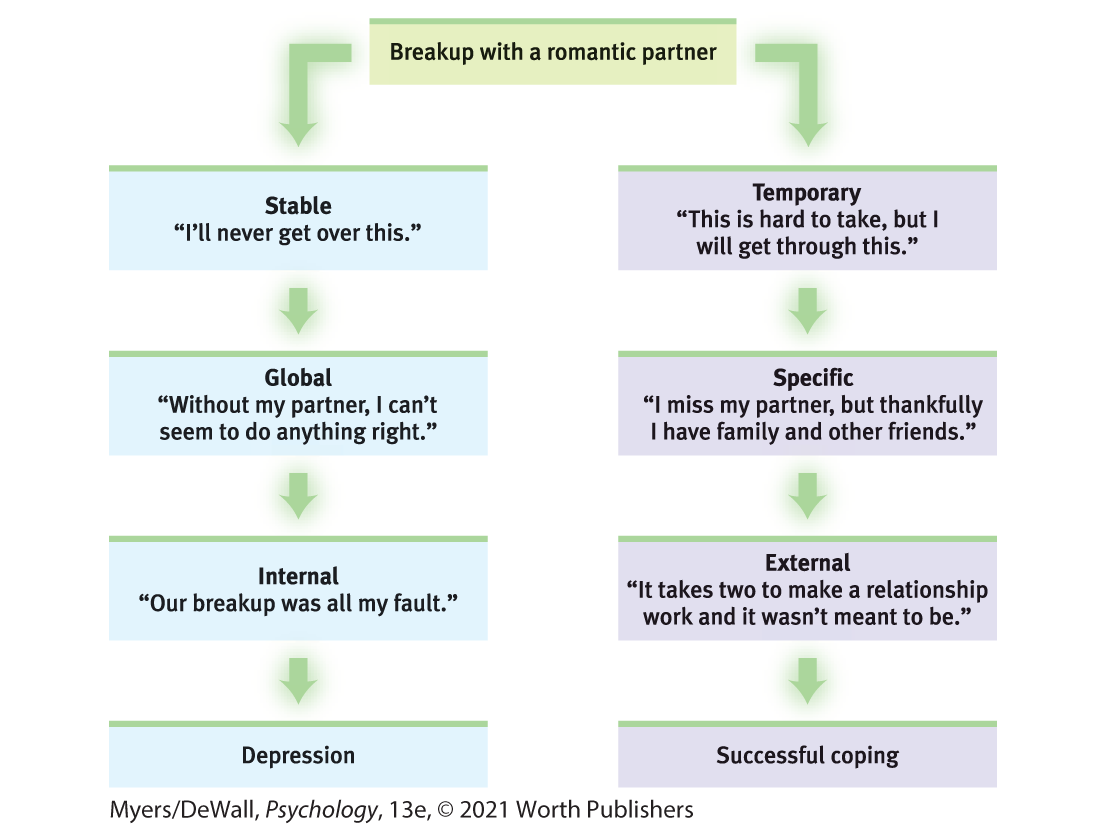
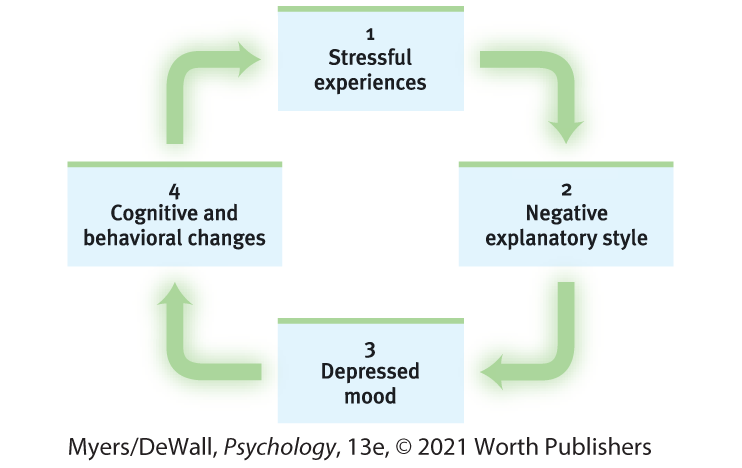
- Self-defeating beliefs and a negative explanatory style contribute to the cycle of depression.
- Views depression as an ongoing cycle of stressful experiences (interpreted through negative beliefs, attributions, and memories) that lead to negative moods and actions and fuel new stressful experiences
Explanatory Style and Depression
The Vicious Cycle of Depressed Thinking
Schizophrenia
- Psychological disorder characterized by delusions, hallucinations, disorganized speech, and/or diminished, inappropriate emotional expression
- Symptoms
- Disturbed perceptions
- Disorganized thinking and speech
- Diminished and inappropriate emotions and actions
Understanding Schizophrenia
- Prenatal environment and risk
- Low birth weight
- Lack of oxygen during delivery
- Maternal prenatal nutrition
- Mid-pregnancy viral infection (e.g., flu, dense population, season of birth)
Understanding Schizophrenia
- Genetic factors
- Odds of being diagnosed with schizophrenia are nearly 1 in 100 but 1 in 10 for those individuals with a diagnosed family member.
- Adopted children’s risk is related to biological parent.
- Emergence of disease influenced by many genes.
Dissociative, Personality, and Eating Disorders
- Dissociative disorder
- Conscious awareness becomes separated (dissociated) from previous memories, thoughts, and feelings.
- Dissociative identity disorder (DID)
- Rare dissociative disorder in which a person exhibits two or more distinct and alternating personalities
- Formerly called multiple personality disorder
Personality Disorders
- Personality disorder
- Disruptive, inflexible, and enduring behavior patterns that impair social functioning
- Disorder forms three clusters, characterized by:
- Anxiety
- Eccentric or odd behaviors
- Dramatic or impulsive behaviors
Personality Disorders
- Antisocial personality disorder
- Lack of conscience for wrongdoing, even toward friends and family members; impulsive, fearless, irresponsible; some genetic tendencies, including low arousal
- Genetic predispositions may interact with the environment to produce the altered brain activity associated with antisocial personality disorder.
Neurodevelopmental Disorders
- Neurodevelopmental disorders are defined by central nervous system abnormalities, typically in the brain. The result is altered thinking and behavior, starting in childhood, that can manifest as intellectual limitations or as psychological disorders.
- Abnormalities have come about during development - typically prenatal development
Neurodevelopmental Disorders
- Intellectual disability: A condition of limited mental ability, indicated by an intelligence test score of 70 or below and difficulty adapting to the demands of life (formerly referred to as mental retardation)
- Autism spectrum disorder (ASD): A disorder that appears in childhood and is marked by significant limitations in communication and social interaction and by rigidly fixated interests and repetitive behaviors
Neurodevelopmental Disorders
- Autism spectrum disorder (ASD)
- Underlying source of ASD’s symptoms seems to be poor communication among brain regions that normally work together to let us take another’s viewpoint.
- Has differing levels of severity
- Gets diagnosed in about three boys for every girl
- Biology’s role in ASD also appears in the brain’s functioning.
Neurodevelopmental Disorders
- Attention-deficit/hyperactivity disorder (ADHD): A psychological disorder marked by extreme inattention and/or hyperactivity and impulsivity
- Diagnosed in 9.4 percent of 2- to 17-year-olds in the United States (less often in other countries)
- Diagnosed twice as often in boys as in girls
- Treatment commonly consists of stimulant drugs and psychological therapies.