Enzymes HL
C1.1.11 Intracellular amd extracellular eznyme-catalysed reaction
glycolysis and the Krebs cycle as intracellular examples
chemical digestion in the gut as an extracellular example
Intracellular enzyme activity:
Free floating ribosomes in the cytoplasm
Extracellualr enzyme activity:
ribosomes attached to rough edoplasmic reticulum
Proteins are sent to golgi apparatus for processing
The golgi packages enzymes in secretory vesicles which releases enzymes via ezocytosis
C1.1.12 Generation of heat energy by the reactions of metabolism
mammals, birds and some other animals depend on this heat production to maintain constant body temeprature
Endotherms: ( warm blooded )
animals which maintain constant body temo
depend o the release of heat from metabolism to maintain a constant body temp
idea that heat generation is inevitablebecause metabolic reactions are not 100% efficient in energy transfer.
C1.1.13 cyclical and lindear pathways in metabolims
use glycolisis, the Krebs cycle and the Calvin cycle as examples
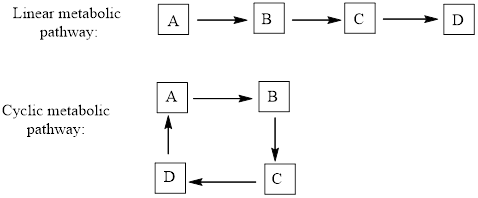 Metabolism: is the sum total of all chemical reactions in an organism
each reaction or stage catalysed by a specific enzyme
the product of the 1st enzyme controlled reaction becomes the substrate for thee next
maybe a chain or cycle of reaction
C1.1.14
C1.1.15 competetive inhibitions as a consequence of an inhibitor binding reversibly to an active site
Competetive inhibitors
statin is the example of competetive inhibitors
Inhibitors is similar in structure substrate
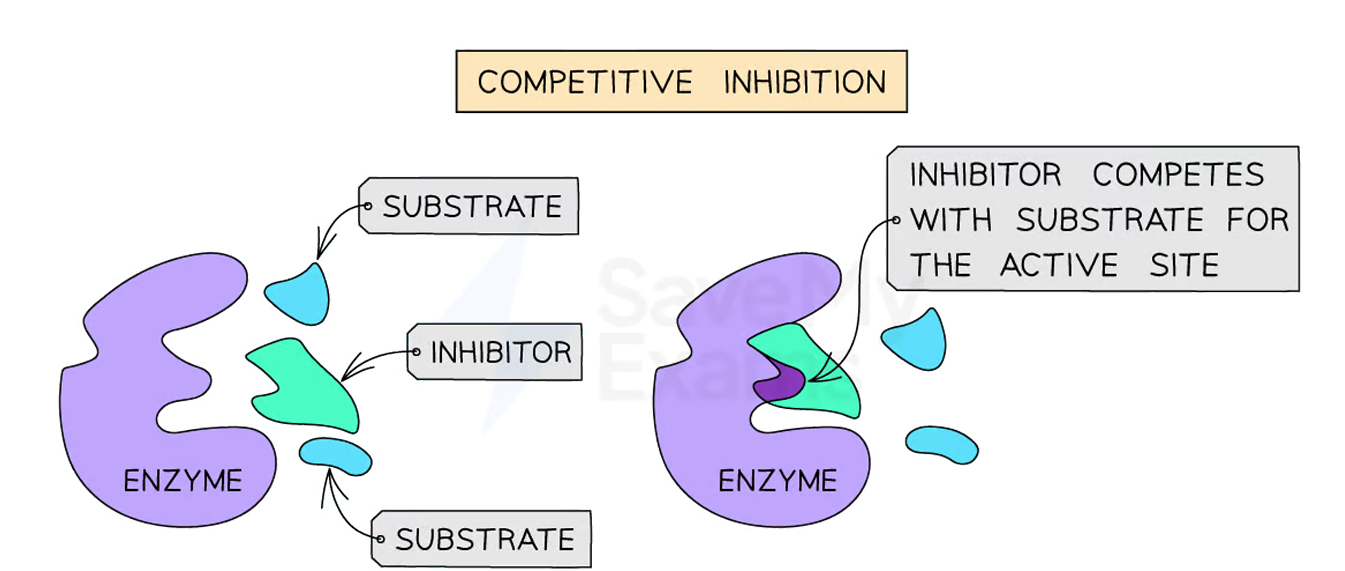
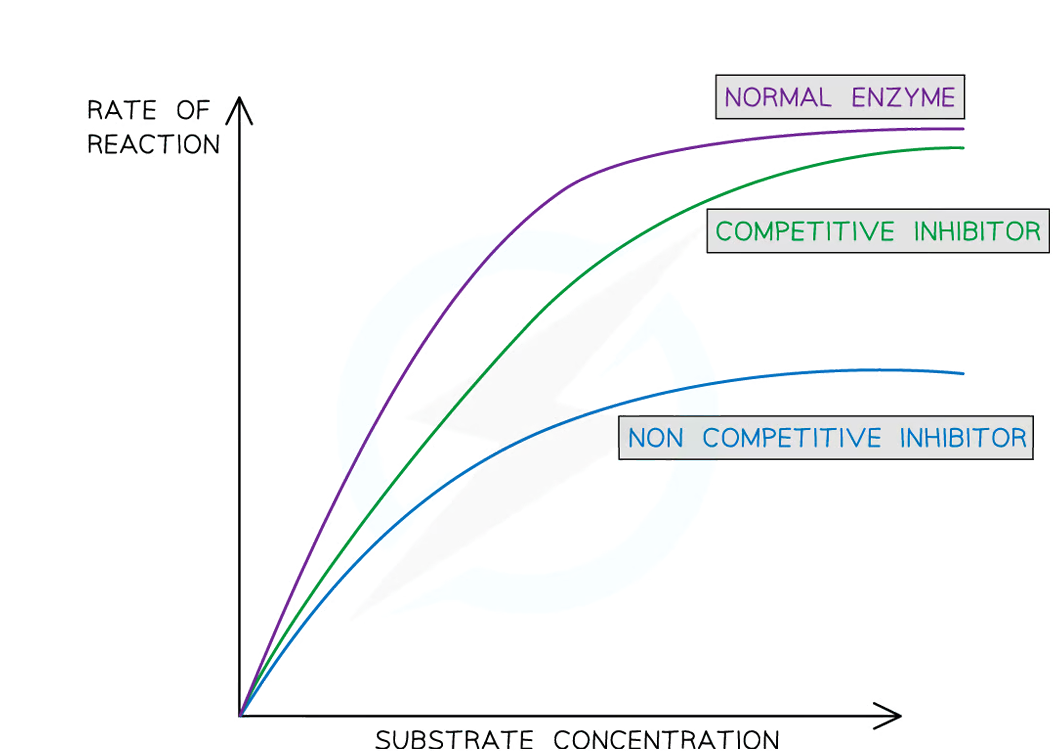
Its important to understand this graph
How statin reduces cholesterol levels in humans after statin enters liver cells:
A metabloc pathway of reactions produces cholesterol in the liver
If no satin - the enzyme HMG-CoA reductase converts HMg-CoA to mevalonic acid
Mevalonic acid is converted to cholesterol through a series of enzyme-catalysed reactions.
Statin are competetive inhibitors of HMG-CoA reductase
If there is less mevalonic acid produced, there will also be less cholesterol produced
Non - competetive inhibitors
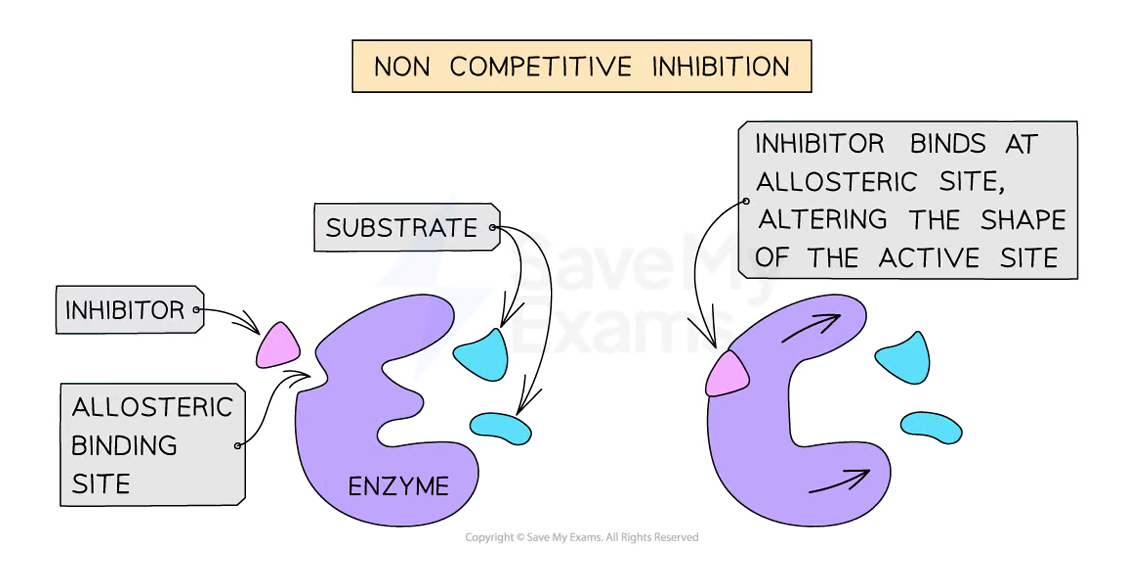
Does not bind to active site
its called the ‘ ALLOSTERIC SITE “
binding causes a change in the 3-D shape of the active site
e.g. cyanide inhibits cytochrome oxidase ( preventing the transfer of electrons in repsiration )
Are different in structure and chemistry to the substrate
Binding of the inhibitor to the allosteric site is reversible
-
Similarites of competetive vs non-competetive:
Both classes of inhibitors bind to the enzyme
Both slow down or stop enzyme activity
Differences
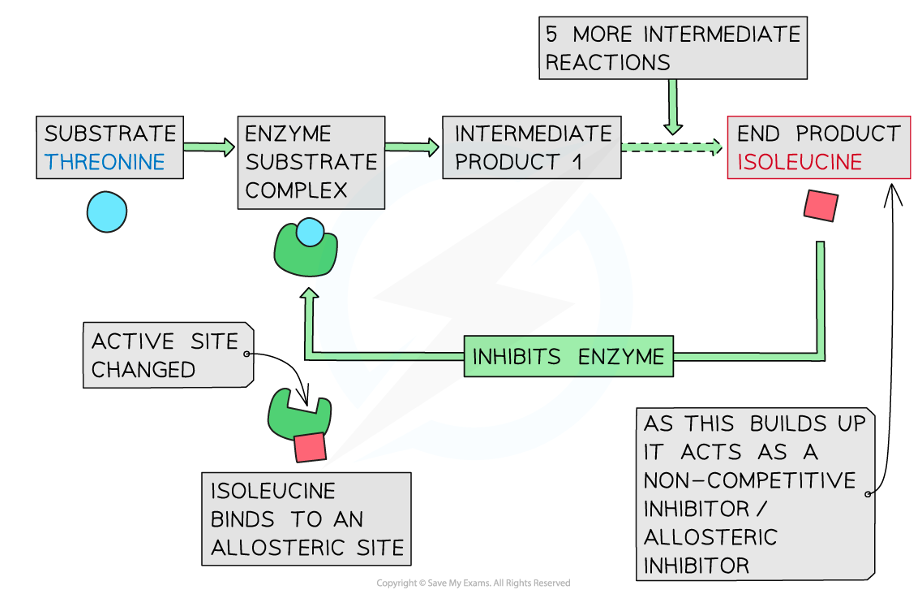
C1.1.16 regulation of metabolic pathways ny feedback inhibition
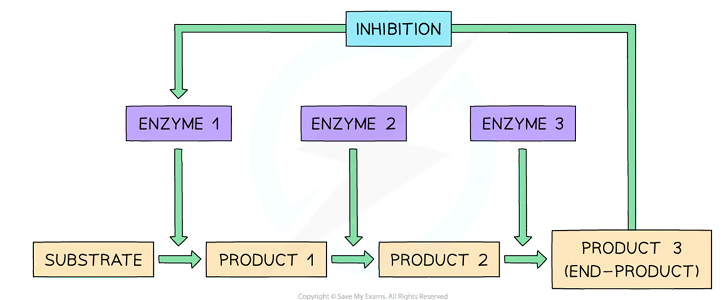
EXAMAMPLE OF END - PRODUCT INHIBITION BETWEEN THREONINE AND ISOLEUCINE
C1.1.17 Mechanisms-based inhibition as a consequence of chemical changes to the active site caused by the irreversible binding of an inhibitor
mechanism - based inhibitors are competetive inhibitors which permanently convalent;y bond to the active site of an enzyme
penicillin is a mechanisms-based inhibitor that binds to transpeptidases, which are enzymes that are involved in constructing the peptidoglycan cell walls of bacteria
penicillin prevents bacteria from building cell wallks, as ot orreversibly inhibits transpeptidase. Bacterial cells without cell wals undergo lysis and die.