Literary Terms
Poetic Devices
- alliteration - occurrence of the same letter or repeating sound at the beginning of adjacent or closely connected words
- Peter’s power passed to pope after picking packs of pickled peppers that made pentecosts in Peter’s mouth
- allusion - reference to another piece of work or pop culture (historical, religious texts) without directly mentioning it, ex: That’s my Achilles heel
- assonance - repetition of a sound or vowel in non-rhyming stresses syllables for echo to be discernable; ex Lazy, Hazy, Crazy summer!
- apostrophe - speech or address to a person who is not present or to a personified object; Ex: O Romeo, Romeo, wherefore art thou Romeo?
- hyperbole - exaggerated statements or claims not meant to be taken literally; ex. I have a million exams to study for this week
- imagery - visually descriptive or figurative language used in a literary work, descriptive language that appeals to the five senses used to create a more vivid picture of a scene in a reader’s head
- metaphor - comparing 2 unlike/different things NOT using like or as
- onomatopoeia - formation of a word from a sound associated with it
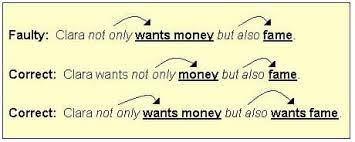
- parallel structure (parallelism) - using the same pattern of words to show that two or more ideas have the same level of importance
- Words and Phrases
- with the -ing form, or infinitive (to work, to sleep)
- DO NOT MIX FORMS (don’t use -ing and infinitive in the same parallel structure
- Clauses
- Parallel structure that starts with clauses must keep on with the clauses
- The coach told the players that they should get a lot of sleep, that they should not eat too much, and that they should do some warm-up exercises before the game.
- Lists after a colon
- Keep all the elements in a list in the same form
- paradox - a statement that seems to go against common sense but may still be true; ex all animals are equal, but some animals are more equal than others
- personification - giving human characteristics to something nonhuman, or an abstract quality in human form
- repetition - repeating something that has already been said or written
- rhyme - correspondence of sound between words or endings of words
- simile - comparison of 2 unlike/different things USING like or as
- poetic device - Tools to create rhythm, enhance meaning, or intensify a mood or feeling
- irony - When a character says or does something that is different from expected
- Dramatic irony - the audience knows something that the character does not Ex: Oedipus Rex, Oedipus demands to know the king’s murderer who is himself
- verbal irony - a speaker says something that is the opposite of what they mean ex; sarcasm
- situational irony - something happens that is different from what is expected
Epics and Drama
- anthropomorphism - attributing literal human traits to nonhuman objects, exists throughout the entire work; ex furries
- What’s the difference between anthropomorphism and personification? - Personification is giving human CHARACTERISTICS to nonhuman objects, while anthropomorphism is literally just giving that characteristic to it
- arête - kind of like idealism; refers to excellence or virtue in a person; max potential
- catharsis - act of purging your emotions to keep everything in balance
- chorus - a homogenous, non-individualized group of performers who comment with a collective voice on the dramatic action
- deity - a god or goddess
- epic poetry - a long story in poem form, originally told by a traveling story-teller
- contain info about the culture that created them
- contain clues to what the people who created them feared or did not understand
- natural disasters, death, heavens, storms, etc.
- epic hero - what the epic poetry revolves around; takes a journey (physically, but also spiritually/emotionally) that involves a vast setting
- often travels over difficult terrain: over a body of water, snow, ice, a forest, wilderness, fire, desert, tunnel, fog, the underworld, etc.
- epic hero characteristics - mysterious origin (abandoned, raised by animals or strangers, etc.), “larger than life” qualities (supernatural powers), natural leaders, appealing to opposite gender but rarely has an extended relationship, must fight bad guys along the way, often seeking revenge for wrongdoing, demonstrates superior strength or intellect (generally problem solver or truth-seeker), weaknesses or flaws that cause him to suffer or hinder his progress (ego, immaturity, ambition, pride, etc.), often faces temptation, may take unnecessary risks, makes the journey as a result of a call to action, is usually joined by companions along the way, often returns changed or “re-born” in some way, has “good” on his/her side, usually helped by a mentor or guide (often with supernatural powers), experiences a time of “darkness” in which he is helped out by the divine or supernatural
- mysterious origin (abandoned, raised by animals or strangers, etc.),
- “larger than life” qualities (supernatural powers),
- natural leaders,
- appealing to opposite gender but rarely has an extended relationship,
- must fight bad guys along the way,
- often seeking revenge for wrongdoing,
- demonstrates superior strength or intellect (generally problem solver or truth-seeker),
- weaknesses or flaws that cause him to suffer or hinder his progress (ego, immaturity, ambition, pride, etc.),
- often faces temptation,
- may take unnecessary risks,
- makes the journey as a result of a call to action,
- is usually joined by companions along the way,
- often returns changed or “re-born” in some way,
- has “good” on his/her side,
- usually helped by a mentor or guide (often with supernatural powers),
- experiences a time of “darkness” in which he is helped out by the divine or supernatural
- Homeric/epic simile - extended simile often running several lines
- hubris - an excessive pride (or “overweening” pride) and is often called the pride that comes before the fall
- muse - something that serves as an inspiration for a literary work
- tragedy - Greek drama. a hero undergoes a bunch of stuff that makes the audience feel bad so we can feel pity and fear, causing us to catharsis
- hamartia - the tragic hero undergoes great pain and suffering because he or she makes a miscalculation/mistake in judgment or has a tragic flaw
- anagnorsis - the point in the plot especially of a tragedy at which the protagonist recognizes his or her or some other character’s true identity or discovers the true nature of his/her own situation (startling)
- tragic figure - a male character, usually a noble, who suffers a reversal of fortune. experiences a downfall as a result of his hubris. typically dies in the end.
- they need to be somewhat good, because they fall (high → fall → low) and we need to watch the fall and pity them
- The Three Great Playwrights - Aeschylus, Sophocles, and Euripides
- Aeschylus - “Father of Tragedy;” most famous play is Prometheus Bound
- Sophocles - wrote Oedipus the King (Oedipus Rex) which was very impressive, used dramatic devices well, and was EPICO; pioneered introduction of third character
- Sophocles philosophy - the dead control and affect our lives
- Euripudes - clever dialogues, fine choral lyrics, and a gritty realism (for this he was disliked and exiled from Athens (alienated women, disliked b/c of the new realism he brought to theatre (like showing kings as people with human weaknesses)))
Other Literary Terms
- mood - the feeling/emotion the reader feels; ex suspenseful, anxious, overjoyed
- inference - a conclusion reached by means of evidence and reasoning
- theme - the central message of a work of literature, the knowledge the author wants to convey about a topic/subject, expressed as observation of or statement about human behavior
- tone - writer’s attitude or feelings about the subject topic; ex sad, happy, angry, usually a lot simpler than mood