Biology lab
CHAPTERS 1 AND 2
independent variable: what is being measured
dependent variable: the experiment results affected by changes in the independent variable.
control: the factor that remains constant throughout the experiment to ensure that any changes in the dependent variable can be attributed solely to the manipulation of the independent variable.
hypothesis: a testable statement predicting the relationship between the independent and dependent variables, guiding the direction of the experiment.
null hypothesis: the independent variable will/will not affect the dependent variable
CHAPTER 3
carbohydrates: glucose
polysaccharides: starch, glycogen, cellulose, chitin
protein: amino acids
monomers are single units that form chains and branched structures, known as polymers are many units
amino acids are monomers of proteins
proteins are polymers of amino acids
starch is a polymer of glucose that is a storage form of energy in plants
glycogen is a polymer of glucose that is a storage form of energy in animals and is made in your liver and can be broken down to glucose to provide energy
glucose is a carbohydrate/sugar, made up of carbon, hydrogen, and oxygen (CH20)
the process that bonds monomers together to form polymers is called polymerization
CHAPTER 4
start with 4x scan lens
do not use coarse knob high power
must be in sharp focus before moving to the next lens *do not spin focus knobs
condenser: condenses the light beam
iris diaphragm: regulates the light source
coarse knob: moves the stage up and down (use only on scanning lens and 10x)
fine adjustment knob: more precisely regulates the focus
total magnification: , ,
CHAPTER 5
cell theory: all living things are composed of cells, cells are the functional unit of life, and all cells come from preexisting cells
prokaryotes: bacteria and archaea, not a true nucleus, less complex, no membrane-bound organelles
eukaryotes: plants and animals, true nucleus, more complex, and membrane-bound organelles
all cells have a membrane (plasma membrane), DNA, and metabolism
histology: the study of tissues
epithelial tissue: location: covers and lines organs, function: protection, absorption, secretion
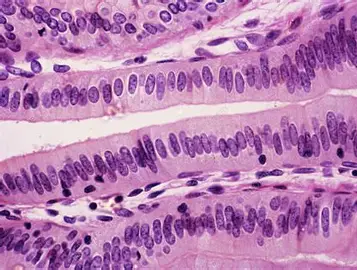
simple columnar: location: line inside of your intestine, function: secretes enzymes and absorbs nutrients
key features: rectangular in rows
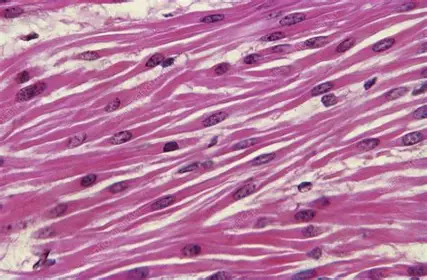
smooth muscle: location: around the digestive tract, arteries, and uterus, function: involuntary movement
key features: nucleus long and skinny, and looks like water
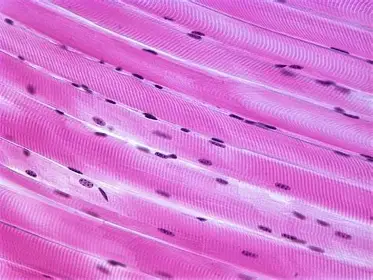
striated muscle: location: skeletal muscle, triceps, biceps, function: voluntary movement
key features: bacon
connective tissue most abundant tissue type
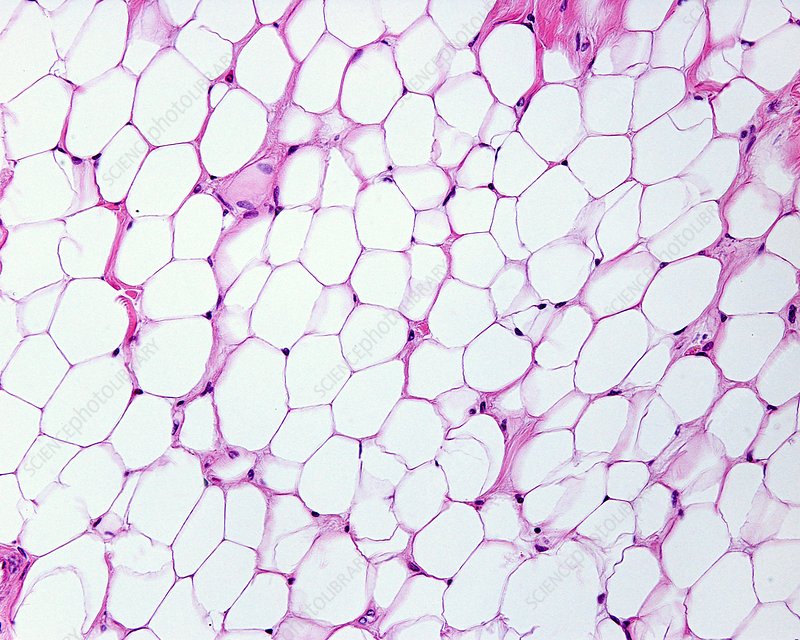
adipose tissue: location: everywhere around organs, muscles, and under the skin function: protection, insulation, stores energy
key features: brain, spider webs
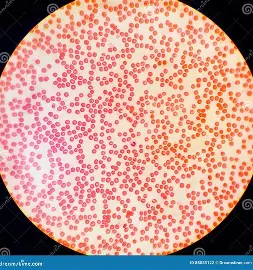
blood: location: everywhere function: carry O2, nutrients
key features: bubbles
CHAPTER 6
simple diffusion: molecules move from high to low concentration
brownian motion: the motion of molecules is due to their energy; as molecular energy increases, the rate of movement increases also
factors that impact the speed (rate) of diffusion:
temperature: higher & faster
steepness of concentration gradient
size
osmosis: the movement of water from high to low concentration through selectively permeable membrane
cells environment: sugar can’t move only water is able to move
isotonic: equal concentation of solute in and outside the cell
hypOtonic: higher concentration of solute inside the cell, increase in mass
hypertonic: higher concentration of solute outside the cell, loss weight
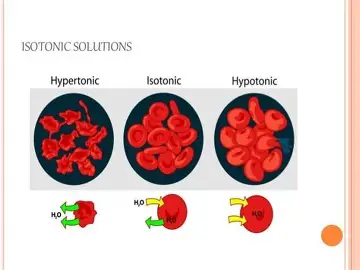
the cell membrane regulates movement of molecules in/out the cell
the cell being selectively premeable by allowing certain molecules pass through the membrane freely and act as a barrier to other molecules
blood, gases, water, and steroids can pass through the membrane freely