Adult AED
Precautions
- Ensure that the scene is safe for defibrillation. Are you surrounded by gas? Are you and the patient physically connected to each other (e.x.: are you and the patient lying in a pool of water?)? Is there a fire or electrocution risk?
- Are there any pieces of metal in the way? For example, are they wearing a wire bra, a necklace, or a nicotine pad?
- Metal that is not in the way, such as earrings, are ok.
- Note that defibrillation on pregnant mothers is ok. It is needed because both lives are in jeopardy
Steps
- Follow steps 1-3 for adult CPR (Refer to “Adult CPR” sheet for more details)
- Turn the AED on
- Remove clothing and expose the person’s bare chest.
- Now’s the time to remove any metallic objects that could be in the way of defibrillation, like necklaces
- Remove pads from the AED and attach pads according to pad diagram
- One on the top right side of the chest and one on the bottom left side, mid axillary, just under left breast
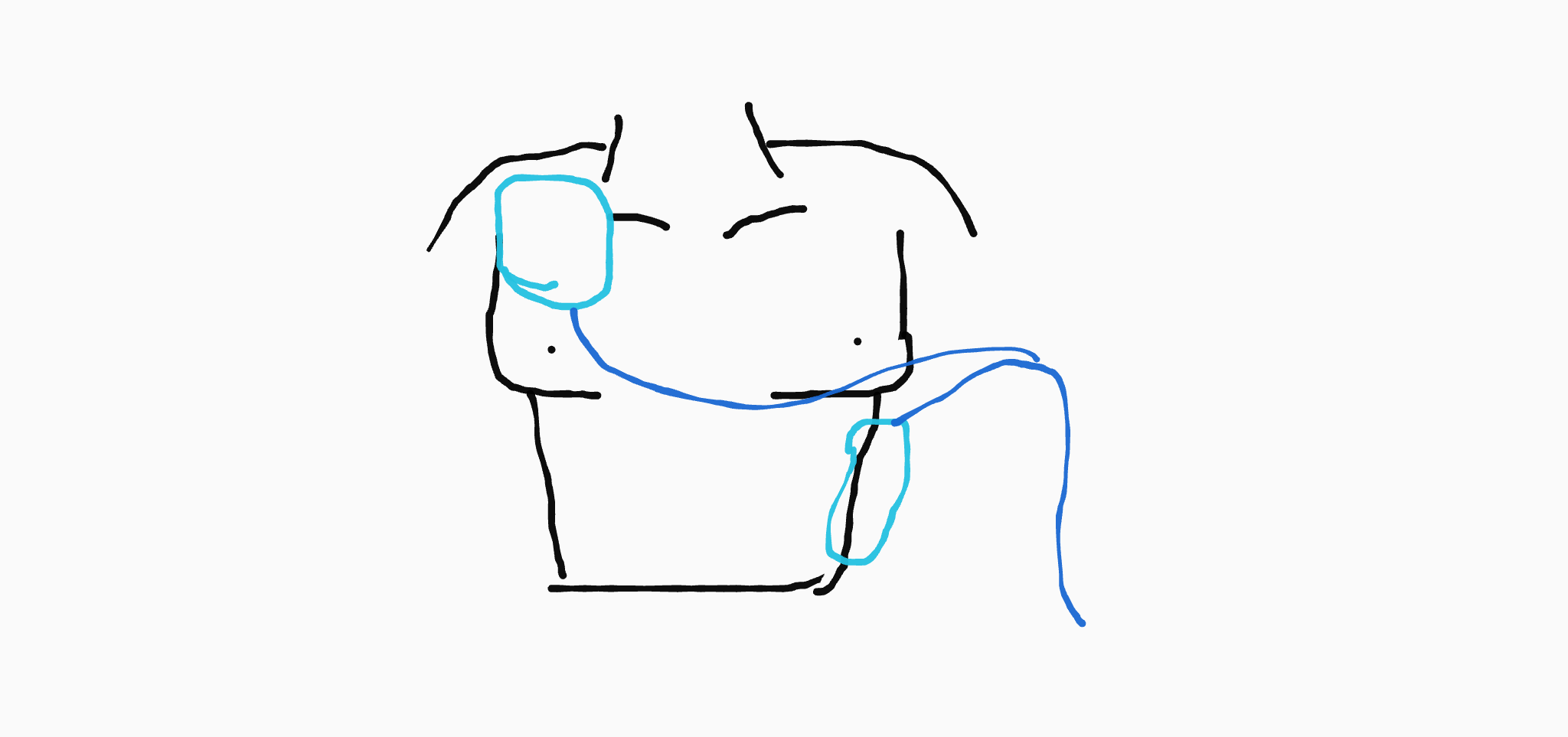
- Plug in the cable
- The AED will begin to analyze the patient’s heart rhythm. DO NOT TOUCH THE PATIENT. The AED will deliver one of two responses.
- “Shock Advised!”--The AED has determined that defibrillation is needed. STAND CLEAR! Make sure nobody is touching the patient. When the AED is charged, push the flashing “shock” button.
- “No shock advised”--The AED has determined that the heart does not have a shockable rhythm. The patient is not necessarily conscious or healthy again. If they are not exhibiting normal signs, continue CPR.
- After either response, begin 5 cycles of CPR. Refer to “Adult CPR” note sheet for more details.
- The AED will re-analyze the patient’s rhythm. Continue this cycle until patient is revived or help arrives.