Anthropology
Anthropology is the study of humans, their cultures, and their biology.
Four main disciplines:
Paleoanthropology:
It encompasses the study of both the past and present. Forensic anthropology applies the methods of paleoanthropology (the study of past human populations) to present populations (bioanthropology) to identify victims and reconstruct the events surrounding their deaths. It focuses specifically on the skeletal system and is multidisciplinary, drawing upon techniques from archaeology, paleoanthropology, and bioanthropology.
Now what do Forensic Anthropologists do:
Forensic Anthropology is the application of the study of humans to situations of modern legal or public concern. Heavily focus on the skeletal aspect.
The human skeleton is an active organ system consisting of 206 bones Over time bones fuse together as we get older.
Bones can add or subtract bony material over time in response to stresses.
Osteology is the study of bones.
The skeleton has four main functions:
Providing infrastructure and support for softer tissues.
Acting as levers for motion, powered by muscles at the joints.
Protecting soft organs from physical damage.
Serving as centers of growth from infancy through early adulthood.
Forensic anthropologists play a crucial role in the identification of individuals who cannot be identified by fingerprints or photographs. They develop biological profiles of skeletal remains, including sex, age at death, racial affinity, height, and any other aspects that could describe the individual.
Sex determination is most reliable after puberty and is typically assessed using the pelvis and skull. The female pelvis is broader and exhibits pregnancy-specific traits, while the male pelvis is larger and more robust. Skull analysis involves taking 34 standard measurements from various landmarks and comparing them against a reference population.
One bone that is best used to determine the age of someone is the false joint aka the Pubic Symphysis.
Age estimation is based on predictable skeletal changes but cannot provide a precise determination of age. mAge ranges are used to report age at death. The pubic symphysis, the junction of the two pubic bones, is considered the most reliable estimator of age at death in adults. [9]
Age ranges that are important to determine age at death:
Fetal (before birth)
Infant (0-3)
Child (3-12)
Adolescent (12-20)
Young adult (20-35)
Adult (35-50)
Old adult (50+)
Ancestry estimation is one of the most difficult tasks in forensic anthropology. It is determined through morphological and quantitative analyses of the skull, considering features such as eye orbits, nasal aperture, dentition, and facial shape.
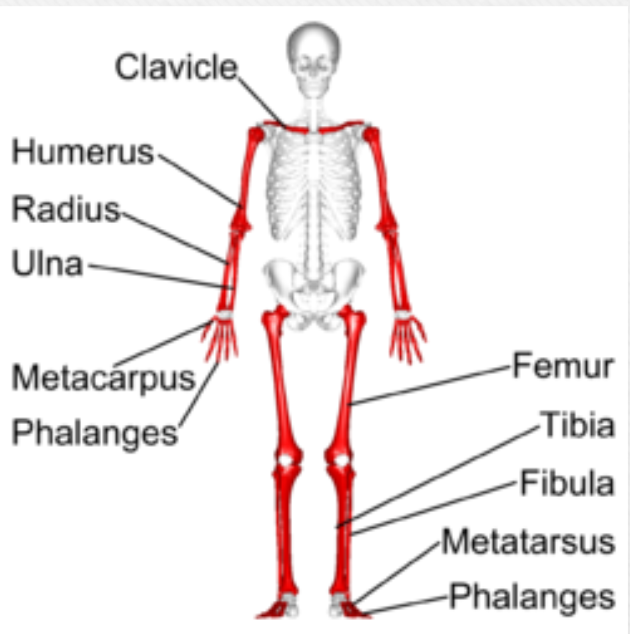
Stature (height) can be estimated from the length of long bones, taking into account the individual's sex and ancestry.
Our Long bones are:
Humerus
Femur
Radius
Tibia
Facial reconstructions can be created using clay sculpture or drawing to aid in the identification of remains. [11] Although not used for positive identification, they may help trigger public recognition. [11]