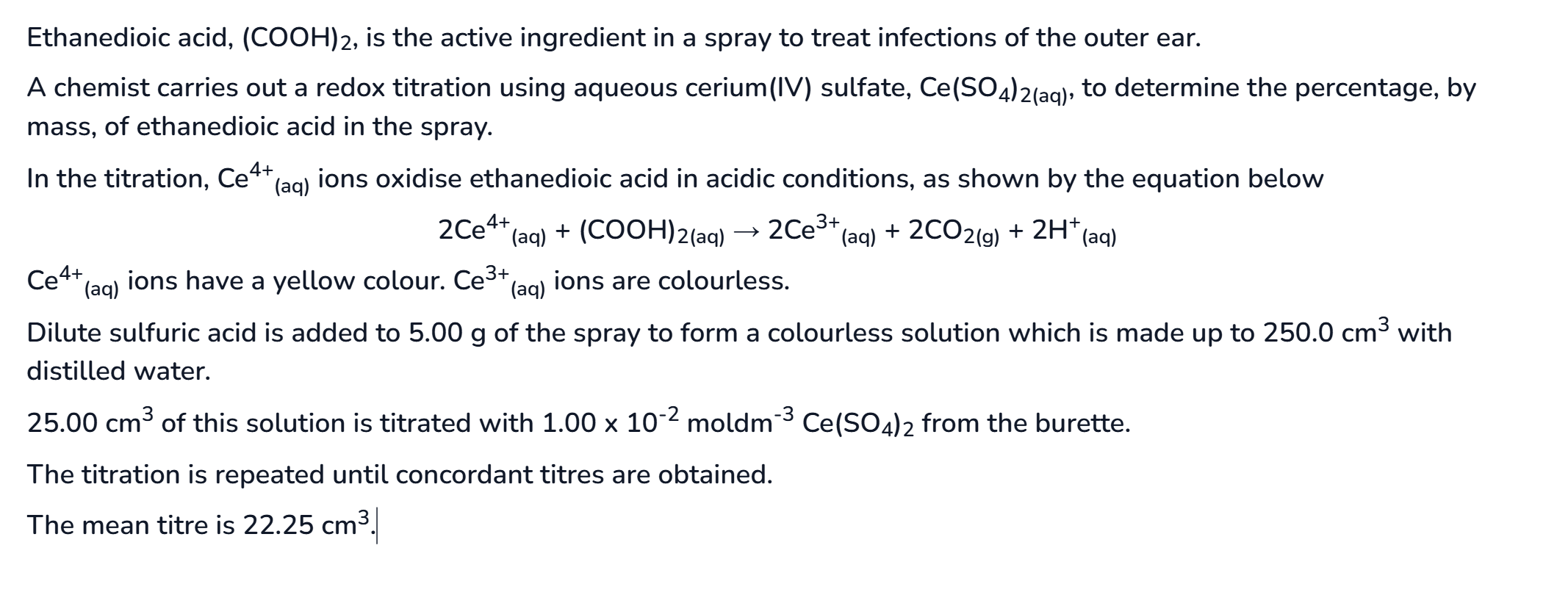
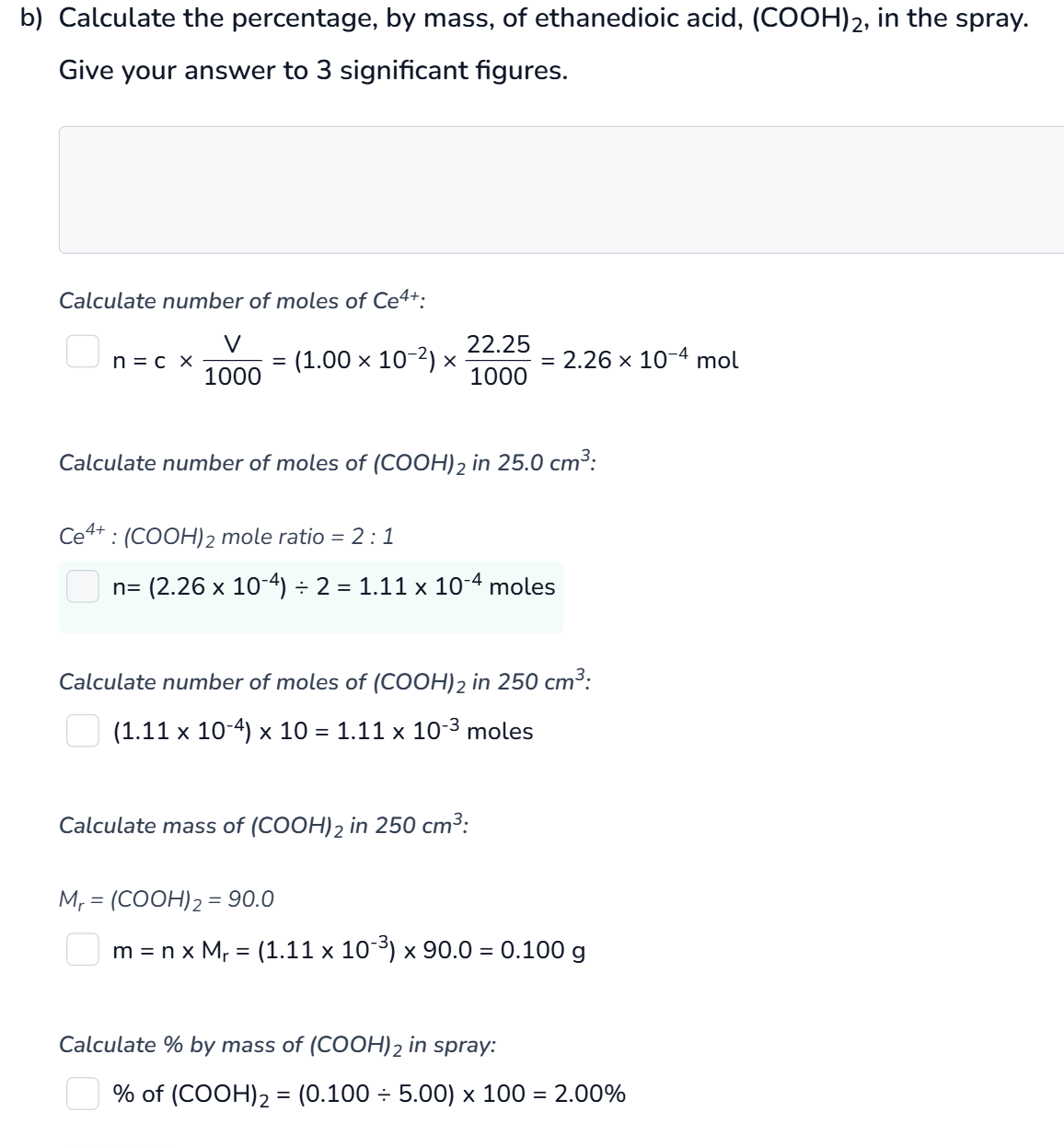
Chemistry Mistakes:
My weak areas:

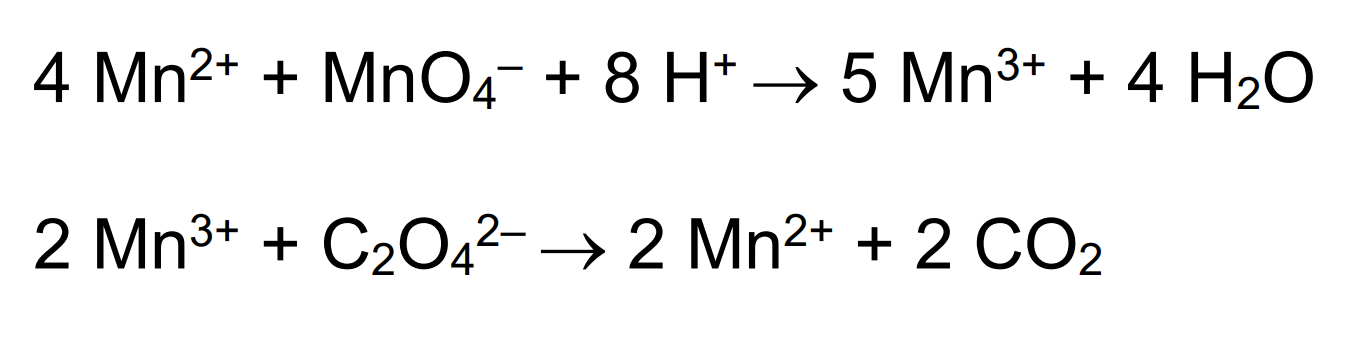
Buffer calculations
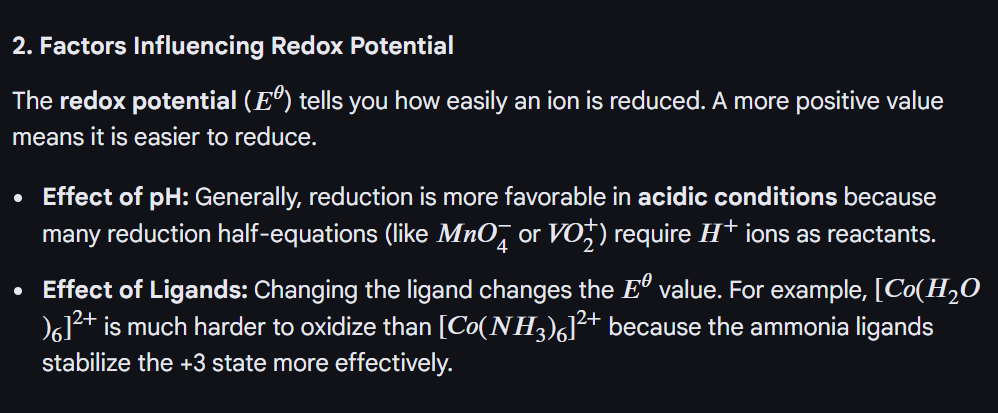
Thermodynamics (Gibbs free):
Suggest a condition where the element Carbon (diamond) has entropy of zero?
At abolute zero
Why does the reaction N2 + O2 → 2NO at different temperatures have Gibbs free roughly constant?
Becuase the gas moles are constant, so the entropy is generally constant, so the Gibbs free energy is roughly constant.
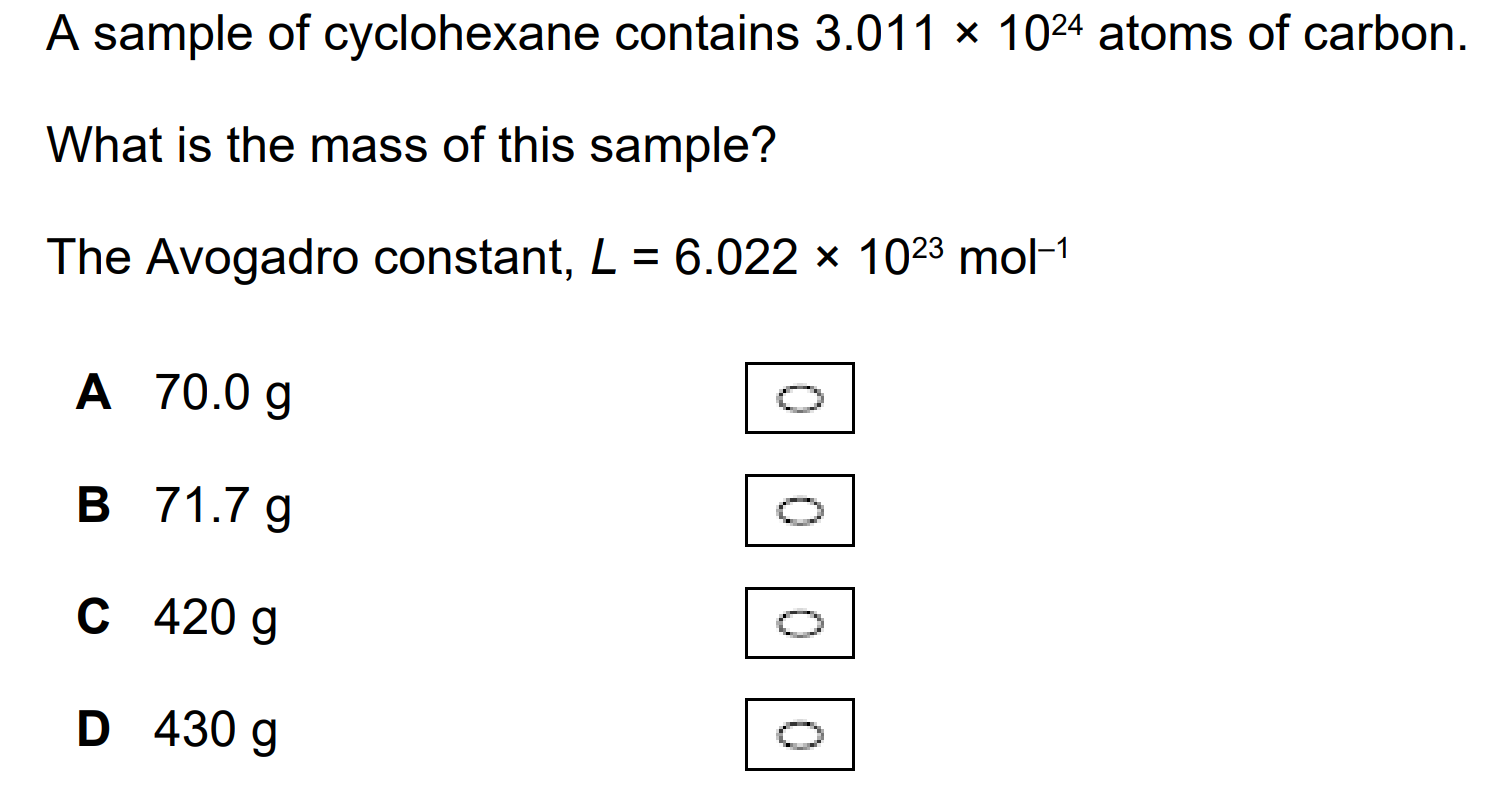
Answer: A
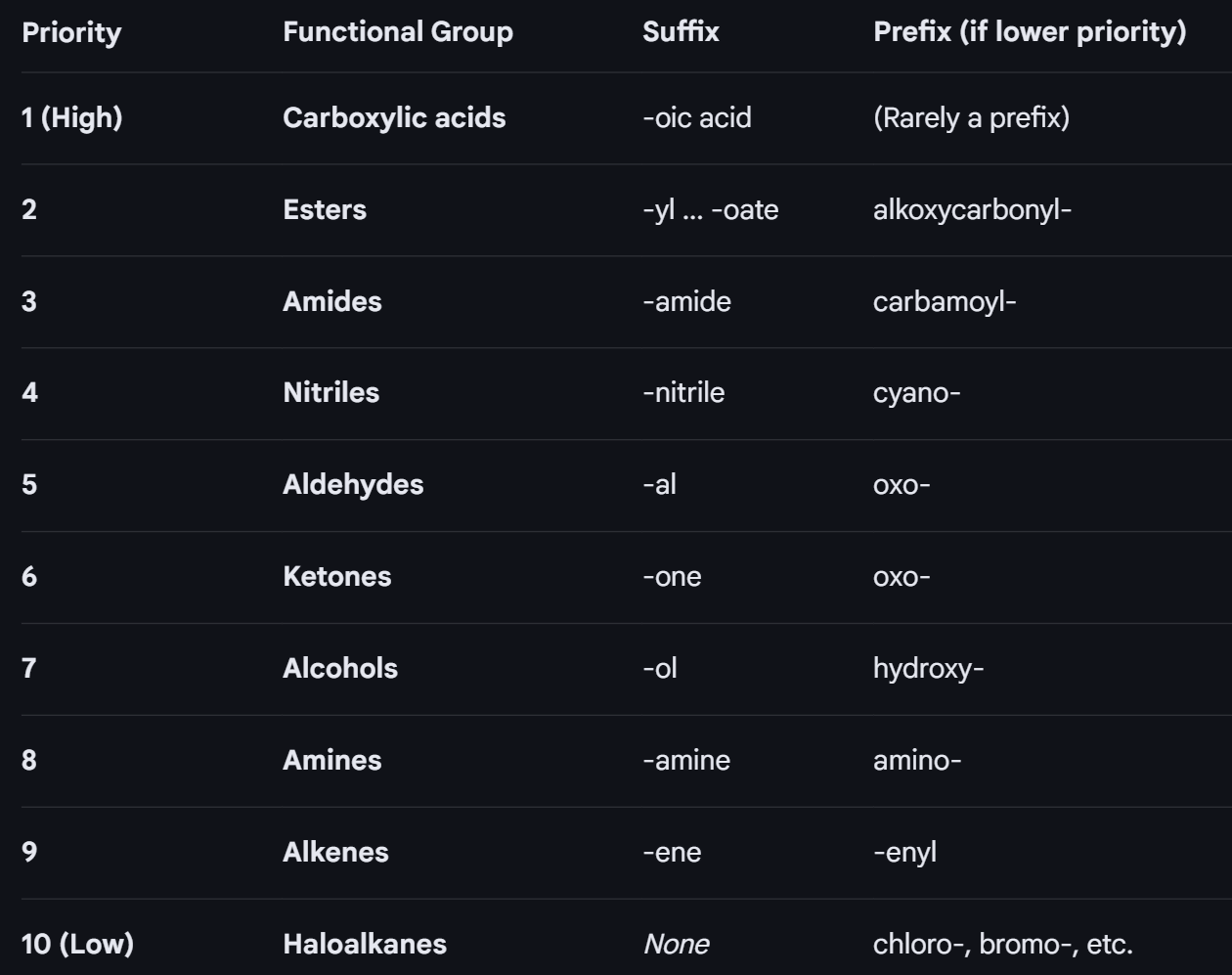
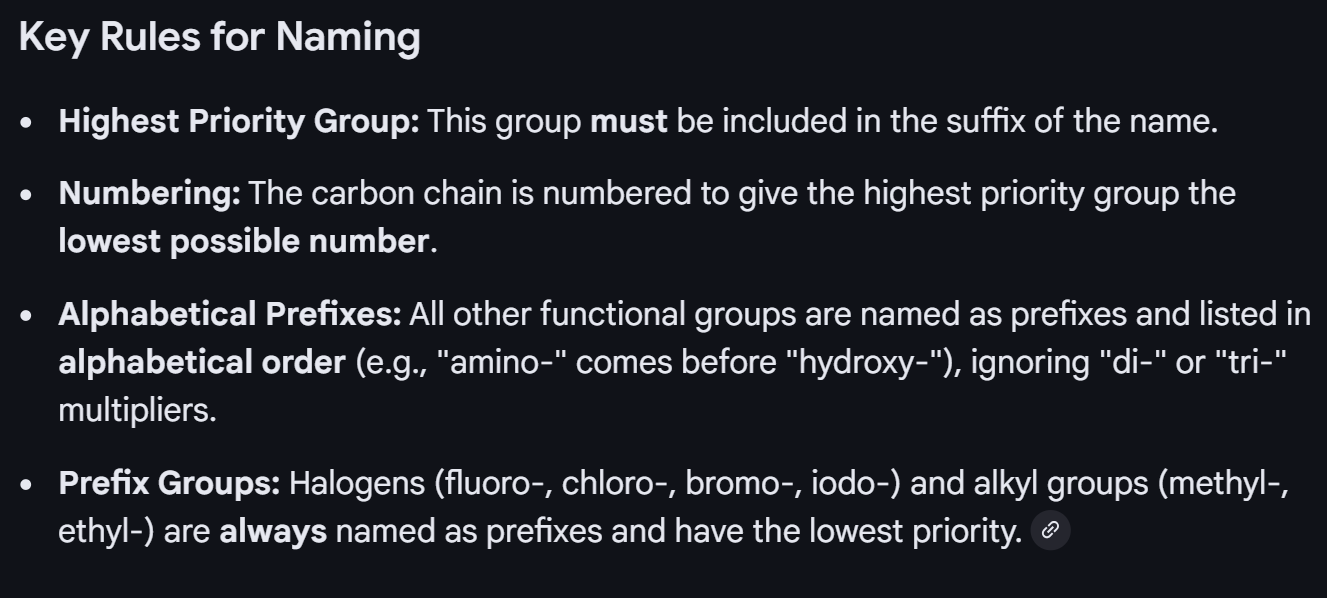
From my mistakes: (the order of priority)
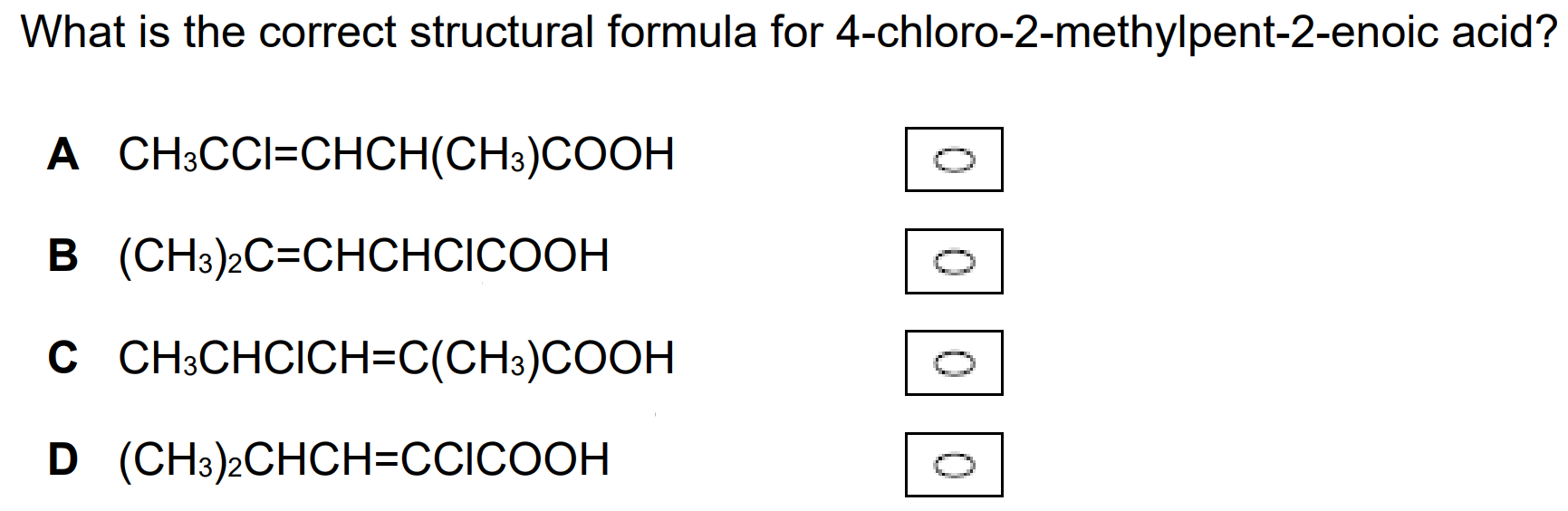
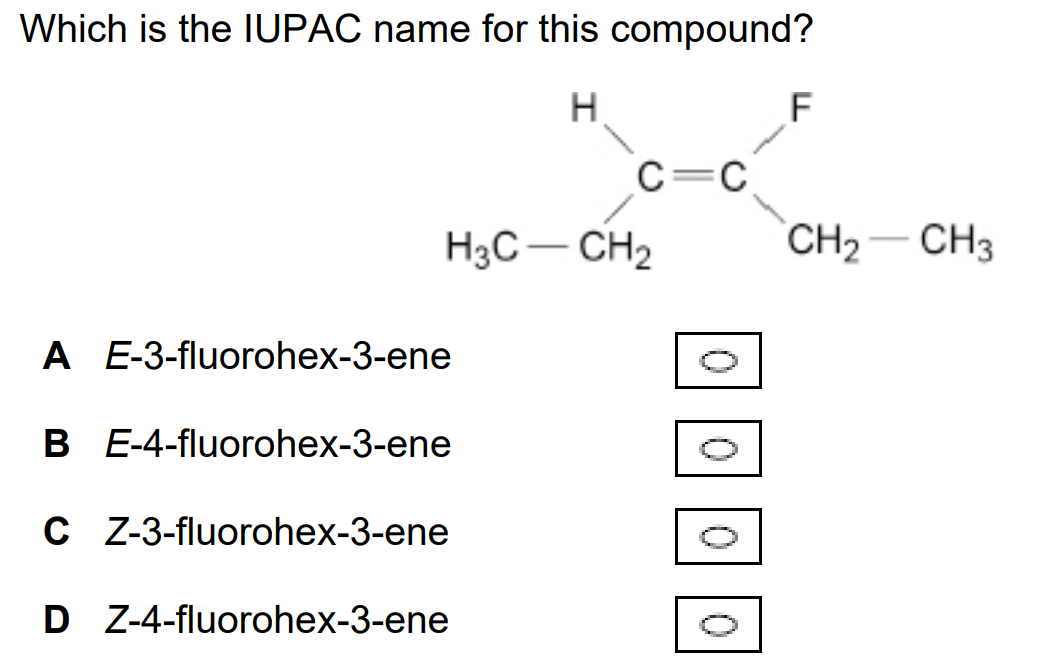
For this question, look at the atom bonded directly to the carbon on double bond, look at atomic number (for RHS, it is F and C since F has higher atomic number it takes priority than C). On LHS, the C takes priority, so since the priority groups are on opposite sides the isomer is E.
For a required practical to prepare a known mass of solution:
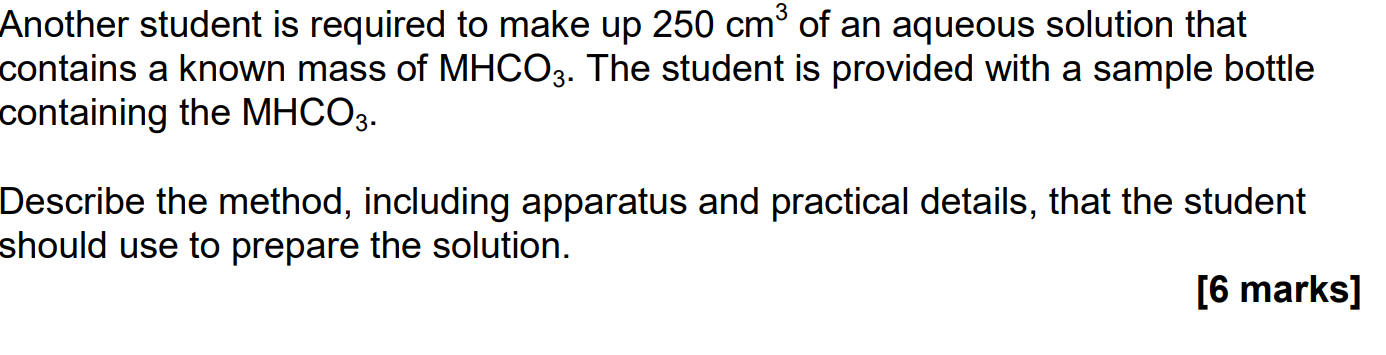
Weigh the weighing boat using a scale
Add solid
Re-weight the weighing boat
Subtract the masses, to get the known mass
Add this into a beaker, then add distilled water and with a glass rod mix so the solute dissolves
Make sure to add the volume of distilled water, where the bottom of the miniscus reaches the line
Then place the solution into a volumetric flask, and close the lid and invert many times. Also to add any other remaining solute into the volumetric flask through washings.
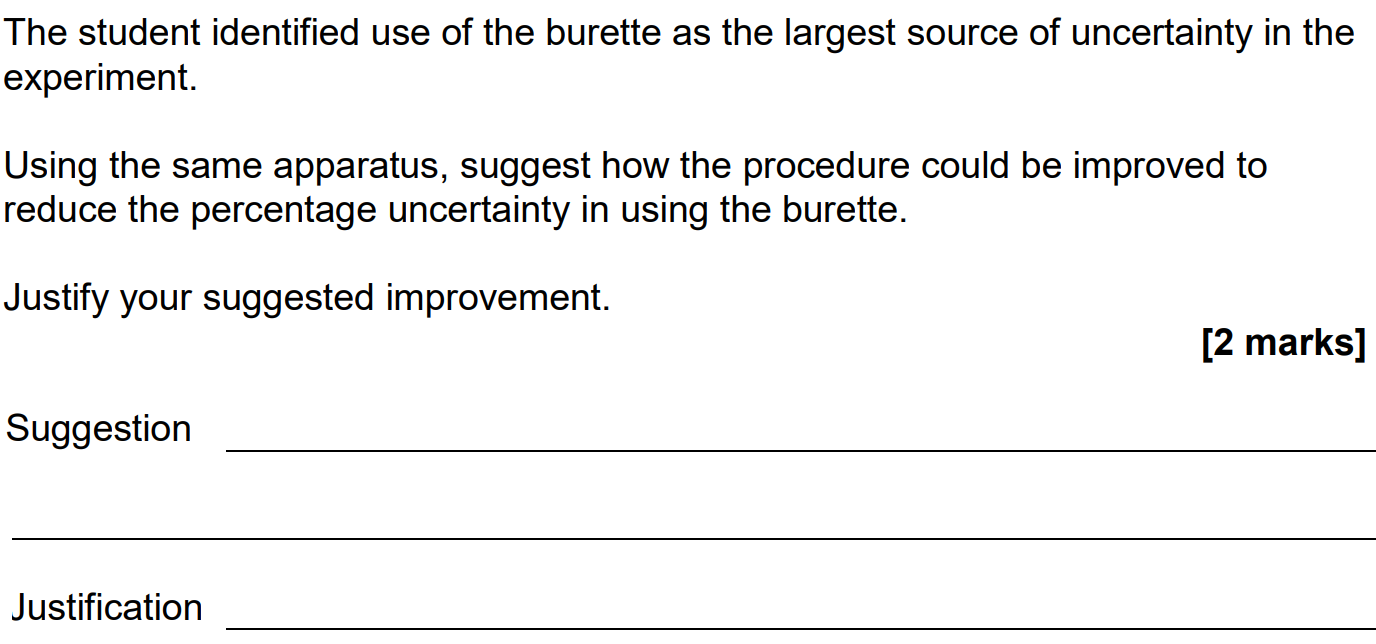
Suggest: use a larger mass of solid OR use a more concentrated solution OR less concentration of HCl
Explain: So, a larger titre will be needed, so a mean titre is more easily calculated.
Key points: For time of mass spectrocopy when it asks -> Explain how ions are accelerated, detected and have their abundance determined in a time of flight mass spectrometer:
Ions are accelerated as they are attracted towards the negative plate
At the detector, the ions are detected when they gain electrons
Their abundance is determined by the amount of electrons they gain which is proportional to their abundance.
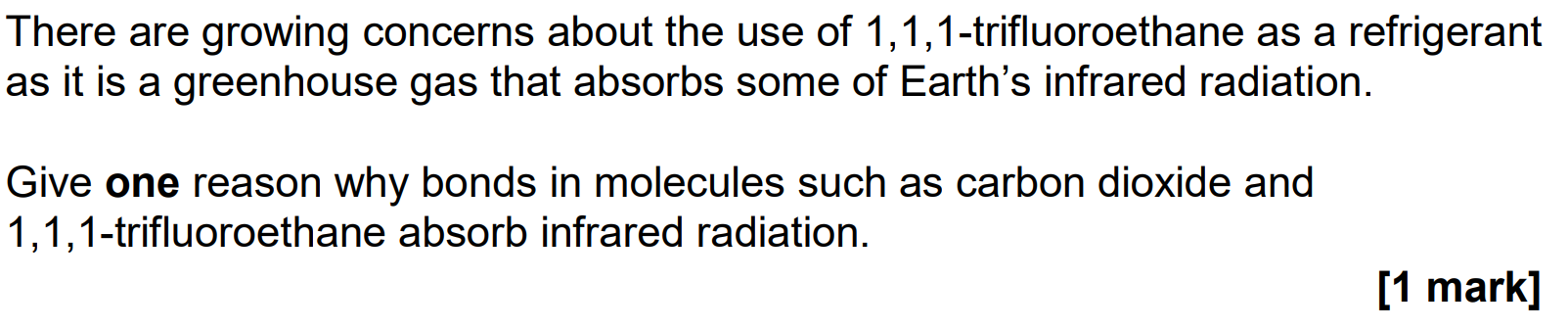
The bonds vibrate/stretch/bend
The bonds are polar
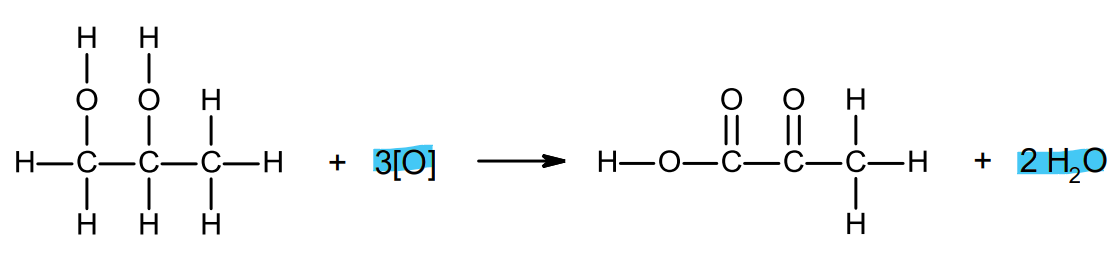
For the oxidation of alcohols don’t foget the water!!

Why is anti-bumping granules used?
To prevent large bubbles OR form smaller bubbles
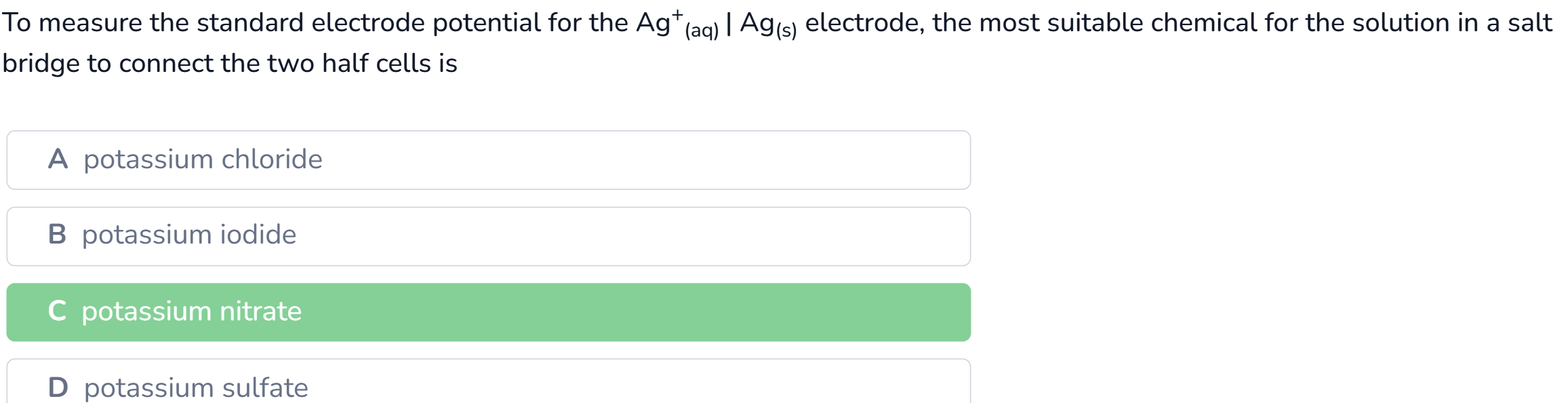
Because each of the other options forms AgI, AgCl => each are insoluble
Except AgNO3
Ag2SO4 is sparingly soluble
Electrochemical series question:
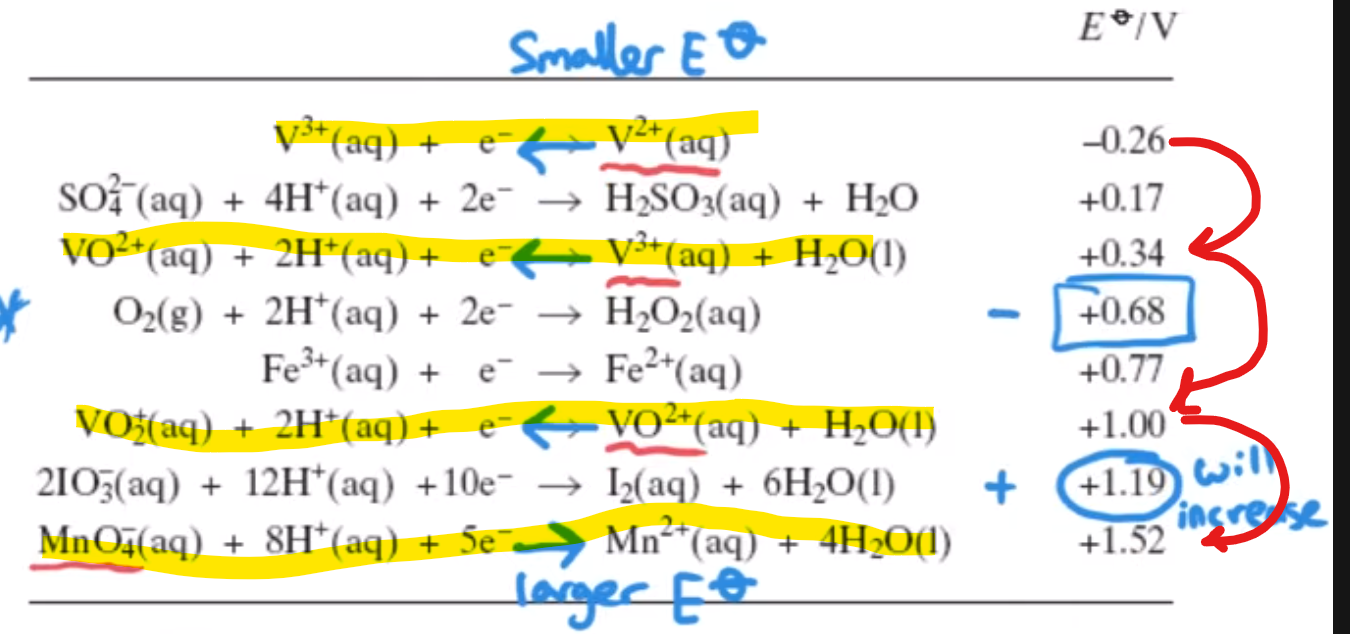
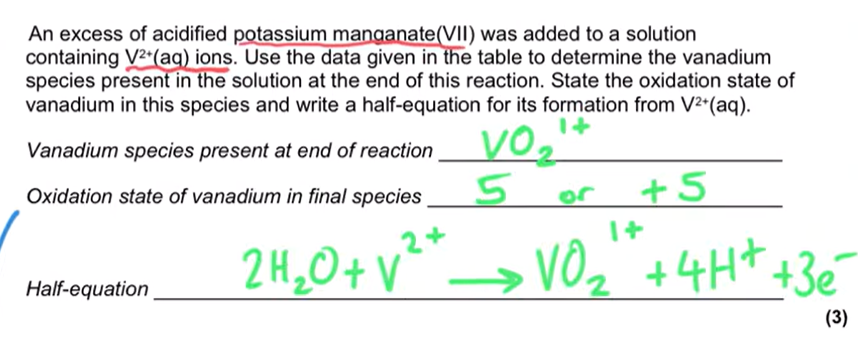
For this question the vanadium and magnate ions are in opposite sides of the spectrum, so the V2+ will be be turned to many other species until finally VO2+
Will changing the surface area of electrode alter the EMF? NO
Key information:
T-shaped molecule contains a permanent dipole.
Suggest two reasons why sulfur dioxide is removed as by-product of exhaust gases?
To reduce the formation of acidic rain (What I wrote it is correct)
ADDITIONALLY, reduced the waste for other final products
Toxic, causes breathing problems
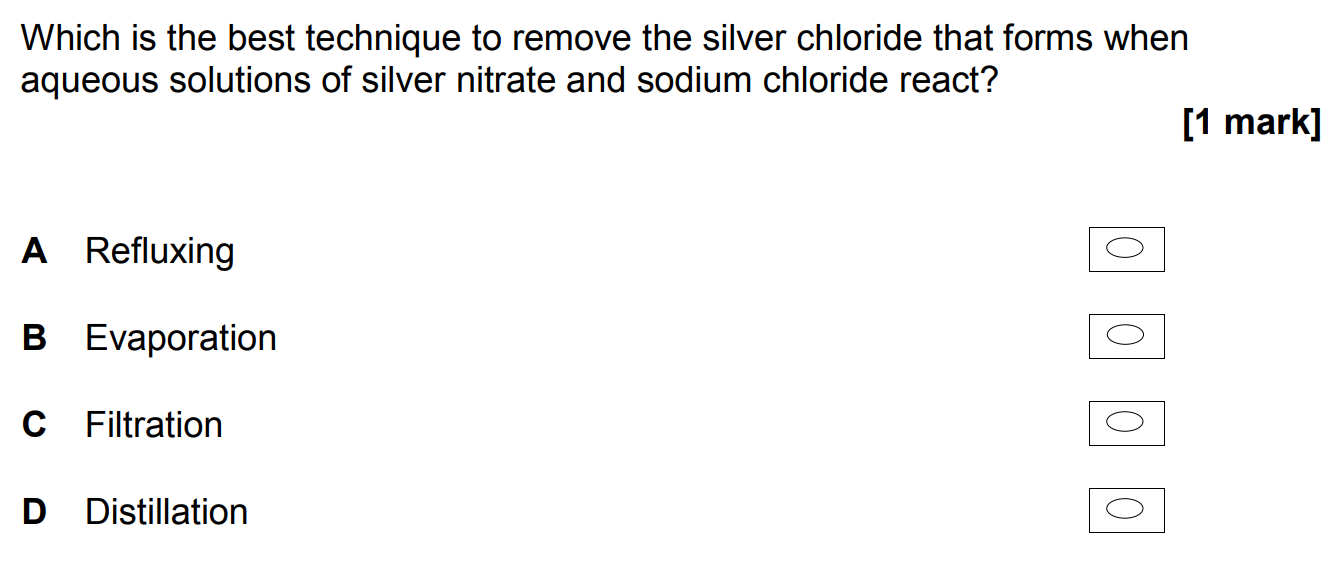
For this question (I got it right), but the key info is that percipitates are solids so they are insoluble so they can be removed via filteration.
Don’t get confused on the instruments for titration:
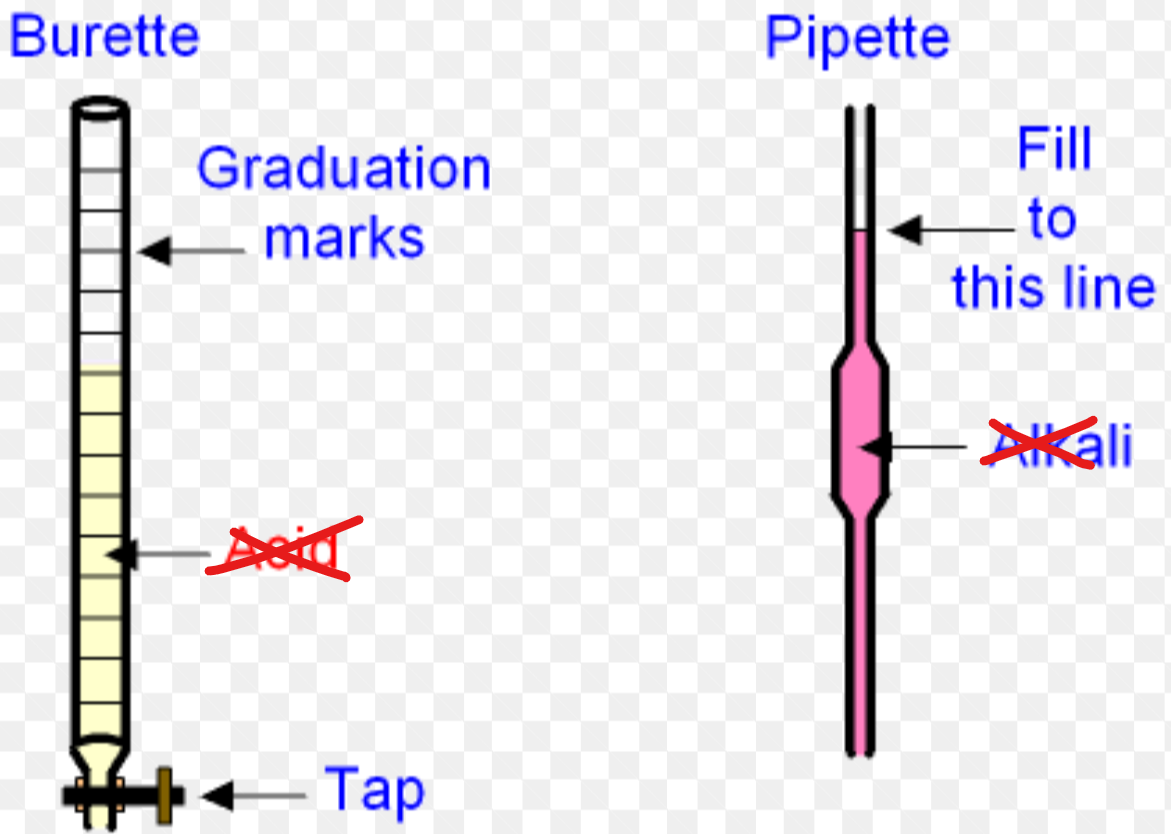
I crossed out alkaline and acid, as these sometimes change around.

For this question: the reason the difference is because data book contains an average from a range of compounds.
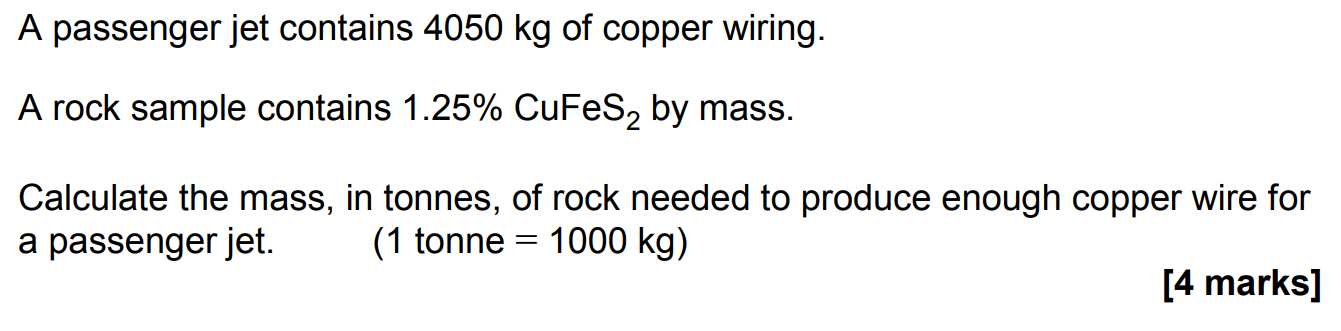
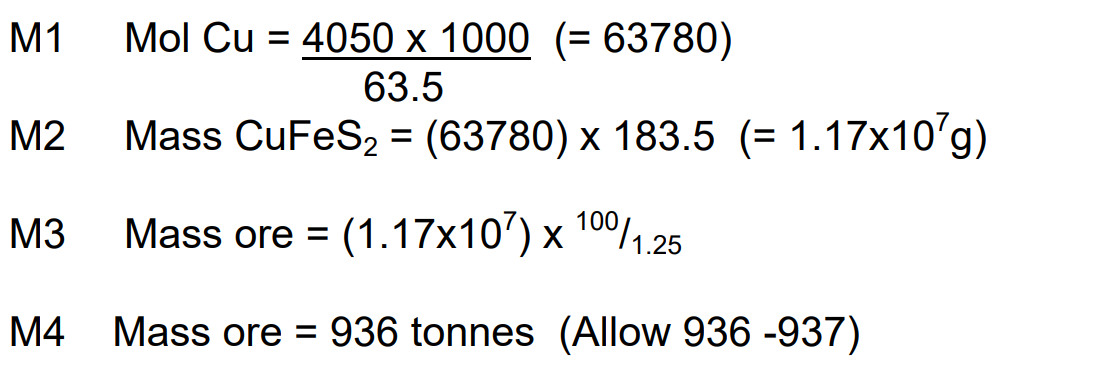
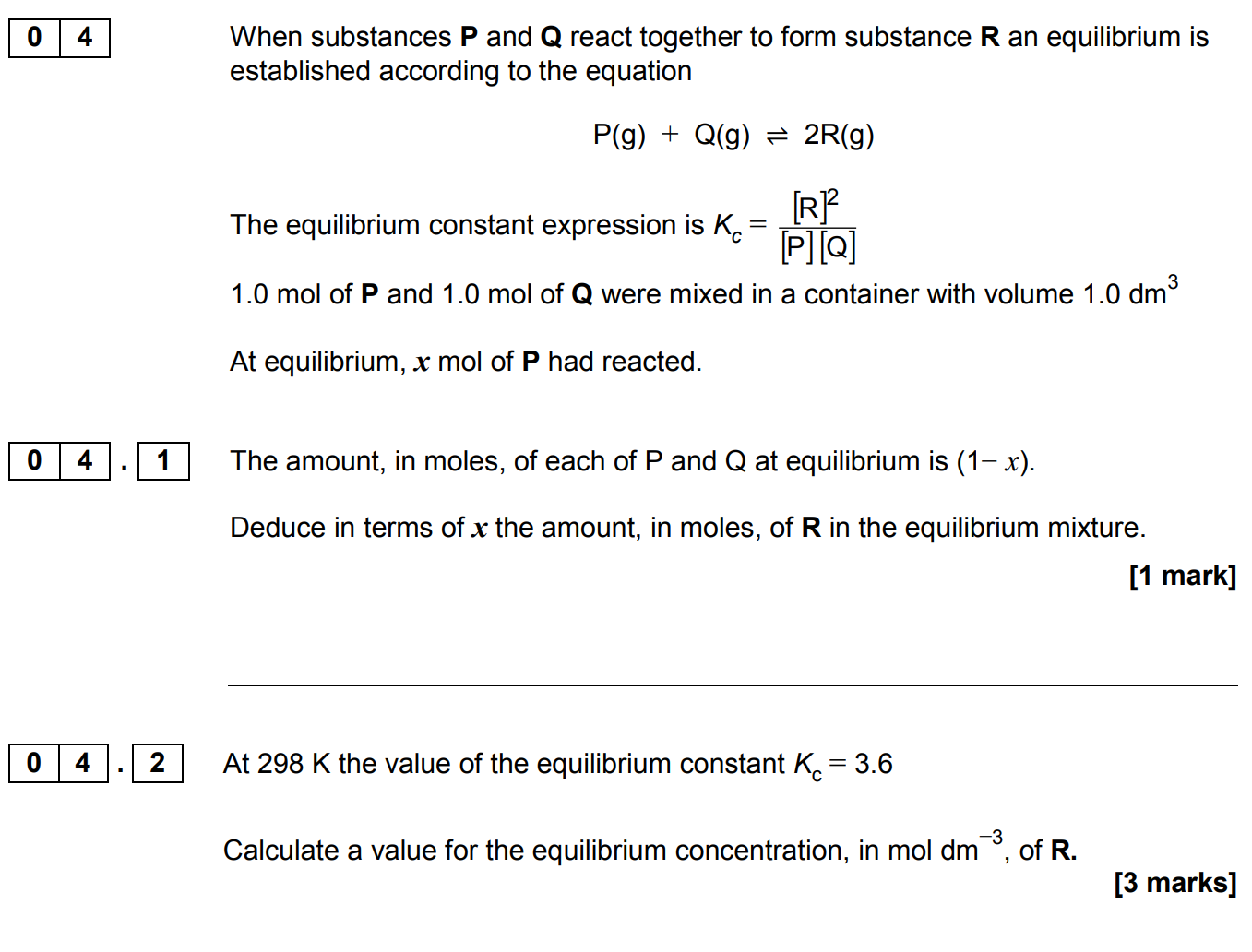
2017 P1 AS Chem (the above pic) => the mistake was resolved, I got confused with wording the amount of moles of each P and Q is (1-x), so each of them have that not combined together.
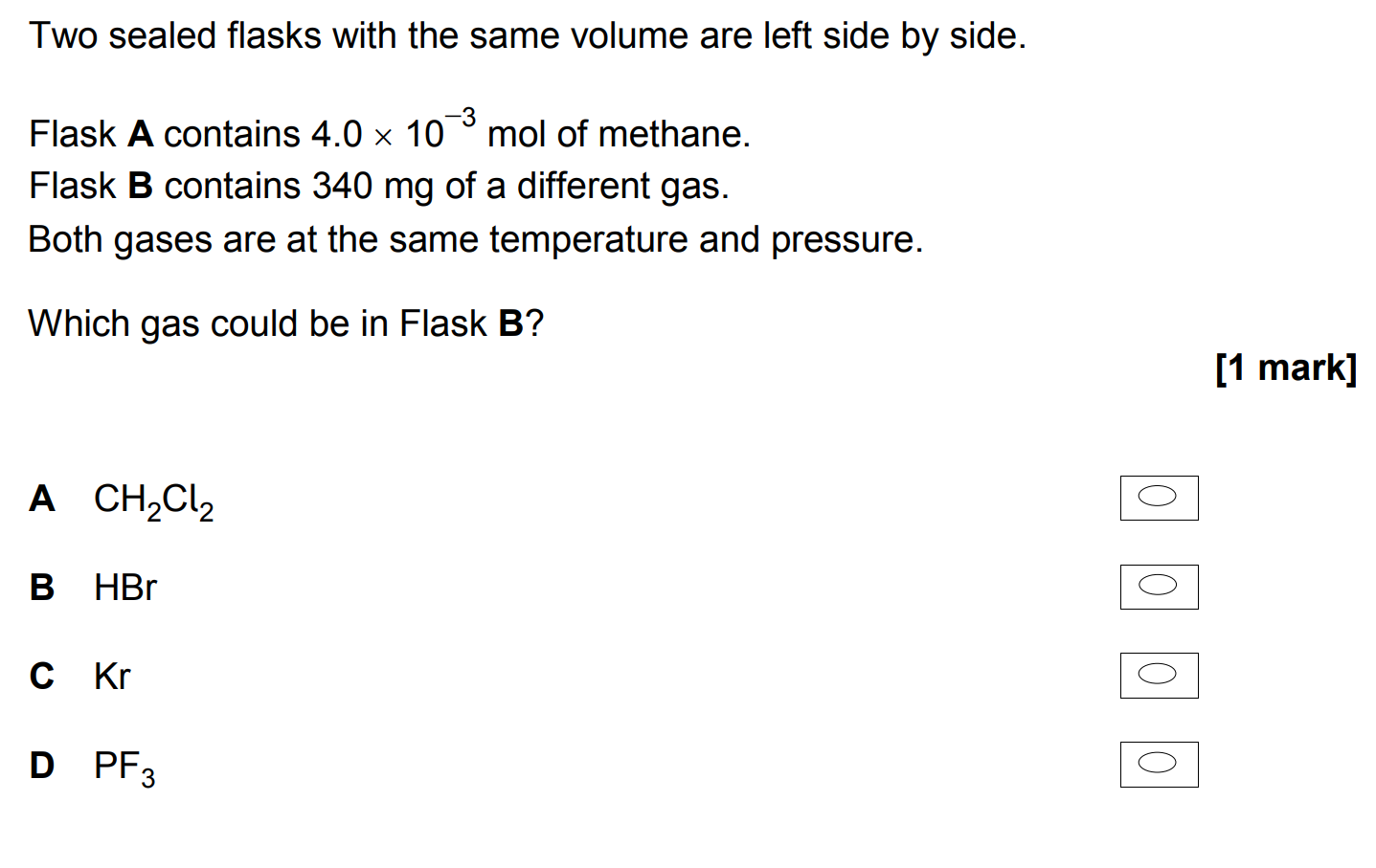
Answer is A, because find Mr of each one, mass divide it by mr and see which one is most closest to the moles.
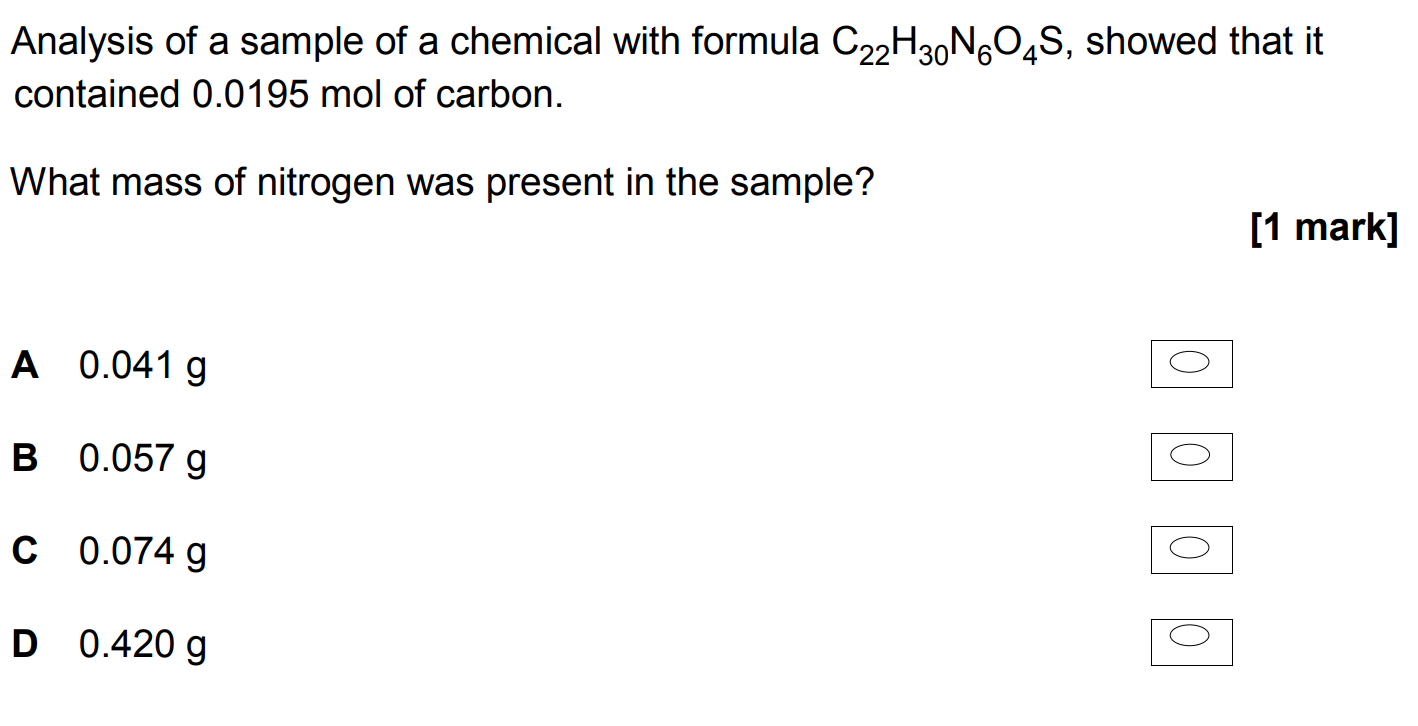
Answer is C, because you first work out the molar ratio of carbon to nitrogen by 0.0195 × 6/22 = 0.005318 moles, then moles x mr (0.005318 × 14)
Thermodynamics - The perfect ionic model (6 marks)
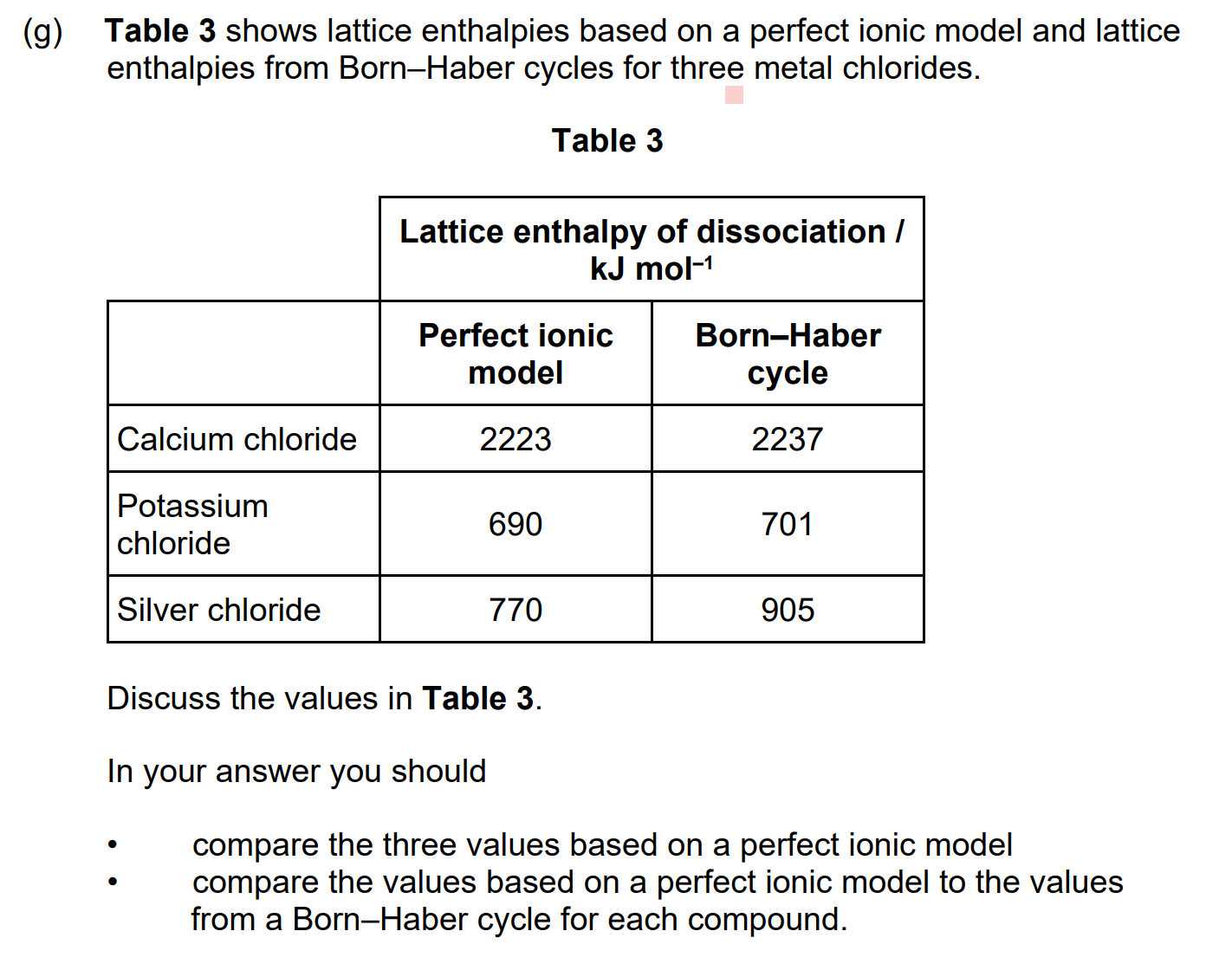
For this question, it gives us two bullet points answer both of them, the first being compare the ionic model between each of the compounds
So, calcium chloride has highest lattice enthalpy because of the charge difference in Calcium which is 2+ while the other cations are of +1 charge, this povides a stronger electrostatic force of attraction between oppositely charged ions
The second bullet point is to compare the theoretical value of lattice dissociation (born haber) to the perfect ionic model.
So, if there is a large difference between Born haber cycle and ionic model there is a greater covalent character. So, for silver chloride the silver ion (cation) is of smaller radius so the positive charge is concentrated in a smaller volume of space, pulling the electron density (causing polarisation) from anion to cation
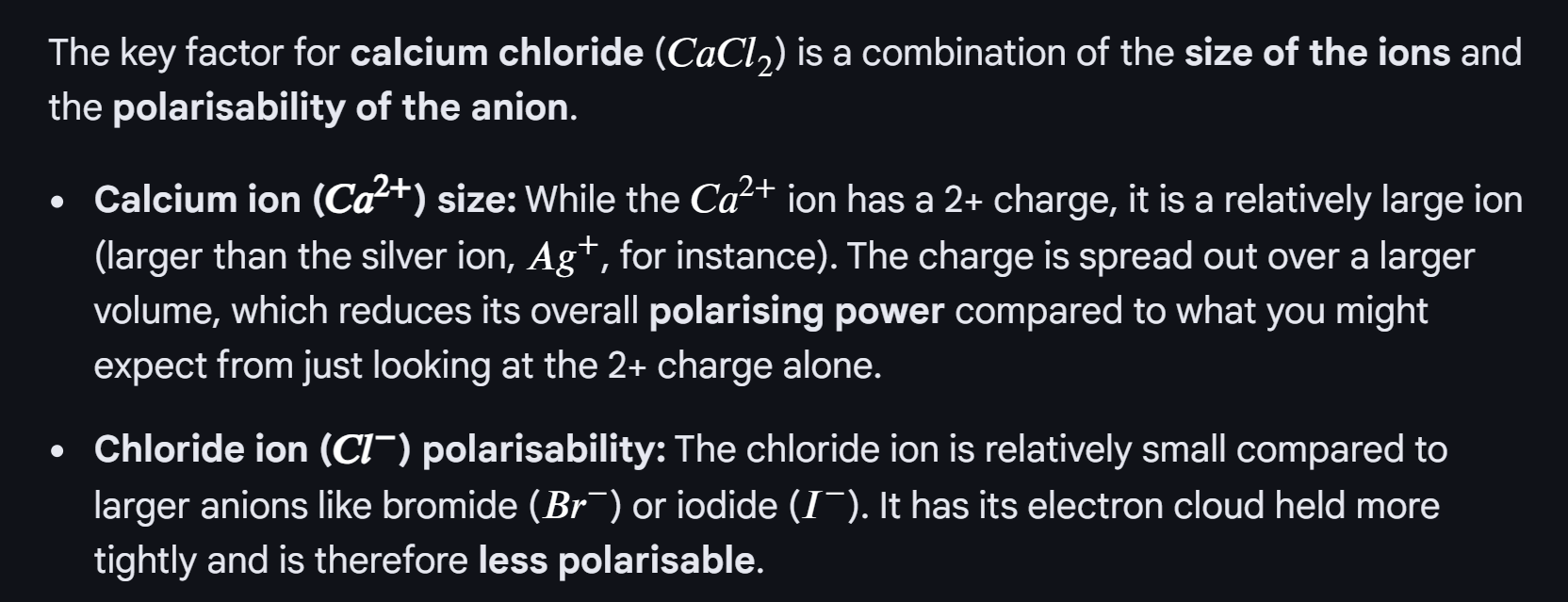
Everything about polarisation and perfect ionic model:
In a perfect ionic model the ions are considered to be perfect spheres, where the cation attracts the electron cloud of nearby negatively charged anion while repelling its nucleus. This causes anions cloud to be distorted from its perfect sphere shape towards the cation. The distortion is called polarisation, and its similar to a covalent bond - because it includes some electron density being shared between two ions.
Factors effecting polarisation: (key thing multiple of these factors play together to cause polarisation)
Cation charge: A higher charge on cation leads to greater positive charge density, so increases probability in distorting anion’s electron cloud.
Cation size: A smaller cation concentrates the positive charge in a smaller volume - increasing the polarising power
Anion size: A larger anion has more loosely held outer electrons making the electron cloud to be more polarised
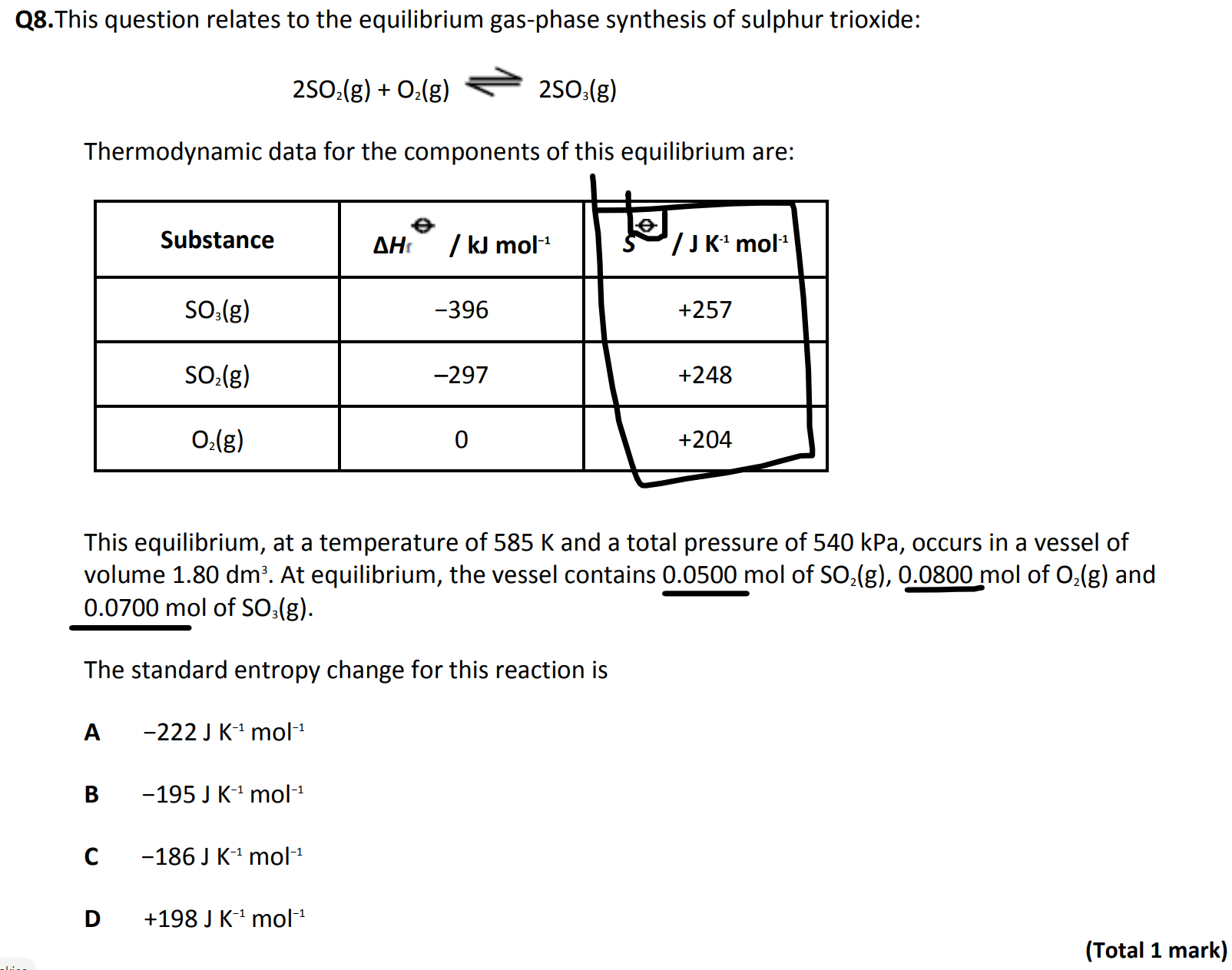
The following is a trick question, because the information in the paragraph shows the irrelevant stuff where the standard enthalpy is not considered. Because the question asked for the standard so only the table and the equation is required. Upon calculation should get C.
Kp (these questions are easy but dont forget how to do them they are easy marks)
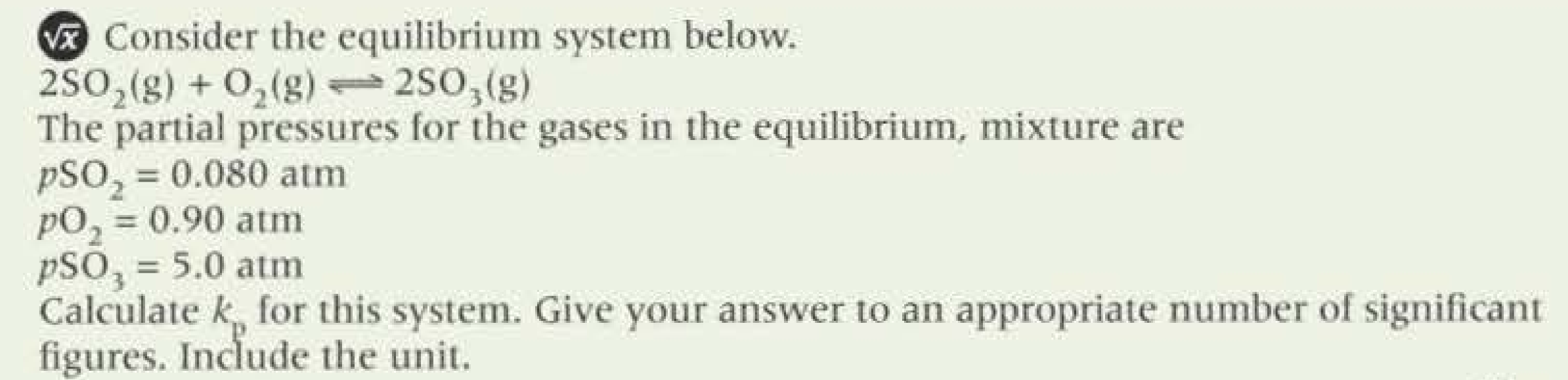
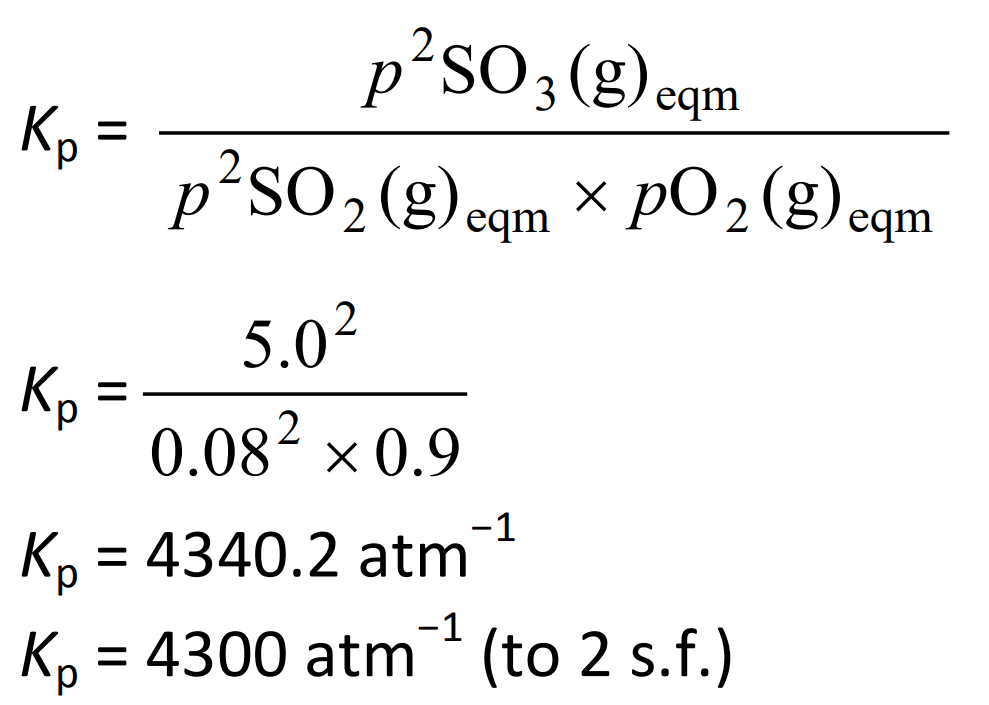
June 2018 P2 AS Question 3.1 there is no need to add the number of moles together, because 0.05 + 0.05 not needed as only one mole of water is being formed.
Additionally, some questions I missed out on the key words:
Why does catalyst not increase the rate of reaction?
They increase the rate of the forward and backward reaction by the same amount.
Multiple-choice question Question 9 stuck
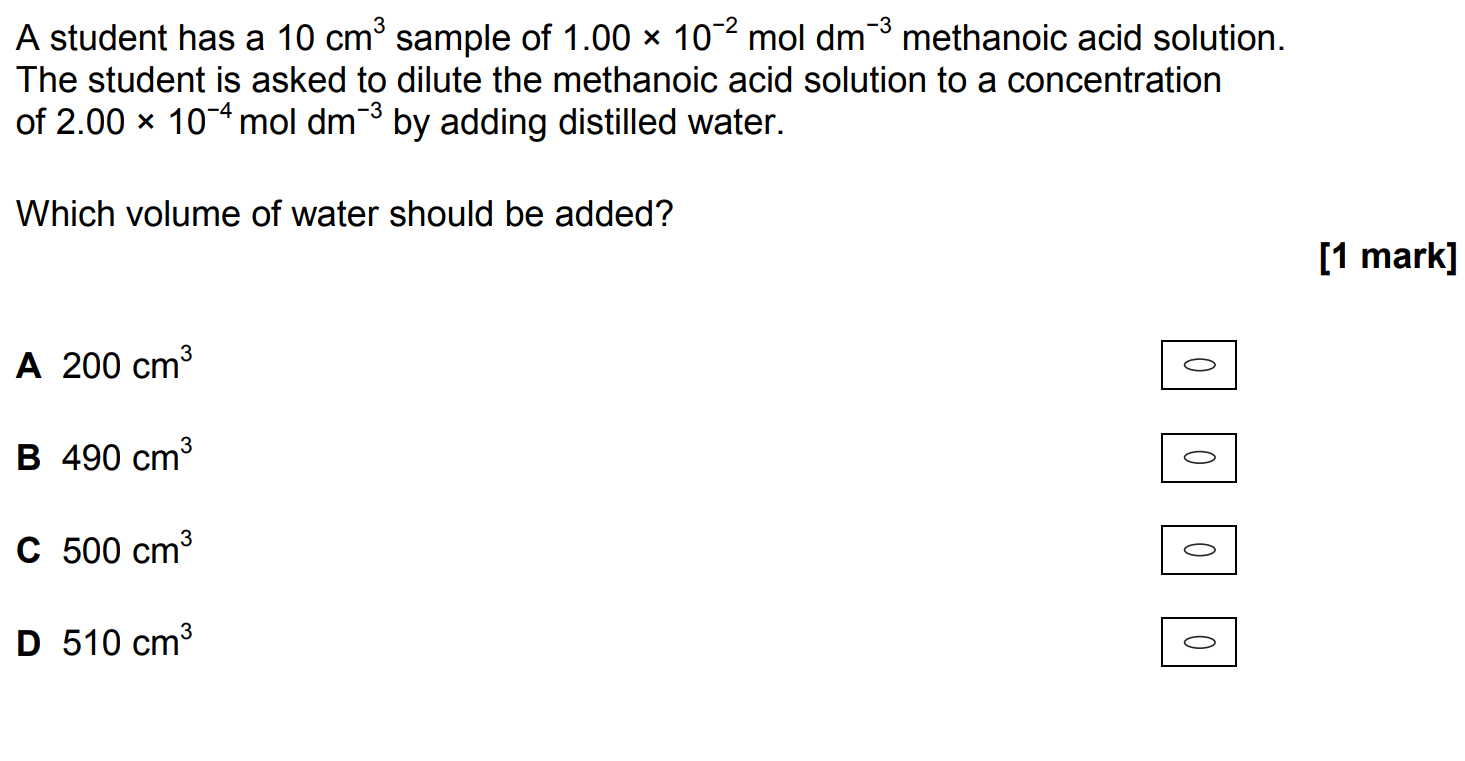
Use the equation C1V1 =C2V2
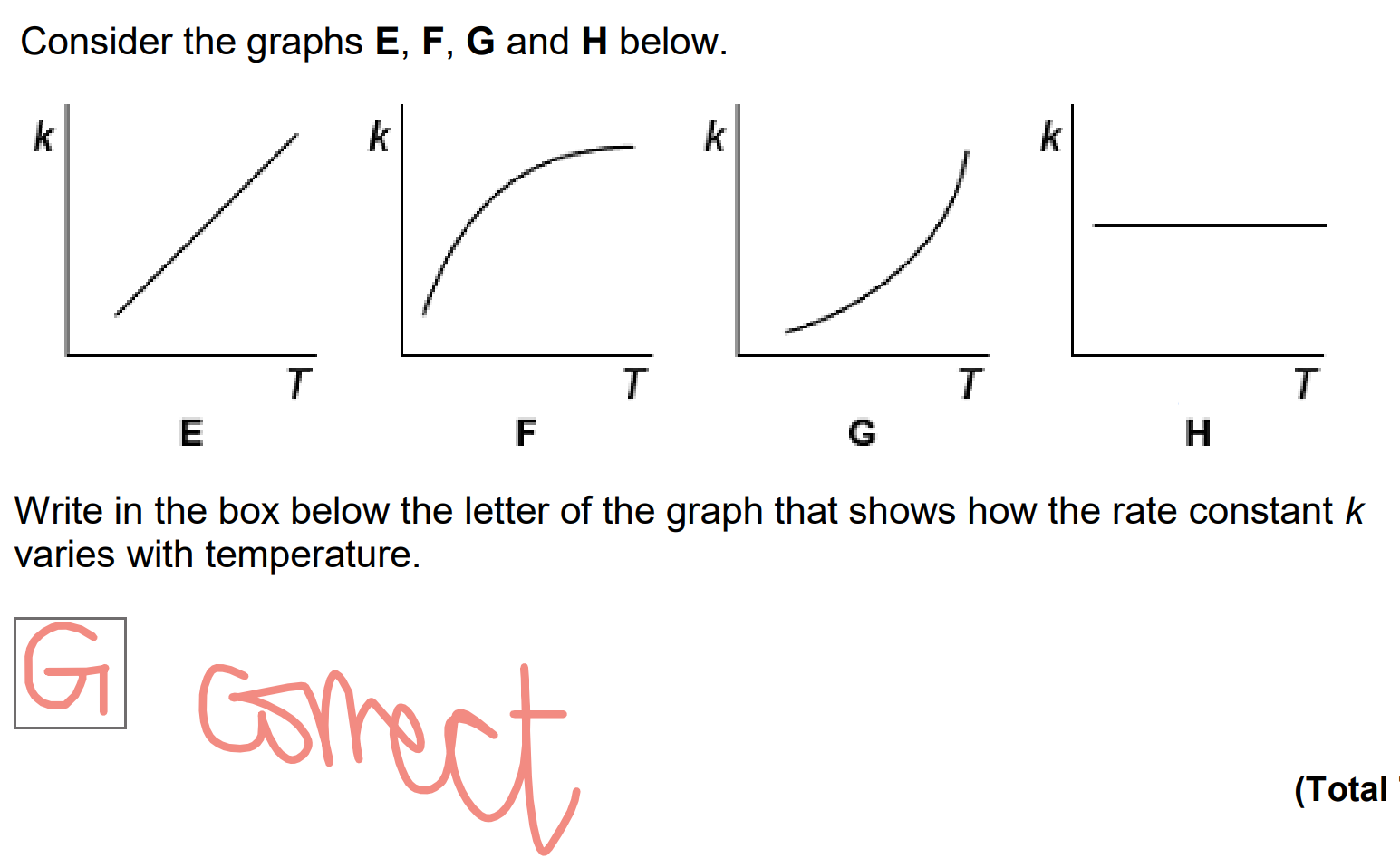
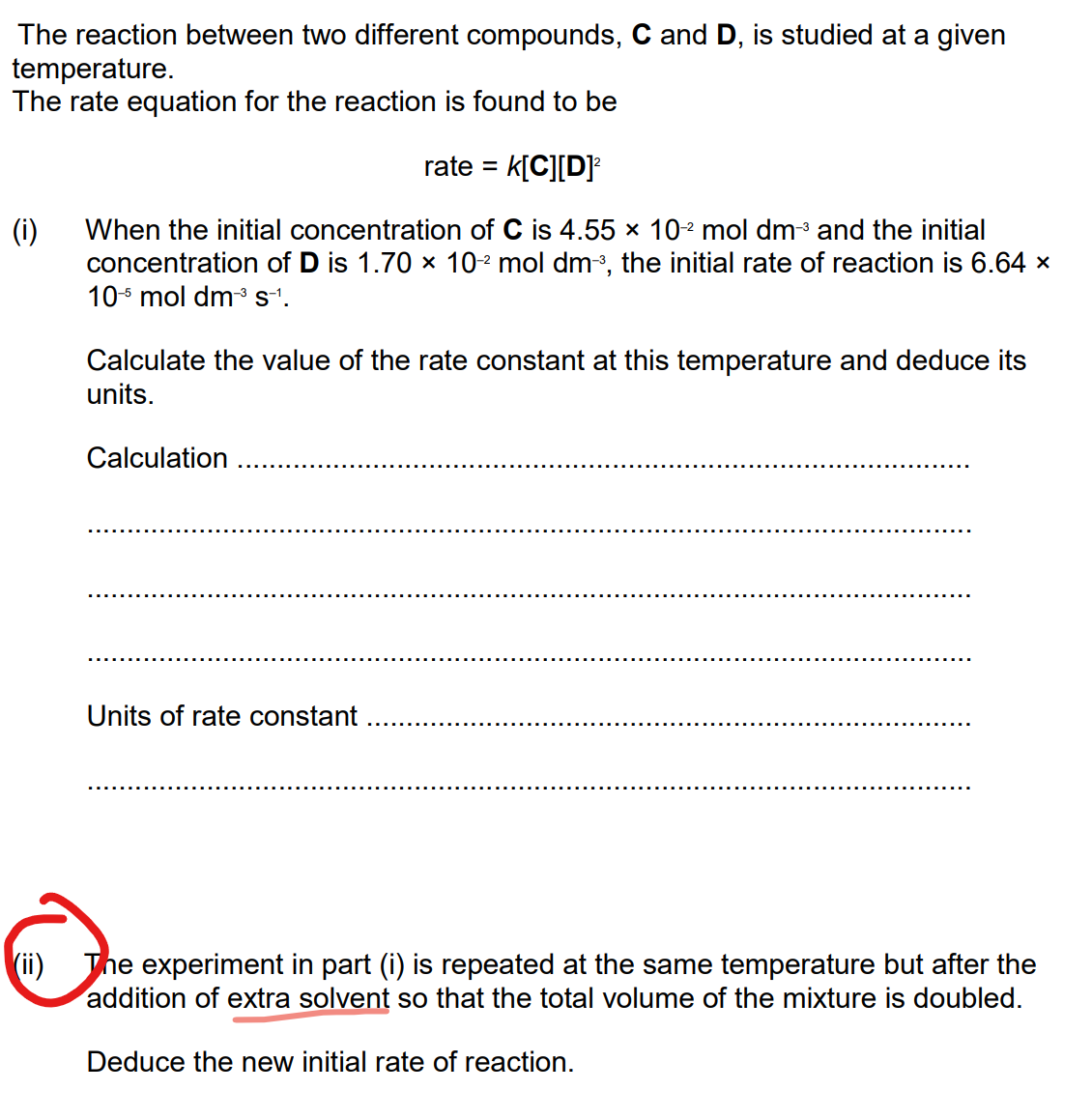
Question stuck:
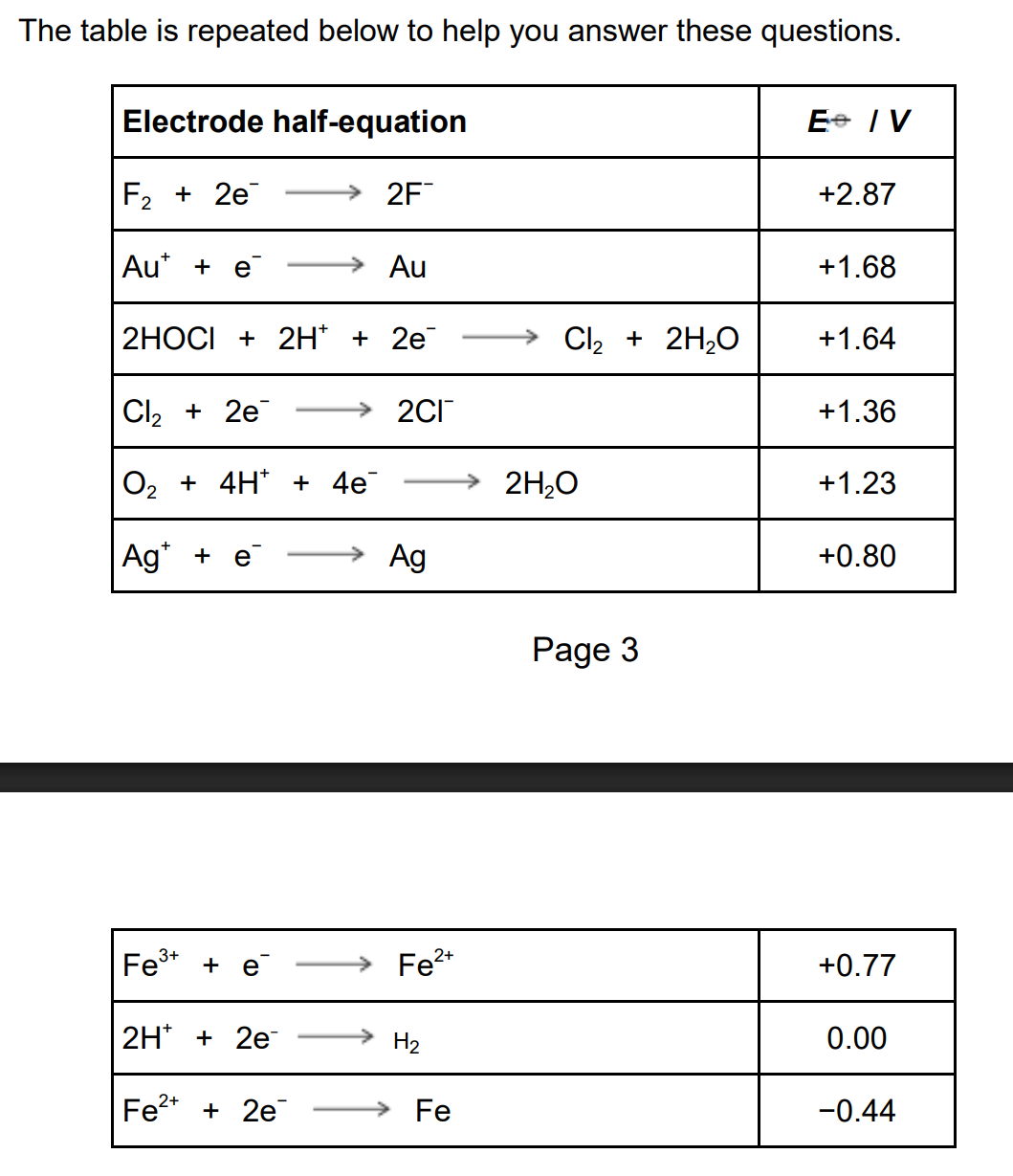
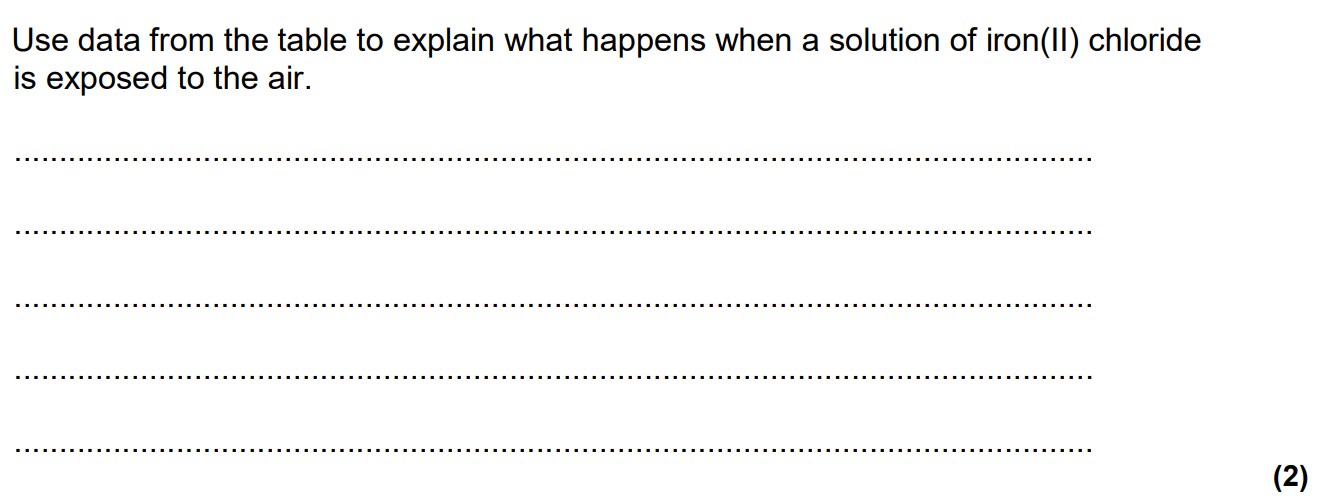
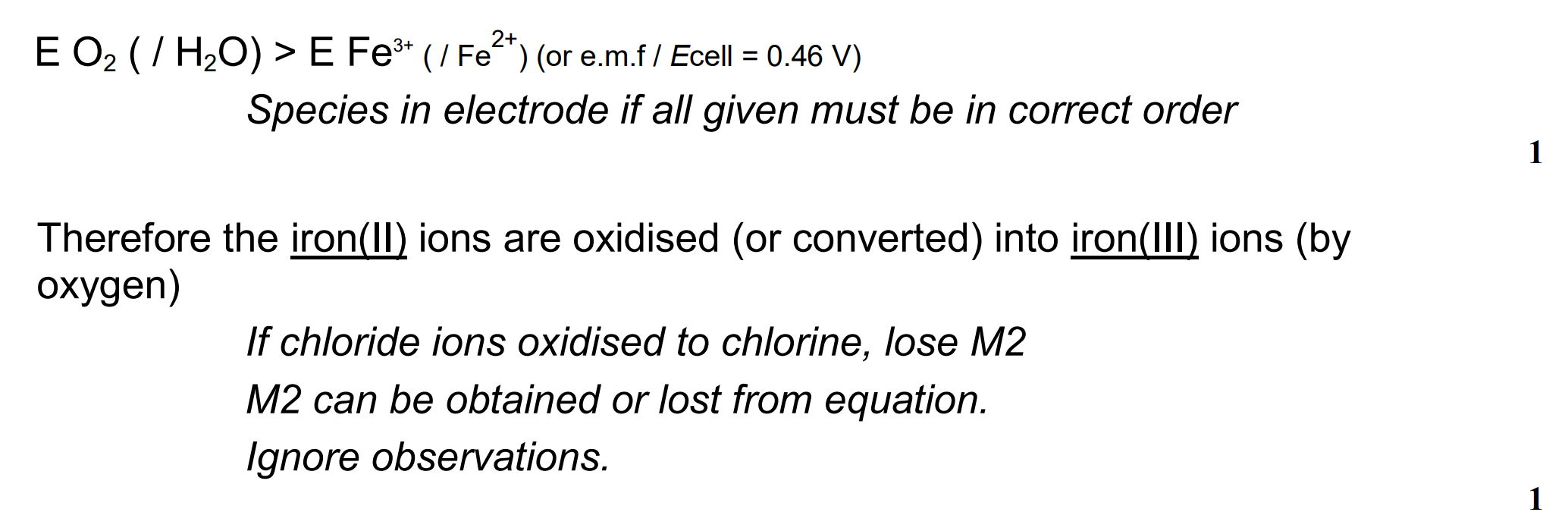


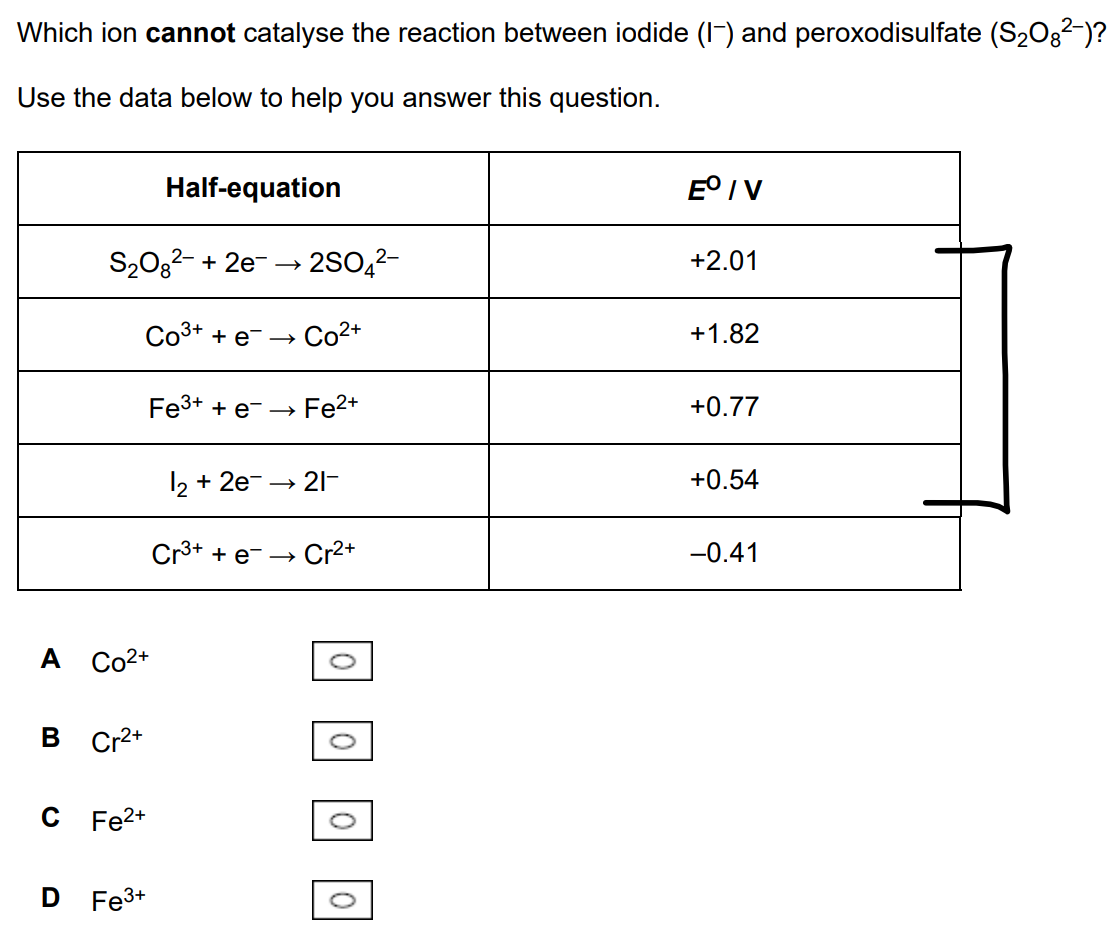
The answer is B.
For a species to catalyse the reaction, but be able to participate in a two step cycle, where it is reduced by one reactant and oxidized by the other. The reduction potential of the catalyst redox couple must lie between the potentials of the two reactants.
If the catalysts E is lower than the species being oxidised, then it cannot be reduced by the species. If the catalysts E is higher than the species being reduced, then it cannot be oxidised by the species.
For electrode potentials:
Key thing to remember: when it is connected with ammeter, because this has a low resistance to electrons, this allows electrons to flow through - so the reaction can go to completion, so with the ammeter measurement it will decrease. However, when connected to a high resistance voltmeter, because it is high resistance, electrons cannot flow through - enabling the measurement of voltage to be stable.

Propanenitrile is C-C-C 3 bonds N resulting in the lowest relative molecular mass

For this question: melting point would be lower if there are impurities, because image Aspirin being neatly stacked together, but because we have impurities, they will come inbetween the neatly stacked order so will reduce the effect of van der waals forces and therefore require less energy to overcome.
drawing of the bunchner funnel, the reflux and the distillation

Asymmetrical carbon, basically means identify the chrial carbon.