Investigating Resistance
You can Investigate adding Resistors in series
- First, you’ll need to find at least four identical resistors
- Then build the circuit shown on the right using one of the resistors. Make a note of the potential difference of the battery
- Measure the current through the circuit using the ammeter. Use this to calculate the resistance of the circuit using R=V/I
- Add another resistor, in series with the first
- Again, measure the current through the circuit and use this and the potential difference of the battery to calculate the overall resistance of the circuit
- Repeat steps 4 and 5 until you’ve added all of your resistors
- Plot a graph of the number of resistors against the total resistance of the circuit
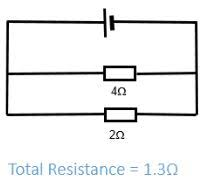
Or in Parallel
- Using the same equipment as before, build the same initial circuit
- Measure the total current through the circuit and calculate the resistance of the circuit using R=V/I
- Next, add another resistor, in parallel with the first
- Measure the total current through the circuit and use this and the potential difference of the battery to calculate the overall resistance of the circuit
- Repeat steps 3 and 4 until you’ve added all of your resistors
- Plot a graph of the number of resistors in the circuit against the total resistance
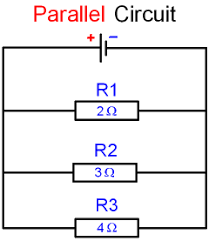
Your results should match the Resistance Rules
- You should find that adding resistors in series increases the total resistance of the circuit
- The more resistors you add, the larger the resistance of the whole circuit
- When you add resistors in parallel, the total current through the circuit increases-so the total resistance of the circuit has decreased
- The more resistors you add, the smaller the overall resistance becomes
- These results agree with what you’ve learnt about resistance in series and parallel circuits.