Chordates, Vertebrates
Phylum 9: Chordates
mammals
birds
fish
humans
They have…
tube like digestive system
complex organs
have a coelom
bilateral symmetry
deuterostomes
Can be split into 3 phyla
lancelets
tunicates
vertebrates
Chordates all have similar embryos, when they become adults, they can look very different.
How are they similar?
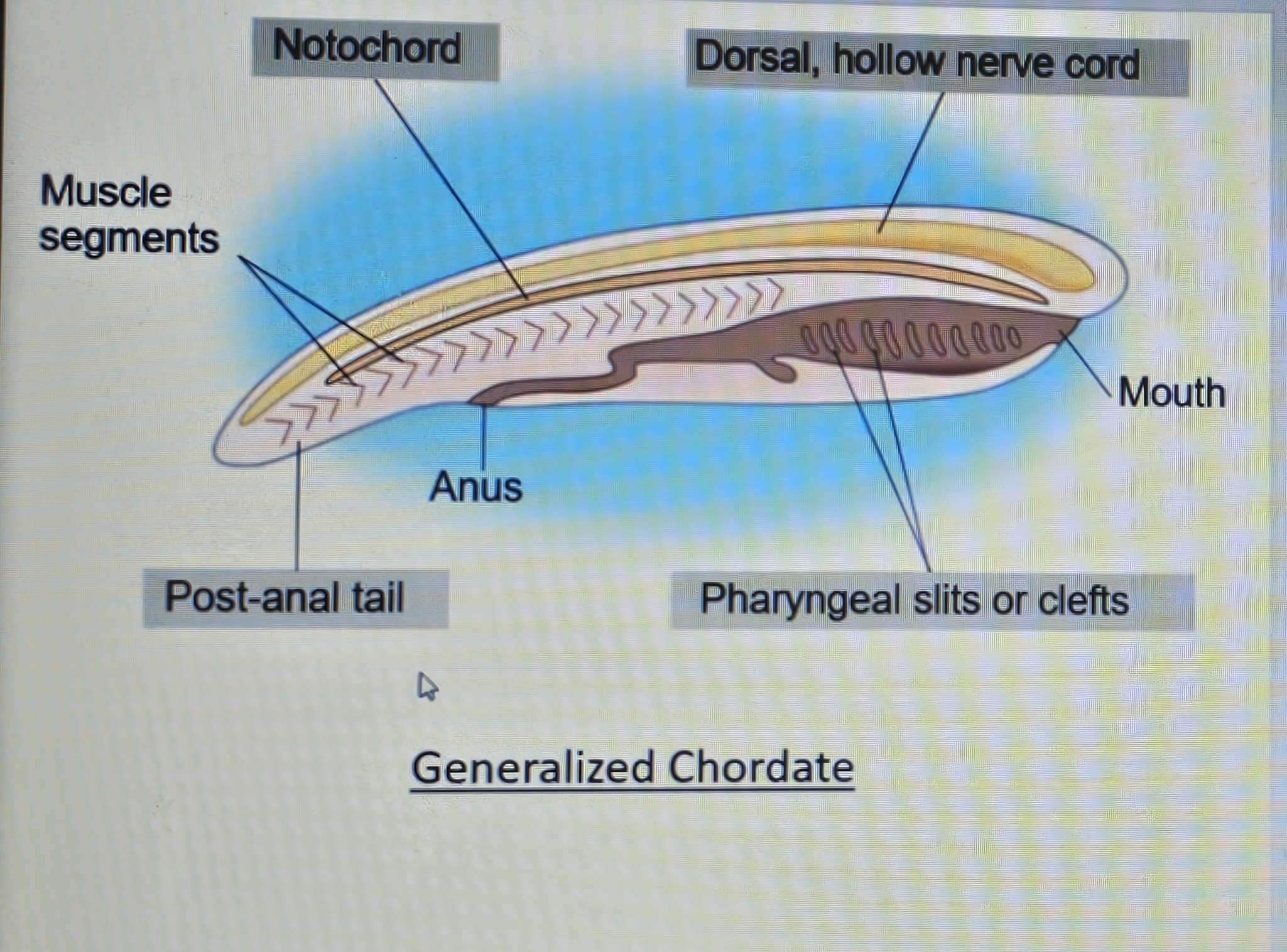
all chordate embryos have a nerve cord that is both dorsal and hollow
vertebrates call this nerve cord the spinal cord and brain
all chordate embryos have a notochord that acts as a flexible support rod
for vertebrates, the notochord has become reduced in adults. all that is left is pads that are cushioning between the backbone that became part of the discs of cartilage that cushion between the vertebrae
pharynx in throat has supporting arches that have clefts that become open slits. water can enter the mouth, take a right turn and leave the digestive system through holes in the throat (gill slits in fish)
in reptiles and mammals, the pharyngeal clefts only made during the embryo stage
all chordates have a muscular tail called post anal tail
Lancelets
thin animals, couple centimeters long
look like flat fish without any fins or eyes
okay swimmers, mostly in the sand with their head sticking up
found in shallow marine environments
filter feed with gills that have openings to the digestive system
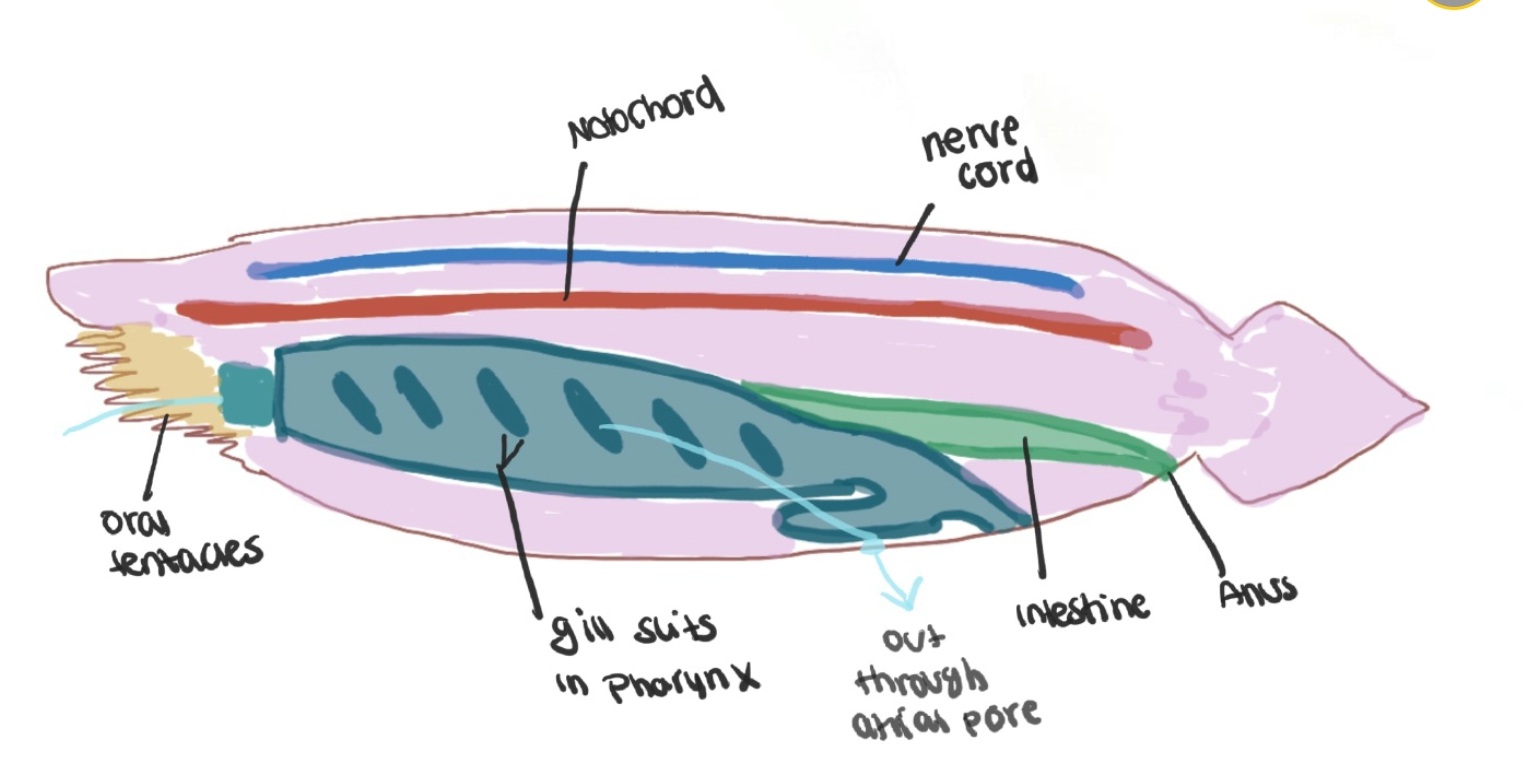
Muscles are working off of the notochord, which allows them to do a controlled back and forth (like the tail moving on a fish)
Tunicates
small animals that vary a lot in their looks
typically (as adults) sessile
another filter feeder that feed with gill slits
after food is captured, water exits out of excurrent siphon
sessile ones are known as sea squirts
other tunicates can float (ex: salps)
Vertebrates
8 clades
cyclostomes
jawless fishes
chondrichthyes
cartilaginous fishes (ex: sharks)
actinopterygii
ray finned fishes
coelacanth
lung fish
3,4 and 5 are collectively called the bony fishes
amphibians
reptiles
mammals
Vertebrates are smarter than lancelets and tunicates
more complex brain
have an endoskeleton including a skull
have a backbone of vertebrae
skeleton can be made of bone and/or cartilage (softer flexible tissue)
closed circulatory system with high blood pressure that is powered by a ventral heart
Fish heart
usually only has 2 chambers inside
upper chamber that receives blood from rest of the body
pushes blood through valve into lower chamber that contracts and sends blood back to the body
Cyclostomes
lot have gone extinct, only 2 kinds left
lampreys and hagfish
no jaws so mouth cannot hinge closed (stuck in circular shape)
only have rudimentary vertebrae
missing paired fins
appeared around 500 million years ago
ostracoderms were early jawless fish that lived in salt water, but they now live in fresh water too
covered in bony armor, so they stayed on the bottom
descendants include lamprey and hagfish
lampreys look like eels
mostly in freshwater
most are parasites on other fish and sucks out some blood
hagfish are ugly and slimy
they are scavengers, go after soft bodied animals, get inside dead fish
can produce mucus that expands in contact with water
if predator tries to latch on, they slide off