Endocrinologic Nursing
Glands
A. Pituitary Gland
Also called hypophysis and “master gland”
Controls secretion of hormones from other glands of the body
Housed in Sella turcica
Being controlled by the hypothalamus
Anterior and Posterior

B. Thyroid gland
Largest endocrine gland
Butterfly shaped
Highly vascular - 5x more blood flow than liver
Location - below Adam’s apple or anterior of trachea
Normal Physiology
APG > TSH > Thyroid gland > Thyroid hormones
Thyroid hormones:
T3 (triiodothyronine) is for metabolism
T4 (thyroxine) is for heat production (makes skin moist)
Both enhances SNS (keeps us alert and awake) by increasing V/S
Hormones are normally produced in the morning.
Difference: T3 is more active than T4
Negative feedback mechanism
Regulates the hormones and prevent hormonal imbalance
Example: Low thyroid hormones signals pituitary gland to increase TSH then Thyroid gland increases thyroid hormones
Basically, If thyroid hormone decreases, TSH increases (vice versa)
Hyperthyroidism vs. Hypothyroidism
Findings | Hyperthyroidism | Hypothyroidism |
|---|---|---|
Cause |
|
|
Appearance |
|
|
Differences
Findings | Hyperthyroidism | Hypothyroidism |
|---|---|---|
T3 & T4 | High | Low |
TSH | Low | High |
Menstruation (LH & FSH) | Low (Oligomenorrhea) | High (Menorrhagia) |
Metabolism | High | Low |
Body weight | Low | High |
Appetite | High | Low |
GIT | High (Diarrhea) | Low (Constipation) |
Heat production | High (Heat intolerance) | Low (Cold Intolerance): use blanket |
Skin | Moist (Diaphoresis) | Dry |
SNS | Hyperactive (Insomnia) | Hypoactive (lethargy) |
Vital sign | High | Low |
Severe form | Thyroid storm, thyrotoxicosis, or thyrotoxic crisis | Myxedema Coma |
Summary
Hyperthyroidism | Hypothyroidism |
|---|---|
|
|
Interventions
Interventions | Hyperthyroidism | Hypothyroidism |
|---|---|---|
Caloric intake | High | Low |
Fiber | Diarrhea | High |
Fluids | High | High |
Activity | Bed rest | Exercise |
Environment | Cool/non-stimulating | Warm |
Sedatives | (+) YES | (-) NO |
Stimulants | (-) NO | (+) YES |
Avoid | Aspirin & Iodine | Sedatives |
Both diarrhea and constipation must have high fluid intake
Medications
Hypothyroidism
1. Levothyroxine
Take in the morning with empty stomach
Avoid taking with multivitamins (can be taken 4 hours apart)
Taking with vitamins can decrease absorption
Effective only if findings are normal
WOF: Undermedication and overmedication
Hyperthyroidism
1. Anti-thyroid medications (Thioamides)
Ex: Propylthiouracil (PTU) and Methimazole (Avoid during 1st trimester if pregnant)
WOF: Agranulocytosis (risk for infection)
2. Lugol’s Iodine Solution
Decreases size of thyroid gland
Taken only for 2 weeks prior to thyroidectomy
Decreases chance of bleeding during and after surgery
WOF: Iodism (Iodine toxicity) which can be hepatotoxic
C. Parathyroid Gland
Located behind thyroid gland
Produces parathyroid hormones (PTH) which regulated calcium and phosphorus
Negative feedback
Parathyroid:
Low Ca (blood) > parathyroid gland > PTH > Ca from bones is transferred to blood > High Ca in blood and Low Ca in bones
Weakens bones but strengthens calcium in blood
Calcitonin:
Vice versa
Strengthens bones but weakens calcium in blood
Functions of calcium
Direct (same) to BP and HR
Inverse (opposite) to muscles, GIT, phosphorus
Too much calcium affects kidneys
Supersaturation - solidification of too much calcium in kidneys (a.k.a. kidney stones)
Osmotic diuresis causes polyuria
Hyperparathyroidism vs. Hypoparathyroidism
Findings | Hyperparathyroidism | Hypoparathyroidism |
|---|---|---|
Cause | Tumor | Thyroidectomy |
PTH | High Ca in blood and Low Ca in bones | Low Ca in blood and High Ca in bones |
Calcium | Hypercalcemia | Hypocalcemia |
Phosphorus | Low (Hypophosphatemia) | Hyper (Hyperphosphatemia) |
Muscle activity | Hypoactive (Muscle weakness and hyporeflexia) | Hyper active “TwiTChing SpaSm”
|
GIT | Hypoactive (Constipation) | Hyperactive (Diarrhea) |
Bones | Weakness (Pathologic fracture) | N/A |
Heart | High BP/HR | Low BP/HR |
Kidneys | Kidney stones and polyuria | N/A |
Interventions
Interventions | Hyperparathyroidism | Hypoparathyroidism |
DOC | Calcitonin | Parathyroid hormone & Calcium gluconate |
Calcium diet | Low | High |
Phosphorus diet (protein and processed foods) | High | Low |
Fluid intake | High | High |
Fiber (GIT) | High | Low |
Activity | Exercise (transfer ca from blood to bones) | Bed rest (transfer ca from bones to blood) |
D. Adrenal Gland
Suprarenal gland
Parts
Medulla
Cortex


Findings | Cushing’s Disease | Addison’s Disease |
Cause | Excessive steroids | Absent steroids |
Appearance |
|
|
Glucocorticoids |
Both cushing’s and addison’s have mood disturbance and high risk for infection
Cushing’s from immunosuppression
Addison’s from decreased stress resistance

Findings | Cushing’s | Addison’s |
|---|---|---|
Mineralocorticoids |
|
|
androgen (hair) | Hirsutism | Alopecia/hair loss |
Summary
Cushing’s | Addison’s |
|---|---|
|
|
Interventions
Interventions | Cushing’s | Addison’s |
|---|---|---|
Avoid | Stress and Infection | Stress and Infection |
Carbohydrates | Low | High |
Protein | High | Moderate |
Calcium diet | High | Low |
Na & H2O intake | Low | High |
K diet | High | Low |
Disturbed body image | (+) | (+) |
Medications
Cushing’s (Adrenal Enzyme Inhibitors) = Decrease steroids
“M.M.K.”
Mitotaine
Metyrapone
Ketoconazole
Addison’s (Corticosteroids “add -sone”)
Dexamethasone, Prednisone, etc.
Taken with meals in the morning to prevent GI upset and side effects
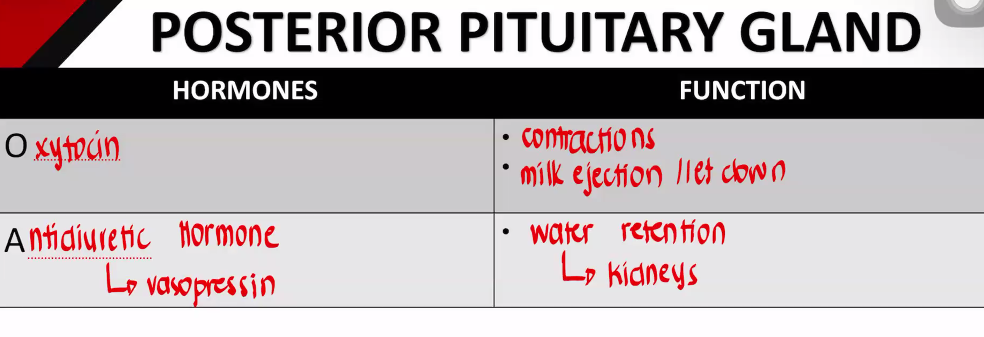
ADH/Vasopressin

Dilutional hyponatremia - is when the amount of sodium in your blood is too low which can cause cerebral edema (most deadly complication)
SIADH Classic sign: FVE with dark urine
DI Classic sign: FVD with light urine


Management
SIADH
1. Demeclocycline
ADH Blocker
2. Diuretics
To decrease fluid volume excess
3. Decrease fluid intake
4. Monitor
Daily weight (1kg:1L) = Best parameter
Intake and output
Electrolytes (Na)
DI
1. ADH (Vasopressin)
Ex: Desmopressin
2. Increase fluid intake
If patient is still not taking ADH
Fluid restriction if patient is already taking ADH
WOF: Water intoxication if patient is taking ADH
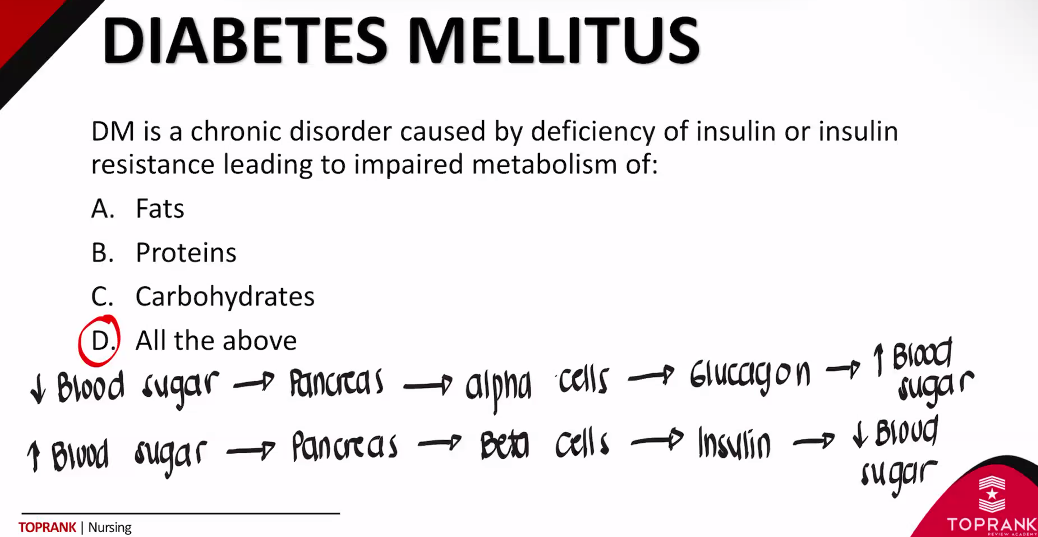
Diabetes Mellitus


OGTT is for pregnant only
Hyperglycemia manifestations
Note: Glucose needs insulin to be inside the cell (carbohydrate metabolism)
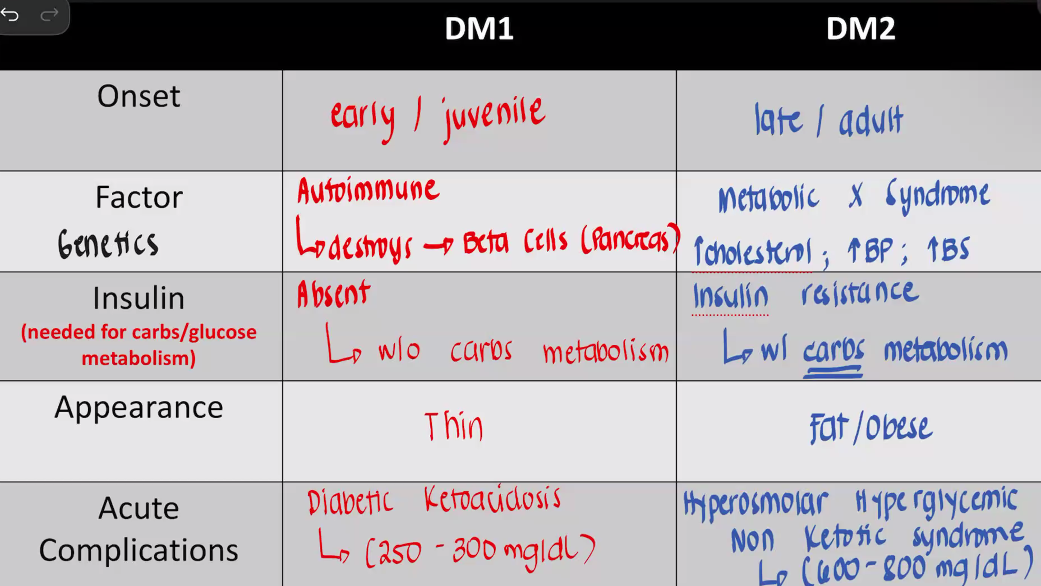
DM1: Insulin is absent, therefore glucose accumulates in the blood
DM2: Insulin is produced but there is resistance so it cannot help glucose to get inside the cell
Since glucose can’t enter the cell, there is cell starvation which causes excessive hunger (POLYPHAGIA)
Kidneys: Sugar can get into the urine called Glycosuria, osmotic diuresis happens so there is excessive urination (POLYURIA) which causes (DEHYDRATION) and increased thirst (POLYDIPSIA)
Increased blood viscosity:
Viscous blood causes poor circulation
Chronic complication
Macrovascular = Stroke/CVA
Microvascular = Neuropathy, Nephropathy, Retinopathy
PRIORITY: DEHYDRATION/FVD
DKA (DM1)
Ketosis - breakdown of fats and proteins w/o carbs metabolism
Fats > kenotes byproduct > DKA (acetone breath, ketonuria, Altered LOC) > Metabolic acidosis
Compensation: Lungs expel Co2 thru rapid, deep, labored breathing (kussmaul’s respiration)
HHNS (DM2)
Insulin resistance with carbs metabolism
No breakdown of fats/protein (No ketosis)
Sugar 600-800 mg/dl
High serum osmolality
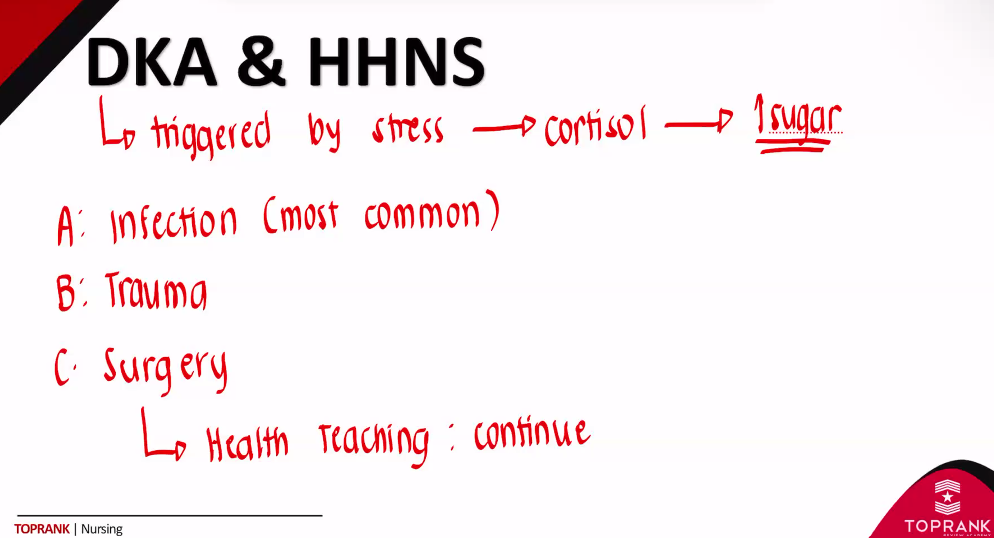
DKA & HHNS Priorities
1st priority - IV NSS (improves blood circulation)
2nd priority - IV regular insulin (short acting insulin)
Hypoglycemia
<60-70 mg/dl
Manifestations are similar to hunger
Early (Adrenergic response)
Diaphoresis
Tremors
Nervousness
Tachycardia
Palpitations
Late (Neurologic problems)
Light headedness
Altered LOC
Weakness
Seizure
Management (Check LOC first)
Conscious
15-15 rule
15g simple carbs, recheck 15 mins, 3x max
Altered LOC/ 4th reading
1mg of glucagon
50 ml of 50% dextrose parenteral
Recovery
Complex carbs (snacks)
Protein