The British Colonies
Here Come the English
More than half a million people left England between 1607-1700 mainly because they were looking for a better life in North America
Nearly 2/3 of British colonists were indentured servants who voluntarily surrendered for a set time in exchange for passage to America in the 17th century
English also viewed land as the basis of liberty (owning land gave men the right to vote)
Also meant, though, that the English and Native Americans came into conflict almost immediately
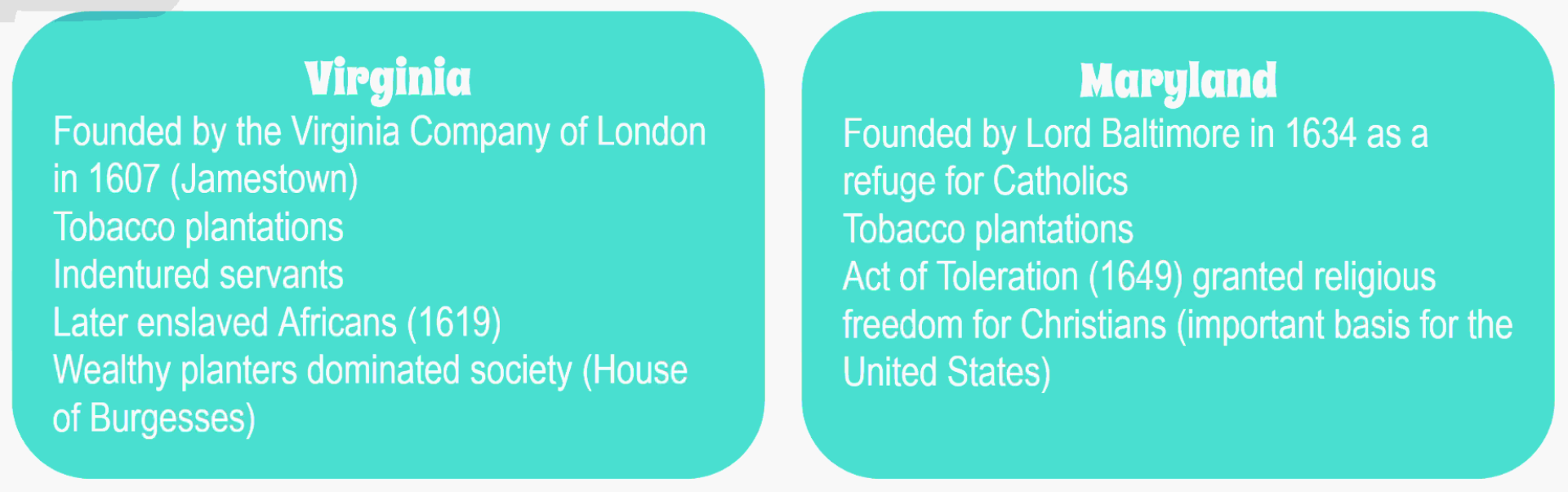
Jamestown & Virginia
About 100 English settlers that were sent by the Virginia Company established Jamestown, the first permanent English settlement in North America
Settlers faced starvation, disease, and conflict with the local Native American tribe, the Powhatans
Many colonists were more interested in searching for gold than farming
This worsened food shortages
Captain John Smith, the leader of Jamestown, imposed the order “He that will not work shall not eat.”
Smith also set up a tentative peace with the Powhatans
Winter of 1609-1610 was so catastrophic, it became known as the Starving Time
Famine and disease killed most settlers; 60/500 colonists survived
John Rolfe introduced tobacco farming, which became the basis of the colony’s entire economy, saving the colony
Rolfe later married Pocahontas, the daughter of the Powhatan chief
Briefly eased tensions between settlers and the Natives
Colony established the House of Burgesses, the first representative assembly in America ~1619
Laid the foundation for self-government
First known African slaves arrived in Virginia in the same year
Marked the beginning of African slavery in the English colonies
The Virginia Company, originally intent on finding gold, realized they needed to diversify
King James I revoked the Virginia Company’s corporate charter ~1624
Made Virginia a royal colony instead
Plymouth and Massachusetts
Group of English Pilgrims set sail on the Mayflower, planning to settle at Jamestown ~1620
Pilgrims were separatists who wanted to break away from the Church of England
Decided to set up their own colony, Plymouth, in modern Massachusetts after being blown off course
Men signed the Mayflower Compact, an agreement to form a self-governing community, before going ashore
Important step towards democracy in America
First winter was devastating
About half the settlers died from cold, disease, and starvation
Pilgrims survived with assistance from the Wampanoag people, especially Squanto
He taught them how to plant corn, fish, and hunt local wildlife
Celebrated their first successful harvest with the Wampanoag ~1621
Thanksgiving
Plymouth was absorbed the Massachusetts Bay Colony ~1691
Puritans founds the Massachusetts Bay Colony (modern-day Boston) ~1630
Puritans were a religious group who wanted to “purify” the Church of England rather than separate from it
Led by John Winthrop, who envisioned the colony as “city upon a hill”
Colony was a theocracy, and only male church members could vote
Strict religious laws shaped daily life/culture
Economy was based on fishing, farming, shipbuilding, and trade
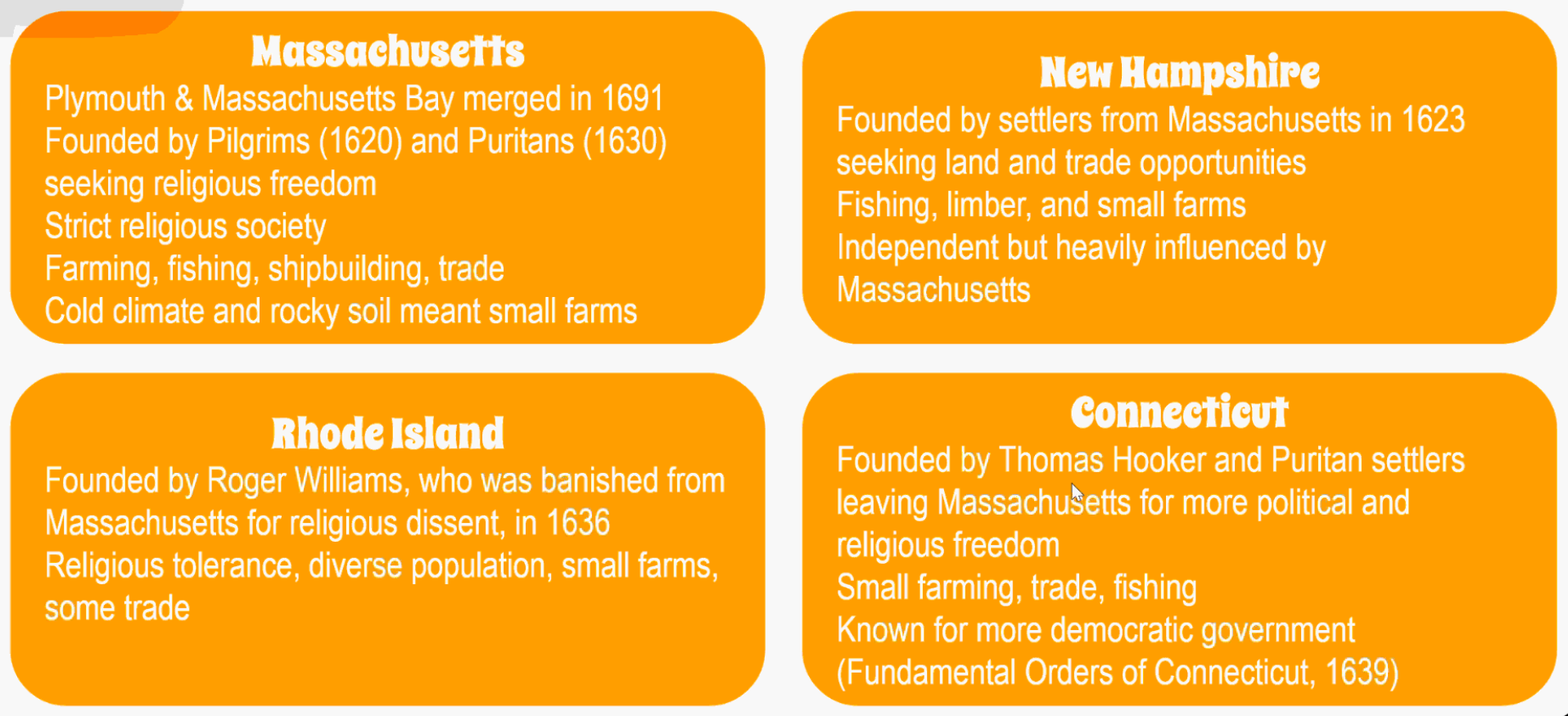
New England Colonies
Small towns
Puritan religion
Education valued
First schools/colleges in America
Economy bases on trade, fishing, and small farms
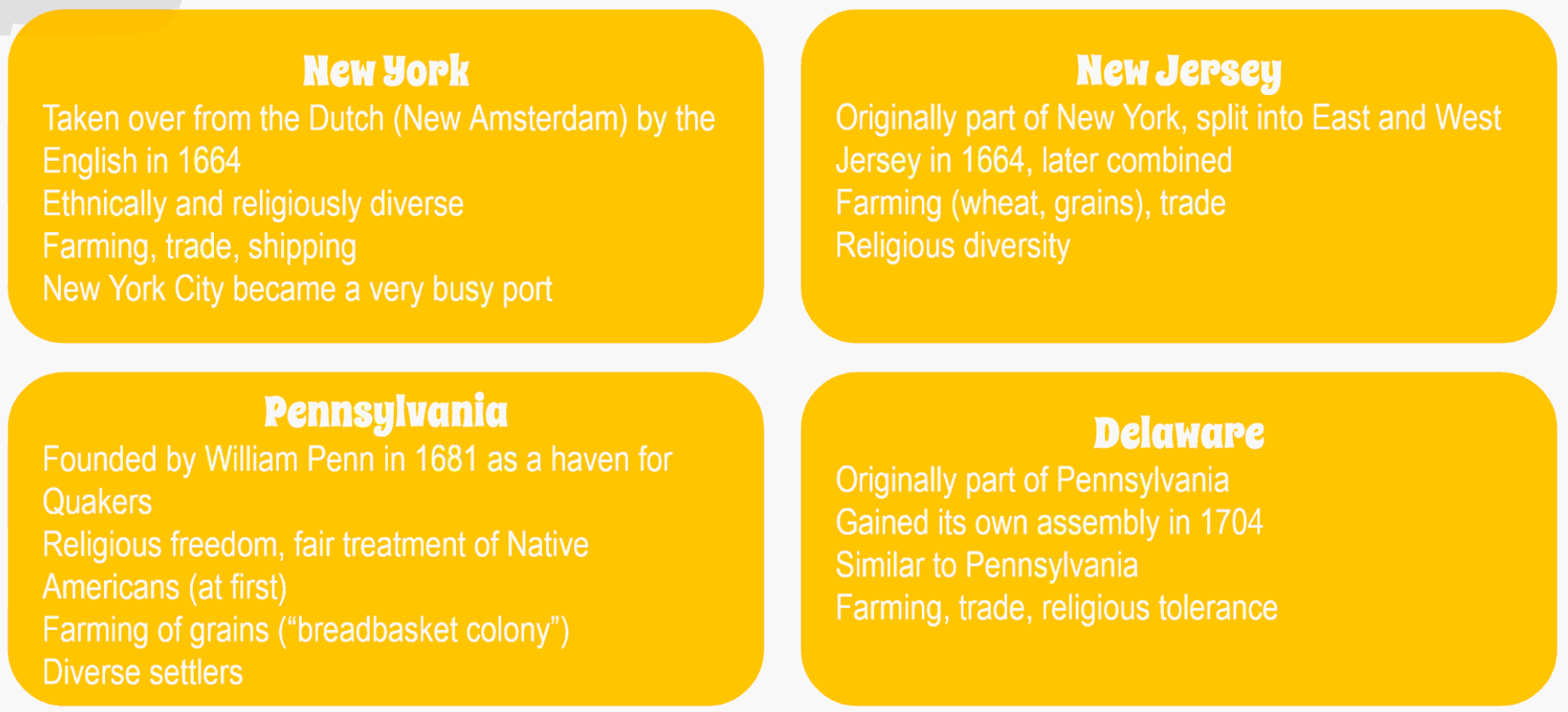
Middle Colonies
“Breadbasket”
Grains and wheat
Religious and ethnic diversity
Major trade and ports (Philadelphia and New York)
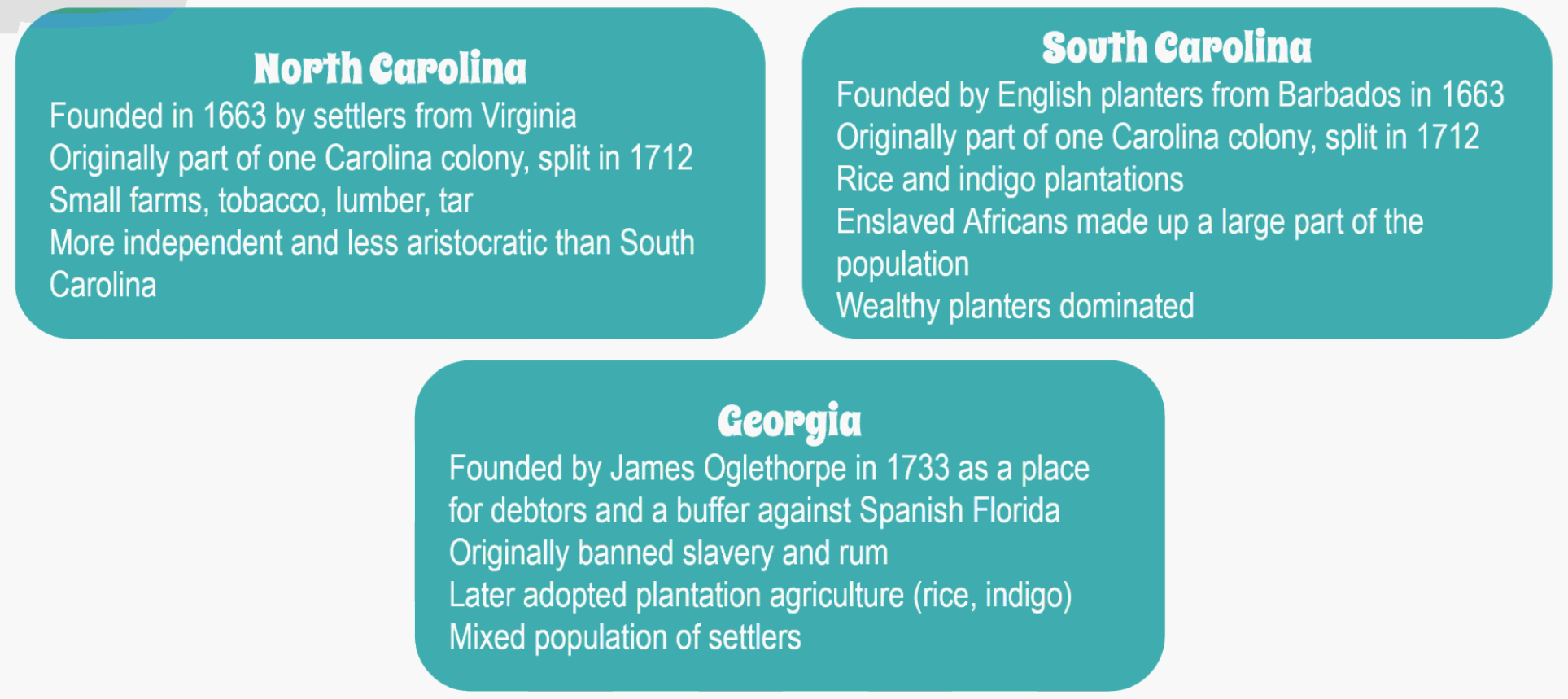
Southern/Chesapeake Colonies
Large plantations with cash crops
Tobacco, rice, indigo
Reliance on slave labor
Fewer cities
Wealthy planter elite vs. poor farmers