Fleshy Fruits
What is the difference between the gynoecium and the carpel?: The gynoecium contains all the carpels
What parts make up the carpel?: stigma, style, ovary
Fleshy Fruits
What happens after fertilization?
Seeds develop into fruit
What is a fruit → a mature ovary (remeber, it can contain more than one carpel and thus more than on eseed)
Fruits can be simple or compound. We’ll see some examples from lab.
Fruit types
Fleshy fruits — all 3 types look similiar from the outside, you have to dissect them to determine what type of fruit you have
drupe: have a single hard pit in the center (ex: peach or olive)
most common fleshy fruit
single hard pit in center
Compound drupes
can be a multiple or aggregate, of drupes or drupelets (little drupes)
Aggregate of drupes: one flower that produces many tiny drupes clustered tightly together, like raspberries and blackberries
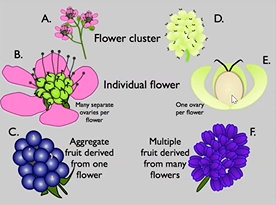
berry: are fleshy throughout (blueberry)
Berries are fleshy throughout, with small seeds embedded
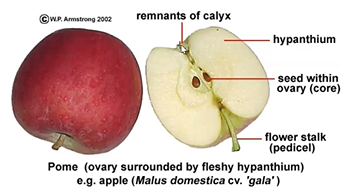
pome (have a papery core (ex: apple)
paper core
fleshy fruit with thin skin and papery cartilaginous structures enclosing the seeds int he center, often in a star shape
flesyy part is swollen receptacle tissue and not an ovary, which is why they are sometimes called “false” fruits
ovary is the “core” which has the seeds
all pomes are in the Rosaceae family but not all fruits in Rosaceae are pomes)
Dry fruits (next lecture)