Education- Week 9 Contemporary Korea
Education in Korea: The good, the bad, and the ugly
Korean education
Korean education contains all 3 elements of good, bad and ugly.
Lecture outline
Intro
Korean education facts
Reasobs fir educaruib fever
Positive consequence of Koreanns’ strong zeal for education
Negative impact of education fever
Conclusion
Introduction
Education inequality- poor children cannot be sent to good or any education academy
In post Covid-19 era, education will go from
Preliminary observations about education in Korea
Education is of paramount importance in Korean culture and society; in turn, this mindset has given way to both one of the most highly educated societies and one of the most competitive
South Korea has the 6th most educated populace in the world with some 40% of the population holding a post-secondary degree
Also, South Korea has achieved unparalleled economic development in the 77 years after WW2
Once an impoverished country predominantly focused on agriculture, the country now stands triumphantly as the 10th largest economy in the world
The exponential growth is mainly accredited to the country’s emphasis on education, as Korea has been able to rely on a large pool of able and talented labour force
Is only self-reliant in rice and has no natural resources, has large exports
However, this explosive development has coincided with, and given rise to an exceptionally rigorous educational system.
The end-all university entrance exam is so critical to students’ futures, that on Korean SAT exam days:
Parents crowd churches and temples to pray for their children’s success;
Offices and the stick market open later so students can get to the exam on time
Airplanes are grounded to reduce the noise
Unsurprisingly students crack under pressure: SK has the highest student suicide rate and students are the unhappiest among OECD country
For example, in 2021 alone, more than 300 youths between the age of 10-19 committed suicide in Korea and suicide has been the number 1 cause of death for that age group for 10 straight years
A 2020 survey shows that nearly 1 in 3 middle and high school students in Korea thought about suicide in that year
It is not a right but an obligation to do well in school
The question is:
What are the characteristics of education in Korea?
Why ar Koreans fixated on education?
What are the positive consequences of Korean's preoccupation with education
What are the negative consequences of education consequences on Korean
Korean Education: Facts
1.Formal school system: 6-3-3-4 system
Education in Korea is mandatory with no tuition fee, up to Grade 12
Compulsory primary education has been fully provided since 1957
Compulsory middle school education has been provided since 2004
2. Public and Private schools
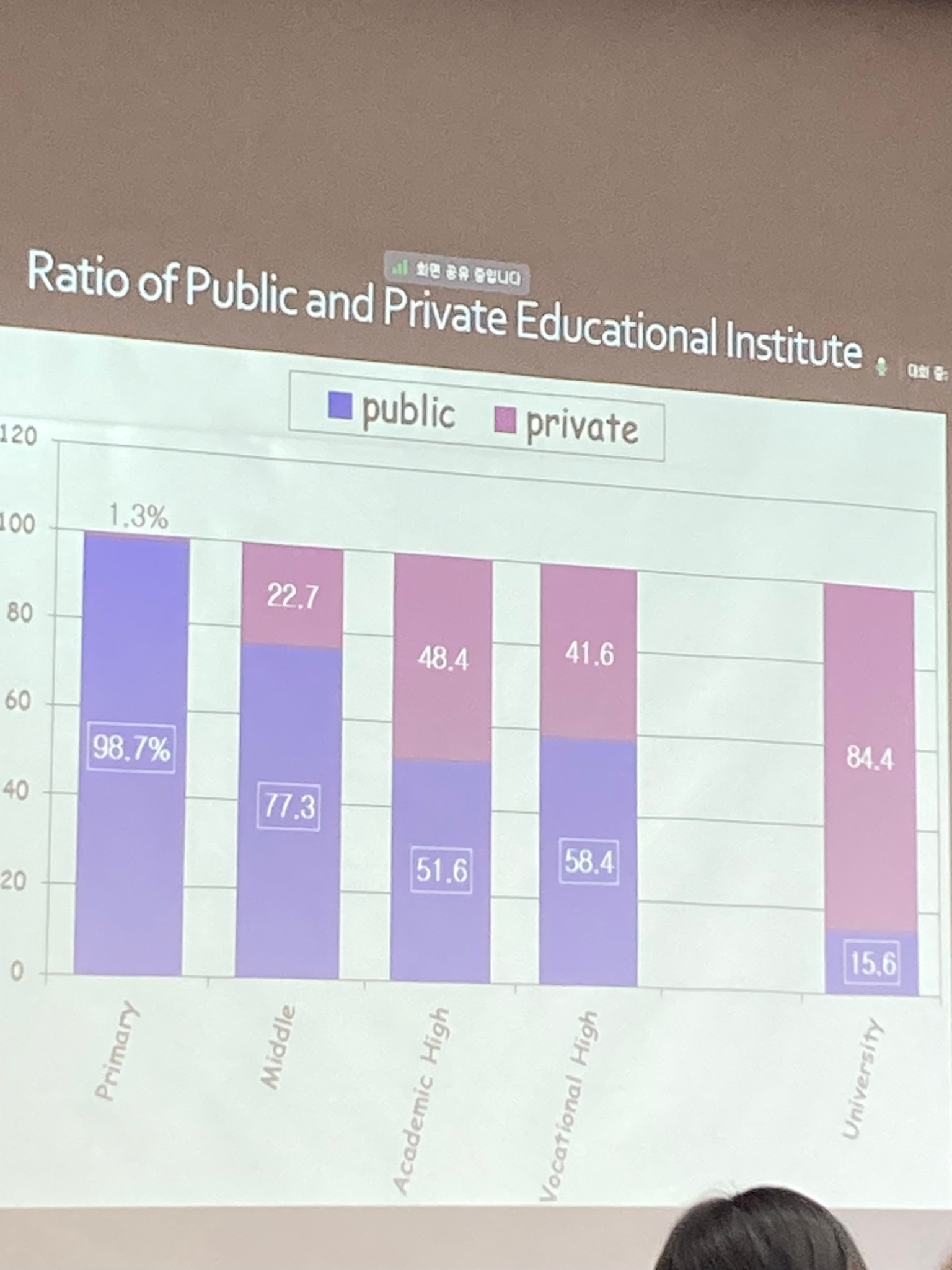
3. A relatively large number of tertiary education institutes (2021): 395
The Number of high school students, and future college students is expected to drop by about ⅓ by 2030
Universities in Korea are already suffering from the low fertility rate (especially smaller ones)
By 2017, 80% of 4-year universities failed to fill their admission quotas
Some universities inthe countryside failed to fill even half
India has the largest number of university in the world
4. More women in enrolling at university
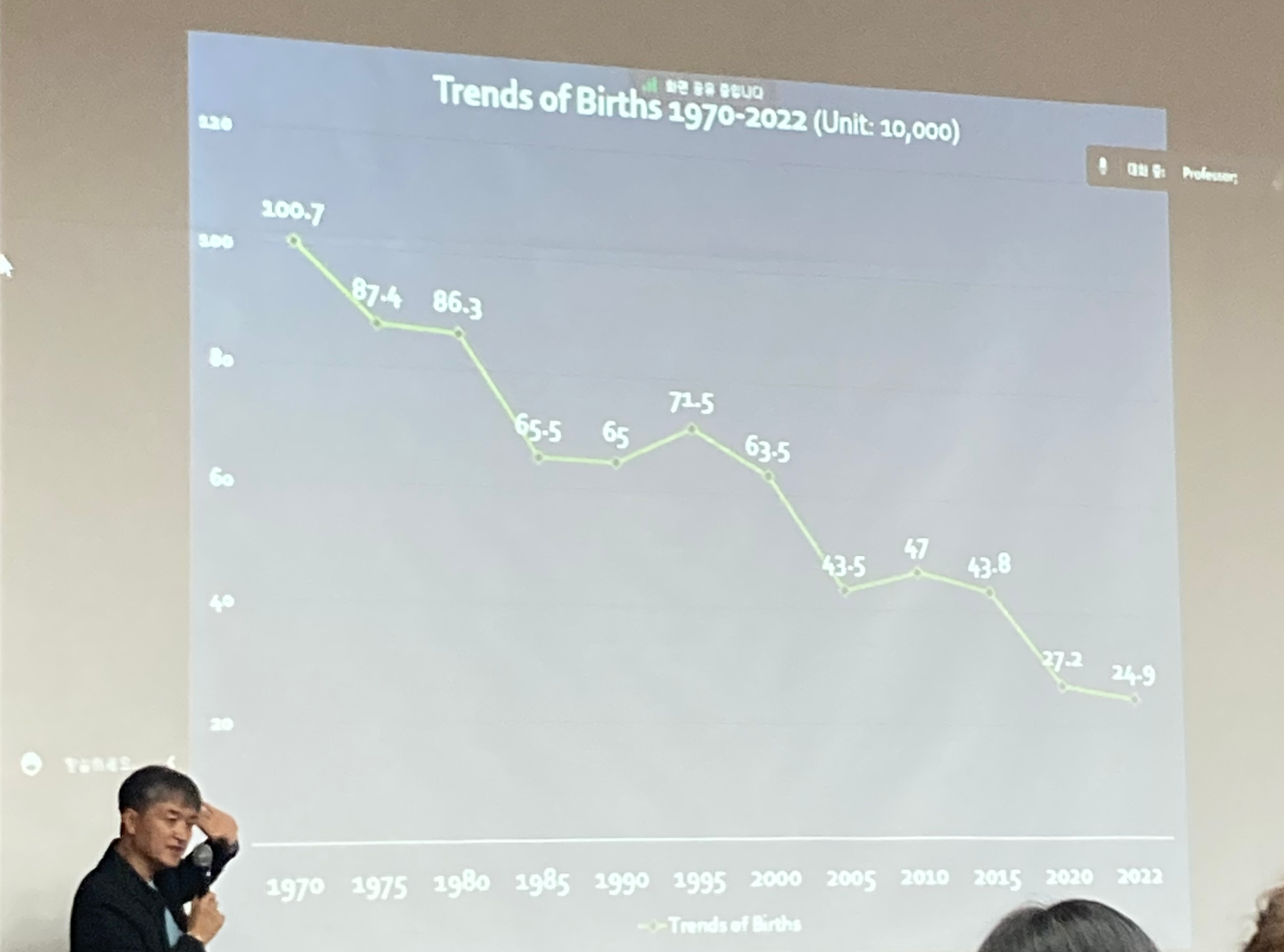
5. Decline in the number of students due to record-low fertility rate
Number of high school students, future college students, is expected to drop by about ½ by 2030
Universities in Korea are already suffering from low fertility rate
In 2017 80% of 4-year universities failed to fill their admission quotas
Some universities in the countryside failed to fill even half
Fertility rate dropped by 75% since 1970
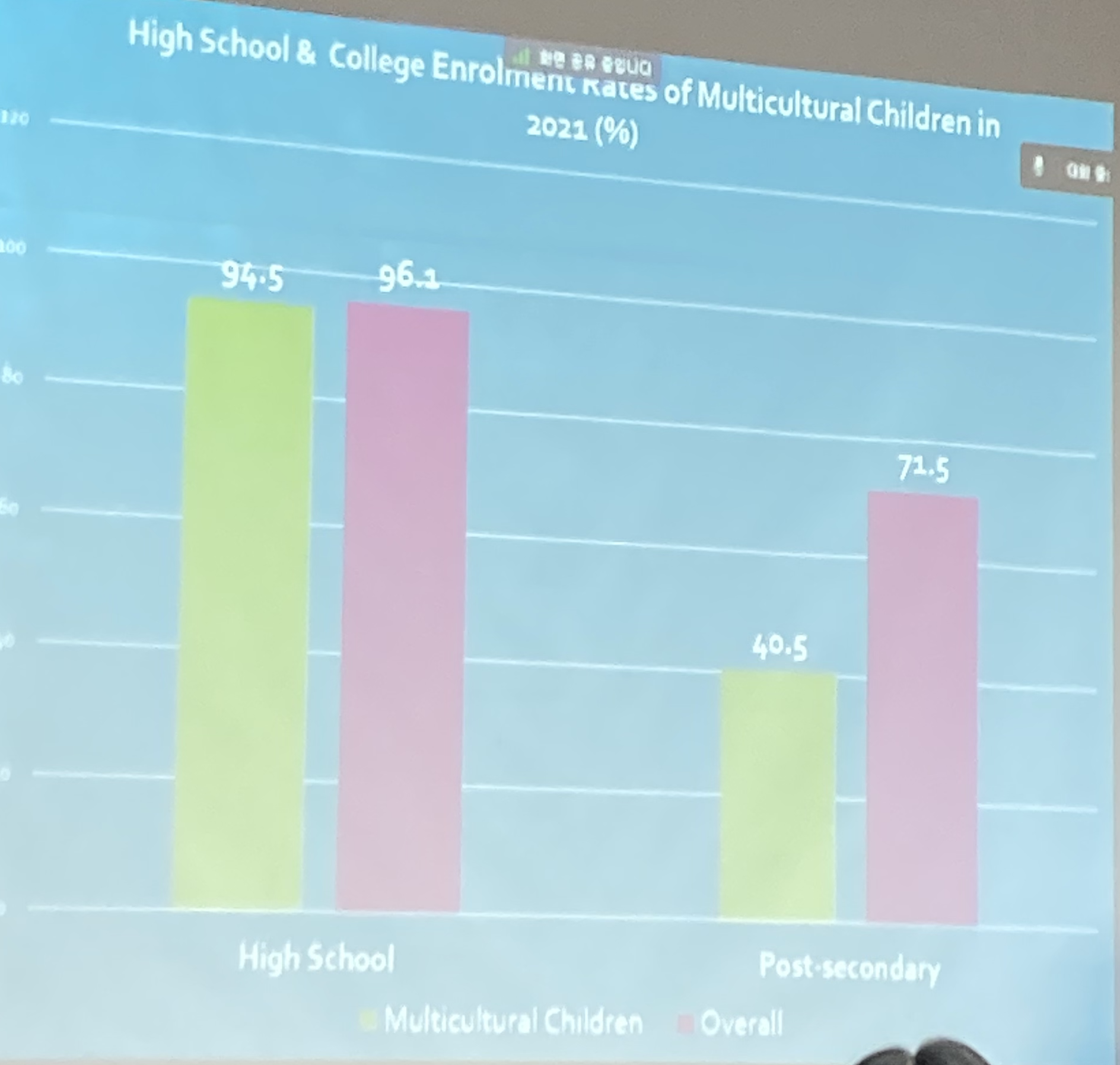
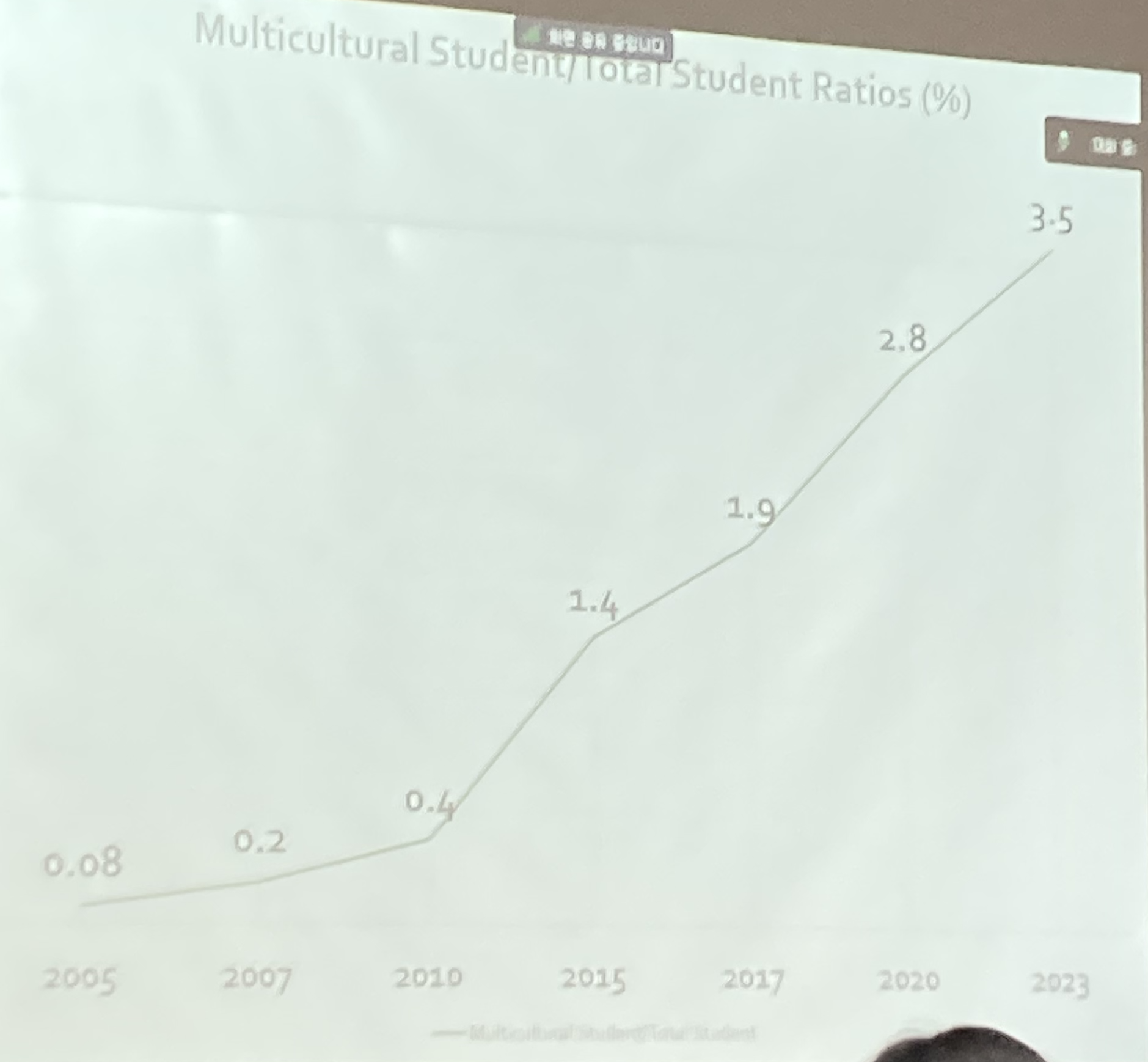
6. Increases in the number of multicultural students
Ratio is 3.5% of total student enrollment in 2023
7.Mandatory school uniforms in middle and high schools
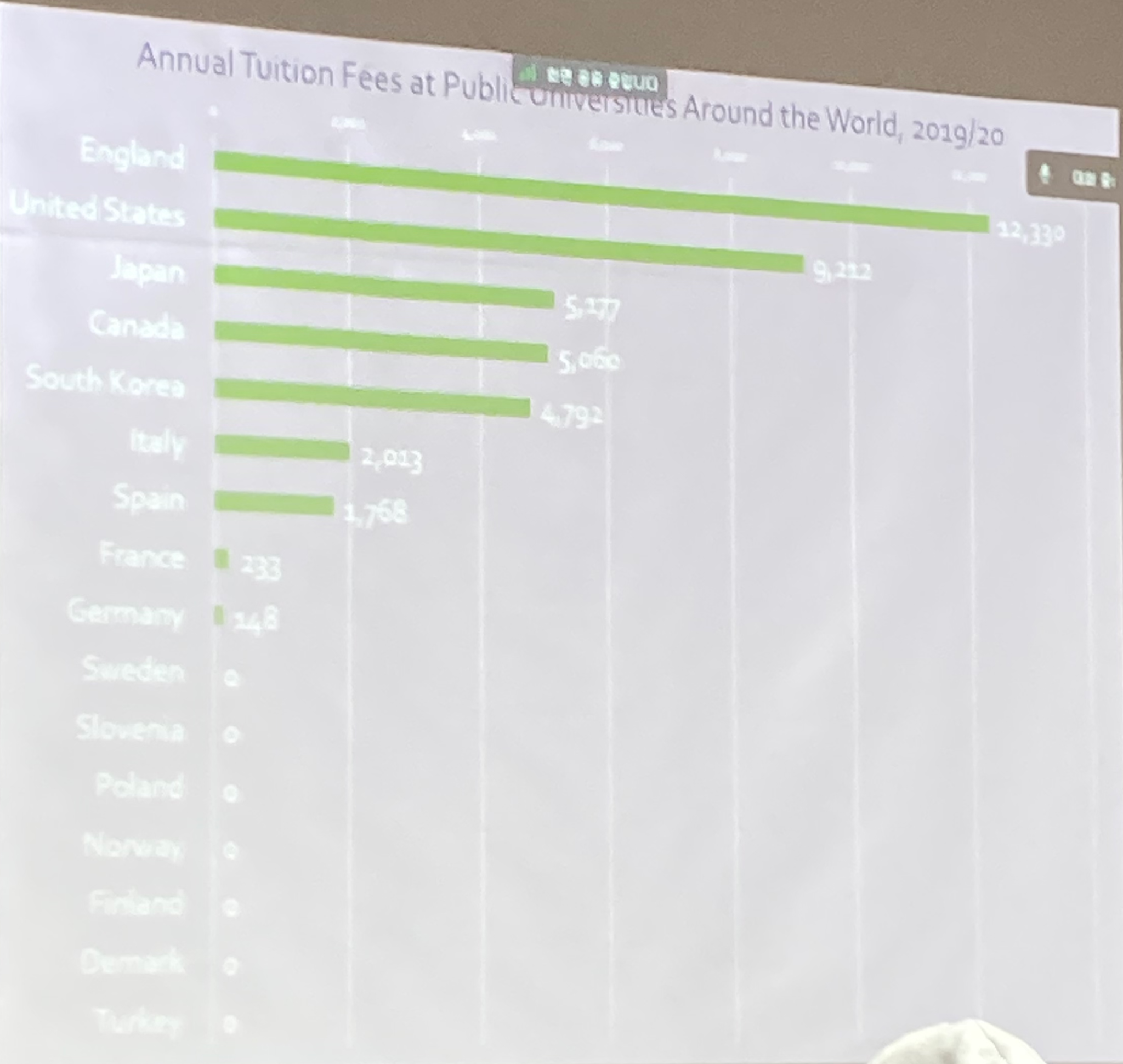
8.Relatively high costs of college tuition
England was highest at 12,330
South Korea was 4,792
9.Korea boasts one fo the world’s highest if not the highest high school graduation rates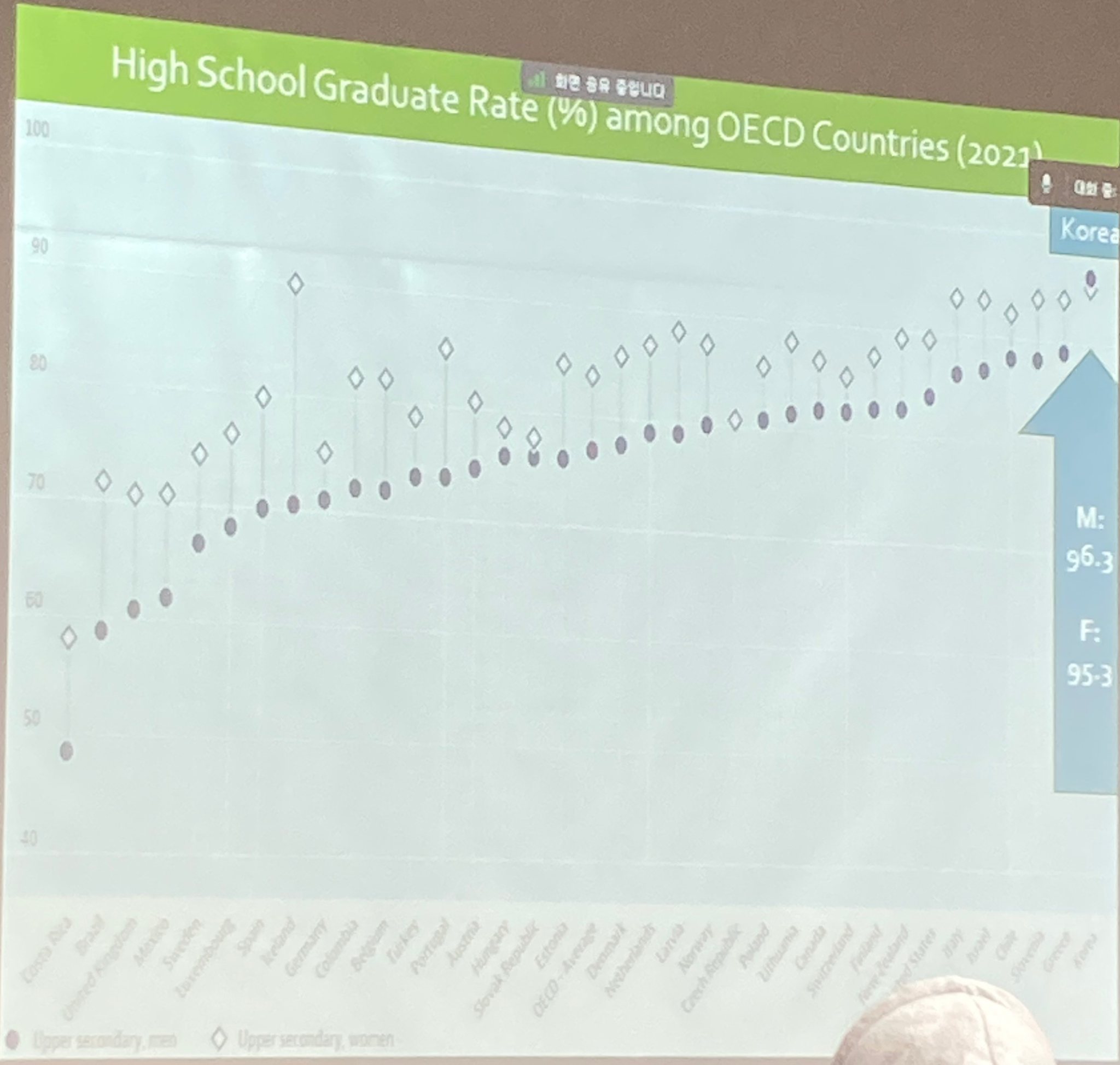
96.3 for males
95.3 for females
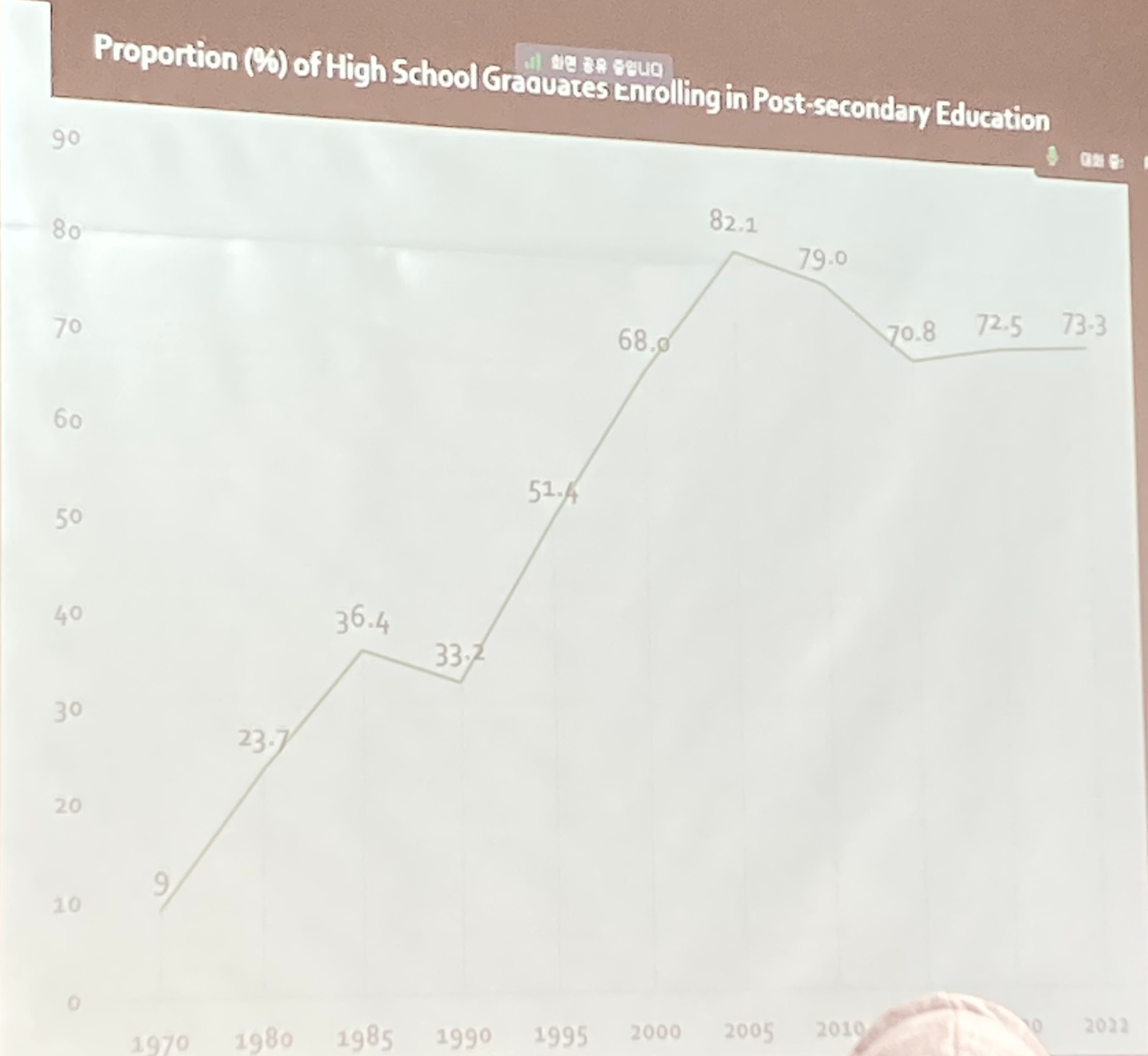
10.Korea has one if the highest college enrollment rates with 73.3% went on to post-secondary education in 2022
Reasons for the Education “Fever”
It comes for 5 factors:
The cultural importance of Confucianism
Korean’s overriding concern with education is a direct influence of Confucianism
Confucianism can be understood as a religion of learning:
Confucius said that “the only way for the superior man [human] to civilize the people and establish good social customs is through education. A piece of jade cannot become an object of art with chiselling, and a man [human] cannot come to know the moral law without education”
Confucian idea assumes that good education makes “good men” and that good men make good government
Indeed, Confucianism regards scholarship and aesthetic cultivation as prerequisites for those in official or governing positions
That is why the past dynasties in Korea, as was done in China and for a limited time in Japan, recruited individuals to serve in the government on the basis of passing the rigorous civil-service examination
Civil-servce examination (aka the imperial examination) was first implemented in China during the Sui dynasty (581-618)
Civil-service examination (gwageo) was first implemented into practice during the Goryeo dynasty in 958
Confusion's emphasis on learning is almost intimately related to its veneration for sagehood- a model of transcendence and the high calling of the gentleman
Manual labour was looked down upon for this reason
Education as a status symbol
University degrees are thought of as lifelong stamps of intellectual competency
Over the years, university degree attainment has become the norm, the minimum educational standard which people are expected to attain to be socially recognised
Failure to do so leads to one’s loss of face, low self-esteem, shame and in extreme cases, avoiding meeting new people
The reason why college enrollment is so high in Korea is because Korean culture has created a cultural milieu in which an individual becomes a complete socially acceptable and socially recognised person only by getting a college degree
In other words, Koreans worry that will not get social recognition just because they don’t have a college degree
Education as the sole means of success
Koreans strongly believe that one needs to graduate from a university to succeed in Korean society
Strong belief in the university→job→success formula
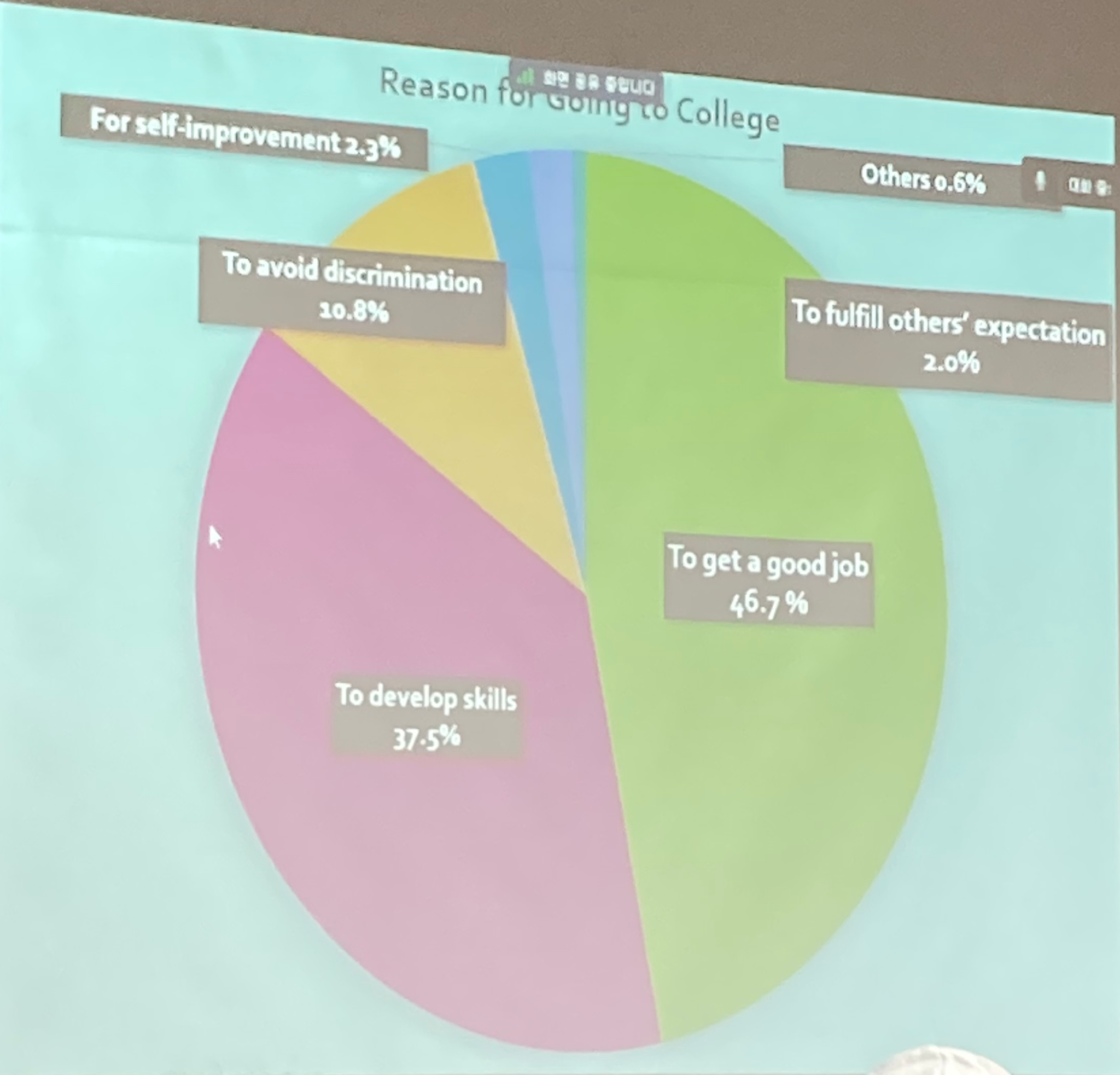
According to a 2022 study the number one reason for enrolling in universities was:
“To get a good job” (46.7% of the respondents)
“To develop one’s abilities and skills” (37.5%
“To avoid discrimination” (10.8%)
It is also true that too many jobs in both public and private sector in Korea require university degrees, the so-called paper ceiling
The paper ceiling unnecessarily precludes STARs- workers who are “skilled through alternative routes”, such as community college, military service and on-the job experience, rather than getting a bachelor’s degree- from getting a fair chance of getting a good job
Discrimination based on education credential
Education based discrimination occurs at two labels
Hakryeok (level of education, e.g. high school diploma vs college degree)
Hakbeol (alma mater, e.g. degree from SKY vs non-SKY)
Glass ceiling the unseen, yet unbreakable barrier that keeps certain groups of people from rising to the upper-level positions of government or companies, regardless of their qualifications of achievements) exists for those with a degree from a less-prestigious university
Hakryeok-based discrimination
In comparison with those with a college degree, there is a widespread, open discrimination against those with a high school diploma in terms of salary (even for doing the same work) and promotion
E.g. at a company with a 11-grade (level) seniority system, those with a high school diploma would start at the lowest level, grade 11 but those with a college degree would start from grade 8, even if they are doing the same work
It takes more than 10 years to be promoted from Grade 11 to Grade 8
Hakbeol-based Discrimination
Glass ceiling (the unseen, yet unbreakable barrier that keeps certain groups of poeple from rising to the upper level positions of governments or companies, regardless of their qualifications or achievements) exists or those with a degree from a less-prestigious university
The importance of university ranking- one’s alma mater has a far, far, far-reaching and life-long impact in the job market, and in the workpace, i.e. one’s chance of getting a job, promotion, etc
In Korea the desire and competition for ‘good jobs’ is especially strong, but the existence of hakbeol-discrimination has meant that those with a degree from higher-ranked universities have been given preferential treatment in hiring and promotion at jobs the Koreans aspire for the most, e.g.
Public corporations
Public research instituions
The jaebeol (large family-owned conglomerates)
Banks
Media companies
Hakbeol-discrimination is well known in Korea, for exmaple a 2022 survey showed thay the most serious form of discrimination in Korea is perceived to be related to education:
Education- both educational attainment and alma mater (29.6%)
Sexual orientation (homosexuality) (16%)
Looks or appearance (11.7%)
Physical handicap (10.7%)
Country of birth (6.8%)
Single mothers (6.2%)
Race or skin colour (6%)
The elderly (4%)
Region of birth (3.4%0
Gender (2.6%)
The response for education would have been much higher if the respondents were allowed to choose multiple answers
Academical elitism and nepotism of SKY universities
The importance of university ranking and hakbeol-based discrimination culminates in academic elitism and nepotism, i.e. outright in academic elitism and nepotism, i.e. outright preferential treatment of the alumni of the most prestigious universities, i.e. the alumni of the “SKY” universities
Seoul National University (SNU)
Yonsei
Korea University
Also the alumni of the SKY universities dominate Korean society, politics, economy and culture
Strong network of alumini
Korean students’ overriding concern with getting admission to the SKY universities is that the alumni of these universities are
Given the most preferential treatment in hiring and promotion
Have much better ‘life chances’ and opportunities, including the marriage market
‘Modern form of caste system’
That is why an admission into a SKY university is considered a ‘crowning lifetime achievement’
Bage of intelligence
Badge of honour to the family
The relative dominance and preferential treatment of SKY graduates is also evident in the way they are overrepresented among high-ranking civil servants and among appointees to prominent positions in government and public corporations
For example, a large proportion of the “power elite” in any give period comprised of large numbers of the SKY alumni
The “power elite” include
Assistants to the President at Cheongwade (Blue house)
Ministers and vice ministers
Heads and directors of administrive departments, police, prosecutor’s office and national intelligence
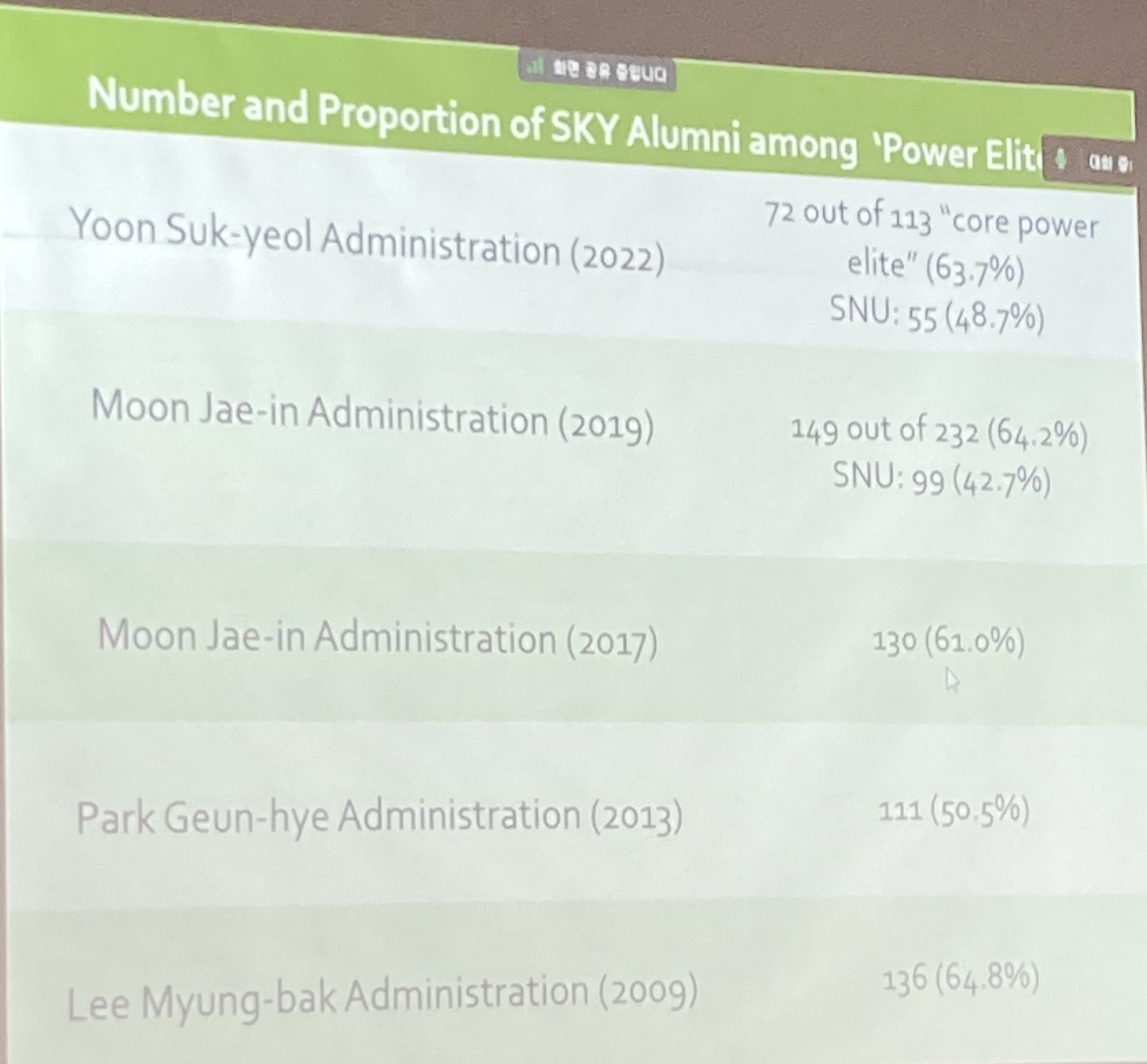
In reality, among the alumni of the SKY universities, it is the SNU alumini who stand out the most
The total of SNU alumni account for about 1-2% of all alumini in any given year since 1970s
However SNU graduates comprise of
About ¼ of all professors in Korea
Nearly 30% of the National Assembly members
Disproportionately large portions of top positions in the governemnt administration, most of which are appointed
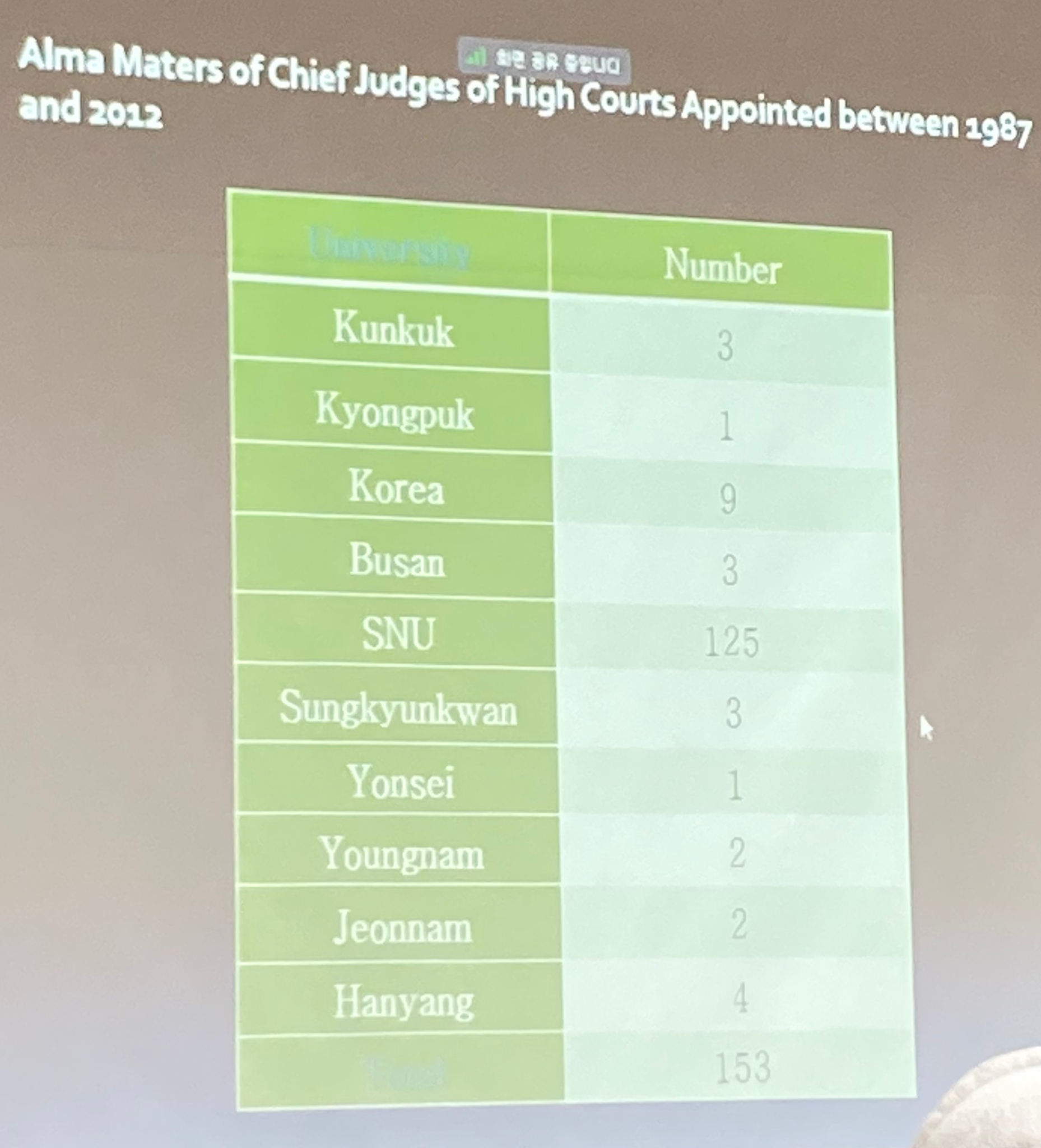
For example since the founding of the Republic of Korea in 1948, more than 85% of all the Supreme Court judges have been SNU alumini
Currently 24 out of 28 chief judges of district courts (85.7%) are SNU graduates
Nearly 82% of the chief judges of high courts appointment between 1987 and 2012 comprised SNU alumni
Postive consequences of Koreans Strong Zeal for Education
7 positive consequences:
A relatively high education attainment among Koreans played an instrumental role in the country’s remarkable industrial growth for the last 50 years or so
Korean’s preoccupation with education has meant there has been no shortage of engineers, scientists, computer scientists, technicians and researchers as well as easily trainable workers to keep up with the country’s industrialisation efforts
Given the fact that Korea is not endowed with rich natural resources, well-educated human resources have been a key factor for the country’s remarkable economic growth
Korea’s high educational attainment has led to various forms of social development
Education (higher education attainment has helped improve Korea’s
Living Standard
Health and hygiene (longer life expectancy at birth)
Quality of life
Status of women
Education has helped also reduce
Illiteracy rate
Poverty
Inequality
Unemployment
Human rights violations
Corruption
The relatively well-educated masses have led to the acceleration of the country’s democratisation
As people become more educated, they become more aware of the importance of freedom, liberty, democracy and human rights
Korea’s zeal for education prompted the Korean government to invest relatively heavily in education, which facilitated an efficient public education system, complete with a system in which all students in all regions are:
Provided with equivalent levels of resourcing and support (e.g. latest technology being available in classrooms, irrespective of region, municipality and neighbourhood)
Exposed to the same school curriculum
Taught by teachers with equivalent expertise
In achievement scores in international assessments, Korean students have performed well
The most widely recognised, and perhaps the only international assessment of student aptitude is the Programme for International Student Assessment (PISA) by the OECD
In the view of helping countries improve their education, policies and results, the worldwide study measures the scholastic performance of 15-year olds students in three subjects, namely reading, maths and science
In the 2018 PISA, which assessed the performance of 600,000 participating students in 79 countries (36 OECD members and 43 partner countries and economies), Korea was ranked 5th overall, the following specific ranks
Mathematics- 7th
Science- 7th
Reading- 9th
Korea’s preoccupation with education has led to the establishment of not only a large number of colleges but also private academics, all of which have created jobs
While job creation due to the expansion of tertiary education is a universal phenomenon, jobs created by the huge private education market in Korea is unique
The Korean education market reportedly accounts for more than 10% of the employment of Koreans with college degree
There are reportedly around 100,000 hagwons (private academies or cram school) in Korea
A large number of college students and those with a college degree also work as tutors
Within the overall societal milieu in which education is so important, i.e. intense pressure to excel at school and to enroll in colleges, there is relatively less “room” for Korean teenagers to engage in anti-social behaviours, e.g. crimes, drugs, gang activities, deviant acts, etc
The negative impact of Korean Zeal for Education
The negative impact happens at 3 levels
Parents
Students
Society
Parent’s sacrifice
1-1 High rate of student participation in Private lessons
80% of elementary and secondary students in Korea take private lessons after school
As of 2022 78.3% of Korean students in primary and secondary schools were taking private lessons
However Koreans’ high participation rate in private lessons is a “recent” phenomenon
In 1980 for example only 14.9% of primary and secondary school students took private lessons
Korean children are subjected to private education from early on
According to a 2016 survey, the rates of participation in private education for 2-year-olds and 5-year-olds in Korea reached 35.5% and 83.6% respectively
The participation rate in private education is highest at elementary at 85.2% (2022)
Middle school 76.2% and High school is 66%
In terms of private education expenditure Koreans spent the most on English, followed by Math and then Korean
1.2- High Spending on Private Education
In 2022 a monthly expenditure on private education per student, including non-participating students was 410,000 won, an 11.8% increase from the previous year
That is more than twice the rate of increase in consumer prices (5.1%)
In 2022 a monthly expenditure on private education per student, excluding non-participating students was 524,000 won ($524)
However may parents are riaisng eyebrows saying that tehse figures do not accurately reflect reality
A typically expediture per student is more likely to be 1 million won ($1000) per month as:
A fee per subject is 400,000 won and
Family income and conspicuous gap in participation rate and spending on private education
In 2022, for example:
88.1% of students from high income families (those with monthly income of more than 8 million won) were taking private lessons
Only 57.2% of students from the lowest income families (those with monthly income of less than 3 million won or less than $3000) did
Korean parents, especially mothers also have to make endless sacrifices to help their children excel in school
1.3-Negative influences of children’s education on family members’ lives
Parents have to sacrifice time and efforts to provide the best enviroment at home for students to do their best at school
Typically when the child enter middle school, family activities become rare, inclduing family vacations, dine-out, extended family gatherings, etc
“Soccer moms” in NA vs “hagwon (cram school) moms”
Mothers as education managers
The prevailing attitude on the part of the parents that “You are a studnt, so you study. Mum and Dad will take care of the rest (or so everything for you”
Popular neologisms which describe Korean mothers as education managers
‘Alpha mom’ and ‘Beta mom’
Both terms refer to highly educated mothers who relentlessly collect information for their children’s education and consider their supportive role for their children’s academic squeeze to be akin to their “careers” and their own “success”
Helicopter mother
Helicopter mother refers to those mothers who encircle their children like a helicopter while constantly providing support to them
Negative Impact on Education Fever: Students Sacrifices
2.1- Too much study time
As of 2022, study time for high school students outside of school during weekdays amounted to 2hrs 40min a day
Saturday- 3hrs 32min
Sunday- 3hrs 41min
Because Korean students spend os much time studying, there are countless number of study rooms, study cafes, reading rooms, etc, some of which are open 24-7 and have hourly, daily, weekly, monthly and multi-monthly rates
2.2- A myriad of private lessons after school
Korean children are pressured to take countless number of private lessons after school on weekdays and on weekends
In the past students especially in high schools, used to study past midnight at hagwon
That is why the municipal government of Soeul, the epicentre of academic competition in Korea, has imposed a 10pm curfew on all cram schools in the city since 2009, illegally in secrecy
2.3-Lack of PLaytime
Having a playtime is a way for children to learn about the world and learning about the world, means so many things including social skills, emotional training, creativity, language development, body movement and more
2.4- Lack of sports activities
The importance of engaging in sports activities include
Learning the rules of the games
The experience of winning and losing, glories and defeats, etc all lead to character-building
2.5- Lack of time to pursue a hobby (or any other interest) or self-development
The only thing school-aged children are allowed or forced to do is school work and studying
2.6- Sleep deprivation
A 2022 study finds that Korean students suffer from sleep deprivation
The average total sleep time:
Elementary school students: 8.2 hours
Middle school students: 7.2 hours
High school students: 5.8 hours
These figures are well below the recommended sleep time of the US government
Elementary school students: 9-11 hour
Middle school students: 8-10 hours
High school students: 7-9 hours
2.7- Impact on Student’s Mental Health
In Korea, students don't have the right to wander or fail
The parents obsession and society-wide education frenzy are easily felt by students who are believed to suffer from various mental problems, especially by those who are not performing well at school, including
Feelings of guilt and anxiety
Anger or frustration
Lack of motivation and difficulty making decisions
Feeling irritable and intolerant towards others
Low tolerance towards stress
Aggressive behaviour
Insomnia
Suicidal thoughts or thoughts of harming someone else
Low self-esteem
Depression
2.8- Korean Students’ Low Level of Satisfaction
A study of 5,437 4th-12th grade students in Korea in 2015 showed that Korean students are much less happy compared to their counterparts in other OECD
In terms if their satisfaction with education and school life only 55.4% of students said they were satisfied with their lives
The OECD average: 84.8%
2.9- Educational Pressure and Students’ Suicide
The long hours of studying and pressure to enter top universities are causing various mental problems, the worst consequence of which is suicide
In 2021 alone, more than 300 youths between the ages 10-19 suicide in Korea and suicide has been the number one cause of death for that age group for 10 years straight
The suicide rate of those between the age of 10-19 in 2021 increased by 10.1% before making the largest jump ever
Society