Electromagnetic Spectrum
The electromagnetic spectrum (also known as electromagnetic spectrum of radiation) is the name given to all of the forms of energy (or radiation) that exist.
The forms of energy in the electromagnetic spectrum are:
Radio waves (used by radios and televisions).
Microwaves (used in microwave ovens).
Light waves (infra-red light, visible light, and ultraviolet light used for light therapy services).
X-rays (used by physicians and dentists).
and Gamma rays (used for nuclear power plants).
Each type of energy has its own wavelength.
WAVELENGTH
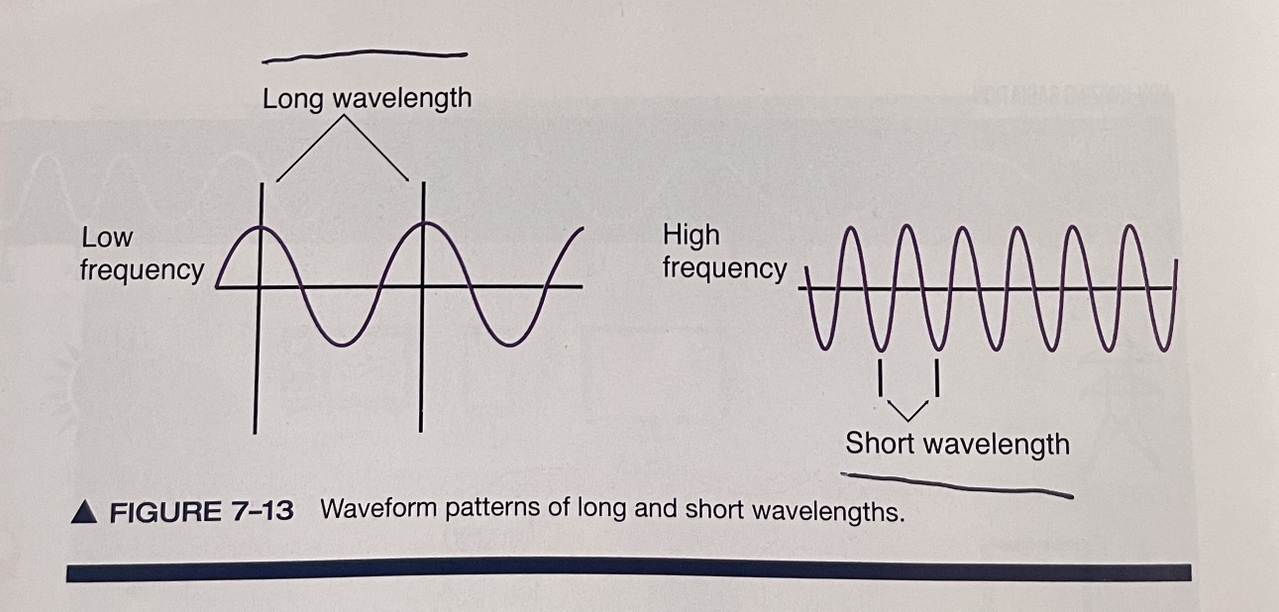
Wavelength is the distance between successive peaks of electromagnetic waves.
Some wavelengths are long and some are short.
Long wavelengths have low frequency, meaning that the number of waves is less frequent (fewer waves) within a waveform pattern.
Short wavelengths have higher frequency because the number of waves is more frequent (more waves) within a waveform pattern.
WAVEFORM
A waveform is the measurement of the distance between two wavelengths.