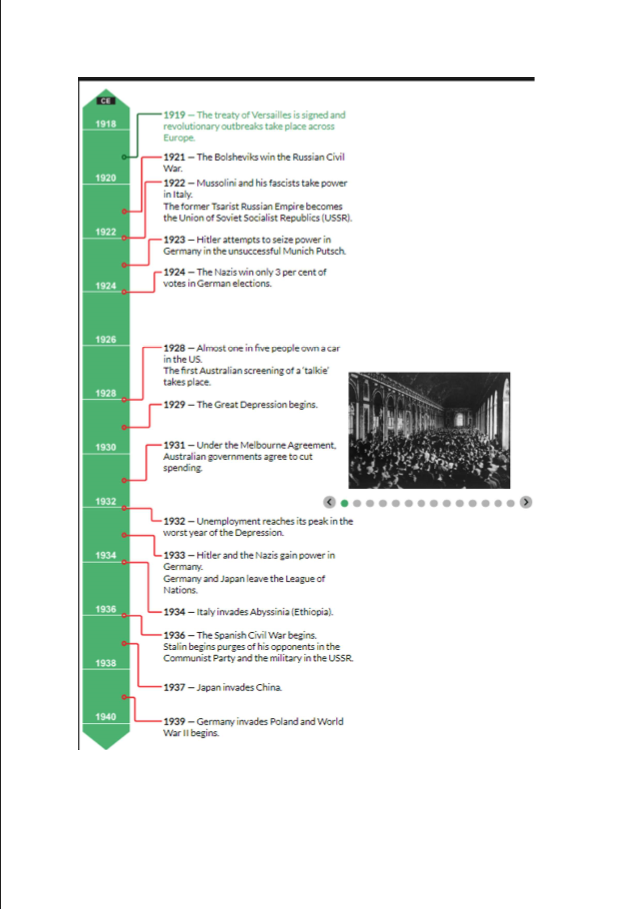
Between World Wars
The First World War was called ‘the war to end all wars’, but just 20 years after the signing of the peace treaties that officially brought the war to an end the world was once again at war, and this time it would be on an even more terrible scale. Across much of the developed world the decade after World War I was a time of growing prosperity. In the United States the ‘Roaring Twenties’ seemed to be a period of rapid, unstoppable growth of wealth. But people’s expectations and hopes came crashing down with the collapse of the world economy in 1929 and the beginning of the Great Depression.
The 1930s brought mass unemployment and misery when many companies collapsed, throwing millions out of work. People were thrown out of their homes because they could not pay their rent or mortgages. Banks closed their doors, leaving people unable to draw on their savings. Years of unemployment caused great hardship and left deep scars. For some, the Depression was even worse than the war because they could not understand how it came about and how they could fight it.
In the decades following the Depression, governments tried to keep enough control over economic activities to prevent a repetition of such suffering. However, from the 1980s governments loosened controls and, in 2008, the world experienced a great financial crisis, resulting in millions suffering ongoing unemployment in some of the world’s richest countries.
Timeline: