Week 9 Addictive Products and Marketing
PART 1 Addictive Products & Marketing
Session Objectives
Understand product design for compulsive use.
Examine marketing to vulnerable groups.
Explore examples: gambling, alcohol, tobacco, gaming, pornography, digital platforms.
Apply ethical frameworks: utilitarianism, deontology, virtue ethics, care ethics.
Consider roles of government, industry, and society.
Identify technology and AI's impact.
Reflect on responses: bans, regulation, or education.
Habit vs. Addiction
Addictive behaviors are not always unethical.
Marketing shapes product positioning and usage.
Habit: Automatic, repetitive behavior.
Routine: Conscious, structured behavior.
Compulsion: Strong urge, not always harmful.
Addiction: Difficult to control, negative consequences.
Products & Ethical Concerns
Low Ethical Concern:
Coffee, chocolate, daily apps, online shopping: Mildly addictive, socially accepted.
Moderate Ethical Concern:
Mobile games, binge streaming, alcohol, vaping, social media: Encourage repeated use, target vulnerable groups.
High Ethical Concern:
Pokies/gambling, AI porn, loot boxes, fast food, social media: Addictive by design, regulated, concerns about duty of care.
Addiction in Marketing
Addiction = repeated engagement despite negative consequences.
Addictive products use habit loops and reward systems.
Includes digital platforms, porn, sugar, vapes, alcohol, pricing strategies.
Consumer Vulnerability
Reduced ability to protect interests or make informed choices.
Systemic barriers put individuals at risk.
Marketing is questionable when it exploits vulnerabilities.
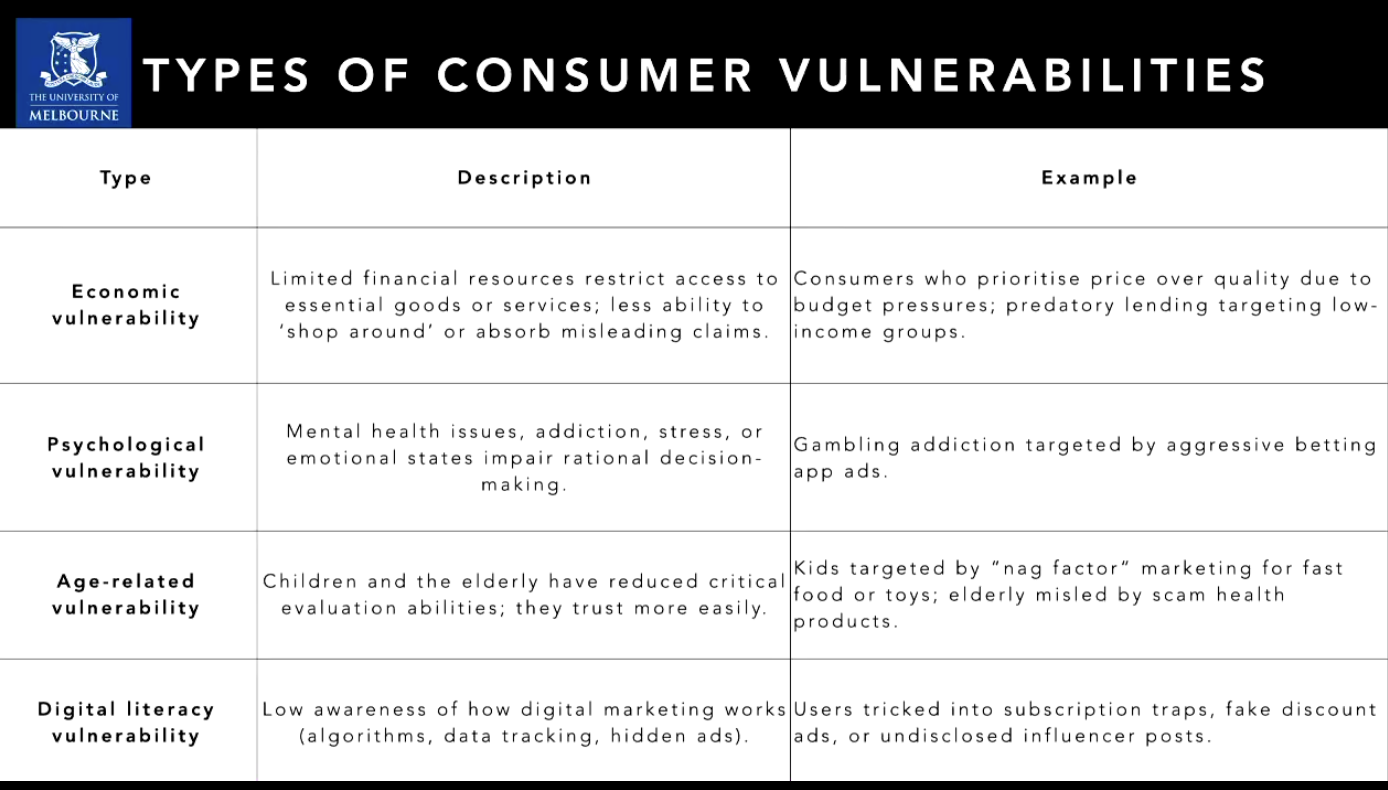
Types of Vulnerabilities
Economic: Limited resources, price sensitivity.
Psychological: Mental health, addiction impair decisions.
Age-related: Children/elderly have reduced critical skills.
Digital literacy: Low awareness of digital marketing.
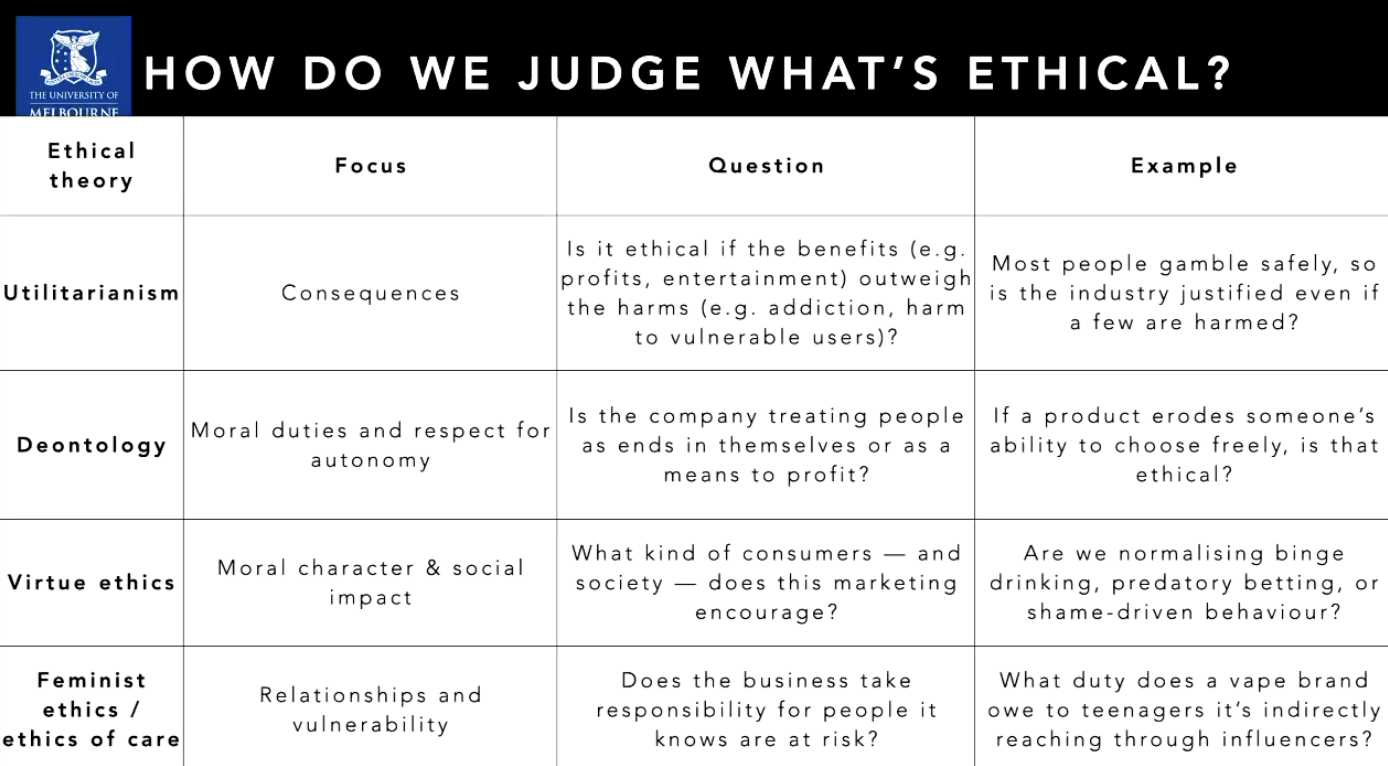
Ethical Theories
Utilitarianism: Benefits vs. harms.
Deontology: Respect for autonomy.
Virtue ethics: Moral character and social impact.
Feminist/Care ethics: Relationships and vulnerability.
PART 2 Gambling & Dependency
Gambling is addictive: variable rewards trigger dopamine.
Companies profit from problem gamblers.
Australia: embedded in sport and culture.
Problem gamblers = 40% of pokies revenue (Australia).
Sports Betting Normalization
Ads during prime-time games.
"Bet responsibly" contradicted by promotions.
Creates illusion of normalcy.
Lowers perceived risk for younger viewers.
Sportsbet & TikTok
Targeting young women with Rihanna novelty bets.
Crown Casino & Ethics
Targeted high-loss customers.
Loyalty programs exploit problem gamblers.
Ignored signs of addiction.
Profited from addiction without intervention.
Fined for breaching gambling laws.

PART 3 Alcohol Marketing
Normalizes drinking as celebration/relief.
Targets young people.
Sells identity, fun, and belonging.
Binge drinking portrayed as humorous.
Ethical Concerns - Alcohol
Virtue ethics: Values promoted by brands?
Care ethics: Are vulnerable groups protected?
Deontology: Is there informed consent?
PART 4 Smoking Trends
Decline due to plain packaging, taxes, public health campaigns, and advertising restrictions.
Plain tobacco packaging introduced aimed to reduce consumption and discourage brand loyalty among smokers, ultimately contributing to a noticeable decline in smoking rates.
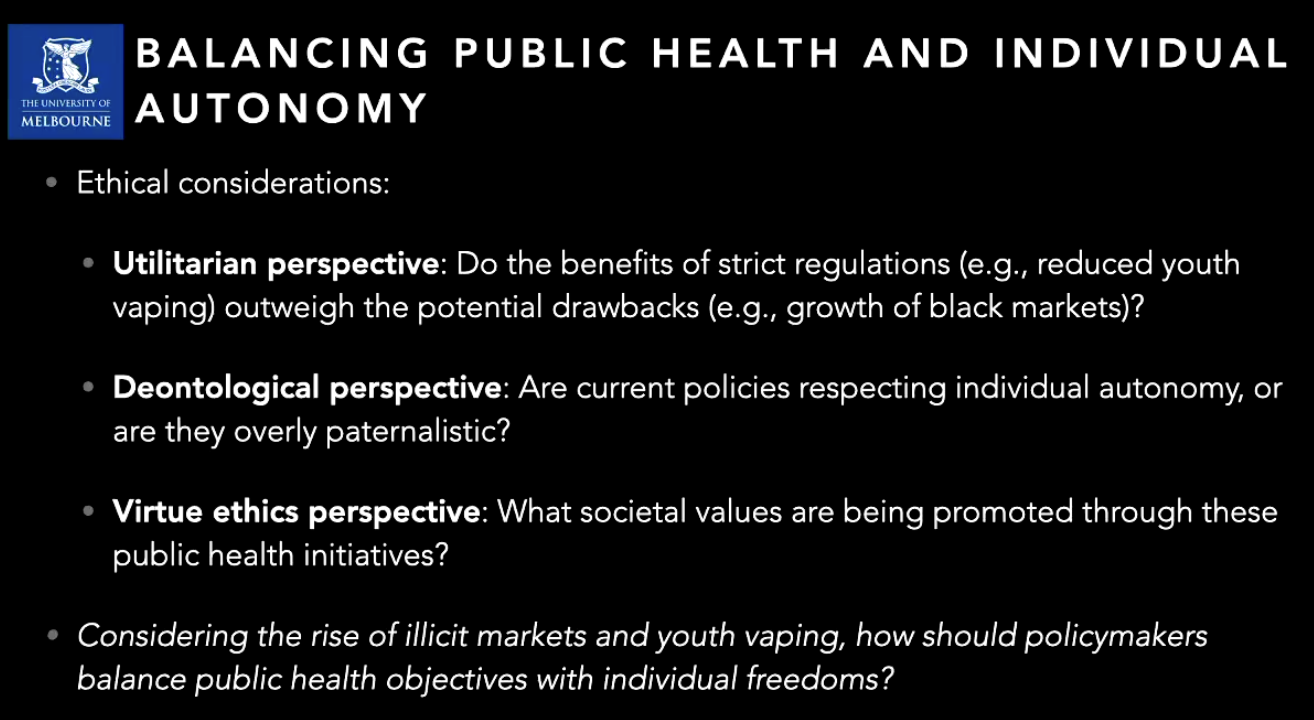
Unintended Consequences: Illicit Markets
High taxes fueled black market activity, where consumers seek cheaper alternatives, resulting in a thriving underground economy that undermines legitimate sales and public health efforts.
Growth of illicit trade: As prices surged due to taxation, many consumers turned to illegal sources for cheaper alternatives, undermining public health efforts.
Organized crime involvement.
Vaping & Youth
Rising prevalence among youth.
Health concerns: addiction, respiratory issues.
Legislative measures: pharmacy sales, prescriptions for under 18.
PART 5 Gaming & Microtransactions
Games designed around monetization loops: loot boxes etc.
Goal: retention and spending.
Systems target vulnerable players.
Gaming or Gambling?
Loot boxes = slot machines.
Variable reward cycles.
Fear of missing out.
Loss aversion.
Ethical Framing - Gaming
Utilitarianism: Profits vs. psychological harm?
Deontology: Is it ethical to obscure costs or manipulate behavior?
Care ethics: Are younger users protected?
Virtue ethics: What values are reinforced?
PART 6 Porn & Dependency
Compulsive use, shame, secrecy, and relationship issues.
Coping mechanism for loneliness/anxiety.
Social stigma excludes it from discussions.
AI & Pornography
Synthetic pornography using faces without consent.
Deepfake porn shared without age checks.
Ethical Reflections - Porn
Utilitarianism: Benefits vs. Personal and social harms?
Deontology: Are individuals treated as ends?
Care ethics: Does the platform take responsibility?
Virtue ethics: what values are reinforced?
PART 7 Sugar & Kids
Ultra-processed, high-sugar foods contribute to childhood obesity.
Marketing uses cartoon mascots and pester power.
Disproportionately impacts low-income families.
PART 8 Social Media Design
Platforms use infinite scroll and notifications.
Teens vulnerable to compulsive use, anxiety, and sleep disruption.
Banning vs. Regulation
Bans create black markets that can fuel unsafe products and behaviors, while regulation may provide a framework for safer usage and accountability. Effective regulation can help to balance user protections with industry innovation, promoting healthier consumption habits and reducing the risks associated with addiction.
Regulation may be seen as paternalistic, but it can provide a structured approach that ensures product safety and consumer protection.
When does ethical marketing become policy? This question arises as companies must balance their pursuit of profit with corporate social responsibility, prompting policymakers to define boundaries that govern marketing practices for addictive products.