NZQA Biology AS 91603: Animal Relationships
Intraspecific Relationships
Groupings
Many animals live in groups, suggesting there is a survival advantage from doing this:
| Advantages | Disadvantages |
|---|---|
| - protection, esp. young from predators \n - shared food, group hunting \n - altruistic behaviour, kin selection e.g pukekos \n - *improve young rearing and parental care i.e and \n - effective migration \n - shared learning \n - breeding success \n - easier division of labour \n - environmental manipulation | - disease \n - competition; intraspecific, hierarchy; pecking order* \n - susceptible to predators |
Hierarchy: a group consisting of individuals of the same species ranked in order of dominance, usually from the alpha down to subordinates; hierarchy determines an order of precedence for access to food, mates, and breeding sites; it is established competitively, usually by brief fights
- hierarchies can be beneficial to reduce competition and aggressiveness, shared resources, and often evolution of the ‘best‘ genes within the group; weaker members help raise the young i.e kin selection
- 10% of energy is passed onto the next trophic level
- hierarchies also have disadvantages, especially if resources are scarce; those of a lower rank may be the target of much aggression
- rank is indicated and maintained by posture and displays, hence, , stronger, and fiercer; and show more submissive and appeasement behaviour
- hierarchies are often complex and involve coalitions and alliances, as in many primates
- the social structure is controlled by an alpha member and has at least one of the following features;
- subordinate groups
- bonding pairs
- family groups
- division of labour
- *Pecking order: a simple linear heriarchy order; those who are higher in the order will ‘peck‘ those lower on the scale; often seen in hens
*Parental care is an energy cost for the parent and limits the number of offspring
- R-strategy: producing a large amount of offspring but not caring for all, often results in infant death
- K-strategy: producing a small amount of offspring but caring for all, often results in steady population growth
Cooperative behaviour is generally innate, but can be modified. Cooperative behaviour is when members of the same species live together for mutual benefit.
Clumping is another form of cooperative behaviour, but is more short-term and simple; it is completely innate.
Social behaviour involves a closed group working together.
Courtship rituals: behaviour of an animal in attempts to attract a mate and results in eventual reproduction. This is important to ensure individuals are and suppresses aggressive behaviour. It also ensures readiness for breeding and develops a .
Agonistic behaviour: threats and submission to establish dominance; avoid competition
Aggressive behaviour: harming or killing a competitor; higher risk of injury
Territoriality: methods by which an animal, or group of animals, protects its territory (defended area) from others of its species (intraspecific), and occasionally members of other species (interspecific)
Home range: the roaming area that an animal uses to find food, mates, and other resources; shared with other members of the same species
Scent marking (aka spraying): an odorous substance containing a pheromone depositied by a mammal from a scent gland or in the urine or feces; jaguars use it to mark their territory
Courtship rituals include:
- bringing gifts
- physical stimulation
- synchronised movement
- visual and vocal cues
To maintain any social system, animals may display different forms of communication such as:
- aural e.g whale song
- visual e.g peacock’s feathers
- chemicals e.g cats and their pheromones
Mating
Mating systems include:
- external fertilisation (usually in response to environmental cues) e.g fish
- monogamy e.g most birds and people
- polygamy
- polygyny - harem, one male with many females e.g lions, baboons
- polyandry - reverse harem, one female with many males e.g bees
- this is uncommon as it involves sex role reversal
- polygynandry - multi-male and multi-female mating system e.g pukekos, bonobos
Sexual dimorphism: the differences in appearance between males and females of the same species (usually males become bigger), results from selection pressures
Interspecific Interactions
Predation
Competition between animals is usually for food, water, space, and/or breeding sites. If the competition is intense, one population may become extinct.
Predation: where one organism kills and consumes another, often those who are weaker, sick, or older than them
- The gene pool of the prey population is kept strong as only those fit to escape from predators are likely to survive and reproduce
Predation avoidance: prey species may try to deter predators using a startle display (looking as big as possible) and/or poison (and warning colours)
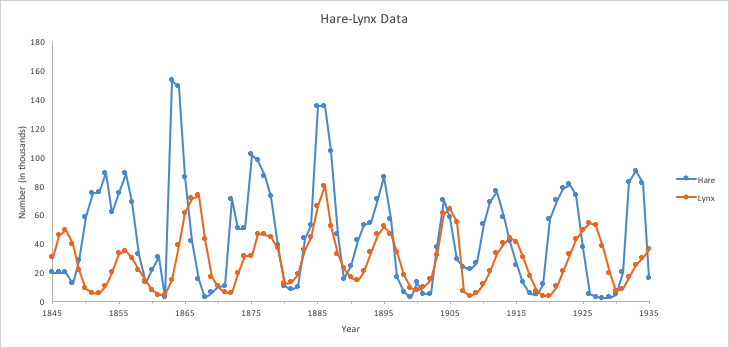
In a predator-prey relationship, . They will regulate the size of the prey population to ensure they won’t eat too many of them or else risk cutting off their food source.
There will always be more prey than predator.
There are three ways of getting food:
- stay in one spot and let the food come to you; this comes in many forms:
- sifting the environment e.g baleen whales swim through the sea, trapping their food on baleen sieves; barnacles open their trapdoors and wave hairy feet about in the water to trap plankton
- dangle bait e.g angler fish has a glowing appendage to attract prey; the snapping turtle has a worm-like structure on its tongue and waits with its mouth open to wriggle the ‘worm‘
- webs and traps e.g trapdoor spiders dig holes in the soil and cover them with a trapdoor; web spiders spin strong sticky threads to trap flying insects
- lying in ambush e.g praying mantis sits motionless until prey comes by
- move and find food; this comes in many forms:
- speed e.g cheetah outrun prey and match evasive maneuvers over short distances
- having the right apprendages e.g snakes can disingage their lower jaw in order to swallow an egg; meat eaters have incisors (teeth specialisation); woodpeckers can chisel a hole to get at beetle grubs
- hunting in swarms e.g army ants hunt in a group of up to 750,000 and overcome opposition with their bites and sheer numbers
- hunting in teams e.g lions, hyenas, and wolves all hunt in packs with coordinated teamwork; barracuda drive fish into shallow water where they are easier to catch
- tool use e.g chimpanzees use twigs or grass stalks to extract termites from their holes
- parasitise another organism
- Parasitism: association between two different organisms wherein one benefits at the expense of another
- parasites live in or on a host organism; the host is always harmed by the presence of the parasite, but is not usually killed
1. e.g tick ectoparasite on bird wings; head louse ectoparasite; tapeworm endoparasite from puppy 2. social parasites include cuckoos - a brood parasite; ants and ‘slave-making‘ of another ant nests e.g Acromyrmex insinuator invading Acromyrmex echinatior
There are ways for prey to defend themselves against predators. Their counter strategies allow then to avoid being detected, subdued, and eaten.
- camouflage - adaptations in form, colour, patterning, and behaviour enable prey species to blend into their surroundings
- startle the predator e.g owls can screech and flap its wings; moths have eye pattterns on their wings which they flash
- avoidance e.g meerkats have lookouts to warn the group against predators; some animals like fawns hide
- Mimicry: when an organism looks like another organism to which it is related
- Batesian mimicry: mimicry in which an edible animal is protected by its resemblance to one avoided by predators; often a harmless, palatable species resembling a toxic or dangerous species; in order to be effective, the mimic must not significantly outnumber the model
- Müllerian mimicry: mimicry in which two or more harmful or unpalatable animals develop similar appearances as a shared protective device e.g yellow and black stripes used by bees, snakes, and wasps
- warning colours - many prey species taste bad, are toxic, or inflict pain on attackers i.e arrow poison frogs and skunks
- arrow poison frogs and skunks make little or no attempt to conceal themselves and opt for to advertise their unpalatability to predators
- body armour - tough outer coverings such as shells are common in several taxa e.g almost all mollusks have protective shells where their limbs can then be withdrawn for protection; turtles and tortoises also have a hardened shell, though it is their only defense
- curling up e.g porcupine, armadillo, and hedgehogs curl into a ball when attacked; their spines and scales protect them
- chemical defence e.g many insects, including the Bombadier beetle and pentatomid bugs (stink bugs), exude or spray a noxious fluid when attacked; North American skunks squirt a strongly smelling, nauseous fluid from their anal glands at would-be attackers
- group defense - provide greater surveillance, confuses predators, and make isolation of individuals difficult e.g large flocks of birds and schools of fish tend to move together as one mass
Other Interspecific Relations
Mutualism: interaction between two different organisms living in close physical association which is beneficial to both organisms involved
Antibiosis: an antagonistic association between two organisms (especially microorganisms), in which one is adversely affected. Compare with parasitism
Herbivory exploitation: the predation of a plant prey which has been reduced significantly and no longer benefits the predator
Commensalism: an association between two organisms in which one benefits and the other derives neither benefit nor harm
Allelopathy: where one organisms produces biochemicals (allelochemicals) that influence the growth, survival, development, and reproduction of other organisms; they may be beneficial or detrimental to target organisms
The Evolutionary Arms Race
Morphology and behaviour are shaped by natural selection.
Predation provides strong selective pressure on prey populations to evolve effective defense mechanisms like greater speed and agility, and better surveillance.
In turn, natural selection favours counter-adaptations in predator populations like group cooperation and geater stealth.