2.4: Protists-Unicellular Eukaryotes
Classification: Protists
- grouped together with organisms that don’t fit into other kingdoms
- catch-all kingdom
- major groups only distantly related
- most protists are unicellular
- eukaryotic
Animal-Like Protists
- consume other organisms
- Cercozoans
- Ciliates
- Flagellates
- Sporozoans
- often called protozoans
- heterotrophs
- consume other organisms for food
- some are parasites
- live on or in another organisms at the expense of that organism
Cercozoans
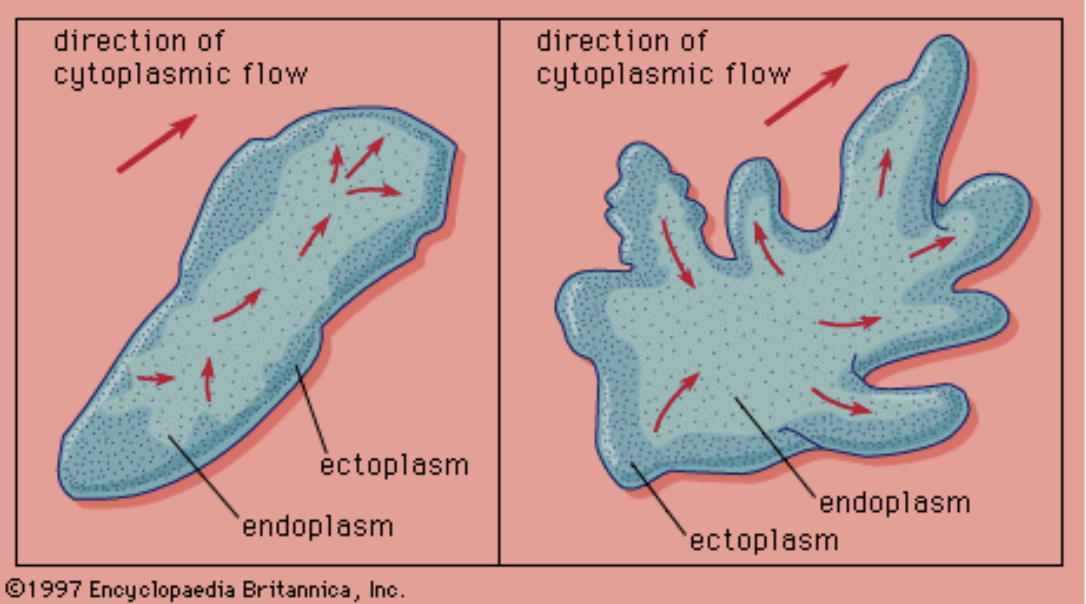
- internal cytoskeleton to move and create different forms
- pseudopods
- used for feeding and locomotion
- temporary cytoplasmic extensions
- live in aqueous environments
- salt or freshwater, mud, humans
- free living and parasitic
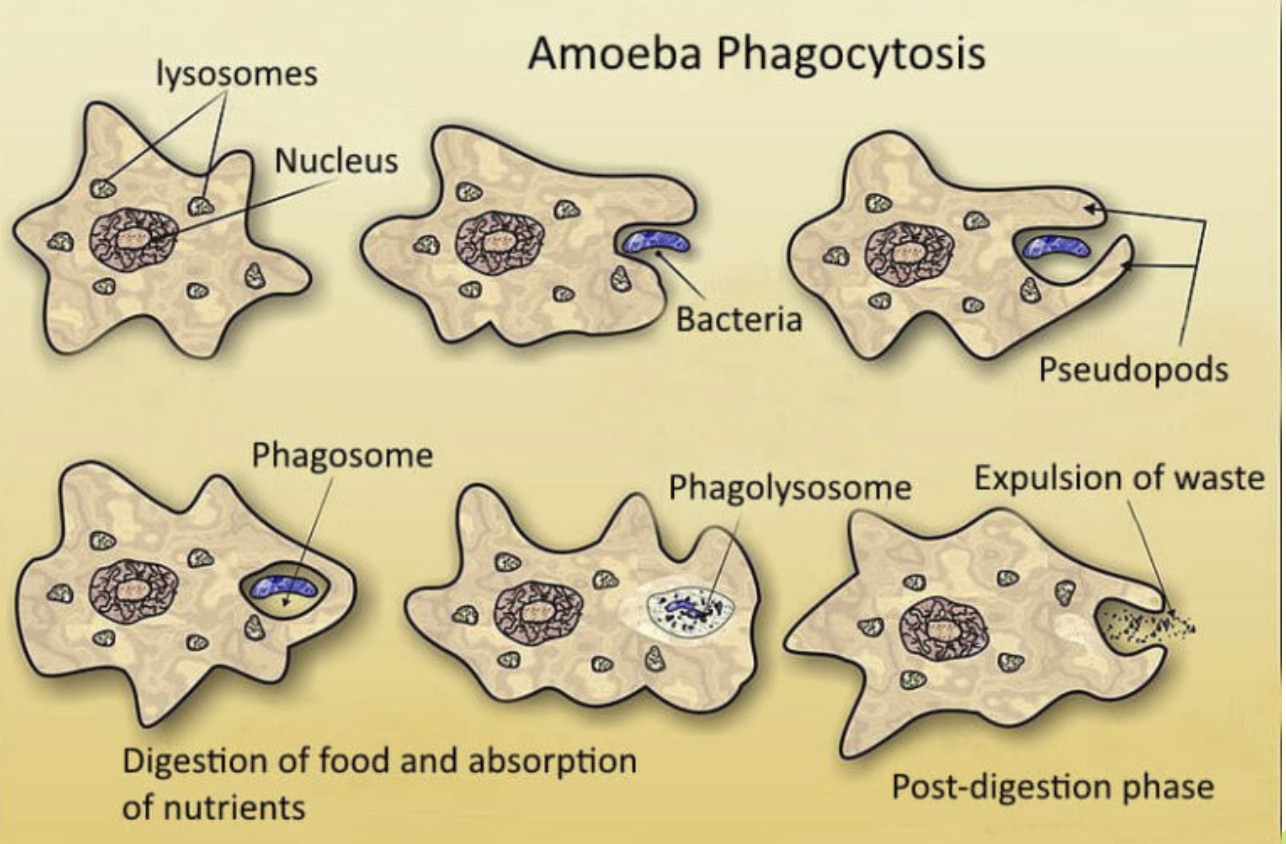
- feed through phagocytosis
- process when a cell engulfs a particle and digests it
Entamoeba hystolitica
- feeds on small intestine lining of humans
- causes amoebic dysentery
- spread by contaminated water or produce
Ciliates
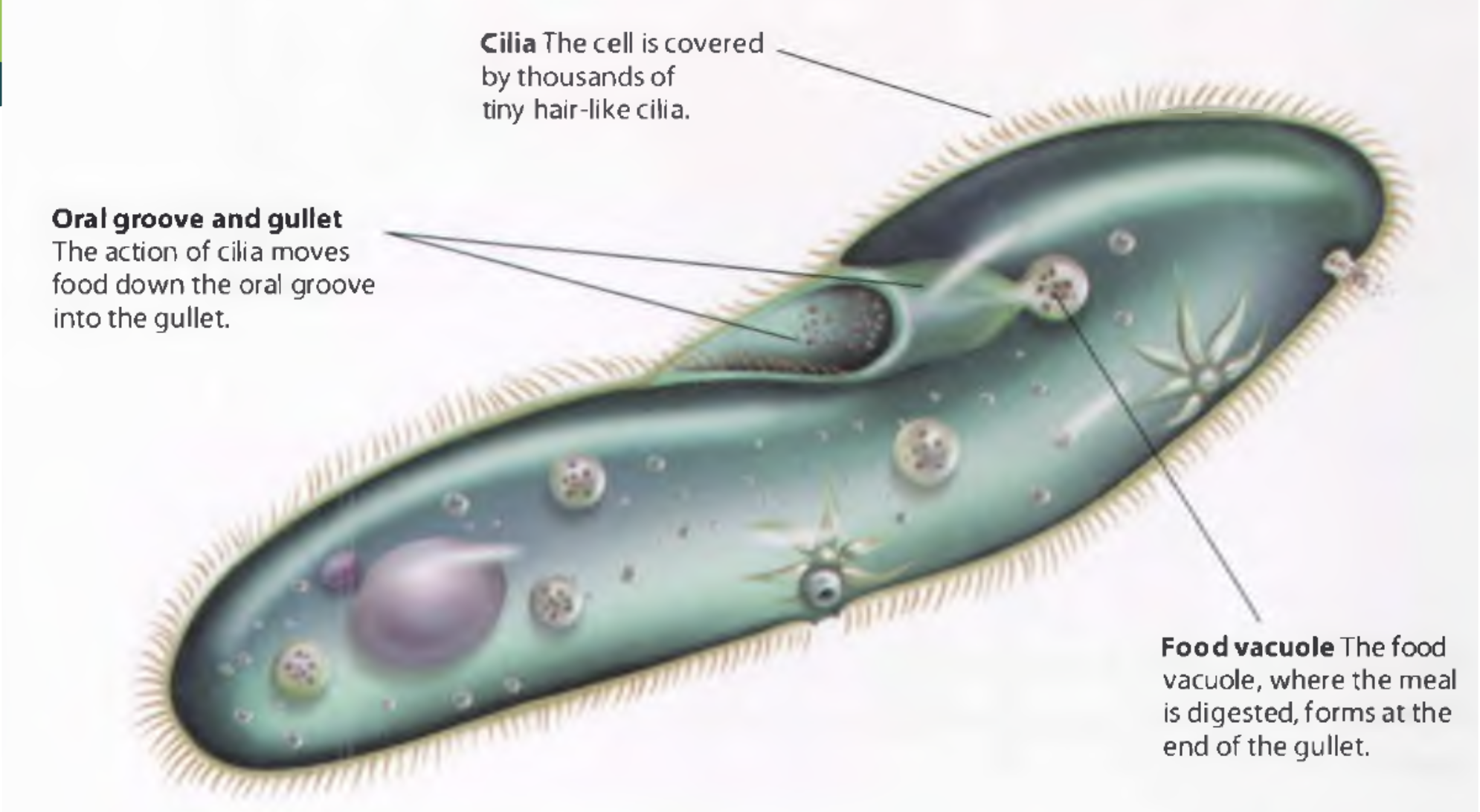
- most familiar are paramecia
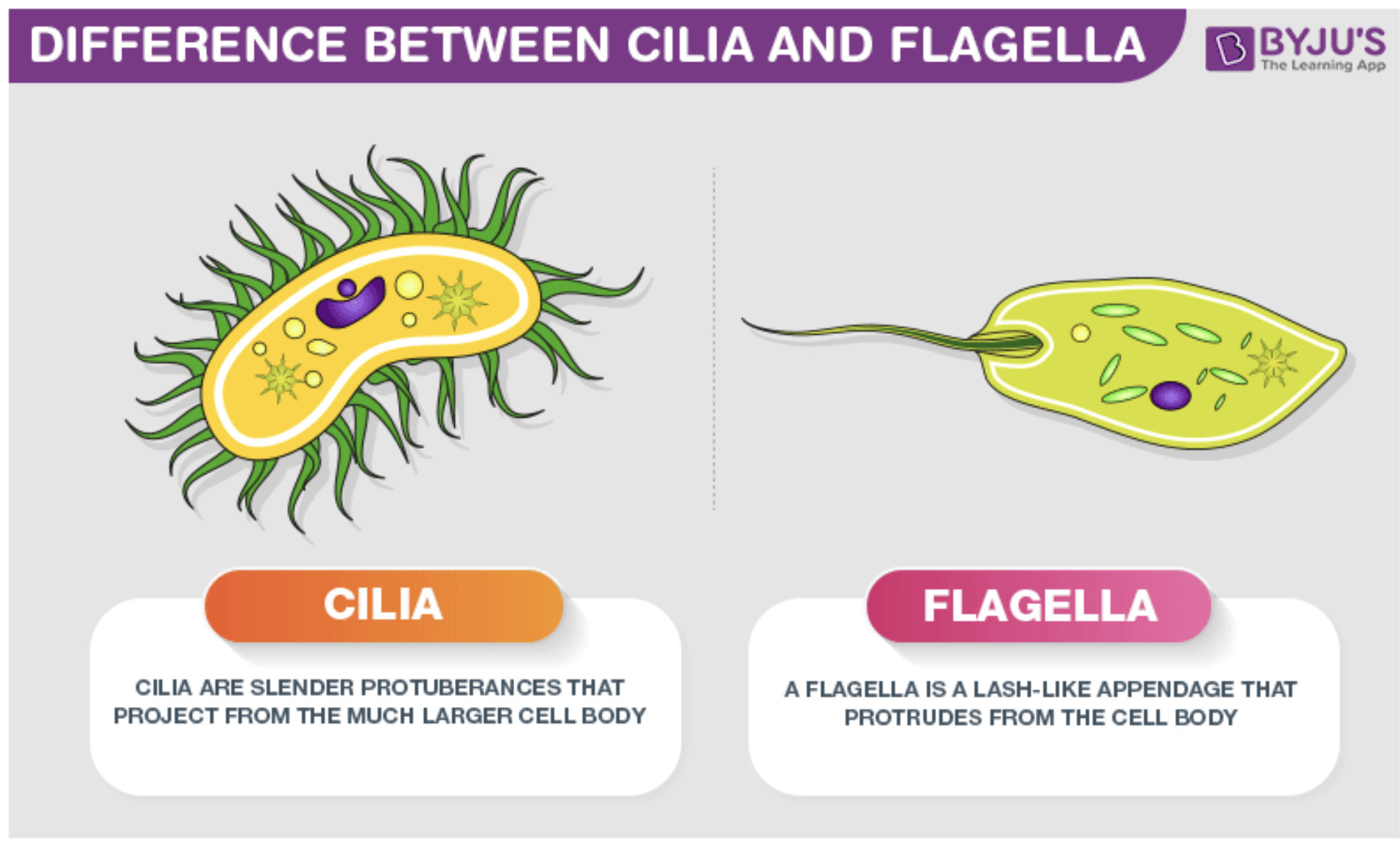
- cilia
- tiny hair like projections covering cell surface
- feeding and locomotion
- free living and parasitic
- large and complex
- over 100 micro metres in length
Balantidium coli
- only known disease causing species of ciliates
- lives in large intestine
- causes diarrhea
Flagellates
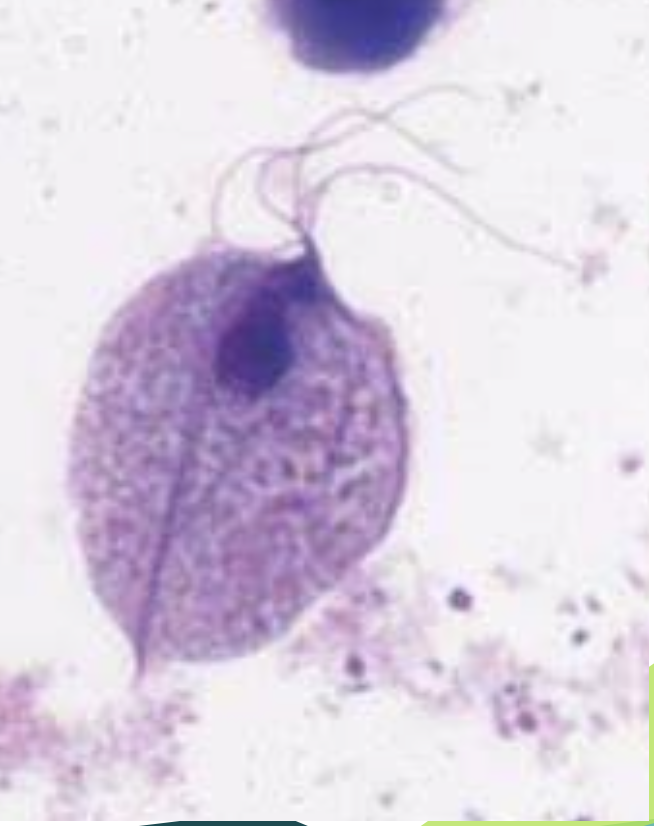
- organisms with one or more flagella
- long hairlike projections extending from cell membrane
- used to propel cell (whip like motion)
- called zooflagellates
- hard protective shell covering outer membrane
free living, parasitic, mutualistic
Trichonympha
- mutualistic relationship with termites
- live in termite gut and produce enzymes
- convert wood into sugar
Giardia
- causes giardiasis
- most common cause of waterborne disease
- found in backcountry streams, lakes, public water
Trypanosoma
- causes African sleeping sickness
- vector borne parasitic disease
- transmitted through tsetse fly bites
- can affect nervous system
- changes of behaviour, confusion, sensory disturbances, poor coordination, sleep disturbance
- fatal without treatment
Sporozoans
- produce spores
- reproductive structures capable of growing a new individual
- parasitic
- life cycles alternate between two hosts
- vector (where spores mature)
- mosquitoes
- host (where spores are produced)
- humans
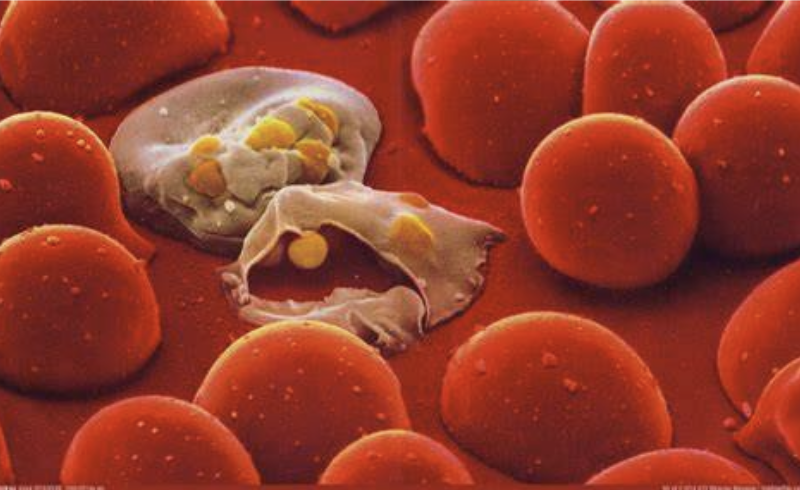
Plasmodium
- causes malaria
- requires a mosquito vector to carry spores
- attacks red blood cells
- symptoms are fever, chills, nausea, vomiting
- kills 2 million people per year
Fungus-Like Protists
- visible to the unaided eye as tiny, slug-like organisms
- creep over damp, decaying plant material
- contains many nuclei
- have cell walls
- walls made of chitin instead of cellulose
- heterotrophs
- engulf small food particles into cytoplasm
- saprotrophs
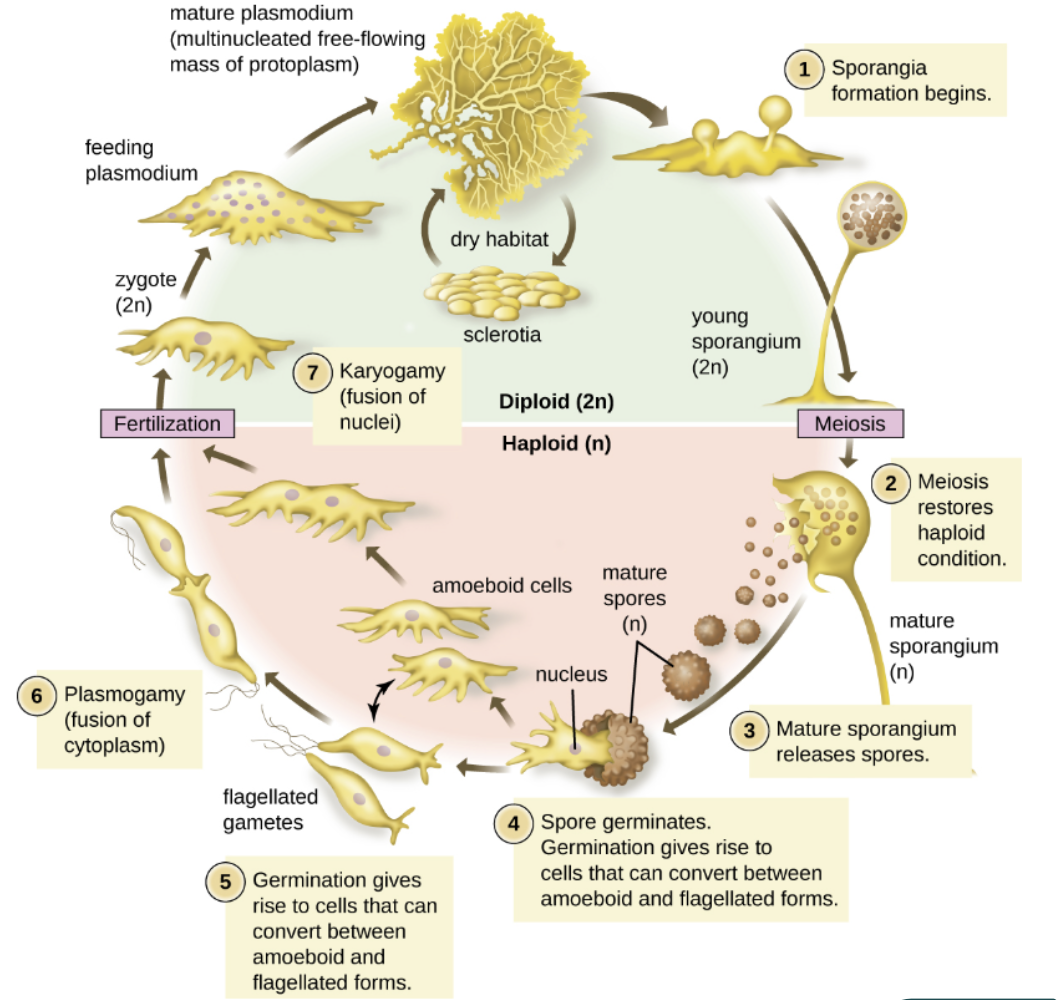
Plasmodial Slime Moulds
- represent vast diversity of morphologies
- difficult to distinguish
- form varied, distinct shapes once formed into a fruiting substance
- feed by engulfing small particles into cytoplasm
- spreads through spores
- streaming blob is called a plasmodium
- NOT THE SAME AS OR RELATED TO SPOROZOAN PLASMODIUM
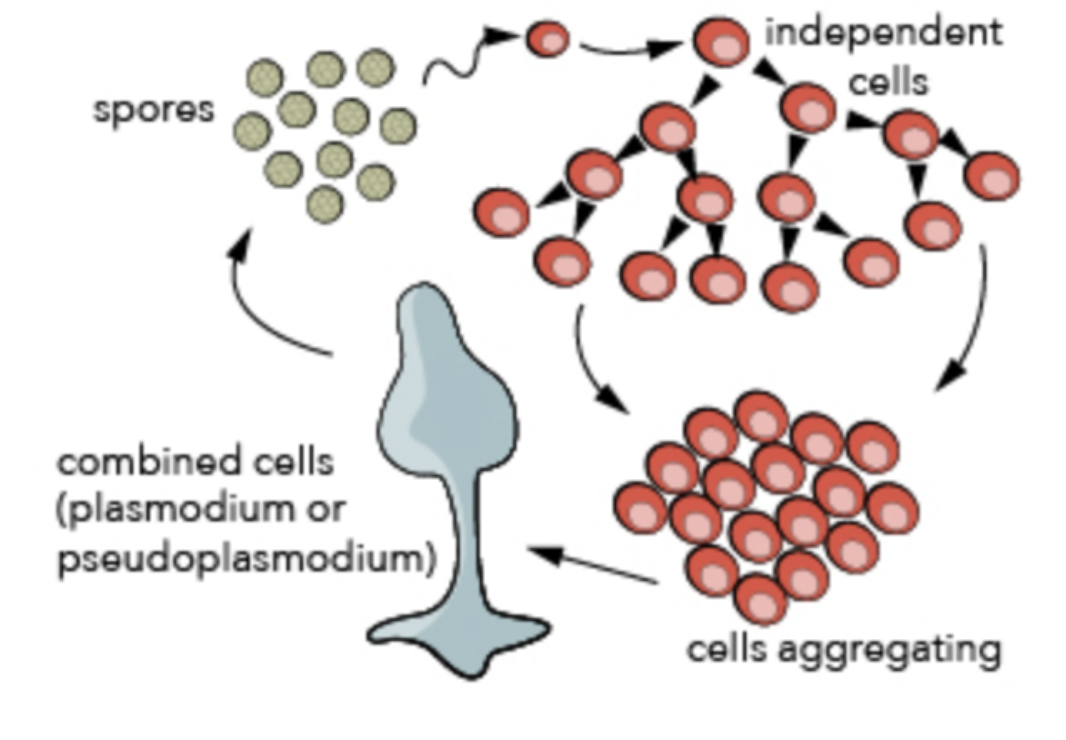
Cellular Slime Moulds
- individual amoeboid cells that periodically aggregate
- form a pseudoplasmodium
- aggregate forms fruiting body
- produces spores
Dictyostelium discoideum
- important for understanding cell differentiation
- single celled and multi celled life stages
- cells showed differentiation while multi celled
- cells gather together when food is scarce
- pseudoplasmodium
- still retain individual cell structure while looking like a single mass
Water Moulds
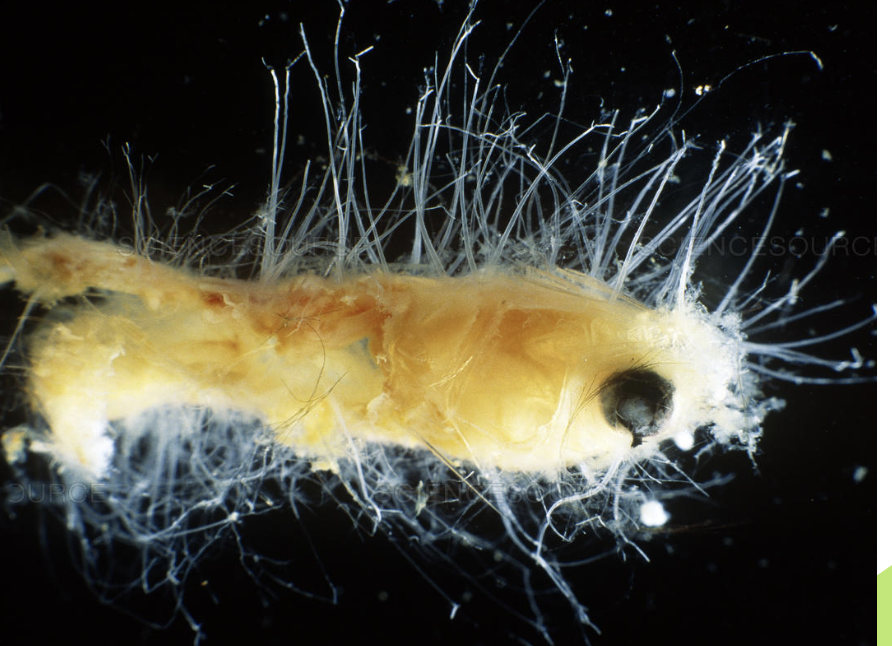
- filamentous organisms resembling fungi
- most live on dead organic material
- some are parasitic
- fish, insects, plants
- extend filaments into host tissues
- release digestive enzymes to absorb nutrients
Phytophthora infestans
- destroys leaves and edible tubers of potato plant
- caused Irish famine
Unicellular Plant-Like Protists
- contains pigments in chloroplasts to carry out photosynthesis
- includes diatoms, dinoflagellates, and euglenoids
Diatoms
- phytoplankton
- single celled and free floating aquatic organisms
- most abundant and diverse of phytoplankton
- rigid cell walls
- outer layer of silica
- found in sand and glass
- play important role in marine ecosystems
- important food source for larger organisms
- primary source of photosynthesis and oxygen production in the ocean
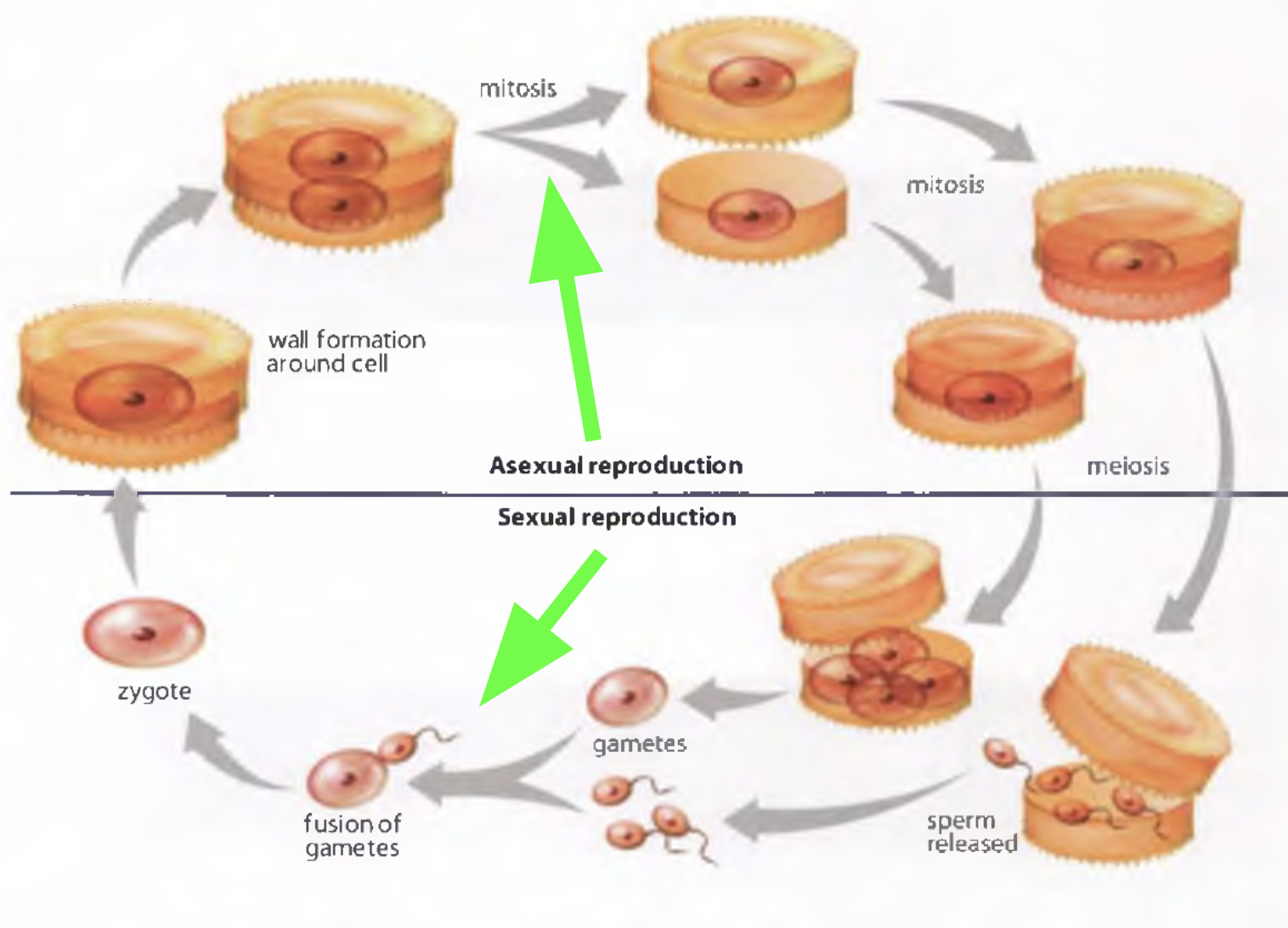
- reproduce asexually usually, can reproduce sexually under certain conditions
Dinoflagellates
- phytoplankton
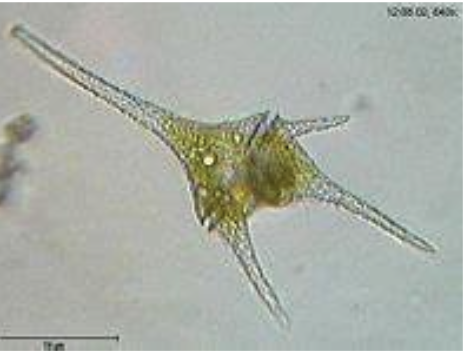
- two flagella at right angles to each other
- movement of flagella results in dinoflagellates spinning through water
- covered in armoured plates of calcium carbonate
- reproduce very quickly
- results in population explosions called algal blooms
- can occur because of changing water conditions
Red Tides
- caused by algal blooms
- dinoflagellates release toxins into water
- harmful to fish and humans
- toxins can accumulate in fish that we consume
- impede nervous system
- can breathe in toxins
- tides can be different colours depending on protist
Symbiodinium
- live inside of corals (mutualistic)
- corals release nitrogens for protists, protists perform photosynthesis for corals
- coral bleaching occurs when dinoflagellates get expelled from corals
- happens because of rising water temperatures
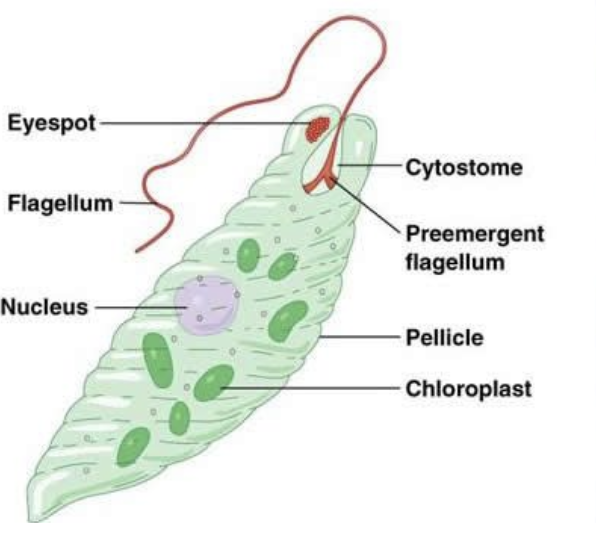
Euglenoids
- most familiar is Euglena
- found in shallow freshwater
- have chloroplasts, are photosynthetic, also have flagella and can absorb nutrients
- autotrophs in sunlight
- heterotrophs in dark
- have an eyespot to detect light
- allows protist to use flagella to move towards light