Non-Coding RNAs
BIOL 209: Non-Coding RNAs
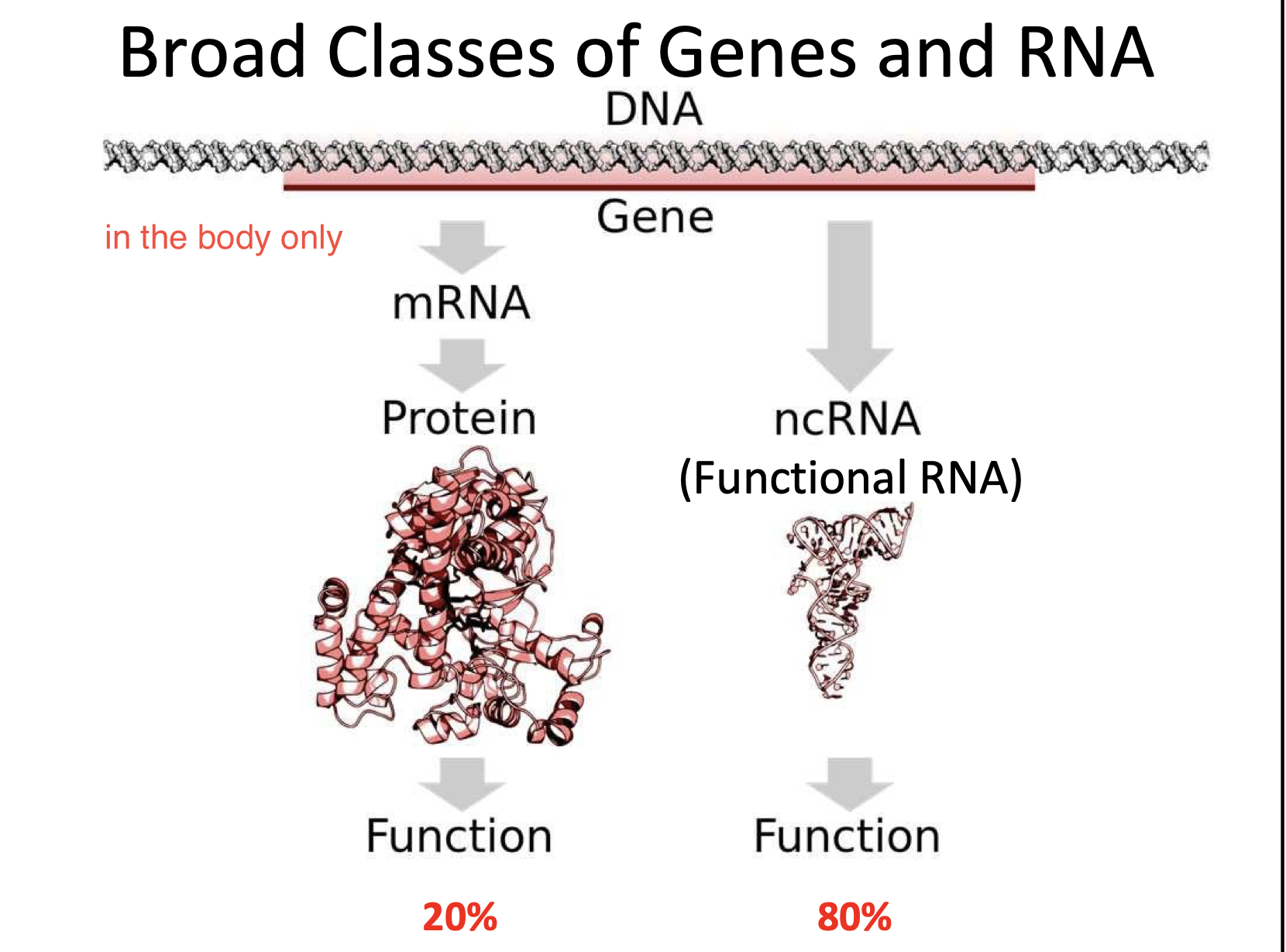
Two Broad Classes of Genes
Protein-coding RNA:
(mRNA) is a type of RNA that carries genetic info from DNA to RNA to the ribosomes where proteins are synthesized
Non-coding RNA/functional RNA:
involves tRNA, rRNA, miRNA, and IncRNAs, these are all ncRNAs which is noncoding RNAs)
mRNA only coding, only functional
18.1: Overview of Non-Coding RNAs
ncRNAs can Bind to Different Types of Molecules
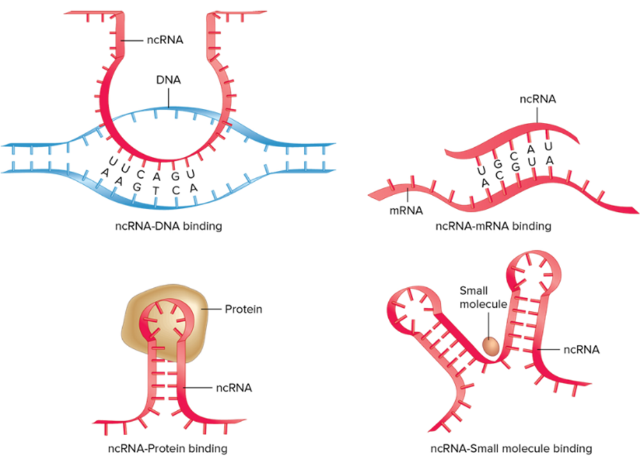
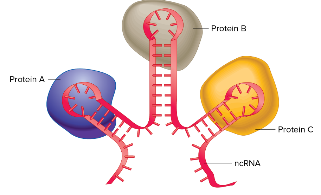
ncRNAs can Perform a Diverse Set of Functions
Scaffolding
formation of a complex
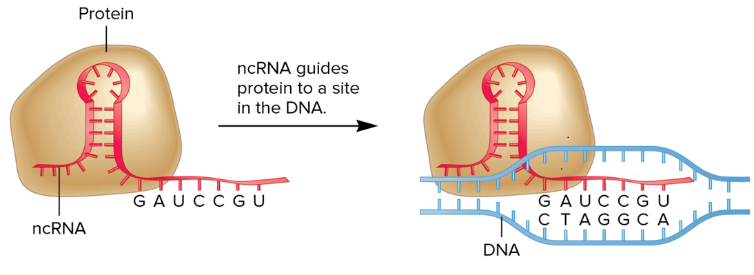
Guide
Movement of molecule to a specific site
Alteration of Protein Function of Stability
Go in and alter struct. which alt. the func. can affect the ability of a protien to act as a catalyst, affect how a protein can bind to another DNA or it can affect stablility
Ribozyme
RNAs with catalysic function, some of them func as ribozyme
Blocker
physically block a process from occuring
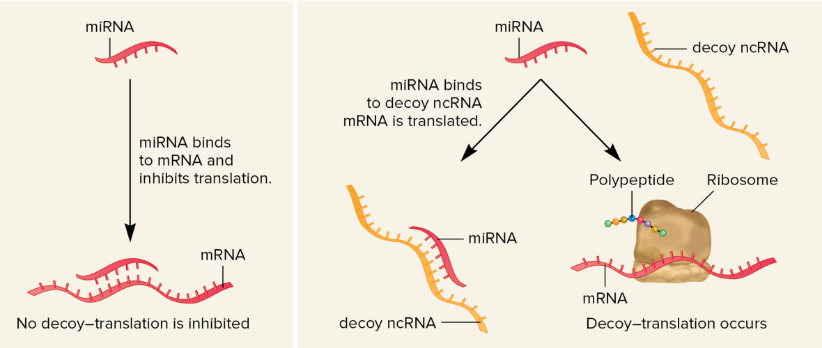
Decoy
Recongnize other ncRNAs and stop them from working
ncRNAs categorized based on size
long non-coding RNAs (lncRNAs): —> 200 nts (red marker)
small regulatory RNAs (short ncRNAs): —> 200 nts (blue marker)
Both/Niether (purple marker)
Type of RNA Found in Plays a role in Description | |||
Telomerase RNA component (TERC) | Eukaryotes | DNA Replication | Facilitates the binding of telomerase to the telomere and acts as a template for DNA replication |
X inactive-specific transcript (XIST) | Eukaryotes | Chromatin structure, transcription | Coats one if the X chromosomes in females mammals and plays a role in its compaction and resulting inactivation X inactivation |
Hox transcript antisense intergenic RNA (HOTAIR) | Eukaryotes | Chromatin structure, transcription | Alters chromatin structure and thereby represses transcription by guiding histone-modifying enzymes to target genes |
RNaseP RNA | Eukaryotes | Processing of tRNA molecules | Processing of tRNA molecules. |
Small nuclear RNA (snRNA) | Eukaryotes | Splicing | Form the subunits of the spliceosome with proteins, processing mRNA |
Small nucleolar RNA (snoRNA) | Eukaryotes | Processing of rRNA molecules | Processing and assembly of rRNA, process rRNA through cleve |
Transfer RNA (tRNA) | Eukaryotes and Prokaryotes | Translation | Recognize mRNA codons during translation and carry the appropriate amino acid. Help in translation |
Ribosomal RNA (rRNA) | Eukaryotes and Prokaryotes | Translation | Structural and functional components of ribosomes. Makes the ribosome, serves as a site. Comes in sizes like 18S, 5S, 45S, come in diffrent legnths. |
Antisense RNA | Eukaryotes | Translation | Complementary to an mRNA; blocks translation |
MicroRNA (miRNA) | Eukaryotes | Translation and RNA degradation | Regulate expression and degradation of mRNAs. RNA interferance (RNAi) reg gene expression |
Small interfering RNA (siRNA) | Eukaryotes | Translation and RNA degradation | Regulate expression and degradation of mRNAs. stops translation fight viral infections |
RNA component of signal recognition particle (SRP) | Eukaryotes and Prokaryotes | Protein targeting and secretion | Directs polypeptides to proper location. involved in the process that moves proteins around the cell to what ever place it needs to go |
Viral RNA | Viruses | Genome | Make up some viral genomes |
CRISPR RNA (crRNA) | Prokaryotes | Genome Defense | Guides endonucleases to foreign DNA in prokaryotes |
PIWI-interacting RNA (piRNA) | Eukaryotes | Genome Defense | Prevents the movement of transposable elements. stop transposons from moving around in germ cells |
Guide RNAs | Eukaryotes | mRNA modification | Serves as a template to alter mRNA molecukes. RNA editing |
18.2 Non-coding RNAs: Effects on Chromatin Structure and Transcription
HOTAIR (Hox transcript antisense intergenic RNA)
Alters chromatin structure and thus, represses gene transcription as shown below:

18.3 Non-coding RNAs: Effects on Translation and mRNA Degradation
RNA Interference (RNAi) can be carried out by microRNAs (miRNAs) and small interfering RNAs (siRNAs).
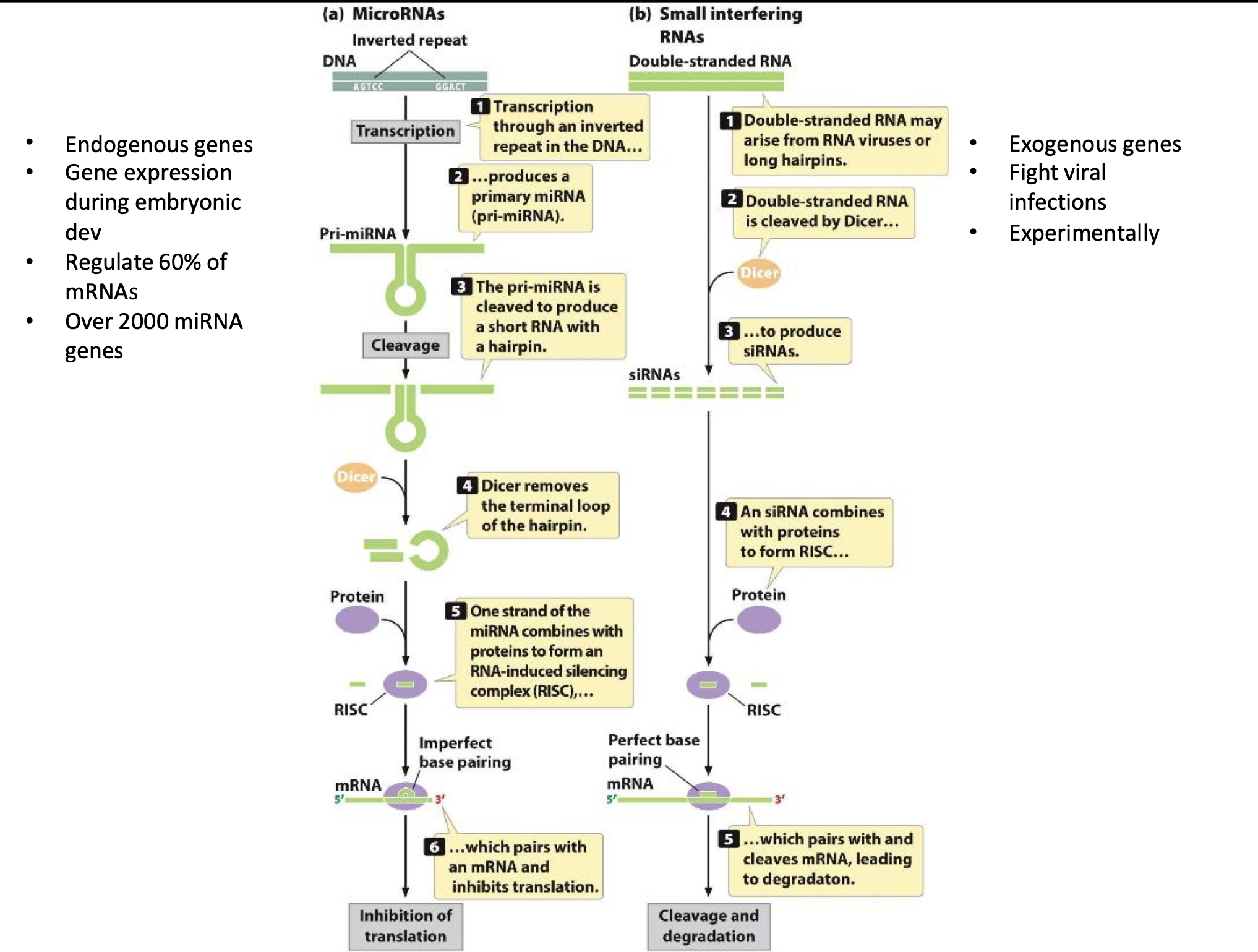

*Dysfunctional HOTAIR can lead to breast cancer *RNAi benefits
-gene regulation
-defense against viruses
18.4 Non-coding RNAs and Protein Targeting
Signal Recognition Particle (SRP) is involved in the process that moves proteins around the cell to the proper location for its function.

18.5 Non-coding RNAs and Genome Defense
CRISPR-Cas System is the equivalent of an immune system in bacteria. (below)
PIWI-Interacting RNAs (piRNAs) silence transposable elements in the germ cells of animals

18.6 Role of Non-Coding RNAs in Human Disease
Abnormalities in the expression of ncRNAs is associated with human diseases.
First ncRNA associated with disease was RNaseMRP, RNA-protein complex that processes some rRNAs, mRNAs, mitoRNAs. Characteristics of Cartilage-hair hypoplasia (CHH): short stature, underdeveloped hair, short limbs, defects in T-cell immunity, predisposition to lymphoma and other cancers
ncRNAs may be used to treat certain diseases
anti-miRNA oligonucleotides (AMOs): used to treat some cancers by inhibiting miRNAs
restore the miRNA using viral vectors, drugs, reversing epigenetic changes