burnout & resilience
notes from lecture slides
burnout
why should we care about burnout?
on the individual level, burnout can lead to an increased risk of developing psychopathology and can also increase the risk of losing one’s job.
on the interpersonal level, burnout impacts the quality of social relationships, for example with colleagues and family.
organisational and societal costs → 125-190 billion dollars in healthcare costs annually (US), furthermore there are costs associated with reduced performance.
what is burnout?
maslach burnout inventory (MBI)
stress as “a syndrome of emotional exhaustion, depersonalisation, and reduced personal accomplishment that can occur among working individuals
issues with MBI
conceptual problems - psychometric problems (low reliability & factorial validity) - practical applicability
→ burnout assessment tool (BAT)
BAT refines the conceptualisation of burnout and hence develops a psychometrically sound assessment tool.
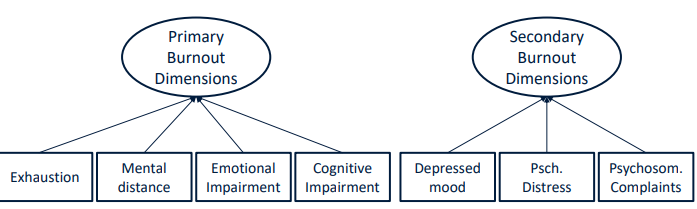
burnout definition → burnout is a work-related state of exhaustion that occurs among employees, which is characterised by extreme tiredness, reduced ability to regulate cognitive and emotional processes, and mental distancing. these four core dimensions of burnout are accompanied by depressed mood as well as by non-specific psychological and psychosomatic complaints.
how do we diagnose burnout
we cant.
11th revision of international classification of disease (ICD-11) = occupational phenomenon, not a medical condition
cannot be given as a diagnosis on its own
no standardised or established way of diagnosing burnout yet
conceptual models and theoretical frameworks
common theoretical frameworks examples:
job demands-control-(support) model
job demands-resources model
effort-reward imbalance
conservation of resources theory
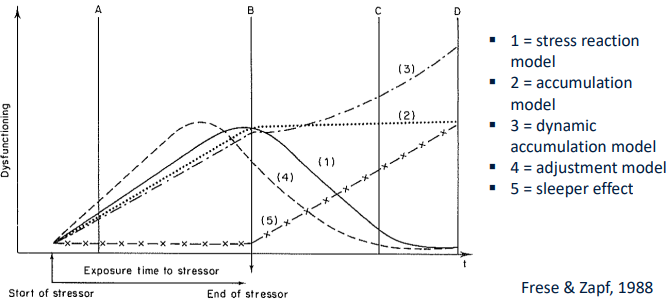
theoretical models - development over time
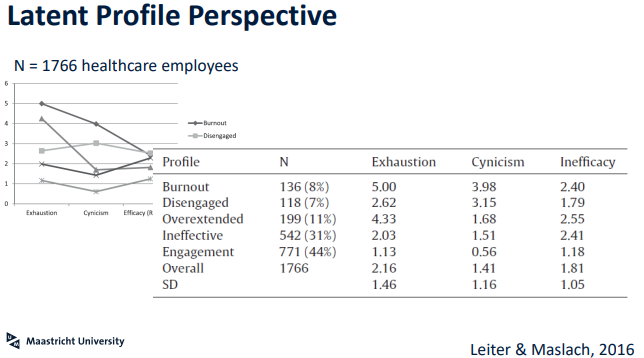
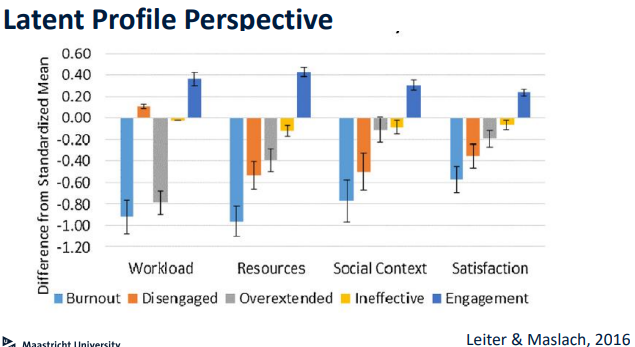
empirical studies on burnout
resilience
defining resilience
104 different definitions
there is a general consensus for 2 elements: adversity & some from of positive adaptation
“resilience is the process by which individuals are able to positively adapt to substantial difficulties, adversity, or hardship. “
resilience can vary across different contexts, and approaches include measuring as a stable trait, an adaptive capacity, or as an evolving process
how are burnout and resilience related?
resilience can protect against burnout → low burnout levels can indicate resilience
studies suggest a bidirectional relationship where resilience reduces burnout risk, lower burnout promotes resilience over time.
takeaways
burnout is a multi-dimensional, work-related syndrome, while resilience is a dynamic response to adversity
both concepts are crucial for improving employee well-being and organisational health
resilience and burnout are bidirectionally related.
study summaries as per study drive
alarcon, 2011
hypothesis : job demands increase burnout, while resources reduce it.
design : meta-analysis of 231 samples using conservation of resources (COR) theory.
results : high demands correlate with emotional exhaustion, while job resources like control and autonomy lower burnout, highlighting the importance of organizational support
arnold 2021
hypothesis: health-oriented leadership (HoL) and psychological capital (PsyCap) support resilience and health in novice teachers
design: longitudinal study with a latent class growth analysis over three time points
results: teachers with high HoL and PsyCap maintained stable health, showing the role of supportive leadership and resilience resources in managing early career stress.
hakanen, 2011
hypothesis: early life SES and cognitive ability predict burnout via educational attainment and work conditions
design: 35-year longitudinal, three-wave study using the JD-R model and life course perspective
results: favourable early conditions led to reduced burnout risk through better educational and job outcomes, showing that resources accumulate over time to protect against burnout
notes from learning goals
what is burnout/resilience
resilience
resilience is the positive adaptation in the face of adversity
resilience is a “dynamic process encompassing positive adaptation within the context of significant adversity”
resilience has 2 defining elements:
experience of adversity (high vs low intensity)
positive adaptation, through which the entity returns to a study state
burnout
“a state of physical, emotional, and mental exhaustion caused by long-term involvement in situations that are emotionally demanding”
more precisely:
“burnout is an exceptionally mediated, job-related, dysphoric and dysfunctional state in an individual without major psychopathology, who has (1) functioned for a time at adequate performance and affective levels in the same job situation and who (2) will not recover to previous levels without outside help or environmental rearrangement.”
BAT – Defining Burnout
Burnout is a work-related state of exhaustion that occurs among employees, which is characterized by extreme tiredness, reduced ability to regulate cognitive and emotional processes, and mental distancing. These four core dimensions of burnout are accompanied by depressed mood as well as by non-specific psychological and psychosomatic complaints
how do individual differences affect burnout/resilience
resilience
a discrete and stable personal characteristic or a bundle of different personal strengths
implies that resilient individuals are generally better able to withstand adversity and setbacks than non-resilient individuals
stable over certain periods but also malleable in the long-run
resilience can be developed with training
personal resources positively relate to resilience
ethnicity moderated the relationship between workplace incivility and job satisfaction
ethnicity moderated the relationship between workplace incivility and burnout
in such a way that employees with high horizontal collectivism value, which emphasise sociability, tended to be more resilient to incivility in the workplace
antecedents of resilience:
personality traits and cultural value orientations:
people who worry a lot tend to think more thoroughly about how to overcome obstacles, which can have a positive effect on resilience
there is a positive relationship between conscientiousness and general resilience and workplace resilience
ethnicity moderated the relationship between workplace incivility and burnout → those with high horizontal collectivism values, emphasising sociability, tended to be more resilient to incivility in the workplace.
personal resources:
personal resources positively relate to resilience
positive relationship between different personal resources (e.g., self-efficacy) and resilience
feelings of control over a situation are positively related to resilience
internal locus of control appears to foster resilience
relationship between social competencies (e.g., emotional intelligence/empathy) and resilience.
individuals with better emotional regulation appeared to be more resilient as they appear to be more calm and focused
emotion regulation - using health strategies to deal with stress and adversity.
personal attitudes and mindsets
finding a sense of meaning and purpose and maintaining ones sense of professional mission helps employees to become resilient in times of adversity
being committed to ones job positively related to resilience
being self-directed fosters career resilience
personal emotions
experience of positive emotions broadens momentary thought-action repertoire
this in turn leads to the experience of more positive affect and emotional well-being
burnout
seems to occur more frequently in young employees under 30 (in the USA)
in European countries - more prevalent in older age groups
burnout levels are higher in north america
positive association with higher levels of education
emotional exhaustion is positively related with neuroticism and openness
burnout is associated with the jungian “helping type”, which is over-represented in the human services and is characterised by a need for affiliation, a capacity for warmth, and a desire for harmony.
burnout has been found to have a positive association with empathy and with poor communal orientations.
how does the environment influence burnout and resilience?
work resources and demands on resilience:
resources from the work context promote employee’s resilience
employees benefit from sharing responsibilities and work tasks with colleagues, as this relieves the burden in challenging situations
strong professional and private social connections promote resilience.
there is a positive effect of colleague’s and supervisor’s social support as well as performance feedback from supervisors on employee resilience.
this effect was stronger for employees with a high promotion focus in combination with a high prevention focus.
positive relationship between the level of support provided by a manager and career resilience.
transformational leadership is positively associated with greater levels of positive affect and lower levels of negative affect in subordinates.
work environment on burnout:
occupational stress occurs when job demands do not match the person’s adaptive resources
burnout has been considered as a final stage in a breakdown in adaption that results from the long-term imbalance of demands and resources, thus from prolonged job stress
apparently, anybody can experience stress, while burnout can only be experiences by those who entered their careers enthusiastically with high goals and expectations. (what a load of bull)
high job demands and lack of resources are positively related with burnout.
guthier et al. (2020)→ burnout plays a more significant role in increasing stressors and stressors play a role in increasing burnout
emotional exhaustion is strongly related to stressors but cynicism is not strongly related to burnout
people can perceive stressors differently
scoring high on burnout → lead to higher perceived stressors.
if you’re burnt out, you can perceive everything as being more and thus, make more work for yourself.
stressor perception → stressor creation
effect was stronger from burnout to job stressors than the other way around
what causes burnout? and how does it develop?
quantitative demands like high work load is more highly correlated with burnout compared to qualitative demands.
it develops through a gradual energy depletion, exhaustion and loss of motivation and commitment. there is an increase in cynicism, which is accompanied by a wide array of mental and physical symptoms.
first stage involves an imbalance between resources and demands (stress)
second stage is the immediate, short-term emotional tension, fatigue, and exhaustion (strain).
third stage consists of a number of changes in attitude and behaviour, such as a tendency to treat clients in a detached and mechanical fashion, or a cynical preoccupation with gratification of one’s own needs (defensive coping)
it’s a slow developing process
possible causes of burnout:
qualitative job demands
role problems
lack of social support
lack of self-regulatory activity
client-related demands
theories on resilience
integrated resource theories → job demands-resources theory + conservation of resources theory
researchers might consider drawing on the job demands-resources model to investigate whether resilience is a personal resource that acts as a buffer against the negative influence of work demands in the workplace.
pioneering research has drawn on the conservation of resources theory and highlighted a gain-oriented perspective to explain how resilience can help individuals obtain additional resources from the environment.
trait activation theory
several studies on resilience at the individual level have conceptualised resilience as a stable or malleable personal characteristic.
according to the trait-activation theory, the behavioural expression of personality traits is dependent on the arousal of these traits by trait-relevant situational cues. thus, situational cues, such as organisational or team contexts, may influence how resilience as a personal characteristic is related to outcomes of interest, such as work behaviours and attitudes.
social cognitive theory
broaden-and-build theory
additional definitions from study drive that may be relevant
conservation of resources (COR) theory: theory positing that burnout occurs when individuals are unable to maintain or acquire resources to meet job demands, with resource loss being central to the burnout process
capacity theory: the concept that resilience can be developed and strengthened over time, viewing it as a state-like characteristic rather than a fixed trait.
depersonalization: a burnout dimension characterised by the development of negative, cynical attitudes towards clients or work, leading to a sense of detachment.
educational attainment: the level of education an individual achieves, often associated with access to jobs with lower demands and more resources, thereby reducing burnout risk.
health-oriented leadership (HoL): a leadership approach that prioritizes employee well-being, creating a supporting environment that fosters resilience and mitigates burnout
person-environment (P-E) fit theory: a theory proposing that stress arises when there is a mismatch between an individual’s characteristics and their work environment.
stressor creation hypothesis: the idea that individuals may inadvertently create additional stressors in their environment through behavioural patterns, perpetuating stress over time.
stressor perception hypothesis: suggests that individual attributes, such as resilience or psychological capital, influence how individuals perceive stressors, impacting their stress response.