Insects and People: Insect Communication
What is Communication?
- A way of passing information on between organisms
- May alter the behavior of other organisms
- Auditory, Vibrations, Chemicals
Why Communicate?
- Courtship and mating
- Identifying food sources
- Alarming of predators
- Aggregation into groups
- Social insects depend on communication to maintain the status quo!
- Time to mate, divide labor, etc.
Sound Production
Stridulation—A sharp chirping or hissing noise produced by scraping parts of the body together
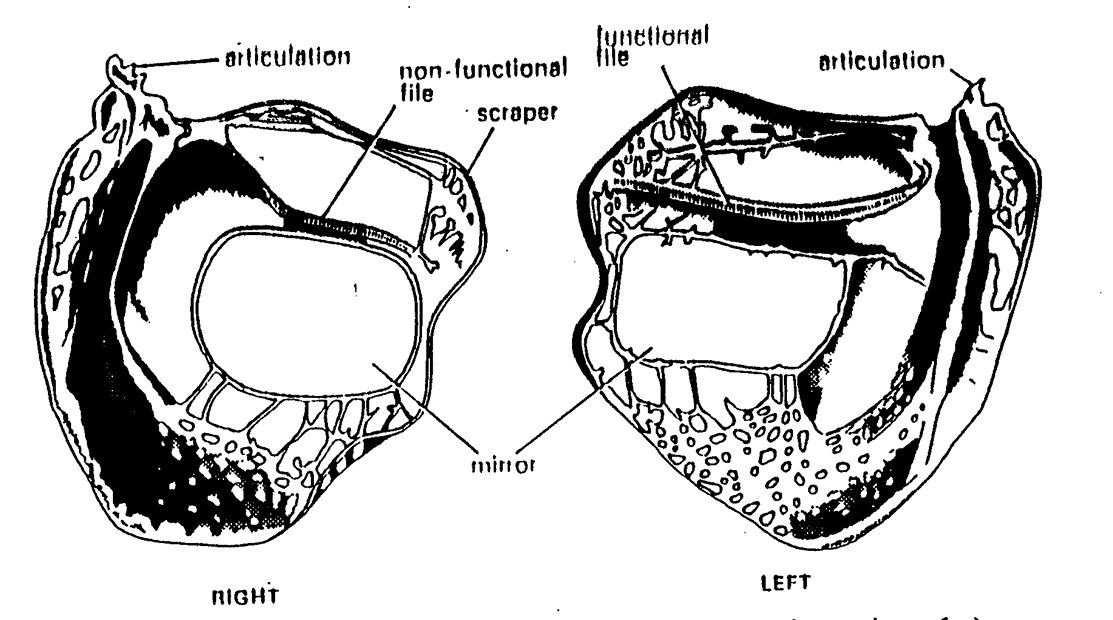
- CALCULATING TEMPERATURE FROM SNOWY TREE CRICKET CALLS:
- No. of chirps in 15 seconds + 40
- Cicadas can produce sound using a tymbal organ that has muscles directly attached
- Some insects produce sound through banging their bodies or strumming against a substrate (drumming)
- Hissing
- Wing-beating
Visual Cues
- Swarming
- Wing Flapping
- Color Flashing
- Light
- Production of Light in fireflies requires:
- Luciferin, Luciferase, Oxygen, and ATP (Energy)
Physical Communication
- Very common among social insects
- But can be found in non-social or sub-social as well
- Used to recognized nest siblings, predators, and mates
Chemical Communication
Allomone—Chemical produced by one species and detected by a different species
- Benefits the sender and harms the receiver
Kairomone—Chemical produced by one species and detected by another
- Benefits the receiver at the expense of the sender
- Corn kairomone attracts caterpillar, starts eating plant. Plant reacts by releasing chemical to attract parasitic wasp. Parasitic wasp finds caterpillar by detecting its kairomone
Pheromone—Chemical produced by one species and detected by other members of the same species.
- Usually benefits both the sender and receiver
- Sex attractants
- Alarm Pheromones
- Dispersal Pheromones
- Aggregation Pheromones
- Caste Determination Pheromones
- Marker Pheromones