Sex and gender
Key terms
Sex - the biological difference between males and females including chromosomes, hormones and anatomy.
Gender - the psychological and cultural differences between males and females including attitudes, behaviours and social needs.
Sex-role stereotypes - a set of beliefs and preconceived ideas about what is expected or appropriate for males and females in a given society.
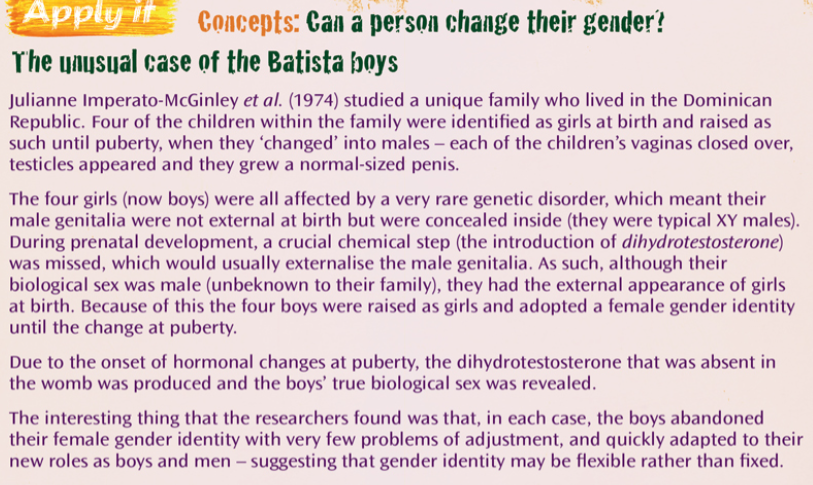
Gender identity disorder - a condition where biological sex and gender identity do not correspond, e.g. a biological male ‘feels’ female.
Key concepts
SEX
In everyday life, sex and gender are used interchangeably suggesting there are one. Most psychologists recognise sex and gender as distinct and separate concepts.
Sex refers to a person’s biological status as either male or female, this is determined by the different chromosomes which then influence hormonal differences as well as differences in anatomy such as reproductive organs.
GENDER
Gender refers to person’s psychological status as either masculine or feminine. This includes all the attitudes, roles and behaviour that we associate with being male or being female and there are heavily influenced by social norms and cultural expectations.
Essentially
sex →as a result of nature gender → as a result of nurture
Gender is typically fluid and open to change. A person may be more masculine or more feminine depending on the social context they are in and the norms and expectations associated with it.
GENDER DYSPHORIA
Some people may experience gender dysphoria when their biologically prescribed sex does not reflect the way they feel inside dand the gender they identify themselves as being.
They may then choose gender reassignment surgery.
Sex Role Stereotypes
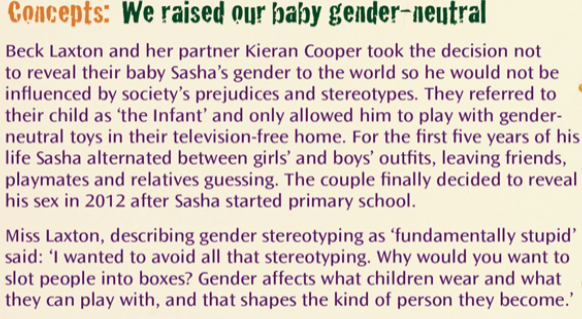
They are a set of shared expectations that people within a society of culture hold about what is acceptable or usual behaviour for males or females.
These expectations are somehow communicated or transmitted throughout society and may be reinforced by parents, peers, the media, as well as other institutions such as schools.
Sex role stereotyping cases - Smith and Lloyd, Furnham and Farragher,
- these can also be used to support social learning theory of gender that various agents of socialisation like parents or media, support and sustain the stereotypical expectations we have of men and women in our society.
Is it as simple as male or female?
Some children are exposed to hormonal imbalances in the womb which means that their genital appear neither obviously male or female. - they are known as intersex and their parents are often encouraged to opt for surgery to make the sex clear.