Week 9: Saturn
Saturn Facts
6th planet from the sun
jovian planet
shares similarities with Jupiter
but Jupiter is bigger than Saturn
distance from the sun = 900 million miles or about 10 AU
saturn is almost twice as far from the sun as Jupiter
diameter = 72,000 miles or about 9 Earth diameters
volume = more than 750 Earths
more volume than Earth
less volume than Jupiter
mass = 95 Earth masses
more mass than Earth
less mass than Jupiter
Density = 0.69 g/cm3
very low density!
lowest of any known object in the solar system
less dense than water!
Saturn would float in large body of water
Surface gravity = 1.16 g (earth’s gravitational pull )
temperature at cloud tops = -290 degrees F
composition = mostly Hydrogen and He, some other gasses
satellites = 146
has more satellites than any other planet in our solar system


Saturn in Mythology
Saturn was Jupiter’s father - god of time
also father to Pluto and Neptune
Oracle told him he would be overthrown by one of his sons
so to solve that problem, he ate his sons when they were born
his wife and sister hid Jupiter from him
Jupiter came back and overthrew him
Jupiter’s Rotation and Revolution
period of rotation: 10 hours and 14 minutes
fast but not as fast as Jupiter
Saturn exibits differential rotation
period of revolution: 29.5 years (amount of time it takes to go around the sun)
axial tilt: 27 degrees F
has seasons!
Tidal Force
Tide (Tidal Force): a stretching force due to gravity pulling on one side of a body more strongly than the other side
remember, gravity gets exponentially weaker with distance
Roche limit
Roche limit: the distance from a body at which another body will be broken up due to tidal forces
this is what happened to Shoemaker-Levy 9 comet for Jupiter

History of observations of Saturn
first telescopically observed in 1610 by Galileo
thought the rings were two smaller bodies fixed near Saturn
thought they looked like Saturn’s “ears”

Saturn’s rings (observations)
1657: Christiaan Huygen hypothesized that these “ears” were actually rings
Huygen also discovered titan (Saturn’s satellite")
1675: Giovanni Cassini discovered the “Cassini Division”
“Cassini Division” : a gap in the rings
the rings are a bunch of tiny little bodies (boulders, ice chunks)
rings are thin (3 story building)
Orientation of rings
Orientation of rings changes with Saturn’s cycle
29.5 year cycle

saturn’s rings are objects getting pulled towards Saturn’s center
objects on top move down ward rotation
objects on bottom move upward rotation
hit each other in center and straighten out
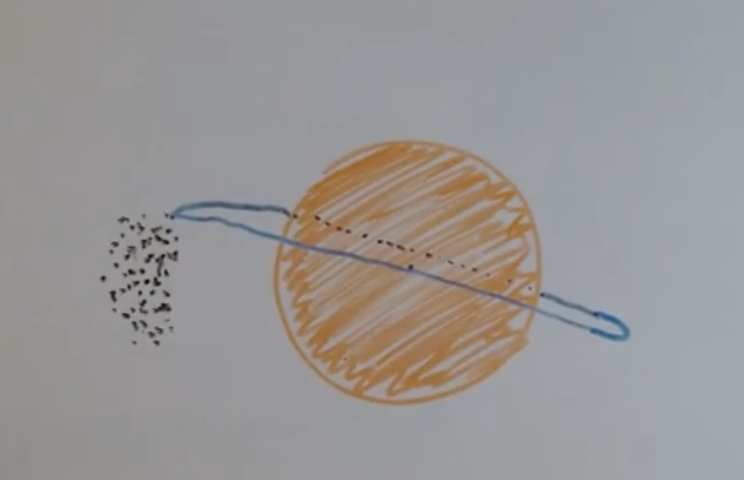

What are the rings made of?
rings system is made up of chunks of ice and rocks
size ranges from a small as grains of sand to as big as a house

Shepard Moons
help keep rings stable / in place
any objects within inner/outer ring is pulled towards center of rings

Shepard Moons: Janus and Epimetheus

have co-orbital motion
Epimetheus orbits closer to Saturn, so has shorter orbital period and eventually approaches Janus from behind
as they get closer, they tug on each other gravitationally
when near each other, they pull on each other and trade orbits
tugging by epimetheus slows down janus, which makes it fall towards saturn in its orbit
janus speeds. up eipmetheus which makes it rise
janus has 4x the mass of epimetheus so it moves inward and epimetheus moves outward
closer to saturn, Janus speeds up in its orbit
farther from saturn, epimetheus slows down
janus will slowly creed ahead of epimetheus
four years later they do the same dance in reverse


Layers of Saturn
very similar to Jupiter
again, layers aren’t this distinct
gradual transition

Saturn also has belts and zones
similar to jupiter
belts = darker regions
zones = lighter regions

Storms on Saturn
storms have large storms
can wrap around entire planet

Saturn’s Hexagon
storms within Saturn
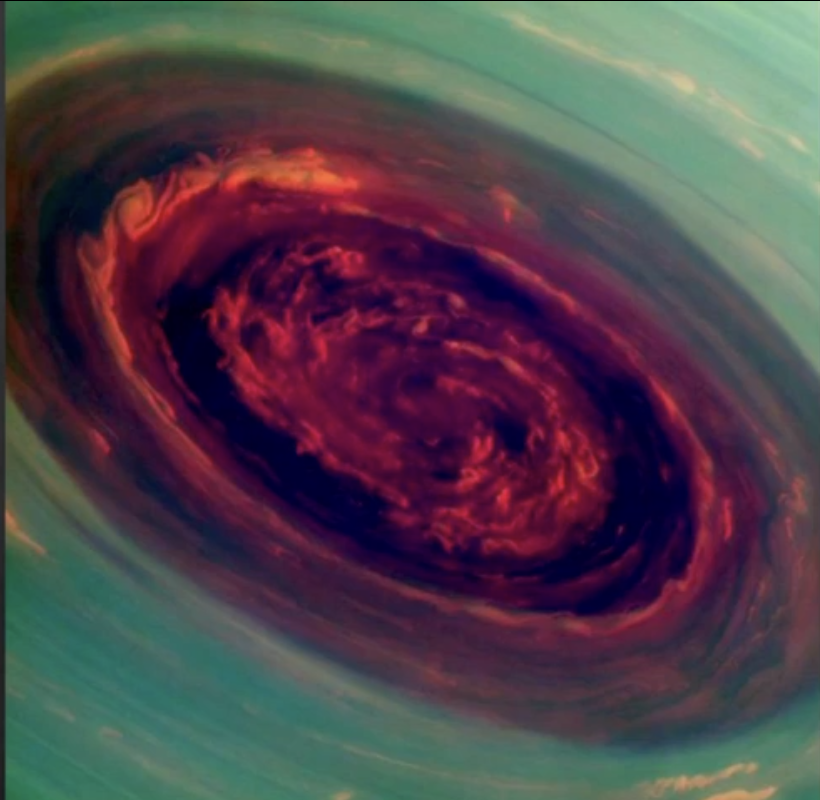

Saturn’s Auroras
Saturn has strong magnetic field that causes auoras when wind crashes into them

Cassini Spacecraft
launched in 1997
arrived at saturn in 2004
mission ended 2017
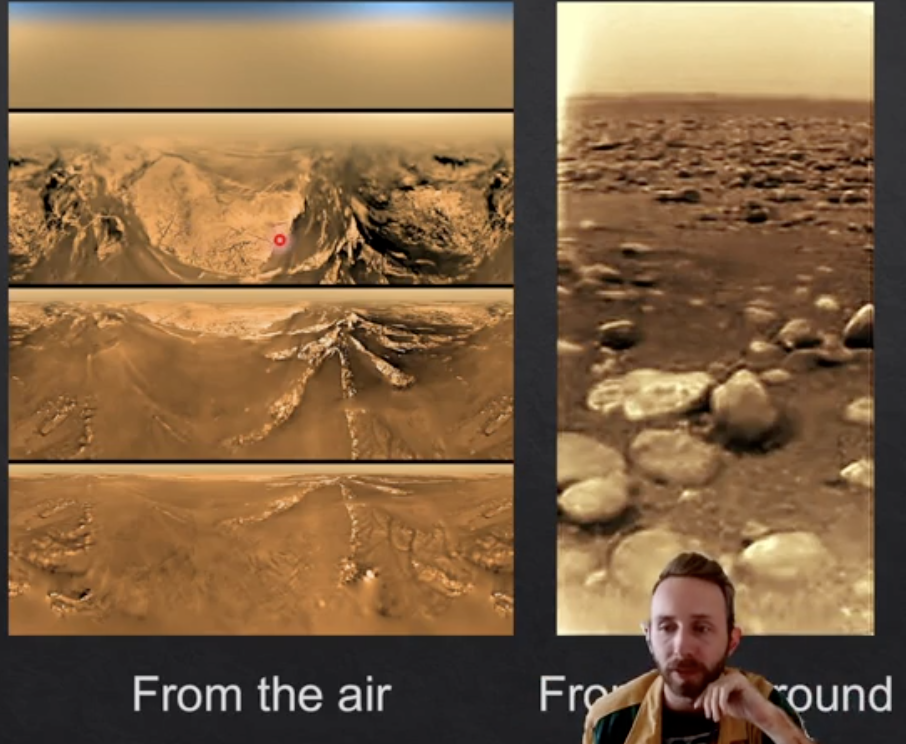
dropped the Huygens probe onto Titan

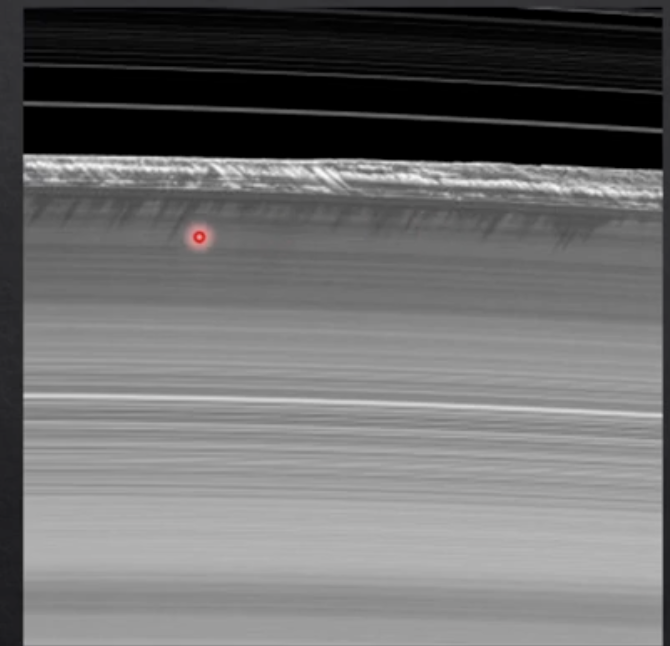
took photos of shadows on saturn’s rings
structures cast shadows on the main rings, shown in photo below
Huygens Probe
part of Cassini spacecraft, released onto titan
one of Saturn’s satellites
Saturn’s Satellites
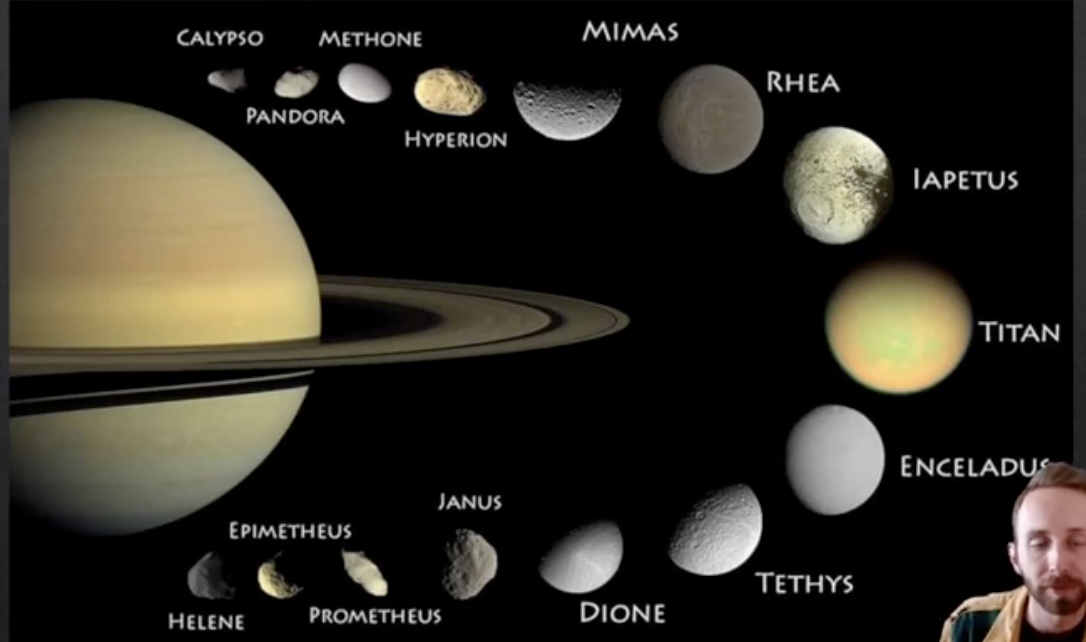
Titan
Saturn’s largest satellite
thick atmosphere (mostly nitrogen)
1.5x thicker than Earth’s atmosphere
contains organic molecules!
Methane
clouds of methane
surface has methane lakes
methane snow
possible methane drainage channels that may have formed from the evaporation or movement of methane

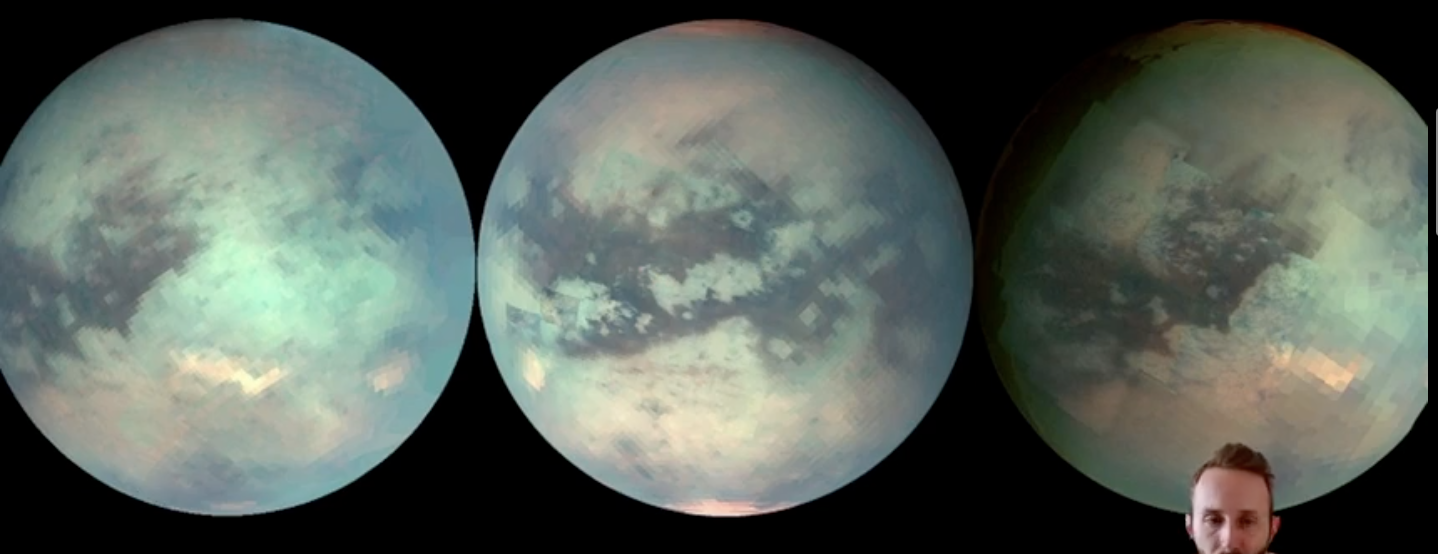
What Huygens Saw on Titan
Enceladus
diameter = 318 miles (1/6th moon’s diameter)
albedo: 97%
albedo: how reflective a body is
surface is made of water ice
has water ice geysers
water geysers: water volcanos
thought that there are water streams under frozen ice surface

Crater counting: how we can determine planet age by surface of the body
by counting craters (little holes/dots on planets)


Saturn’s E rings
created by Enceladus’s water ice geysers
Enceladus’s shoots out ice geyers, making saturn’s ring (labelled E ring)
Other Moon/satellites of Saturn
Mimas
looks like death star

Phoebe
orbits saturn backwards / in opposite direction of other moons


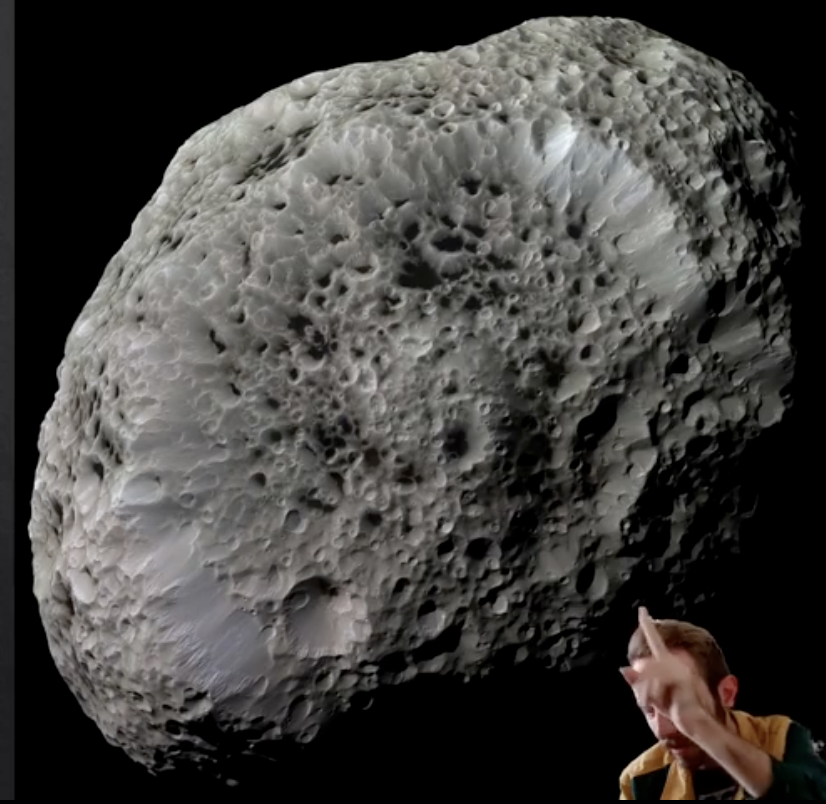
Hyperion
Rhea
Rhea has its own ring of pebbles and boulders
