Forensic Anthropology Week 1: Ethics and Bone Morphology
Forensic Anthropology Week 1: Ethics of Working with Human Remains, Anatomical Terminology and Bone Morphology
Aims of the Lecture
This session aims to discuss the ethical implications of working with human remains, review standard anatomical terms and positions, identify types of bones and other body tissues, and examine the macro- and microstructure of bones and teeth, including the functions of the skeleton.
Understanding Ethics
Ethics are defined as "Moral principles that govern a person's behaviour or the conducting of an activity." They serve as a guide to determine what is right and wrong and emphasize adherence to principles of honesty, integrity, fairness, and decency.
Ethical Issues in Working with Human Remains
Working with human remains presents numerous ethical challenges, which are crucial for forensic anthropologists to consider. These might include issues related to identification, privacy, respect for the deceased and their communities, and the appropriate use of remains for research and teaching.
Reasons for Analyzing Human Remains
Human remains are analyzed for several critical purposes:
Medicolegal Investigations: Assisting law enforcement in identifying individuals or circumstances of death.
Disaster Victim Identification (DVI): Identifying victims after mass casualty events.
Humanitarian Work: Recovering and identifying individuals in conflict zones or mass graves.
Accidental Discoveries: Investigating remains found unexpectedly.
Research/Teaching: Advancing scientific understanding and training future professionals.
Burial Laws in the EU & UK
Key legal principles regarding human remains include:
No Property in a Corpse: A corpse cannot be stolen or owned.
Burial Act ($1857$): Governs burial, cremation, and exhumation.
Common Law Offence: Disinterring a body without lawful authority is illegal.
License for Exhumation: Requires a license from the Ministry of Justice or Ministry of Culture (depending on the context).
Human Tissue Act ($2004$): Applies to remains less than years old, regulating their use and storage.
Ethical Codes of Practice
Various professional bodies, universities, trusts, and funding bodies establish their own codes of practice and ethical guidelines. Notable organizations include:
Royal Anthropological Institute (RAI)
British Association of Forensic Anthropologists (BAFA)
Chartered Society of Forensic Scientists (CSFS)
British Association for Biological Anthropology and Osteoarchaeology (BABAO)
These guidelines reinforce responsible conduct in forensic anthropology, particularly in areas like bioarchaeology and forensic anthropology, emphasizing ethics, partnership, and collaboration with stakeholders, especially Indigenous communities. This is highlighted in publications such as "Ethical Approaches to Human Remains: A Global Challenge in Bioarchaeology and Forensic Anthropology" and commentaries debunking poor scholarship that hinders ethical practices and stakeholder collaboration.
Importance of Ethics in Forensic Practice
Ethical considerations are paramount to ensure that work and research do not:
Negatively interfere with a community or an investigation.
Impose specific interpretational methods as the sole correct approach.
Create negative feelings towards human osteologists.
Lead to social opposition to medicolegal investigations.
Disseminate incorrect information to the public.
Create political or social conflict (e.g., by portraying one group unfavorably), potentially leading to vandalism.
Compromise the privacy of a group (e.g., by revealing sensitive religious or health information).
Specific Ethical Issues in Forensic Anthropology
Using Human Remains for Research/Teaching: Requires careful consideration and ethical approval.
Assigning 'Race': The biological concept of race is complex and its use in forensic contexts is ethically debated.
Buying/Owning Human Remains: Prohibited on social media/eBay, especially for remains of unknown provenance.
Protected Characteristics, Medical History, DNA: Sensitive information requiring strict privacy and data protection.
Fetishizing Human Remains: Unprofessional and unethical use of images (e.g., 'skull selfies') not for medicolegal investigations. This also extends to teaching collections, which must be handled respectfully.
Case Example: The MOVE Bombing
In May , Philadelphia police dropped a bomb on a house belonging to a Black liberation group, resulting in deaths, including children (Delisha, , and Tree, ). Firefighters were ordered to let the fire burn, destroying homes. The handling of remains from this event, particularly their use in textbooks and universities without proper consultation and respect for the families, has raised significant ethical concerns regarding the use and representation of historically marginalized communities' remains.
Controversy: Elizabeth Weiss and Repatriation
Lectures refer to the controversy surrounding physical anthropologist Elizabeth Weiss, whose views on repatriation of skeletal remains have drawn criticism. Her dismissal as curator of a university collection and the lawsuit that followed highlight ongoing debates in bioarchaeology regarding Indigenous values, relationships, and research, contrasting
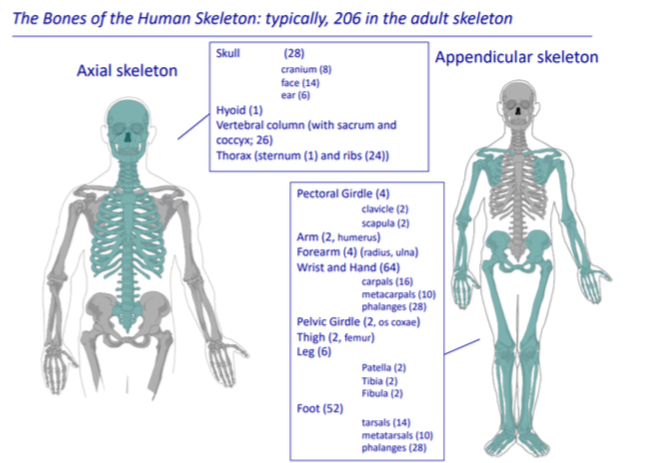
Bones in the human body:
There are 206 bones in the average adult human body.
There are 54 bones in the hand/wrist
There are 6 bones in the arm
There are 4 shoulder bones
24 rib bones (1 in the sternum)
22 bones in the human skull (8 cranial, 14 facial)
6 bones in the ears (smallest bone is stirrup bone)
1 bones in the throat
4 pelvic bones
24 bones in the vertebrae
8 bones in the legs
52 bones in the feet
Anatomical terminology:
This is specific vocabulary which enables scientists to discuss skeletal material without confusion. All of the terminology assumes the skeleton is laid out in the standard anatomical position or is supine with palms facing up.
Anatomical planes of reference:
Sagittal
Coronal
Transverse
Directional terms:
Used to refer locations of skeletal elements, and are essential for standardisation and effective communication. (Incorporate them every time discussing a skeleton in the lab.
superior - towards head (cranial)
Inferior - away from head (caudal)
Anterior - towards the front (ventral)
Posterior - towards back (dorsal)
Medial - towards the midline
Lateral - away from the midline
Proximal - nearest to axial skeleton (used for limbs)
Distal - furthest from axial skeleton (used for limbs)
Endocranial - inner surface of cranial vault
Ectocranial - outer surface of cranial vault
Palmar - palm side of hand (volar)
Plantar - sole of foot (volar)
Anatomical terms for general bone features (boney projections and parts):
Process - bony prominence
Eminence - same as process but less prominent
Spine/spinous process - long thin sharp process
Tuberosity - large rough eminence
Tubercle - small rough eminence
Trochanter - large prominent rough process
Malleolus - rounded protuberance
Boss - smooth rounded eminence
Articulation - area where adjacent bones in contact
Condyle - rounded articular process
Epicondyle - non-articular process
Head - large rounded end of a bone
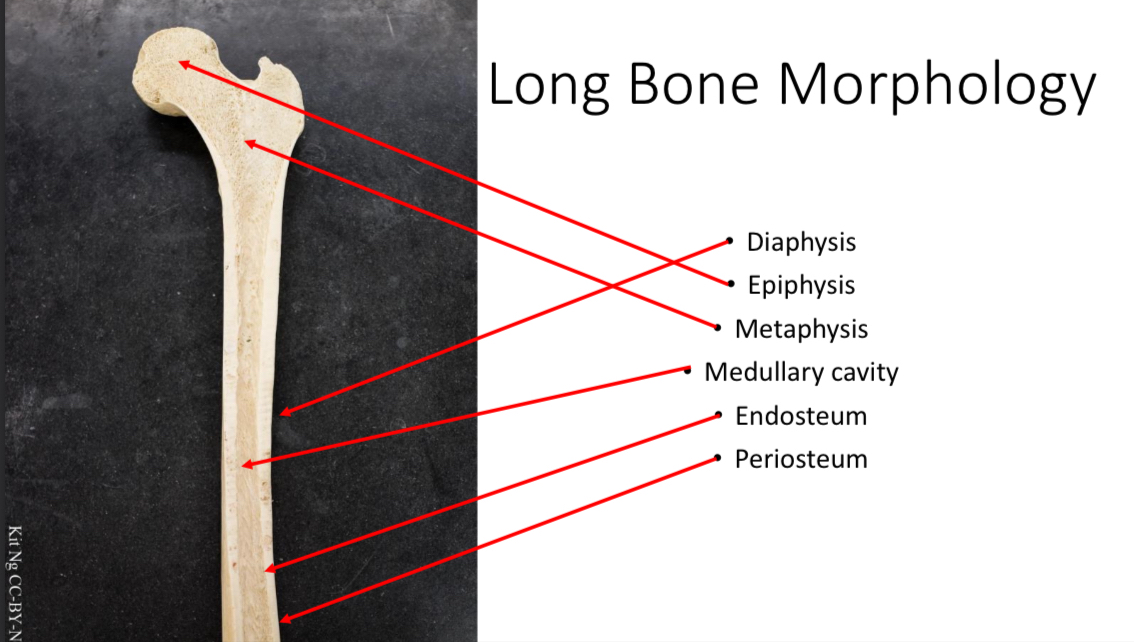
Shaft/diaphysis - straight section between ends of a long bone
Epiphysis - extremity of a long bone
Neck - bone between head and shaft
Torus - bony thickening
Ridge - linear bony elevation
Crest - sharp ridge of bone
Line - raised linear surface (not as sharp as crest or thick as torus)
Facet - small articular surface
Ramus - a branch
Boney depressions and openings:
Fossa - depressed area, broad and shallow
Fovea - pit like depressed area smaller than fossa
Groove - long pit or furrow
Sulcus - long wide groove
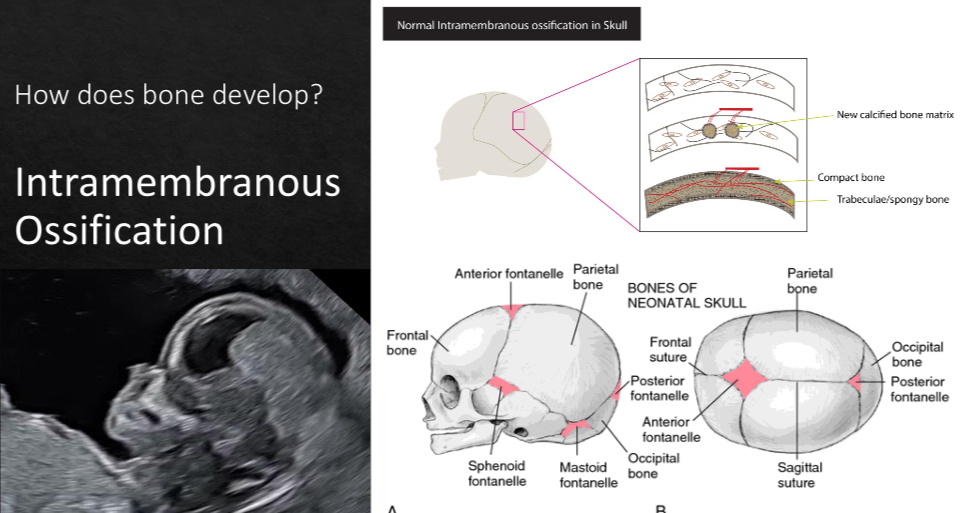
Fontanelle - space between cranial bones of an infant
Suture - where adjacent bones of the cranium articulate
Foramen - opening through bone ( for blood vessels and nerves)
Canal - tunnel like passage, extending from a foramen
Meatus - short and wide canal
Sinus - cavity within a cranial bone
Alveolus - tooth socket
Useful terms:
endo - internal
Ecto - external
Peri - around
Chondro - cartilage
Osteo - bone
Blast - constructing/forming
Clast - destroying/reabsorbing
Cyte - cell
Cranial - skull area
Post cranial - things below the skull
Function of the skeleton:
The skeleton is the frame to support the body weight, it protects the organs, gives lever for movement, attachment for muscles (landmarks and features), storage for calcium and phosphorous and haematopiesis (RBC, WBC, platelets in bone marrow).
The bone is a composite material made of inorganic and organic components, the inorganic components include hydroxyapatite which is a form of calcium phosphate and makes up between 60-75% of bone while the organic portion makes up 25-40%. The organic component includes mostly collagen, which is the main structural protein which forms long fibres. The organic component helps give bone its strength while the inorganic component gives bone its rigidity.
Bone Structure:
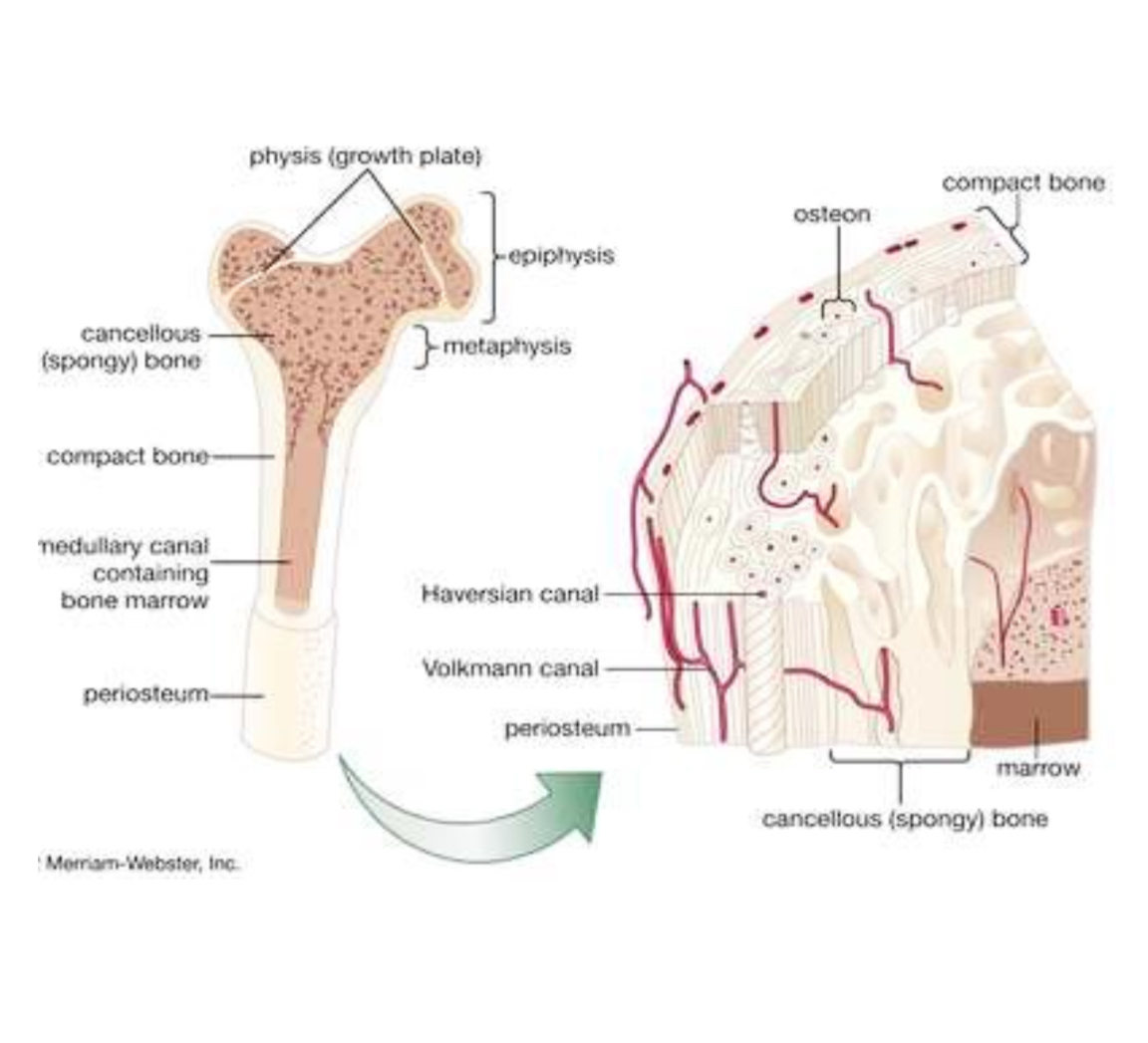
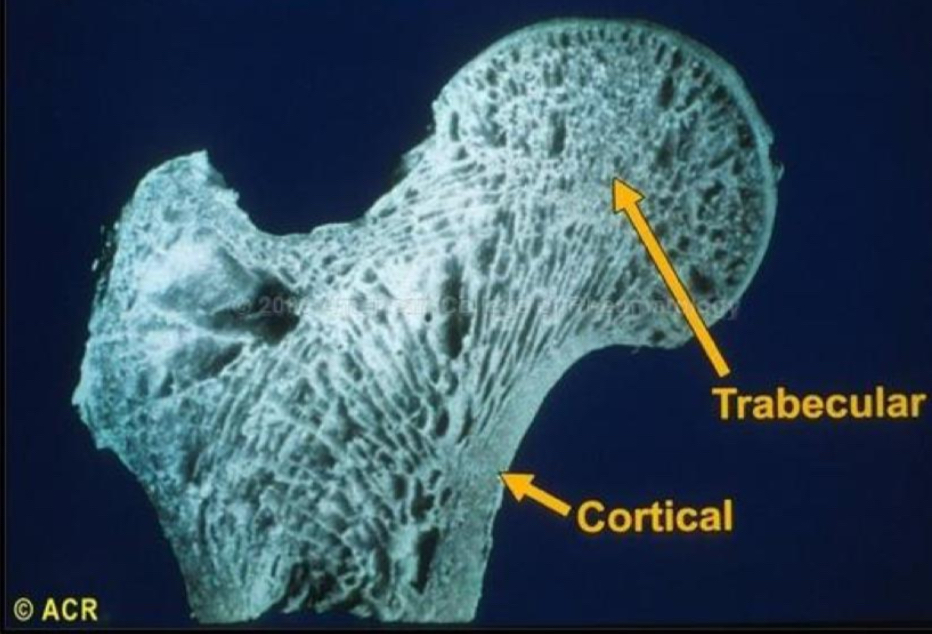
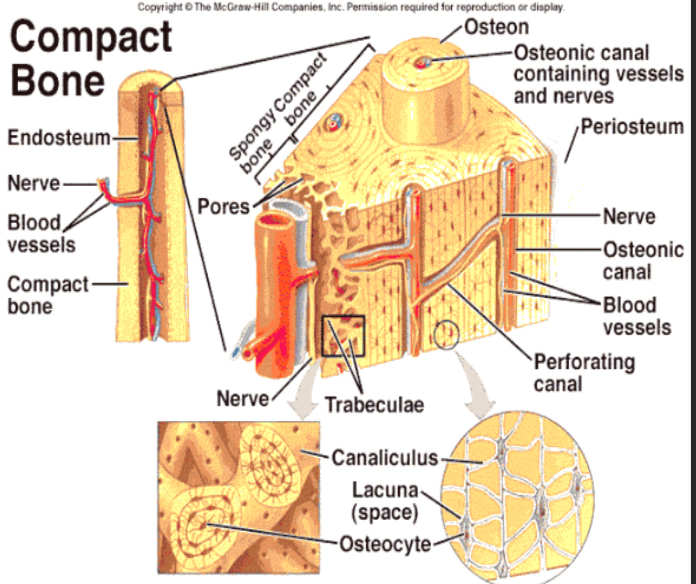
The majority of bones contain 2 distinct morphological types of bone:
cortical (compact) bone
Cancellous or trabecular (spongy) bone
Diploe in the cranium
Microscopically:
The adult compact bone has a concentric ring structure (osteon)
Osteocytes, Haversian and Volkmann’s canals, lacunae.
Blood vessels
Lymphatic vessels
Nerves (all originating in periosteum)
Trabecular bone doesn’t contain true osteons:
No lamellar structure
Like a crunchie bar
Structure of teeth:
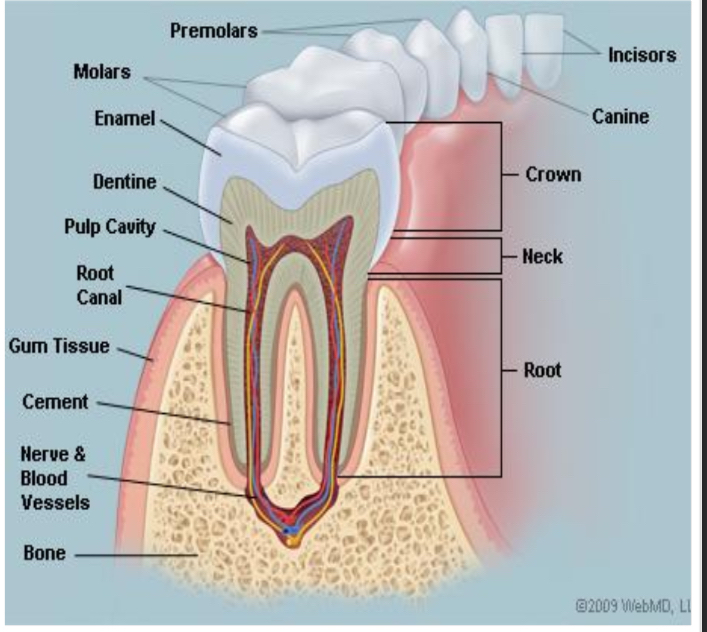
Organic (25%)
Inorganic (75%)
Enamel forms from ameloblasts, dentin from odontoblasts, cementum from cementoblasts
Enamel, mineralised tissue - what you brush
Dentine, comprises bulk of tooth, encloses pulp chamber and root canals, less mineralised, capable of defence reactions.
Cementum, hard tissue similar to bone in composition.
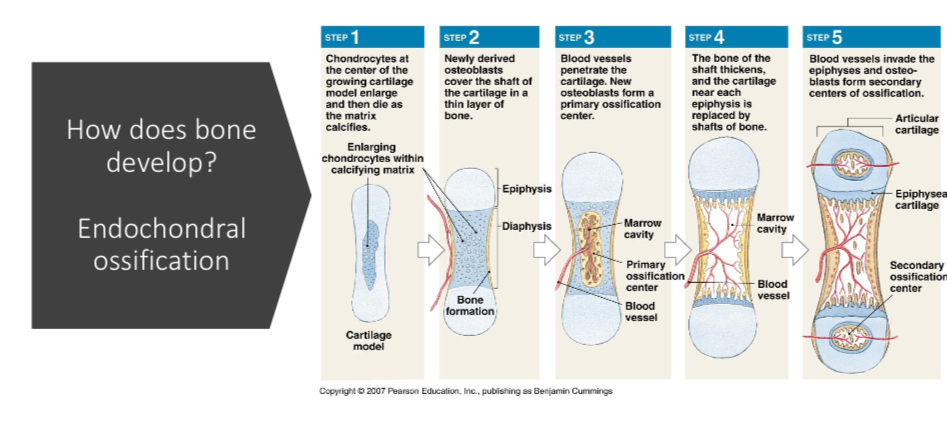
Bone formation and remodelling:
Formation starts during the development of foetus, continues through childhood/adolescence as the skeleton grows.
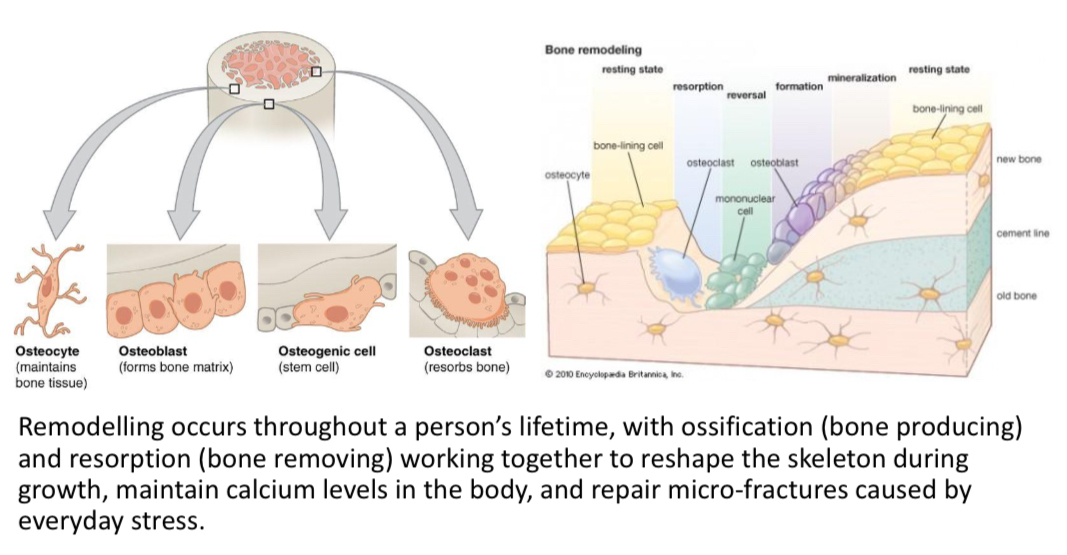
Remodelling is a life long process which consists of breaking down old bone (resorption) and the formation of new bone (ossification). It is key for shaping the skeleton, repairing fractured bones, and maintaining calcium levels.
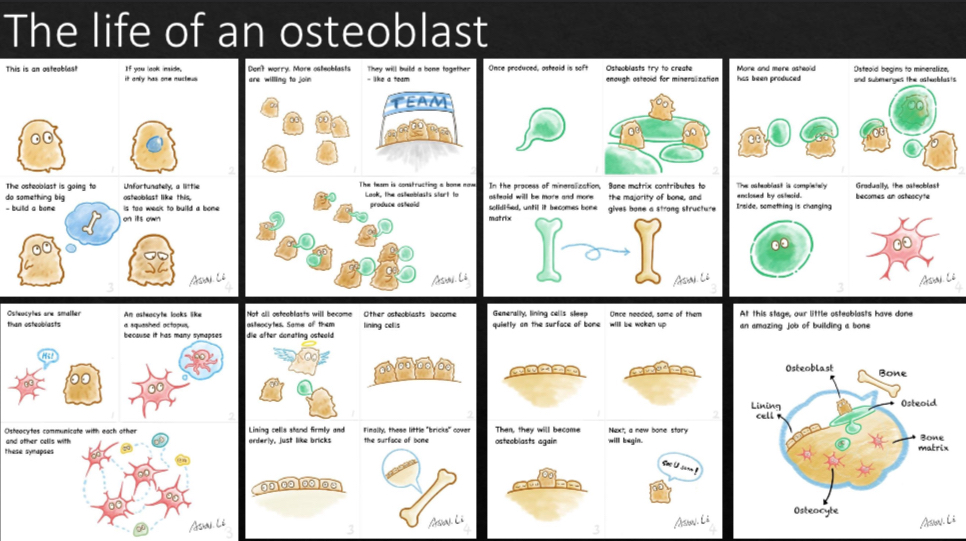
3 types of bone cells - osteoblasts, osteocytes, osteoclasts - are responsible for production, maintenance, and resorption of bone.
In foetal development, 2 mechanisms which create bone tissue - endochondral ossification and intramembraneous ossification.
What holds it all together?:
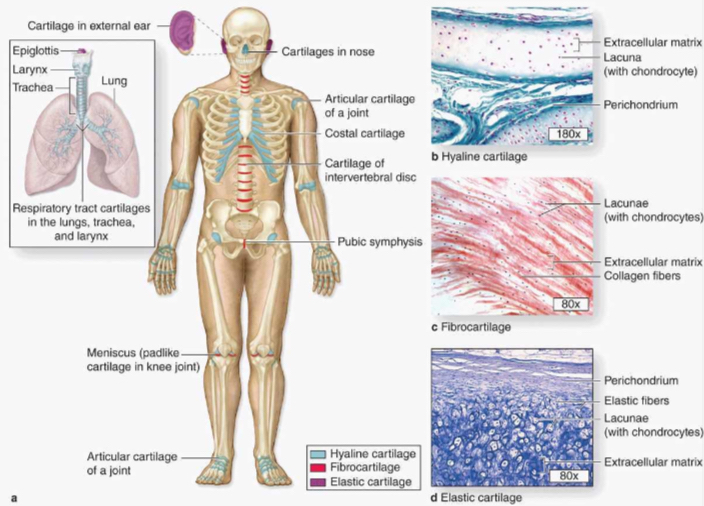
Cartilage - connective tissue in the body.
3 types: hyaline, elastic, and fibrous.