Week 13 - Brain Development
Cortical folding begins end of 1st trimester → 80% adult volume by 2 years
Neural tube → telencephalon → cortex (CNS)
70 days - major sulci form (central, calcarine, sylvian fissure) then smaller sulci (superior temporal sulci) → finer folding, more surface area
Experience-dependent plasticity begins in utero
Heschl’s gyrus larger in infants who received maternal sounds vs no noise
Playing auditory sounds → voice-selective areas can be localized
Less myelination → hard to distinguish grey and white matter
Increasing myelination → increase transduction speed
Measuring cortical tissue development
QMRI - tip proton in different angles & measure the exact relaxation time
Units: millimeters of water to macromolecular tissue (neurons)
T1 relaxivity (R1) = 1/(T1)
Dense tissue - quicker relaxation (more things to bump into vs uninterrupted) → tissue growth predicts T1 decreases, R1 increases (pruning opposite) → higher R1 → denser tissue → warmer color
Primary sensory regions become redder first
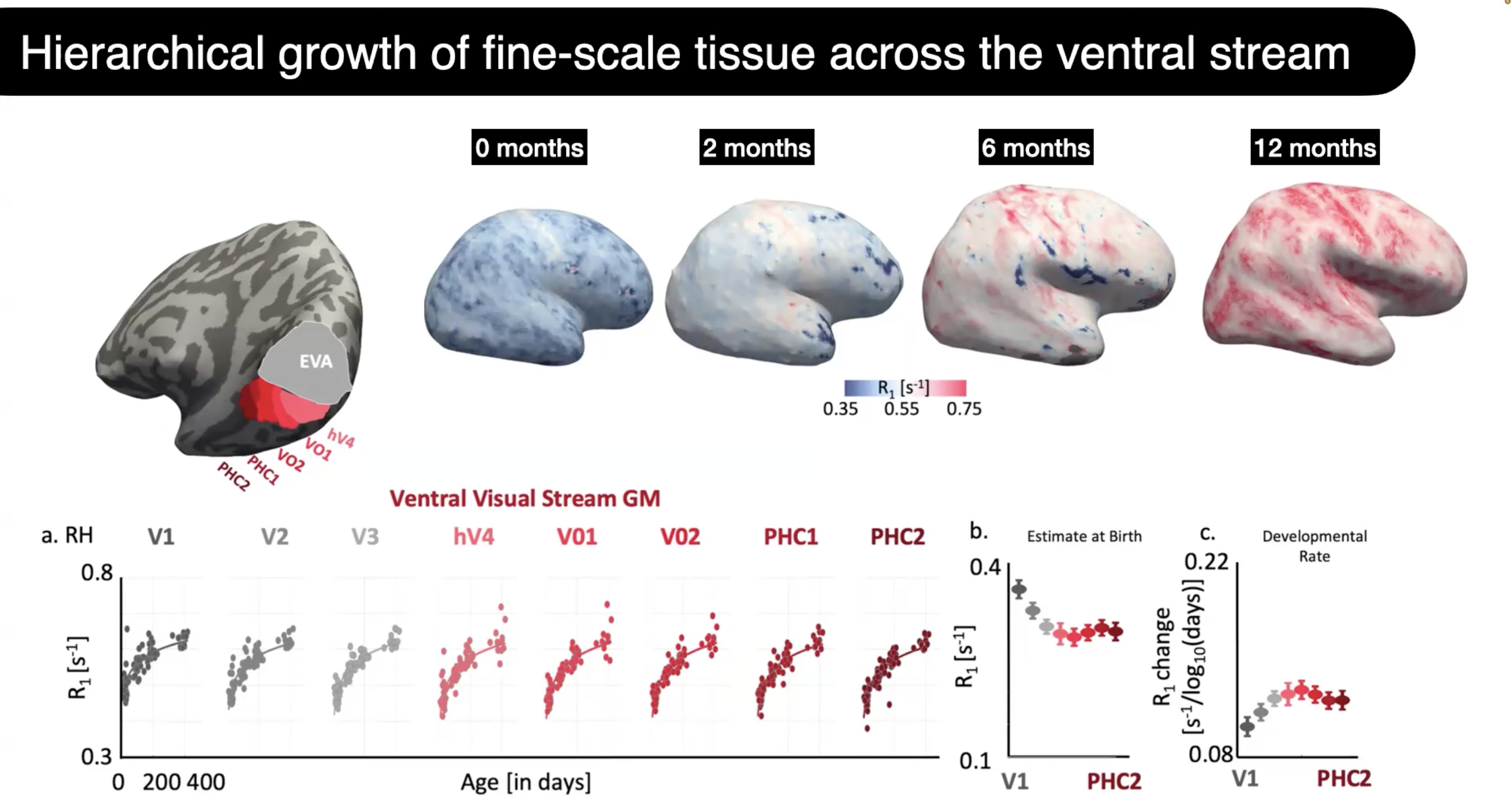
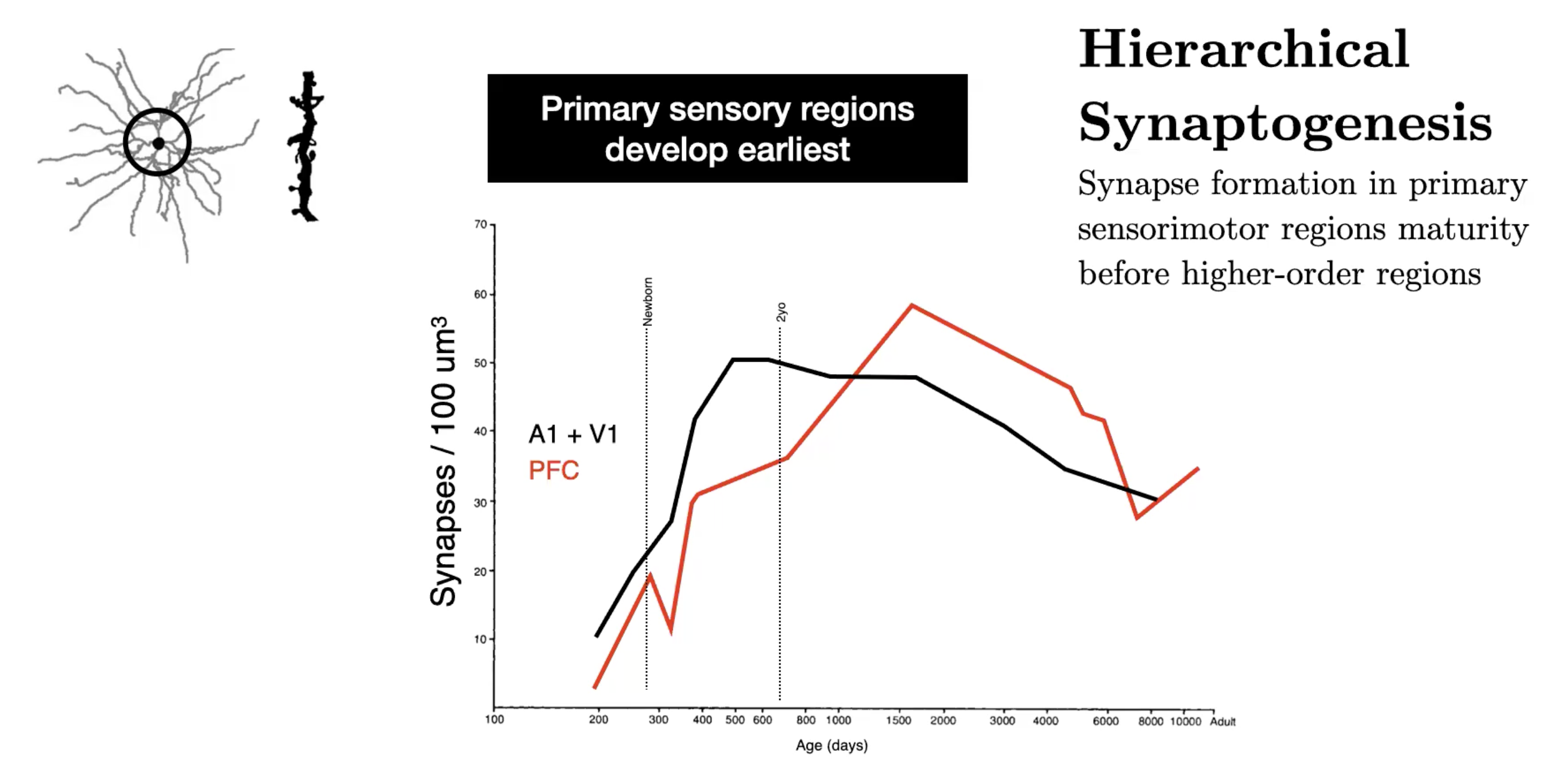
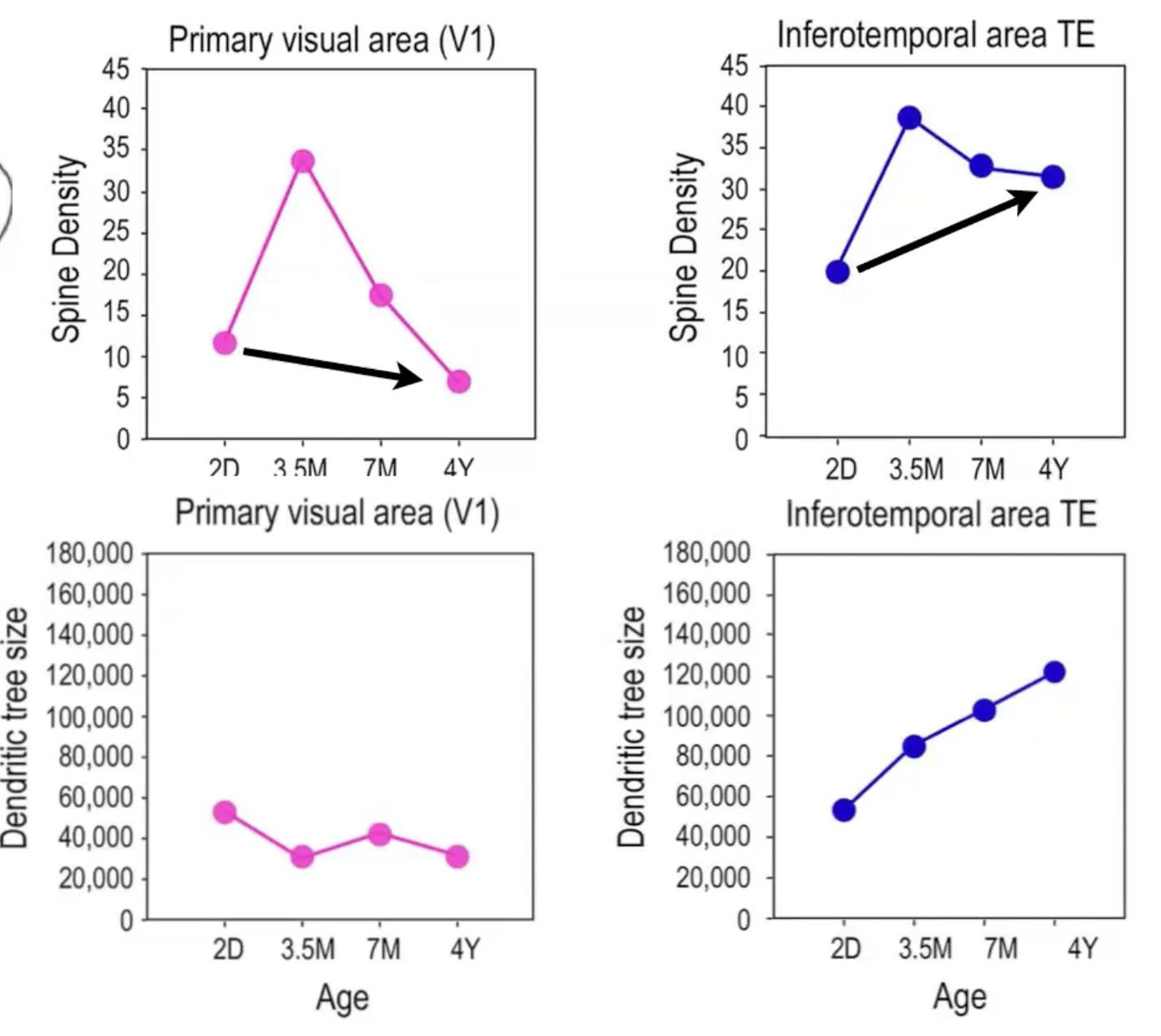
Hierarchical development - V1 has head start, other regions more protracted development trying to catch up
Follow-up study on category selective regions (instead of visual field maps)
Face-selective on posterior fusiform (pFus) and place-selective on collateral sulcus (CoS) → high-level, tissue growth or differences?
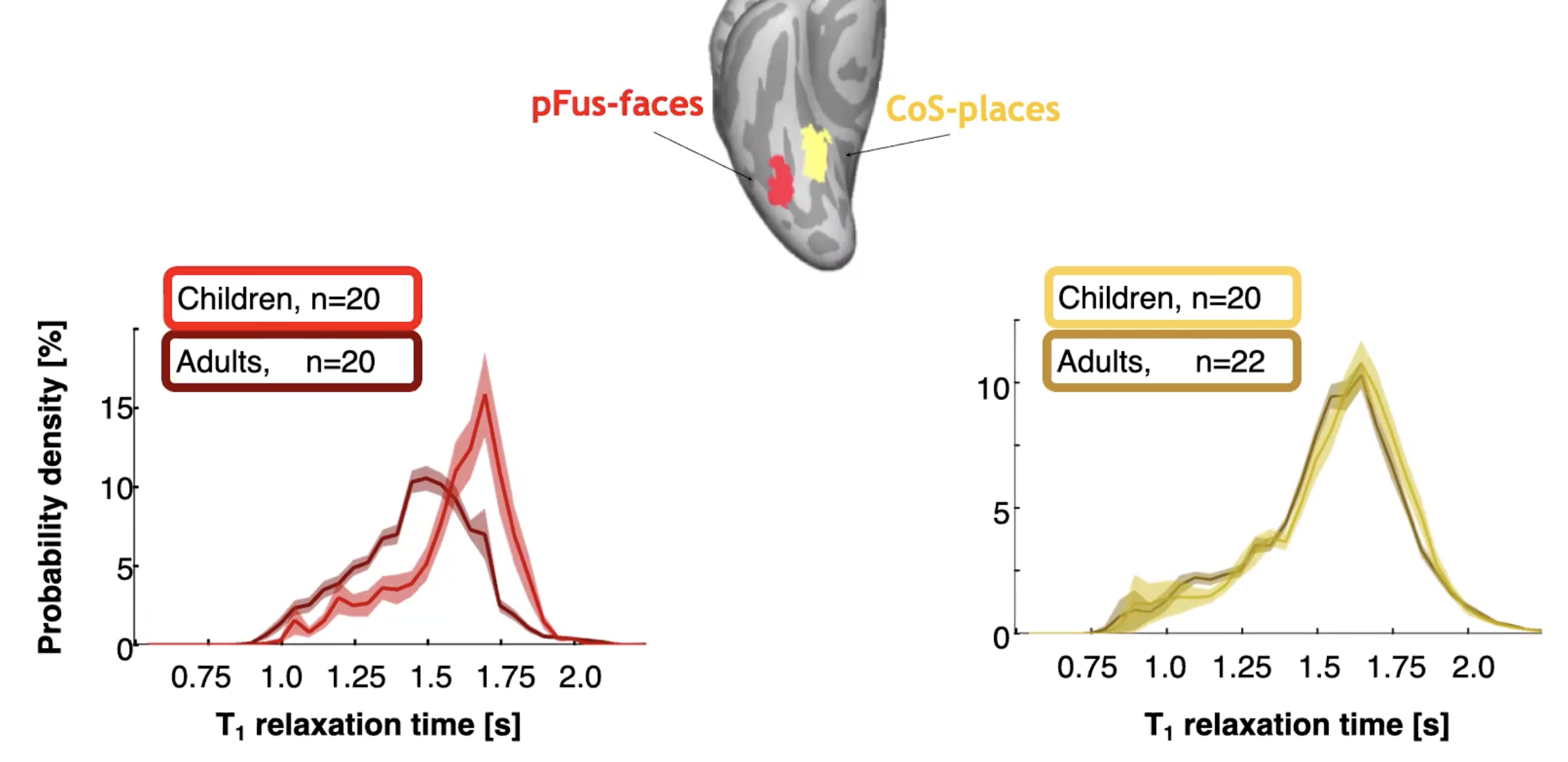
Cortical tissue predominantly growing than pruning; different regions, different trajectories
Behavior analysis - microstructural proliferation, function, and behavior are linked
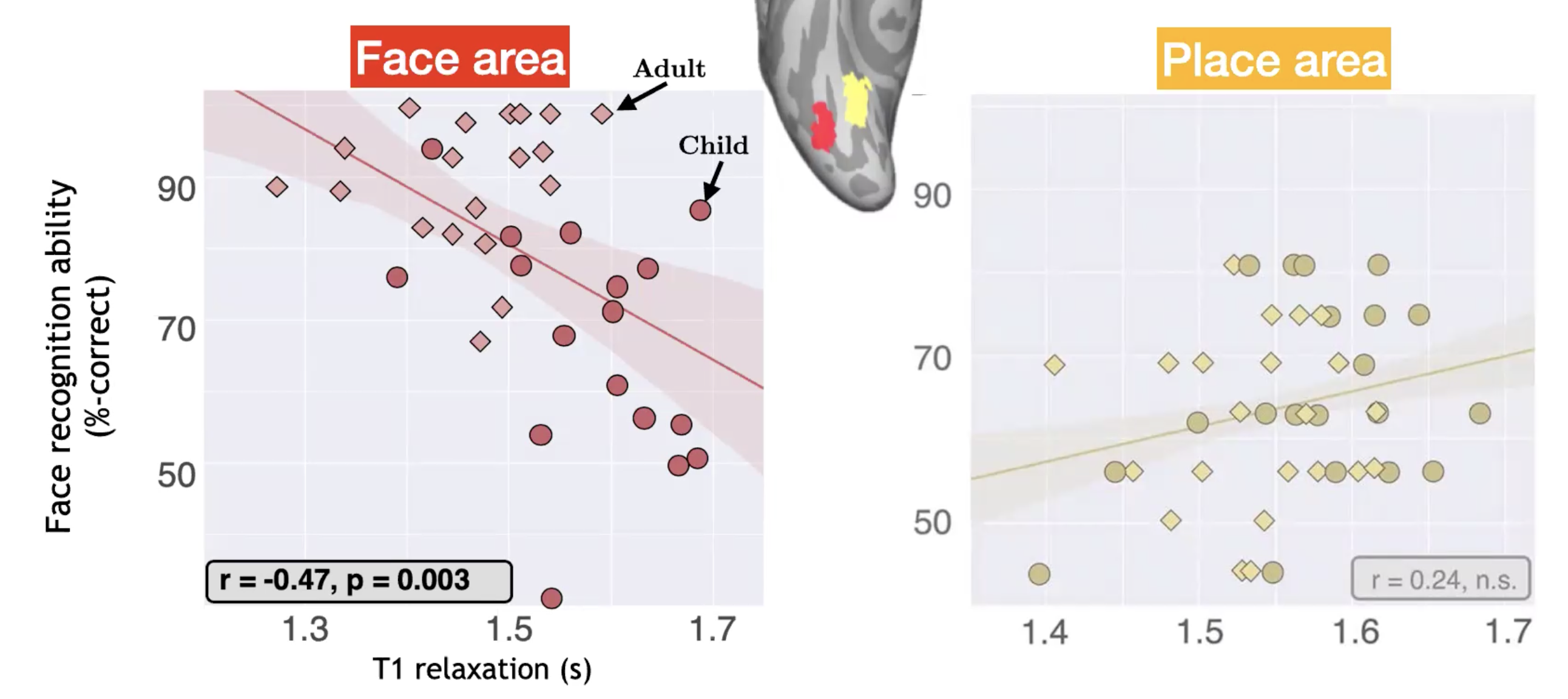
Function/behavioral necessitates brain tissue growth → no behavioral change, no growth
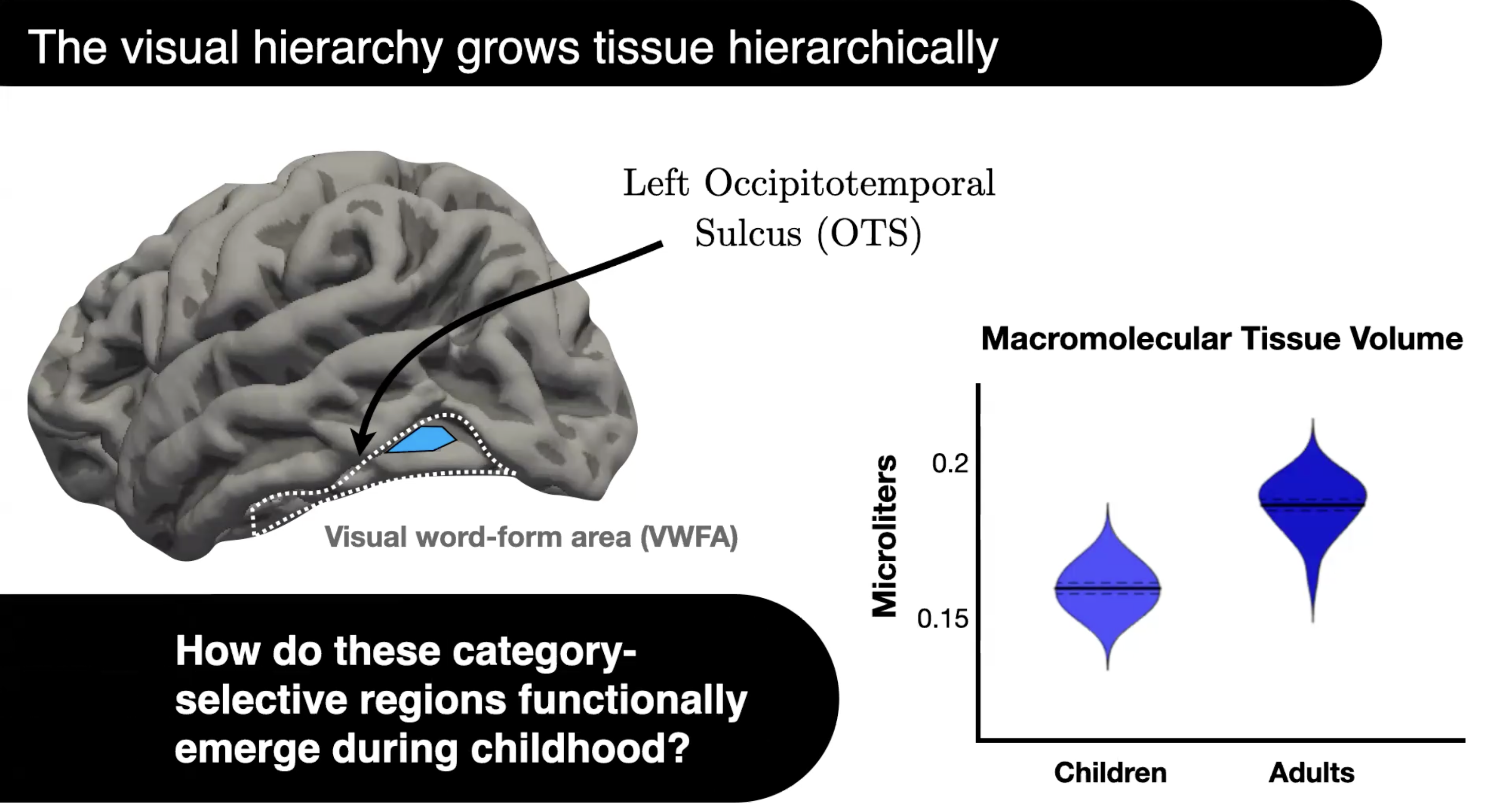
VFWA (OTS) emerges over first year of preschooling, becoming robust after learning to read
VWFA starts to prefer visual image of word over other categories
Continuing to grow as reading gets better (more words per minute)
Does becoming proficient with words or faces “recycle” a lesser used one (bodies in OTS)?
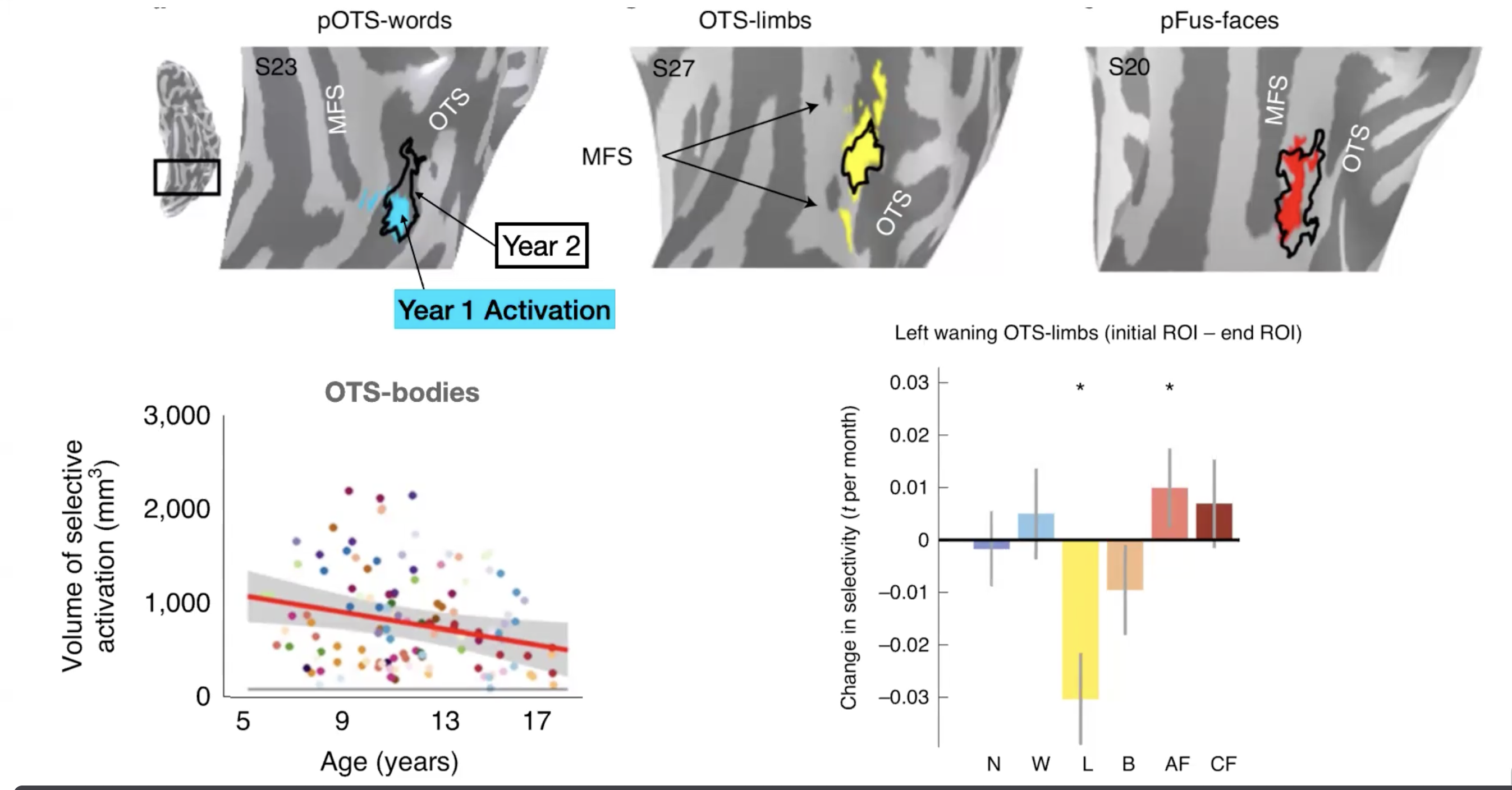
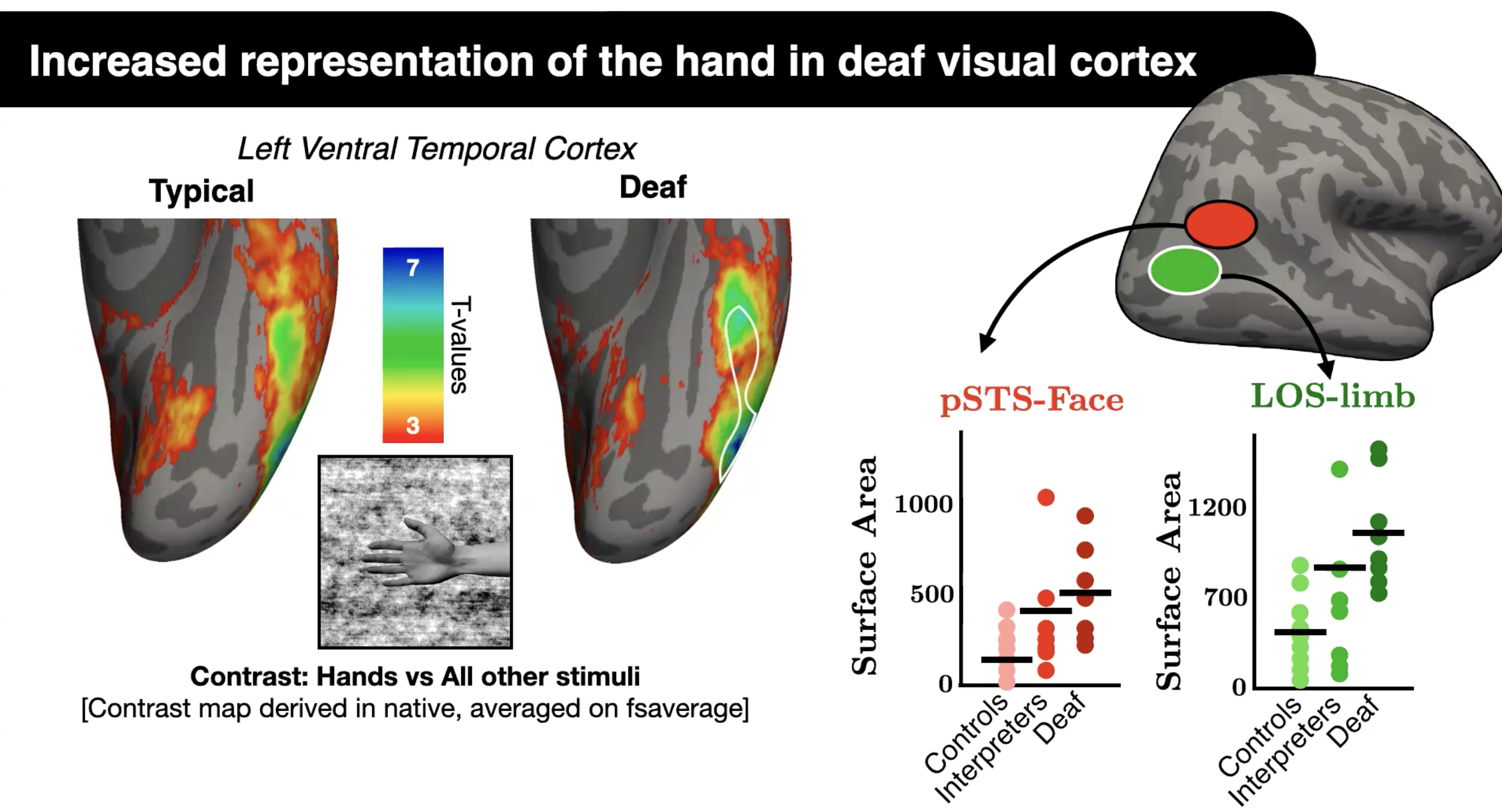
Migration happens to make more room, when there is competition (fusiform more medial to make space for the more lateral )
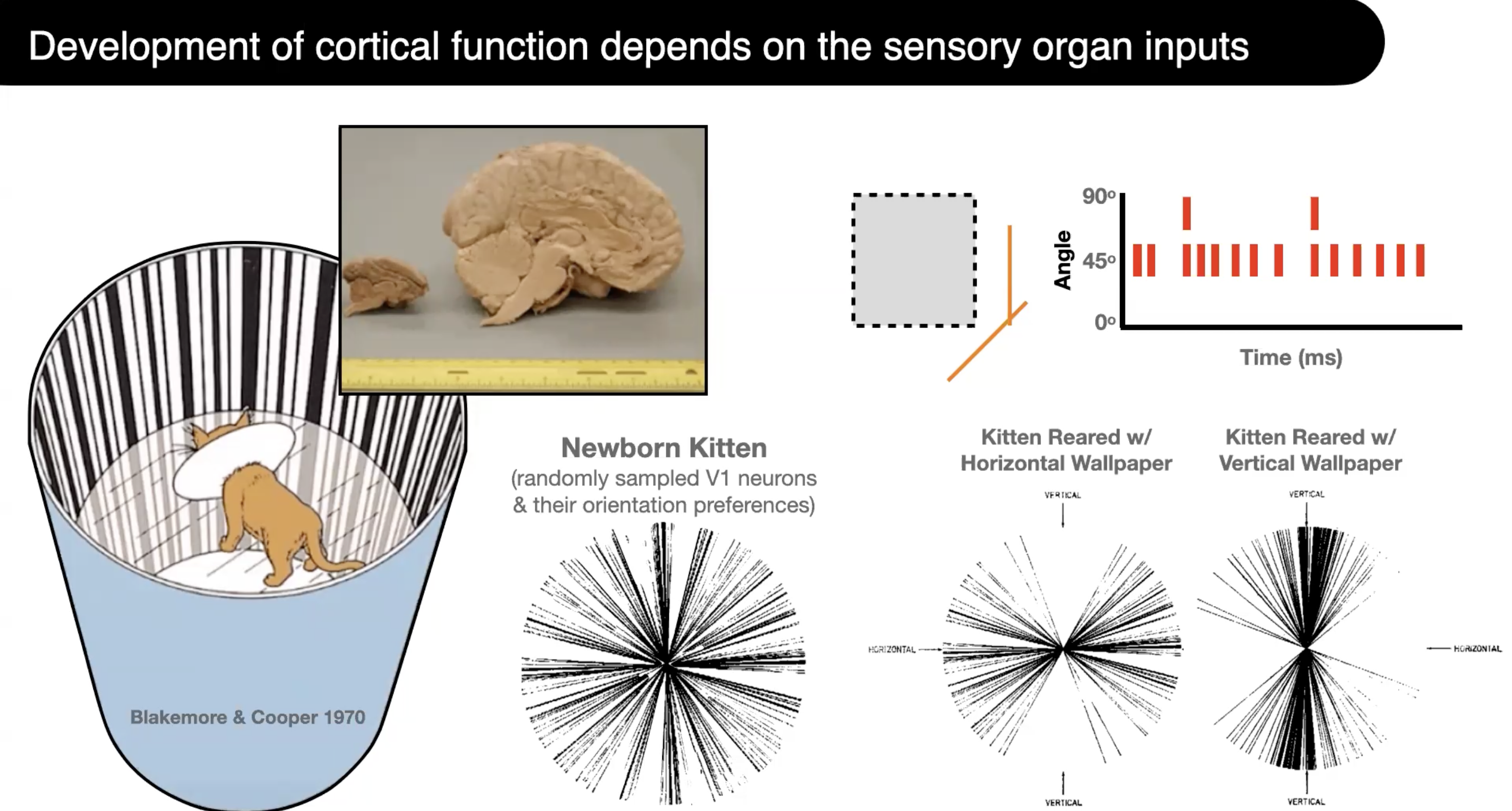
Cat experiment - cortical development depends on sensory input
Kittens see only vertical lines → pruned so only vertical orientation tuned neurons