Ch. 43 Sleep
Physiology of Sleep
Circadian rhythm
the 24-hour, day-night cycle
biological time clocks
Sleep regulation
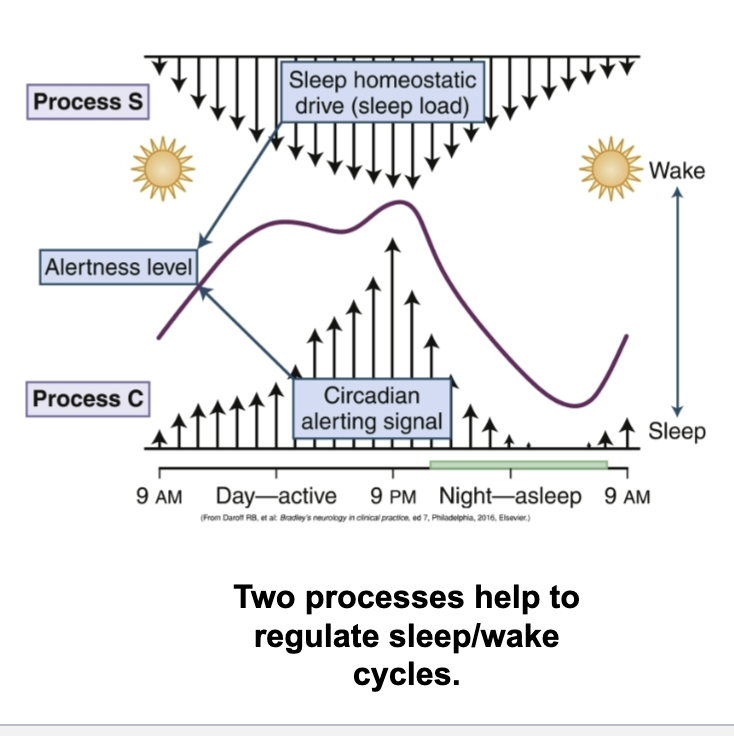
homeostatic process (Process S)
regulates the length and depth of sleep
circadian rhythms (Process C)
influences the internal organization of sleep and the timing and duration of sleep-wake cycles
operate simultaneously to regulate sleep and wakefulness
Time of wake-up is defined by the intersection of Process S and Process C
Stages of sleep
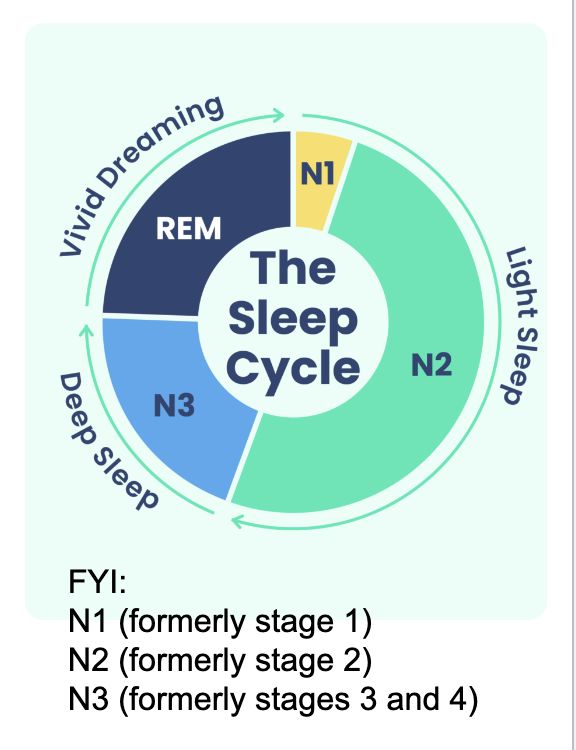
Nonrapid eye movement (NREM) - 75% of night
Rapid eye movement (REM) - 25% of night
Sleep Cycle
Pre-sleep period: first 10-30 minutes
Three stages of NREM (N1, N2, N3) and REM sleep for a total of 90-110 minutes
The number of sleep cycles depends on the total amount of time that the person spends sleeping
Function of Sleep
A time of restoration, memory consolidation, and preparation for the next period of wakefulness
Sleep restores biological processes
Ex: during NREM stage 3 sleep, the body releases human growth hormone for the repair and renewal of epithelial and specialized cells such as brain cells
Protein synthesis and cell division for the renewal of tissues occurs
The basal metabolic rate lowers during sleep, which conserves the energy supply of the body
The benefits of sleep often go unnoticed until a person develops a problem resulting from sleep deprivation
Dreams
occur in NREM and REM sleep
the dreams of REM sleep are more vivid and elaborate
Important for learning, memory, and adaptation to stress
Normal Sleep Requirements and Patterns
The average daily amount of sleep needed, by age, is:
Newborns (up to 3 mos): 14 to 17 hours
Infants (4 to 12 mos): 12 to 16 hours, including naptime
Young children (1 to 5 yrs old): 10 to 14 hours, including naptime
School-aged children (6 to 12 yrs old): 9 to 12 hours
Teenagers (13 to 18 yrs old): 8 to 10 hours
Adults (18 yrs and up): 7 to 9 hours
Factors Influencing Sleep
Drugs and substances
Lifestyle
Usual sleep patterns
Emotional stress
Enviroment
Exercise and fatigue
Food and caloric intake
Sleep Assessment
Most people can provide a reasonably accurate estimate of their sleep patterns
Usually, patients are the best resource for describing sleep problems and how they are a change from their usual sleep and waking patterns
In addition, bed partners can provide information about patients’ sleep patterns that help reveal the nature of certain sleep disorders
sleep apnea, how frequently the apneic attacks occur
When caring for children, seek information about sleep patterns from parents or guardians
Questions to ask patient:
description of sleeping problems
usual sleep pattern
physical and psychological illness
current life events
emotional and mental status
bedtime routines
bedtime environment
behaviors of sleep deprivation